History
Atago Jinja stands on the summit of Mt. Atago (924 m) in Ukyo-ku, Kyoto. The official site describes it as the head shrine of the roughly 900 Atago shrines across Japan, long known as a shrine with divine power against fire. The official site does not list the enshrined deities; Japanese Wikipedia gives five: Izanami no Mikoto, Haniyamahime no Kami, Ame no Kumahito no Mikoto, Wakumusubi no Kami and Toyoukehime no Mikoto.
According to the official history, the “Atagoyama Shinto Engi” and the Hakuun-ji chronicle in the “Yamashiro Meisho-shi” record that in the Taiho era (701–704) En no Gyoja, regarded as the founder of Shugendo, and Taicho, known as the founder of Mt. Haku, received court permission and built a sanctuary on Asahi-ga-mine (Mt. Atago). In 781 (Tenno 1) Keishun is said to have revived it, and Wake no Kiyomaro built Hakuun-ji there, making it a center for protecting the nation as Atago Daigongen. It was renowned as a mountain training site of combined Shinto and Buddhism and, around the 9th century, was counted among the “Seven High Mountains” alongside Mt. Hiei and Mt. Hira.
In the era of combined Shinto and Buddhism, the main hall enshrined the Buddhist original form Shogun Jizo, and the inner sanctuary (today’s Wakamiya) honored the tengu Taro-bo of Mt. Atago. With the Shinto-Buddhist separation order of the early Meiji years, Hakuun-ji was abolished and became Atago Jinja. Shogun Jizo was moved to Konzo-ji (Oharano, Nishikyo-ku, Kyoto) and is still enshrined there, the official site says. In September 2003 (Heisei 15) the 1,300th anniversary festival of the shrine’s enshrinement was held. All of this is the shrine’s own account.
Highlights
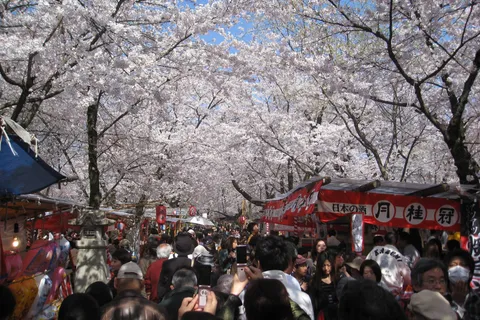
The official site says the summit is about 10 degrees cooler than the city, so cherry trees bloom about a month later in spring. The summit is described as offering fine views of Kyoto city, Mt. Hiei and the Hira range.
The shrine’s emblem is the “Hi no Yojin” (火迺要慎, “mind the fire”) fire-prevention talisman. The official site explains it as a reminder from past generations to keep a sense of awe toward fire, which gives blessings but can also destroy everything. It also describes a household custom of throwing one shikimi leaf from Atago into the hearth fire first thing in the morning, praying for the household’s safety and care with fire; today the shikimi is enshrined alongside the talisman. According to Japanese Wikipedia, there is also the “Atago no Mitsu-mairi”: the belief that a child taken to visit by age three will never suffer a fire. The official site also lists a prayer service for three-year-olds (offering ¥3,000).
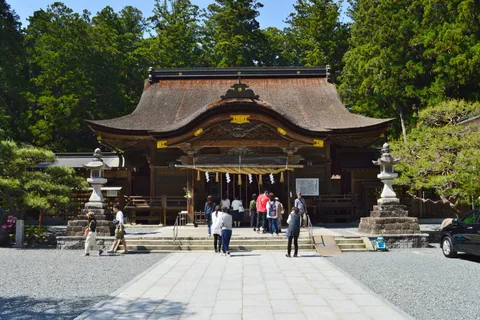
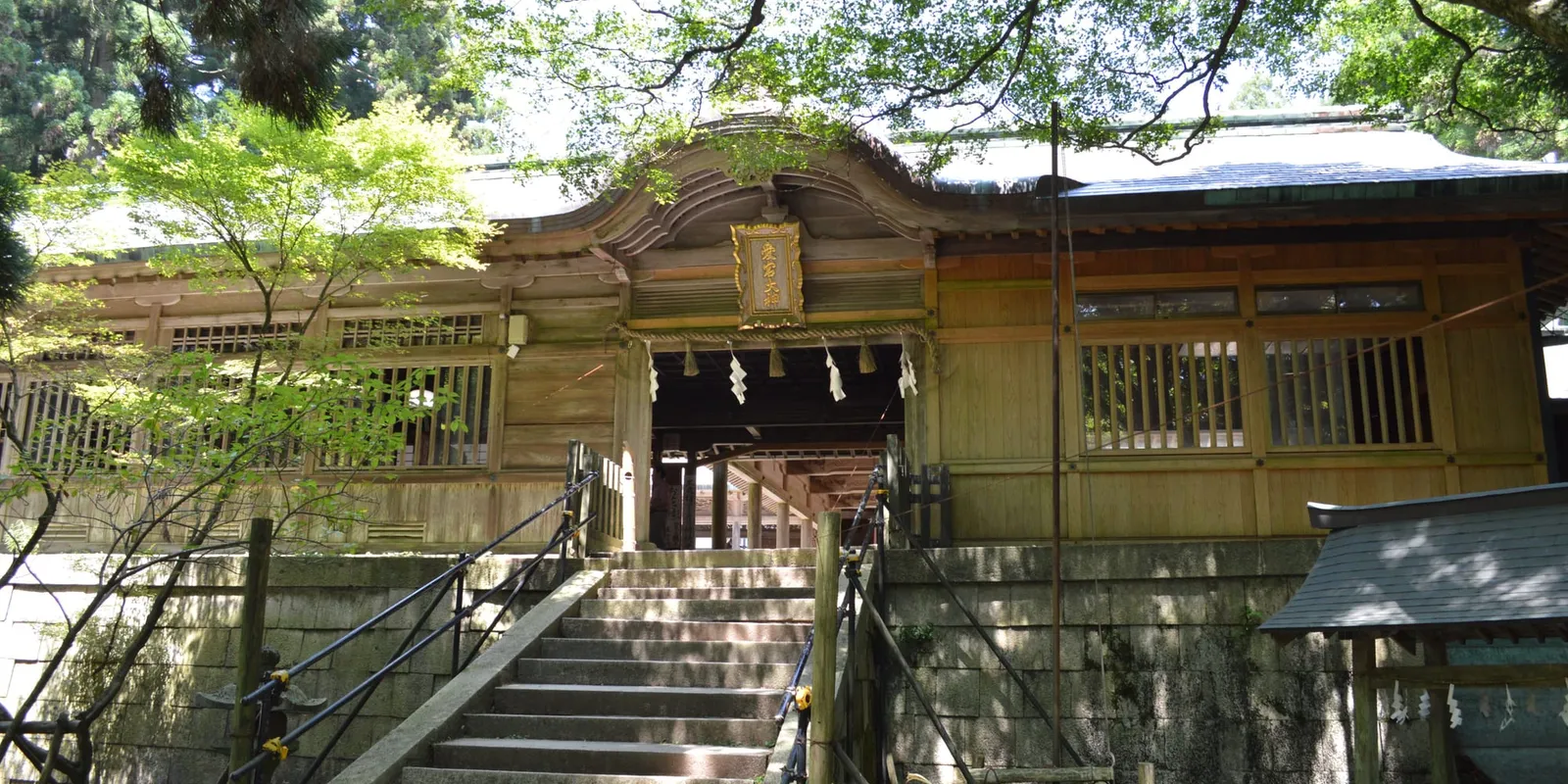
According to Japanese Wikipedia, the Kuro-mon (black gate), once called the Kyoguchi Somon, is one of the few remains from the Hakuun-ji era; the same source says the main hall was rebuilt in 1836 (Tenpo 7) and that the sword Kawatsutsumi no Tachi (Sasamaru) is a national Important Cultural Property (deposited at the Kyoto National Museum). The official site also lists goshuin for Wakamiya, Okumiya, Shogun Jizo and Mitsuhide-ko. Japanese Wikipedia further says that in May 1582 (Tensho 10), just before the Honno-ji Incident, Akechi Mitsuhide is said to have stayed in seclusion at Atago and held a renga poetry session (Atago Hyakuin).
Visiting Tips
There is no road for cars; you walk up from a trailhead. The official site recommends the main approach from Kiyotaki, which has an easy-to-find start and a wide trail, at about 2–3 hours on foot. From Mizuo it is about 2 hours, and from Shikimigahara about 1 hour 30 minutes. The official site states that the trail via Kubinashi Jizo is not an official approach and has no connection to the shrine.
Prayer services are accepted on request every day from 9:00 AM to about 4:00 PM, with offerings of ¥5,000, ¥7,000, ¥10,000 or ¥20,000 and up at your discretion (¥3,000 for the three-year-old service only). For those who cannot climb, talismans and charms can be mailed, and there is also the “Atagokai” membership (¥3,500 the first year, ¥3,000 from the second) under which monthly prayers are offered on the mountain on your behalf. The main-shrine goshuin is ¥500, and a limited gold boar goshuin exists.
Kyoto Buses run to Kiyotaki from Kyoto Station, Keihan Sanjo Station and the Arashiyama area. The only car park is the paid Sakuraya Parking at Kiyotaki; the road is narrow and street parking is not possible. As it is a mountain trail, plan for cold-weather and rain gear and for getting back down before sunset.
Annual Festivals
- Monthly festival (the 1st, 15th and 23rd of every month): The official site says it is held three times a month.
- Chinka-sai (April 24): The official site’s 2026 schedule lists the Chinka-sai and the Chinka-ko-sai.
- Senichi-mairi (night of July 31 to early morning of August 1): Also called Senichi Tsuyasai, it is said to bring 1,000 days of fire-prevention blessings. According to the official site, tens of thousands visit each year and the roughly 4 km main approach from Kiyotaki to the summit is lit (in 2024 it was held in the daytime instead; it varies by year, so check the official site).
- Annual festival (September 28): Listed in the official 2026 schedule as “Reisai / Shikinen Zotai Commemorative Grand Festival.”
- Hitaki-sai, Hiusu-sai, autumn festival / Fuigo festival (November): In the official 2026 schedule, November 8 is the Hitaki-sai, the 9th the Hiusu-sai, and the 23rd the Autumn Festival and Fuigo-sai.
- Oharae and Joya-sai (December 31): Listed as the year-end festival.
According to the official site, the present hall was renovated in 1929 (Showa 4), and a periodic reconstruction project, including a new roof for the main hall, has been under way to coincide with the grand festival of the 60-year Hinoe-uma year in 2026 (Reiwa 8). Dates change from year to year, so check the “News” section of the official site for the latest.
Nearby Food & Sightseeing
- Gatsurin-ji (月輪寺): According to Japanese Wikipedia, a temple closely tied to Hakuun-ji, the predecessor of Atago Jinja, on the Gatsurin-ji route up Mt. Atago, about 50 minutes on foot from the Kiyotaki trailhead.
- Atago Jinja First Torii (Toriimoto): According to Japanese Wikipedia, Atago Jinja’s first torii stands in Saga-Toriimoto, Ukyo-ku.
- Konzo-ji (金蔵寺), Oharano, Nishikyo-ku: The official site says Atago’s original Buddhist deity, Shogun Jizo, was moved here at the time of the Shinto-Buddhist separation and is still enshrined. It is far from Mt. Atago, so treat it as a separate outing.
Frequently Asked Questions
- Q. What are the visiting hours, and how long is the climb?
- A. The official site does not give opening or closing times for the mountaintop grounds. Prayer services are accepted on request every day from 9:00 AM to about 4:00 PM (official site). From Kiyotaki on the main approach the walk to the shrine is described as about 2–3 hours (Japanese Wikipedia says 4–5 hours for the round trip). The Kyoto City Tourism Association page says visits outside daytime hours are discouraged, so plan to be back down before sunset.
- Q. Can I get a goshuin at Atago Jinja?
- A. Yes. The official site lists goshuin at ¥500 for the main shrine, ¥500 for Shogun Jizo, and ¥300 each for Wakamiya, Okumiya and Mitsuhide-ko. A limited gold boar (kin-i) goshuin (¥500) is given on the New Year's first three days, at Senichi-sai and on the monthly festival day, the 23rd. The goshuin book is L-size, 48 pages, with a vinyl band cover. Separate hours for goshuin are not given, so use the prayer-service hours (9:00 AM to about 4:00 PM) as a guide and go early.
- Q. How do I get there, and is there parking?
- A. There is no road to the summit; you must walk up from a trailhead (official site). Kyoto Buses reach Kiyotaki, the start of the main approach, in about 50 minutes from Kyoto Station (Route 72) or about 15 minutes from Keifuku Arashiyama Station (Routes 62 and 72). From Kiyotaki it is about 2–3 hours on foot, about 2 hours from Mizuo, and about 1 hour 30 minutes from Shikimigahara. The only car park is the paid Sakuraya Parking at Kiyotaki, with room for several dozen cars.
- Q. What is Senichi-mairi, and when is it held?
- A. According to the official site, visiting from the night of July 31 to the early morning of August 1 is said to bring 1,000 days' worth of fire-prevention blessings; its formal name is Senichi Tsuyasai. The Yumike-sai is listed for 9:00 PM on July 31 and the Asamike-sai for 2:00 AM on August 1. However, the official site's 2024 notice says that, because night-time electricity and setup became difficult, daytime July 23 to August 1 was observed as Senichi-mairi, with talismans, prayers and goshuin handled from 9:00 AM to 4:00 PM and no night or early-morning handouts. The Kyoto City Tourism Association's 2026 listing gives July 23 to the early morning of August 1, with lights only from the evening of July 31 to the early morning of August 1. Arrangements differ by year, so check the official site before you go.
- Q. What is the fire-prevention talisman, and what if I cannot climb the mountain?
- A. The official site describes the "Hi no Yojin" (火迺要慎) talisman as the emblem of Atago, effective for fire prevention. Shikimi (star anise) sprigs are given in bundles of five. For people who cannot safely climb, talismans and charms can be sent by post: call 075-861-0658 (9:00 AM–5:00 PM) to ask about how to apply and the offering. Prayer services can also be arranged by phone, with the talismans mailed afterward, according to the official site.
Plan Your Visit
Before you go, you can book a stay and get your shrine-visit items ready.
Amazon links open Amazon.co.jp (Japan) in English; whether an item ships overseas depends on the product.
※ Contains ads (PR). Links open external sites such as Amazon, Rakuten, Trip.com and Booking.com.