History
Hirano Jinja stands in Hirano Miyamoto-cho, Kita Ward, Kyoto. The official site writes its name in Roman letters as “Hirano-Jinja.” According to the official site, four deities are enshrined: Imaki Sumeokami (god of renewed vitality), Kudo no Okami (god of the hearth and a peaceful household), Furuaki no Okami (god of peace who throws off evil spirits) and Hime no Okami (god of productivity).
The official history says that the Shoku Nihongi entry for 782 (Enryaku 1) records a rank being granted to the Imaki deity of the “Tamura rear palace,” and that this deity, enshrined within the Heijo Palace, was moved to the Hirano site in 794 (Enryaku 13), at the same time as the move of the capital to Heian-kyo. The original precinct was a little over eight cho square (about 1,500 m on a side in Heian measure), roughly the size of today’s Kyoto Imperial Palace, but over the years it shrank to a little under 200 m square.
The same history records that the Imaki deity was granted the highest Shinto rank, Shoichii, in 864 (Jogan 6); that according to the Engi-shiki it is the only shrine in Japan where the Crown Prince was designated to conduct the rites in person; and that it was ranked a Kanpei Taisha in Meiji 4. It also explains that “Hirano no Mikamado,” one of the imperial kitchen hearths, which is said to watch over health and good fortune, is tied to the virtues of the four Hirano deities, and that the shrine was revered as the tutelary shrine of clans such as the Minamoto and Taira, who left the imperial family. It adds that the theory that Hikaru Genji in The Tale of Genji is a manifestation of the Hirano deity “seems to have some merit.” All of this is the shrine’s own account.
Highlights
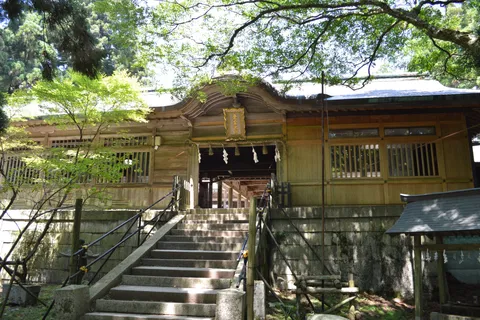
The core of the precinct is the main hall, a national Important Cultural Property. The official site says the south hall was built in 1625 (Kan’ei 2) and the north hall in 1632 (Kan’ei 9), with two buildings, each joining two halls into one, standing north to south. The style is called “Hirano-zukuri” or “Hiyoku Kasuga-zukuri,” and the shrine explains that it faces east because the deities were imperial court deities. Within the inner fence stands the auxiliary shrine Agata-sha; in the grounds are the subsidiary shrines Kasuga, Sumiyoshi, Ebisu and Hachiman, and the approach has the Shusse Michibiki Inari and Sarutahiko shrines. The official site says the south gate was granted from the old gate of the Imperial Palace in 1651 (Keian 4) and moved to its current site in 1943 (Showa 18).
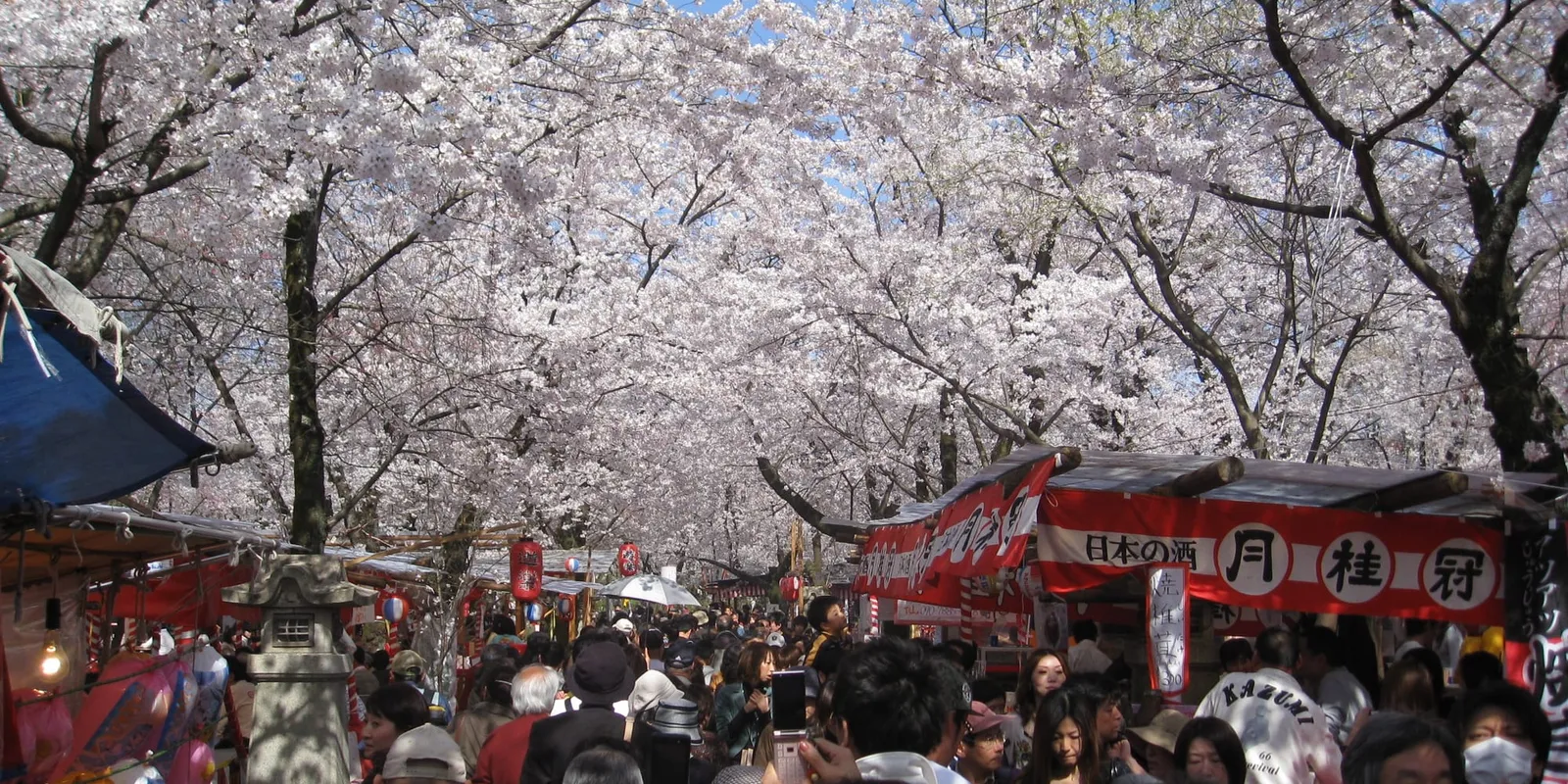
But Hirano is above all about cherry blossoms. According to the official site, cherry trees have been planted here since the Heian period as a symbol of heightened vitality, and there are now about 60 varieties and 400 trees (the English page of the same site says about 500, so the counts differ). The many rare varieties are said to come from the offering of trees marking the households of nobles whose clans had left the imperial family and who held the shrine as their tutelary deity. In the Edo period the night cherry blossoms were opened to commoners, and “Hirano no Yozakura” became one of the capital’s leading blossom-viewing spots. The early-blooming “Sakigake,” presented as a cherry that originated at this shrine, flowers in mid to late March, and the site says it is said that when it opens, blossom viewing begins in the capital. Flowering times for each variety are listed on the official “Hirano Jinja no Sakura” page. Some varieties, such as Jugatsu-zakura, flower from October to early April.
Visiting Tips
The official site does not give visiting hours for the grounds. Prayer services can be booked by phone (075-461-4450) or through the prayer application form. The hours and fee for the regular goshuin are also not stated on the official site, so it is safest to ask the shrine office. The site does list the shrine as one stop on the Nishioji Seven Shrines Blessing Tour (January 1 to end of February; ¥500 stamp fee, free stamp card).
The “Notices” page of the official site lists prohibited items, including eating and drinking in the grounds, bringing in bicycles or motorbikes, bringing pets, using drones or radio-controlled devices, and unauthorized location shoots. It asks visitors to take care that tripods and monopods do not trouble other worshippers, and requires a permit application for commercial use of images. It is worth checking the rules before a blossom-season visit.
From JR Kyoto Station, take City Bus 205 or 50 to Kinugasako-mae (衣笠校前) and walk about 3 minutes north. There are 17 parking spaces at the northeast corner of the east-side road, with no fee stated.
Annual Festivals
- Oka-sai, Cherry Blossom Festival (April 10): According to the official site, the festival is said to originate when Emperor Kazan made a visit to the shrine to pray for the prosperity of his descendants and held a special imperial rite (the site’s English page says Emperor Kazan ordered cherry trees planted in 985). The Oka-sai ritual is at 10:00 AM, the mausoleum visit at 11:00 AM, the procession-departure rite at noon, a historical procession of about 200 people through the parishioner district at 1:00 PM, and the return rite around 3:00 PM.
- Cherry-season events: The Kyoto City Tourism Association lists the 2026 cherry illumination as March 28 to April 12. The official site says the 25th “Hirano Jinja Sakura Concert” of spring 2026 began on March 26.
- Annual Grand Festival (April 2): 10:30 AM (official annual events list).
- Nagoshi no Oharae (June 30): From 4:00 PM. After the Oharae prayer is read, participants pass through a large chinowa grass ring. The official site explains how to breathe three times on a paper figure (hitogata) and offer it.
- Foundation Anniversary Festival and Hoto-sai (September 14): The anniversary ritual is at 10:00 AM, the lantern-offering festival from 6:00 PM, and lanterns are offered until the Moon-Viewing Festival.
- Moon-Viewing Festival (Meigetsu-sai): In 2026 (Reiwa 8) it was held on Friday, September 25 from 6:30 PM, with koto, shakuhachi and gagaku performances.
- Shichi-Go-San (November 15): The official site says families may also visit on other convenient days in October and November.
- Niiname-sai (November 23) and Oharae / New Year’s Eve ritual (December 31): Niiname-sai is at 10:00 AM; the Oharae is at 4:00 PM, followed by the Joya-sai.
- Saitan-sai, New Year’s Day rite (January 1): 7:00 AM. Monthly rites (Tsukinami-sai) are held on the 1st of each month.
Dates and times change from year to year, so check the “Annual Events” page of the official site for the latest.
Nearby Food & Sightseeing
The official site’s page on the “Nishioji Seven Shrines Blessing Tour” lists seven shrines along Nishioji-dori as stops. Here are nearby ones whose addresses appear on that page.
- Wara Tenjingu: In Kinugasa Tenjinmori-cho, Kita Ward. Listed as one of the seven shrines on the tour page of the official site.
- Daishogun Hachi Shrine: West of Ichijo-dori in Kamigyo Ward. Another of the seven; the same page gives a 5-minute walk southeast of Kitano-Hakubaicho Station.
- Kumano Jinja Kinugasa Branch (熊野神社衣笠分社): In Komatsubara Kita-machi, Kita Ward. Also one of the seven.
Nearby restaurants are not listed here because we could not confirm them from the official site or other primary sources.
Frequently Asked Questions
- Q. What are the visiting hours?
- A. The official site does not state visiting hours for the grounds; contact the shrine office at 075-461-4450. For the cherry season, the Kyoto City Tourism Association lists the 2026 blossom illumination as March 28 (Sat) to April 12 (Sun), but neither page gives evening hours or an admission fee.
- Q. Can I get a goshuin at Hirano Jinja?
- A. The official site does not state the hours or fee for the regular goshuin. It does list the shrine as one of the stops on the Nishioji Seven Shrines Blessing Tour, held from January 1 to the end of February, with a ¥500 stamp fee and a free stamp card. Check with the shrine office (075-461-4450) for regular days.
- Q. How do I get there, and is there parking?
- A. The official site says to take City Bus 205 or 50 from JR Kyoto Station to "Kinugasako-mae" (衣笠校前) and walk about 3 minutes north. It gives about 7 minutes on foot from Kitano-Hakubaicho Station on the Keifuku Kitano Line, though another page on the same site says 15 minutes, so the figures differ. There are 17 parking spaces at the northeast corner of the east-side road, with no fee stated. During cherry-blossom season, public transport is the safer choice.
- Q. How many cherry trees are there, and when is the best time to see them?
- A. The official cherry page says trees have been planted here since the Heian period and that there are now about 60 varieties and 400 trees (the English page of the same site says about 500, so the counts differ). The early-blooming "Sakigake" flowers in mid to late March, varieties such as "Hirano Nezame" and "Arashiyama" in early to mid April, and double-flowered ones such as "Gyoiko" and "Shogetsu" in mid to late April, so different varieties can be enjoyed over about a month and a half. Timing varies from year to year.
- Q. When is the Cherry Blossom Festival (Oka-sai)?
- A. According to the official site, it is held every year on April 10. The Oka-sai ritual is at 10:00 AM, a visit to Emperor Kazan's mausoleum at 11:00 AM, and the procession-departure rite at noon, followed at 1:00 PM by a historical procession of about 200 people through the parishioner district; the return rite is around 3:00 PM. Times can change, so check the official site beforehand.
Plan Your Visit
Before you go, you can book a stay and get your shrine-visit items ready.
Amazon links open Amazon.co.jp (Japan) in English; whether an item ships overseas depends on the product.
※ Contains ads (PR). Links open external sites such as Amazon, Rakuten, Trip.com and Booking.com.