History
Kifune Jinja stands deep in the mountains along the Kibune River on the western side of Mount Kurama in northern Kyoto, and serves as the head shrine of roughly 2,000 water-deity shrines found across Japan. Its exact founding date is unknown, but shrine tradition holds that a sanctuary already existed here around 1,300 years ago. According to legend, the goddess Tamayori-hime traveled upstream in a yellow boat in search of the source of the water and came ashore at this spot, where she enshrined the water deity — the shrine’s name is said to derive from that “yellow boat” (ki-fune), or alternatively from “ki-fune,” meaning the root from which water springs forth. Note that while the place name is read “Kibune,” the shrine’s own name is officially read “Kifune.”
The enshrined deity, Takaokami no Kami, is a dragon god who governs water and rainfall, and was long petitioned by the imperial court both to end droughts and to stop excessive rain — a role that earned the shrine deep reverence as a “rain-summoning, rain-stopping” sanctuary. In the Heian period it was ranked among the Twenty-Two Shrines singled out for special imperial patronage, and to this day it draws devotion from any trade connected with water. Downstream from the main shrine, the Yui-no-Yashiro sanctuary enshrines Iwanagahime no Mikoto, goddess of good relationships, and Kifune is counted among Kyoto’s foremost shrines for matchmaking thanks to a famous episode involving the Heian-period poet Izumi Shikibu, who came here to pray for reconciliation with her estranged husband; moved by fireflies dancing over the Kibune River, she composed a poem of longing, and soon after her marriage was restored.
Highlights
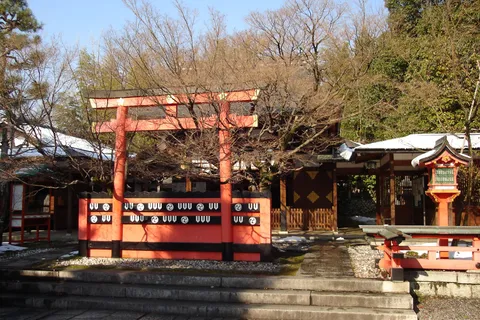
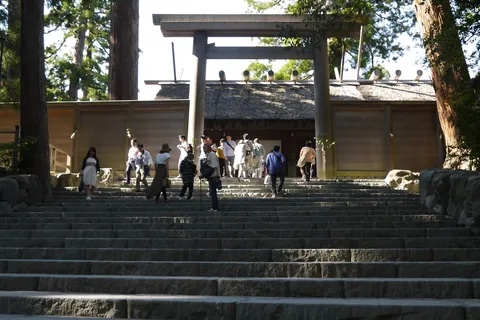
The image most associated with Kifune Jinja is the row of vermillion Kasuga-style lanterns lining the stone steps up to the main shrine. Lit from dusk into the evening, the lanterns’ glow against the deep green of the mountainside creates an almost otherworldly scene that draws crowds of visitors and photographers alike. The shrine is also said to be the birthplace of the ema votive plaque tradition: worshippers once dedicated live horses to the shrine — a white horse in fine weather, a black horse to pray for rain — and ema plaques still bear horse imagery in that memory today.
About 700 meters upstream along the Kibune River lies the Okumiya (inner shrine), believed to be the site of the shrine’s original sanctuary, where legends tell of the “Funagata-ishi,” a boat-shaped stone from which water still wells up, and a sacred “dragon cave” said to be home to a water dragon. Partway between the main shrine and the Okumiya, the Yui-no-Yashiro sanctuary is famous for its “water fortune” slips tied to the Izumi Shikibu legend — blank paper fortunes that reveal their text only after being dipped in the clear waters of the Kibune River, a favorite ritual for visitors.
Visiting Tips
The proper way to visit Kifune Jinja is the “three-shrine pilgrimage” taking in the main shrine, Yui-no-Yashiro, and the Okumiya; walking the full route along the river takes about 1.5–2 hours. From May through September, riverside dining platforms called kawadoko line the Kibune River outside a row of traditional ryokan, drawing crowds who come to dine above the cool rushing water — a popular pairing with a shrine visit. The path to the Okumiya is paved but has some ups and downs, so comfortable walking shoes are recommended. Goshuin stamps are available at the shrine office from 9:00 to 17:00.
Annual Festivals
- Kifune Festival (June 1): The shrine’s largest annual festival, featuring gagaku court music and a mikoshi procession, held to give thanks to the water deity and pray for a safe year.
- Water Festival (July 7): A festival of gratitude for the blessing of water, with dedications of flower arrangements and special prayer rites.
- Water Fortune Slips: A beloved ritual available year-round, in which blank fortune papers float on the shrine’s sacred spring and reveal their hidden text, delighting visitors of all ages.
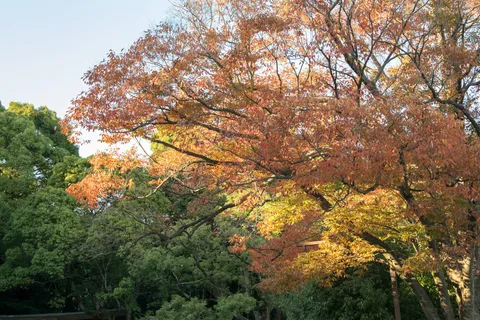
- Kifune Momiji Toro (early to late November): During the autumn foliage season, the approach from the main shrine to the Okumiya and the banks of the Kibune River are illuminated at night, transforming the valley into a mysterious, otherworldly landscape.
Nearby Food & Sightseeing
- Ryori Ryokan Hirobun: A long-established ryokan right beside Yui-no-Yashiro, famous for one of Kibune’s largest kawadoko riverside platforms; from May through September it serves kaiseki cuisine and the signature flowing-noodle dish nagashi somen above the rushing river.
- Beniya: A riverside ryokan known for seasonal kaiseki cuisine — kawadoko dining above the river in summer, and cozy irori hearth-side meals in autumn and winter.
- Kurama-dera: An ancient temple on the far side of the mountain from Kifune’s Okumiya, reachable by cable car or on foot — pairing a visit here with Kifune is one of the classic hiking routes in the northern hills of Kyoto.
Frequently Asked Questions
- Q. What is the "three-shrine pilgrimage"?
- A. Kifune Jinja's traditional visiting route through the main shrine, Yui-no-Yashiro, and the inner shrine — walking all three takes about 1.5–2 hours.
- Q. What are the visiting hours?
- A. The main shrine gates are open 6:00–20:00 (May–Nov) or 6:00–18:00 (Dec–Apr); the amulet office is open 9:00–17:00.
- Q. When is the goshuin office open?
- A. 9:00–17:00, for ¥500.
- Q. Is there parking?
- A. Yes — 8 spaces at the main shrine and 10 at the inner shrine (¥800 per 2 hours), though lots fill quickly during peak seasons like autumn foliage, so public transport is recommended.
- Q. How do I get there?
- A. Take the Kyoto Bus from Kibuneguchi Station to the Kibune stop, then about a 5-minute walk.