History
Kurumazaki Jinja is dedicated to Kiyohara no Yorinari (1122–1189), a renowned Confucian scholar of the late Heian period. Yorinari served the imperial court as Daigeki (senior court secretary) and as a Doctor of Confucian Classics (Myogyo Hakase), and was considered the foremost scholar of his generation. When he died in 1189, a mausoleum was built for him on land associated with the Kiyohara clan, and a shrine to enshrine his spirit was later established on the site — the origin of Kurumazaki Jinja.
The shrine’s unusual name comes from a well-known legend. When Emperor Gosaga passed by the shrine in his ox-drawn cart, the ox is said to have suddenly stopped moving, and the shaft (nagae) of the cart snapped in two. Taking this as a sign of the enshrined deity’s formidable power, the emperor bestowed on the shrine the title “Shoichii Kurumazaki Daimyojin” — giving rise to the name “Kurumazaki,” meaning roughly “where the cart broke.”
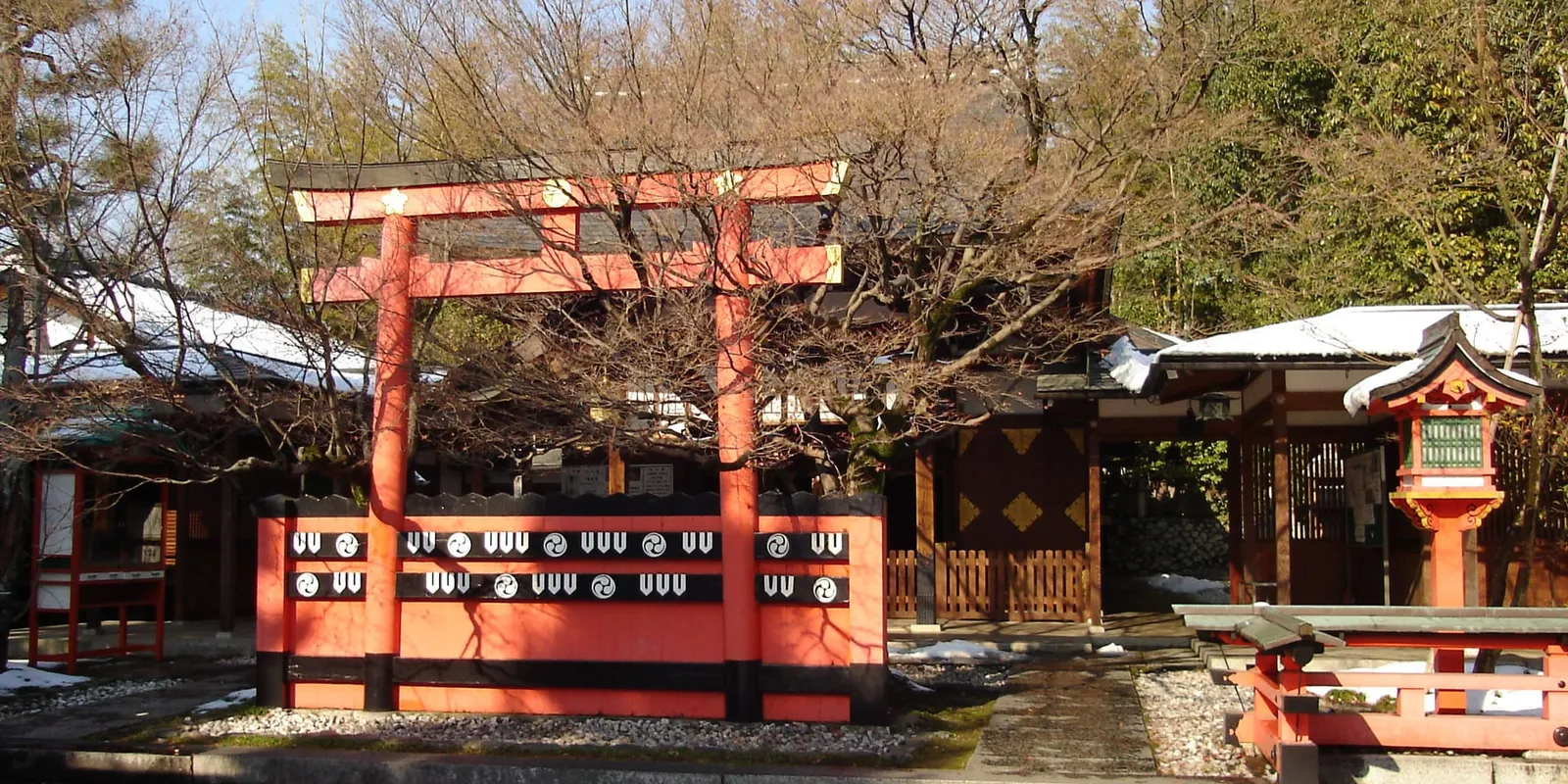
Today the shrine is perhaps best known for its subsidiary shrine, Geino Jinja (“Entertainment Shrine”), founded in 1957. Dedicated to Ame-no-Uzume no Mikoto, the goddess of the performing arts, its approach is lined with more than 4,000 vermilion wooden stakes (tamagushi) bearing the stage names and pen names of actors, musicians, and other entertainers and cultural figures who have come to pray there, making it a major pilgrimage site for Japan’s entertainment industry.
Highlights
The single most striking sight at Kurumazaki Jinja is the sea of vermilion tamagushi stakes lining the approach to Geino Jinja. Bearing the names of entertainers and creators, their numbers grow every year, a vivid testament to the shrine’s standing within Japan’s entertainment world. The stakes are replaced roughly every two years, so the names on display always reflect currently active public figures.
Another distinctive feature is the pile of “prayer stones” (kinen shinseki) in front of the main worship hall. Under a custom said to date back centuries, visitors borrow a small stone from the shrine office, carry it with them while holding their wish in mind, and — once the wish comes true — return it to the shrine along with a second stone as a token of gratitude. The growing mound of prayers, wished-for stones, and returned stones makes for a quietly moving sight.
Visiting Tips
The shrine grounds are open to visitors at all times, though the goshuin office operates 9:30–17:00. Two different goshuin stamps are available — one for Kurumazaki Jinja itself and one for the Geino Jinja subsidiary shrine — so it’s worth collecting both. Kurumazaki-jinja Station on the Randen (Keifuku Electric Railroad) Arashiyama Main Line sits right at the shrine’s back entrance, making the tram the easiest way to arrive. Visitor parking is available, but note that the lot closes at 16:30, so allow enough time if arriving by car.
Annual Festivals
- Mifune Festival (third Sunday of May): Begun in 1928 to commemorate Emperor Showa’s enthronement, this elegant festival recreates Heian-period boating parties on the Oi River just upstream of Togetsukyo Bridge, with ceremonial boats bearing dragon and heron-head prows.
- Choyo Festival (September 9): Marking the Chrysanthemum Festival, one of Japan’s five seasonal festivals, this rite offers visitors chrysanthemum-infused sake afterward.
- Hitaki Festival (November 23): Thousands of ritual wooden sticks are stacked into a hearth-like structure roughly 4 meters tall and ceremonially burned, a late-autumn rite praying for good health.
- New Year’s Visit (January 1–3): Known for drawing many entertainment-industry visitors, the shrine sees large crowds during the first days of the year.
Nearby Food & Sightseeing
- Togetsukyo Bridge: The iconic bridge spanning the Katsura River in Arashiyama; the Oi River just upstream is the stage for the Mifune Festival. Reachable from Kurumazaki Jinja on foot or by Randen tram, with beautiful scenery in every season.
- Arashiyama Bamboo Grove: A tunnel of towering bamboo running between Nonomiya Jinja and the Okochi Sanso villa, and one of Arashiyama’s most popular walking spots, just a short distance from Kurumazaki Jinja.
- Randen (Keifuku Electric Railroad) Arashiyama Line: Just a few minutes by tram from Kurumazaki-jinja Station to Arashiyama Station, this charming streetcar line makes it easy to combine a visit with other temples and shrines across Sagano and Arashiyama.
Frequently Asked Questions
- Q. What are the visiting hours?
- A. The grounds are open to visitors at all times. The goshuin office is open 9:30–17:00.
- Q. When is the goshuin office open?
- A. 9:30–17:00, for ¥500. Two types are available: Kurumazaki Jinja and the subsidiary Geino Shrine.
- Q. Is there parking?
- A. Yes, visitor parking is available, but it closes at 16:30.
- Q. What is the Geino Jinja subsidiary shrine?
- A. Founded in 1957 and dedicated to Ame-no-Uzume no Mikoto, goddess of the performing arts, its approach is lined with more than 4,000 vermilion tamagushi stakes bearing the names of actors, musicians, and other entertainers who have prayed there.
- Q. How do I get there?
- A. Directly outside Kurumazaki-jinja Station on the Randen (Keifuku Electric Railroad) Arashiyama Main Line, or right at the Kurumazaki-jinja-mae city/Kyoto bus stop.