History
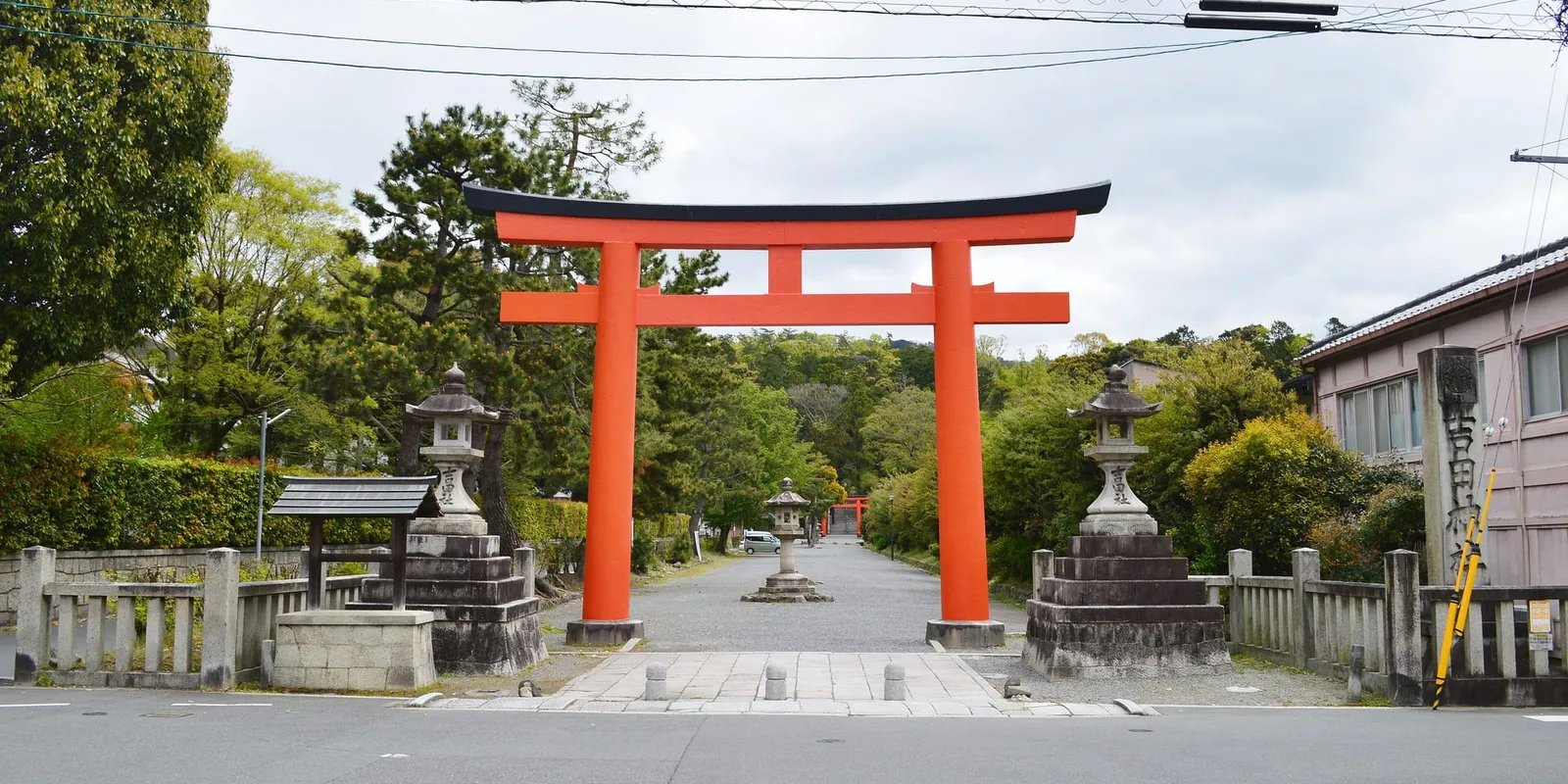
Yoshida Jinja stands on Yoshida-yama (Kaguraoka) in Sakyo-ku, Kyoto. The official site gives no reading for the name; the reading “Yoshida-jinja” comes from the Japanese Wikipedia. The site also bills the shrine as Shinbutsu Reijo (Shinto-Buddhist sacred sites) No. 30 in Kyoto.
According to the official site, in April 859 (Jogan 1) Middle Counselor Fujiwara no Yamakage invited the deities to Yoshida-yama as a guardian shrine for the capital and founded it. Yoshida-yama has long been called “Kaguraoka” (the hill where the gods gather), and its graceful shape is counted as the 12th of the “Thirty-six Peaks of Higashiyama.” The official site says the shrine enjoyed deep imperial devotion from the start, and that after the priest Yoshida Kanetomo created Yoshida Shinto it gained great authority in the Shinto world and flourished. Its former estate is given as 590 koku.
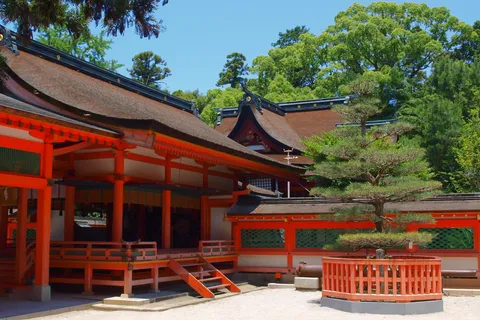
The deities of the main shrine are Takemikazuchi no Mikoto in the first hall, Iwainushi no Mikoto in the second, Ame no Koyane no Mikoto in the third, and Himegami in the fourth. The official site describes the first two as gods of warding off misfortune and bringing good fortune, the third as a god of learning, and the fourth as a goddess granting special virtue to women. The third and fourth are described as a divine couple who grant good matches and marital harmony.
Highlights
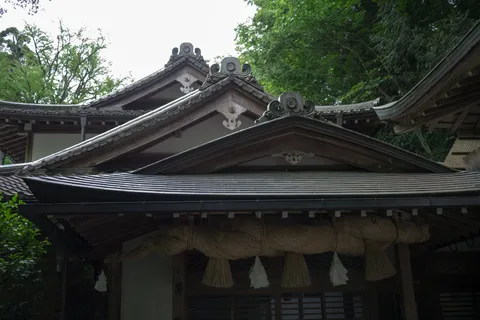
The shrine’s best-known feature is the Saijosho Daigengu. The official site presents it as a shrine to the gods of all Japan and labels it an “Important Cultural Property.” Its deities are the eight million gods of heaven and earth; the East and West Shinmei shrines enshrine Amaterasu Omikami and Toyouke-hime, and the East and West shrines enshrine the 3,132 deities of the shrines listed in the Engishiki. The official site says Yoshida Kanetomo built it on its present site in 1484 (Bunmei 16), moving a shrine that once stood in Muromachi in Sakyo, with the deities installed on November 24 of that year. The Japanese Wikipedia describes it as a distinctive octagonal-plan building with a thatched roof.
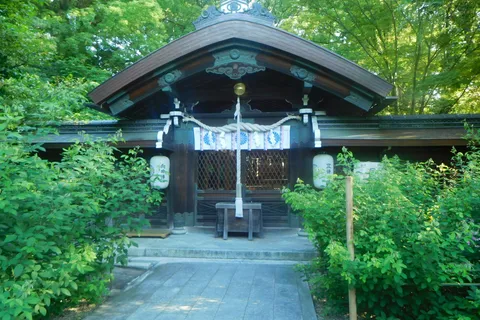
Besides the main shrine, the grounds hold many auxiliary shrines. Yamakage Shrine honors Fujiwara no Yamakage, who the official site says draws devotion as the god of the kitchen knife and the patron of cooking and dining. Kaso Shrine enshrines Tajimamori no Mikoto and Hayashi Join no Mikoto as patrons of confectionery, Takenaka Inari Shrine is for business prosperity, and the Tenmangu shrine enshrines Sugawara no Michizane for academic success. There are also the Wakamiya, Shinryu, Sansha, Imamiya and Kaguraoka shrines.
Visiting Tips
The official site gives no visiting hours for the grounds, and admission is free. Prayer-service reception is listed as 9:00 AM–4:30 PM and the shrine office is open until 5:00 PM (the prayer-service page says reception ends at 4:20 PM, so the pages differ). Prayer services cannot be reserved and are handled in order. The official site lists the fees as ¥5,000 for a same-day service, ¥10,000 for a one-month service, and from ¥30,000 for a one-year service. It asks visitors to phone for prices of talismans and amulets; goshuin books appear in its list of items, but no goshuin fee or hours were found.
A good route is to pay respects at the four halls of the main shrine, then go on to Daigengu. The special inner-precinct visit, where you can approach the hall and the East and West shrines, is offered only on the first three days of the New Year, during Setsubun, and on the 1st of each month. According to the official site it runs about 8:00 AM to 4:00 PM (until about 10:00 PM on February 2 and 3 during Setsubun) and is free.
It is about a 20-minute walk from Demachiyanagi Station on the Keihan Main Line, or about 5 minutes on foot from the “Kyodai Seimon-mae” city bus stop. There are about 20 temporary parking spaces, for use only while visiting, and they cannot be used during Setsubun. Car navigation may not guide you well if you enter “Yoshida Jinja,” so the official site suggests setting the destination to “Yoshida Kindergarten” or “Kyoto University.”
Annual Festivals
- Setsubun festival (three days around Setsubun in February): According to the official site, it has been held since the Muromachi period and draws about 500,000 visitors in a typical year (the shrine’s own statement). In the 2026 (Reiwa 8) schedule, February 2 has the eve-of-festival rite, Ekijin-sai and the Tsuina-shiki (oni-yarai) rite; February 3 has the main-day rite and the Karo-sai, where old talismans and amulets are burned; and February 4 has the after-festival rite. About 800 stalls line the grounds on the 2nd and 3rd, and the “Yakuzuka” mound, which takes on visitors’ misfortune, stands in front of Daigengu. Special talismans such as the misfortune-warding amulet and the Setsubun arrow are given out only during the Setsubun period. The 2027 dates could not be confirmed on the official site.
- Monthly, on the 1st: A monthly rite is held, and it is a day of special inner-precinct visits to Daigengu.
- Toshigoi-sai (March 17) and the annual festival (April 18): The official site says the annual festival stems from the shrine’s founding; it is closed to the public, but can be viewed from the central gate.
- Yamakage Shrine festival (May 8): The site says an Ikama-ryu knife ceremony is offered, in which fish are cut using only a knife and chopsticks, without hands.
- Nagoshi no Harae (June 30): After burning the paper figures, participants pass through a ring of reeds three times together with about 1,000 worshippers in a typical year (official site).
- Imamiya Shrine procession (second Sunday of October) and Kaguraoka Shrine procession (last Sunday of October): Processions with portable shrines and palanquins tour the neighborhoods.
- Niiname-sai (November 23) and the Daigengu annual festival (November 24): These are dates in the official 2026 (Reiwa 8) schedule.
- Shiwasu no Oharae and Joya-sai (December 31): Listed on the events page for 2025 (Reiwa 7).
The events page shows the schedule for 2025 (Reiwa 7), and times and details may change, so check the official site or the shrine office for the latest.
Nearby Food & Sightseeing
- Yoshida-yama: The hill on which the shrine stands, also called “Kaguraoka.” The official site says it is counted as the 12th of the Thirty-six Peaks of Higashiyama.
- Kyoto University (Yoshida Campus): An area named in the official access guide, in the bus stop “Kyodai Seimon-mae” and as a car-navigation destination.
- Demachiyanagi Station: A Keihan Main Line station that the official site gives as the nearest station, about a 20-minute walk. From the station you head south along Kawabata-dori.
Frequently Asked Questions
- Q. What are the visiting hours?
- A. The official site gives no visiting hours for the grounds and says admission is free. Prayer-service reception is listed as 9:00 AM–4:30 PM, and the shrine office is open until 5:00 PM (the prayer-service page, however, says reception ends at 4:20 PM, so the pages differ). Reception hours change on January 1 and during the Setsubun period. Prayer services cannot be reserved and are handled in the order of application.
- Q. Can I get a goshuin at Yoshida Jinja?
- A. The official page on talismans and amulets lists goshuin books among its items, but no fee or hours for the goshuin itself could be found. The site tells visitors to phone (075-771-3788) for prices of talismans and amulets, so it is safest to check with the shrine office before you go.
- Q. How do I get there, and is there parking?
- A. According to the official site, it is about a 20-minute walk from Demachiyanagi Station on the Keihan Main Line, or about 5 minutes on foot from the "Kyodai Seimon-mae" city bus stop. The site also lists city bus Route 206 from Kyoto Station at about 31 minutes. There are about 20 temporary parking spaces, for use only while visiting, and they are not available during the Setsubun festival.
- Q. What is Daigengu?
- A. It is the Saijosho, which the official site describes as a shrine to the gods of all Japan and labels "Daigengu (Important Cultural Property)." The official site says Yoshida Kanetomo built it on its present site in 1484 (Bunmei 16). It is usually visited from the central gate, but the inner precinct (the hall and the East and West shrines) can be viewed free of charge on the first three days of the New Year, during Setsubun, and on the 1st of each month.
- Q. When is the Setsubun festival?
- A. According to the official Setsubun page, the festival runs for three days around Setsubun. In its 2026 (Reiwa 8) schedule, February 2 has the eve-of-festival rite, Ekijin-sai and the Tsuina-shiki (oni-yarai) rite, February 3 has the main-day rite and the Karo-sai bonfire, and February 4 has the after-festival rite. The 2027 dates could not be confirmed on the official site. The temporary parking lot cannot be used during the festival, and the site advises using public transport.
Plan Your Visit
Before you go, you can book a stay and get your shrine-visit items ready.
Amazon links open Amazon.co.jp (Japan) in English; whether an item ships overseas depends on the product.
※ Contains ads (PR). Links open external sites such as Amazon, Rakuten, Trip.com and Booking.com.