History
Oi Zao Gongen Shrine is a small shrine in Oi 1-chome, Shinagawa Ward, within walking distance of Oimachi Station and set among buildings and homes. Locals affectionately call it “Gongen-sama” (per Time Out Tokyo). The reading “Oi Zao Gongen-jinja” is taken from the Romanized name on the official site (OOI ZAOU GONGENJINJYA). Sources on its founding are limited, so this page is a shorter one that stays mostly within what the shrine’s official site says.
According to the official history, this whole area was formerly called “Gongendai” and “Yoroigafuchi,” and a shrine to Zao Gongen was enshrined in the “Gongen no Mori” (Gongen grove) on the hilltop, from a time said to be 900 or 1,100 years ago, though it is uncertain. It was then also called “Akaguma Gongen,” and is recorded as a Kumano Gongen shrine with Susanoo no Mikoto as the main deity and Kanayamahiko and Kanayamahime (Kanayamahiko no Mikoto and Kanayamahime no Mikoto) as the secondary deities. Time Out Tokyo gives the Heian period as the approximate time of founding, but the official site does not commit to a date.
The official site also carries a tradition about the origin of the place name “Oi.” According to this story, when a couple who had prayed to Zao Gongen were expecting a child, a well suddenly sprang up in the grounds of nearby Kofuku-ji, and this is said to be the origin of the name “Oi” (this is a tradition and is not a historically confirmed fact).
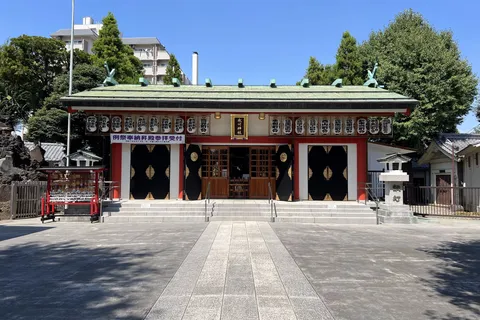
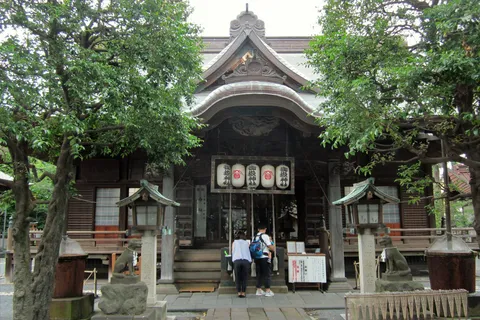
In 1910 the Gongendai hill was cut away to become a railway works site, and the shrine hall was moved to Raifuku-ji in Oi Motoshiba. Parishioners and former devotees later worked to restore it, and the official site says the hall was completed in October 1925, when Kanayamahiko no Mikoto, Kanayamahime no Mikoto and Takehaya Susanoo no Mikoto were enshrined in a re-enshrinement ceremony. The present hall is said to have been completed in 1988, and a procession for the 30th anniversary of the re-enshrinement was held in May 2019. 2026 is 100 years since 1925, and Time Out Tokyo describes the April 2026 festival as a milestone marking 100 years at the present site.
Highlights
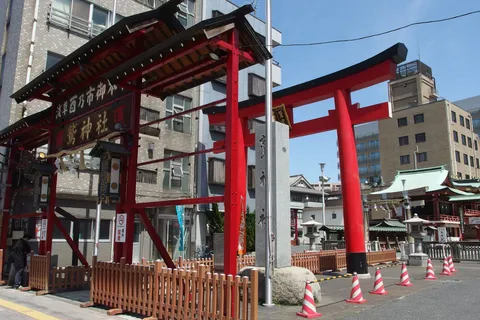
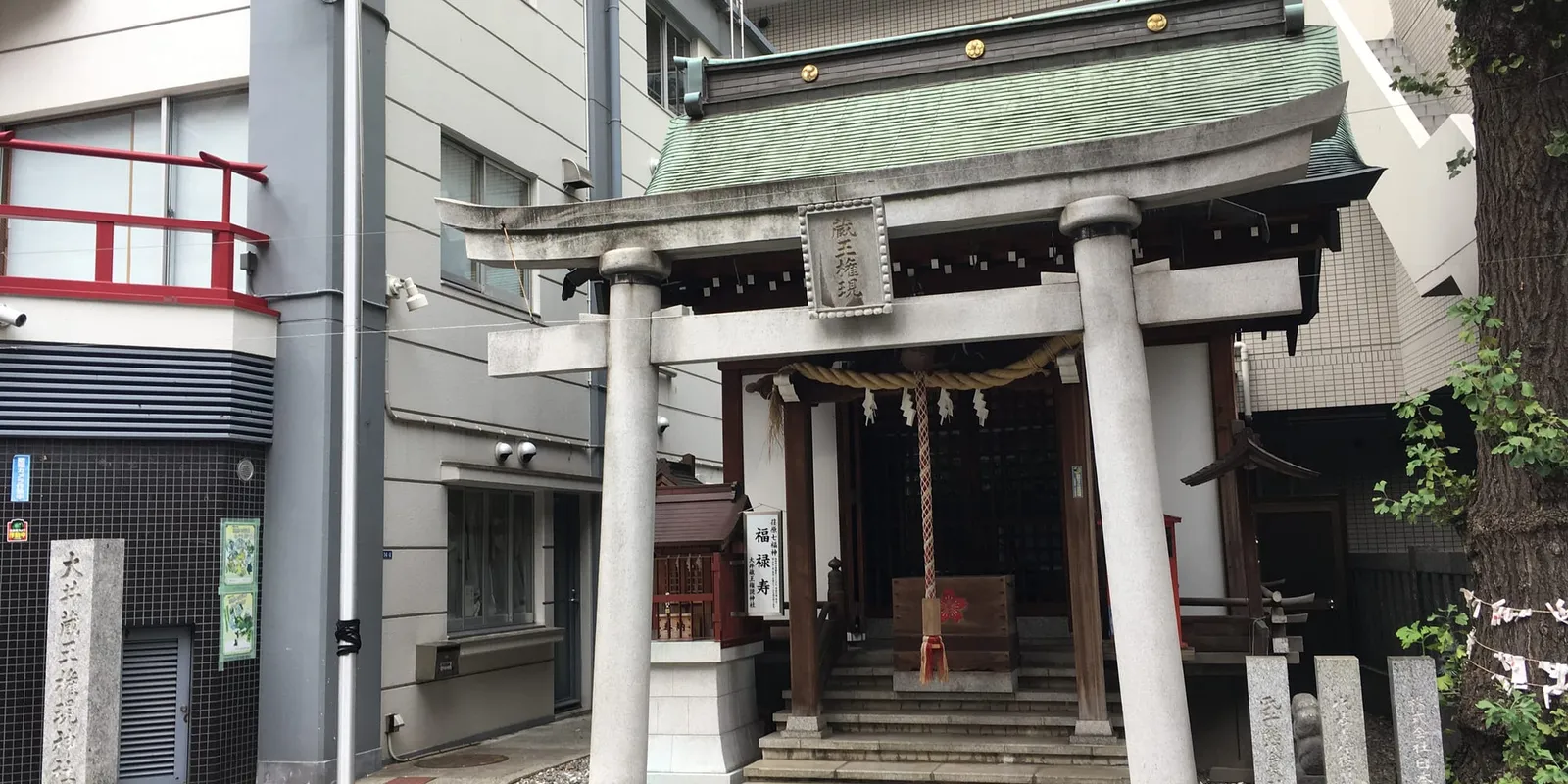
According to the official site, a stone shrine carved “Zao Daigongen” is kept at the back right of the altar inside the hall. Fukurokuju, one of the Seven Lucky Gods, is also enshrined together with Zao Gongen, and the torii and hall stand compactly facing the street.
The shrine’s main mikoshi is described on the official site as a rare, brightly colored one with carvings on its body. The carvings are said to depict Emperor Go-Daigo of the Nanboku-cho period, who is linked to the shrine, and Kusunoki Masashige and his son Masatsura.
The “tengu mikoshi” is a handmade portable shrine by volunteer parishioners, made after the story that when plague and fire struck the Oi village long ago, the “Akaguma Tengu” guarding the shrine came to the village’s aid. According to the official site, young men in white face powder, rouge, and women’s under-kimono walk through town driving away misfortune, and this has become a local feature. The shrine also has a preservation society for “Gongen Taiko” drumming, whose members give dedicated performances such as the Tengu Taiko.
Visiting Tips
The official site gives no visiting hours for the grounds, and lists phone hours for the shrine office as weekdays 1:00 PM–5:00 PM (tel. 03-3771-5288). Parts of the official site have not been updated (the event schedule is still for fiscal 2023, and the topics are from 2024), so it is wise to check the shrine’s Instagram (@oi.zaogongen, introduced by Time Out Tokyo as the official Instagram) for the latest.
For goshuin, the official site shows the shrine’s goshuin, a Fukurokuju goshuin, seasonal goshuin, and limited editions for the Setsubun festival and the April grand festival. The fee and hours are not stated on the official site. According to Time Out Tokyo, the shrine takes part in the Tokyu-line “Flower Goshuin” rally, and the monthly flower-water-basin goshuin can be checked on the shrine’s Instagram.
It is about a 5-minute walk from Oimachi Station (JR Keihin-Tohoku Line, Tokyu Oimachi Line, Rinkai Line) (per Time Out Tokyo). The official site gives no parking information.
Annual Festivals
The latest event schedule on the official site is for fiscal 2023, and dates may change from year to year.
- New Year’s Day service (January 1): “New Year’s Day service and hama-ya arrow release” in the official fiscal 2023 schedule. The official site describes dedicated performances by the Gongen Taiko society, a serving of amazake, and the “Hamaya Hosha no Gi” arrow-release rite.
- Setsubun festival (February 3): Listed as “Setsubun Tsuina-shiki” in the official fiscal 2023 schedule. The activity report for that year says bean-throwing took place after the ceremony.
- Grand festival, “Tengu Matsuri” (April, third Saturday and Sunday): On the official site, 2023 was April 15–16. Time Out Tokyo says it is held on the third Saturday and Sunday of April each year (described as a festival started by local volunteers around 1995). For 2026 it lists a shrine maiden dance and music on the 18th with a children’s mikoshi and float procession, followed on the 19th by a procession of the mikoshi bearing a giant tengu face, a children’s procession, and more. The official site describes the tengu mikoshi as “every other year,” so note that the information differs.
- Fukurokuju Festival (early October): A float carrying the Fukurokuju statue goes around the neighborhood. The official fiscal 2023 schedule says October 2, while the same site’s activity report says October 1.
- Gongen Market (October 30): Listed in the official fiscal 2023 schedule. No further details are given.
Nearby Food & Sightseeing
- Dining streets around Oimachi Station: Time Out Tokyo describes Oimachi as a place where alleys dating back to the postwar black markets run in all directions, lined with standing bars and other eateries. A good stop after your visit.
- Kashima Shrine: A shrine in the same Oi district of Shinagawa (Oi 6-chome). The official site of Oi Zao Gongen Shrine also mentions Kashima Shrine as a place name along the old Tokaido road.
Frequently Asked Questions
- Q. What are the visiting hours?
- A. The official site gives no visiting hours for the grounds. It lists the shrine office's phone hours as weekdays 1:00 PM–5:00 PM (tel. 03-3771-5288). It is a small shrine tucked between homes and buildings, so if you want a goshuin it is wise to check the shrine's Instagram or call beforehand.
- Q. Can I get a goshuin at Oi Zao Gongen Shrine?
- A. The official site shows the shrine's goshuin, a goshuin for Fukurokuju (one of the Seven Lucky Gods), seasonal goshuin, and limited editions for the Setsubun festival and the April grand festival. The fee and hours are not stated on the official site. According to Time Out Tokyo, the shrine takes part in the Tokyu-line "Flower Goshuin" stamp-rally, and the monthly flower-water-basin goshuin can be checked on the shrine's Instagram (@oi.zaogongen).
- Q. How do I get there, and is there parking?
- A. The address is 1-14-8 Oi, Shinagawa. It is about a 5-minute walk from Oimachi Station (JR Keihin-Tohoku Line, Tokyu Oimachi Line, Rinkai Line), past a shopping street and between buildings (per Time Out Tokyo). The official site does not mention parking, so going by train is the safer choice.
- Q. What is the Tengu Festival, and when is it held?
- A. The grand festival is also called the "Tengu Matsuri" (Tengu Festival), and Time Out Tokyo says it is held on the third Saturday and Sunday of April each year (April 18–19 in 2026). According to the official site, it recalls a story that when plague and fire struck the Oi village long ago, the shrine's guardian "Akaguma Tengu" came to the village's aid; a tengu mikoshi built by hand by volunteer parishioners is carried. The official site, however, describes the tengu mikoshi procession, with young men in white face powder and women's under-kimono, as held "every other year," so what you see may differ from year to year.
- Q. Why is it called "Gongen-sama"?
- A. The nickname appears to come from Zao Gongen (a gongen deity), who is enshrined here, and Time Out Tokyo says local residents of Oimachi affectionately call the shrine "Gongen-sama." According to the official site, this area (Hiromachi and Oi 1-chome) was formerly called "Gongendai," and Zao Gongen is said to have been worshipped in the "Gongen no Mori" (Gongen grove) at the top of the hill. A stone shrine carved "Zao Daigongen" is said to be kept inside the hall.
Plan Your Visit
Before you go, you can book a stay and get your shrine-visit items ready.
Amazon links open Amazon.co.jp (Japan) in English; whether an item ships overseas depends on the product.
※ Contains ads (PR). Links open external sites such as Amazon, Rakuten, Trip.com and Booking.com.