History
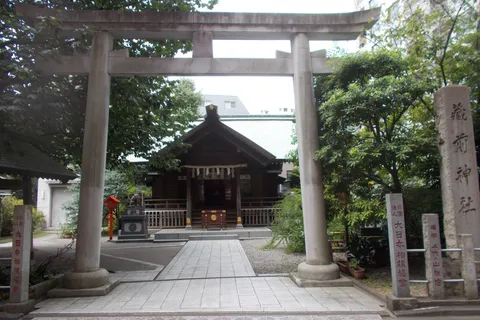
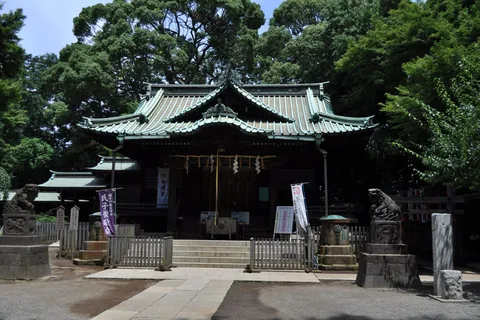
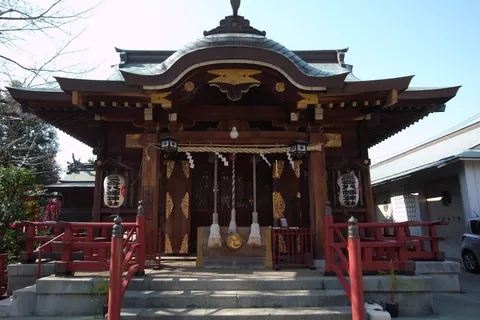
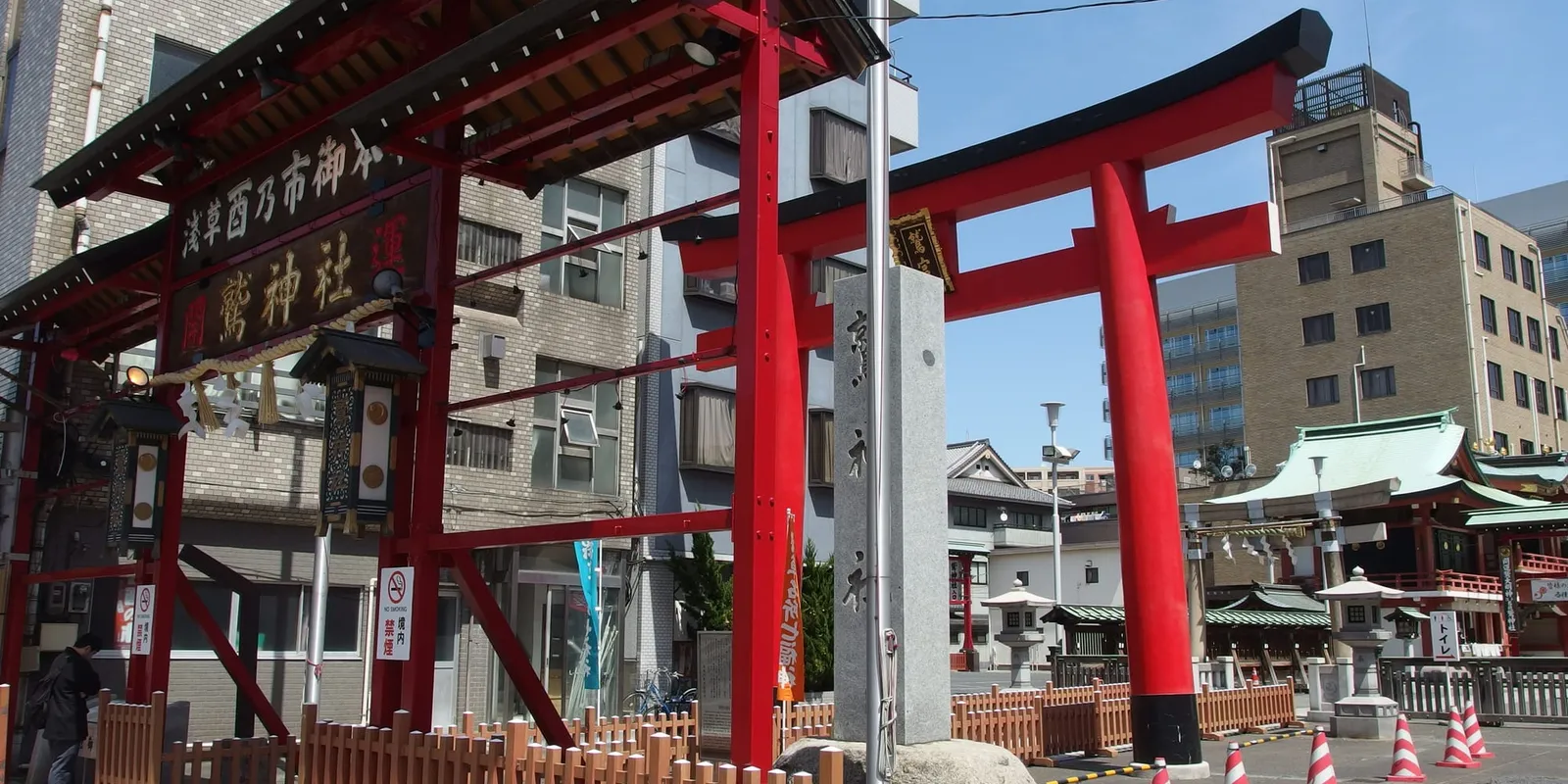
Otori Shrine stands in Senzoku 3-chome, Taito Ward, Tokyo, and is known nationwide for its November Tori-no-Ichi. It is read “Otori Jinja” and locally affectionately called “Otori-sama.” The enshrined deities are Ame no Hiwashi no Mikoto and Yamato Takeru no Mikoto.
According to the official site, shrine tradition holds that when Amaterasu hid in the Heavenly Rock Cave, an eagle perched on the end of a stringed instrument (gen) played in front of the cave; the gods rejoiced at it as an omen that would brighten the world, and the god in charge of that instrument came to be called Ame no Hiwashi no Mikoto, with the character for “eagle” (washi) in his name. He is said to be a god of great virtue in opening up land, good fortune, industry and business prosperity, and to have been enshrined here.
Later, the story goes, Yamato Takeru stopped at the shrine during his campaign against the eastern tribes to pray for victory and, on his way home after succeeding, hung his weapon, a rake (kumade), on the pine in front of the shrine to celebrate and give thanks. That day was a Day of the Rooster in November, so it was set as the shrine’s festival day, which is said to be the origin of the “Tori no Matsuri” (Tori-no-Ichi); because of this episode Yamato Takeru also became one of the enshrined deities, the official site says. These are traditions from the shrine’s own account, and the official site gives no founding year.
The official site also says the Edo-period “Toto Saijiki” records the bustle of the festival and shows that it was already very lively by the Horeki–Meiwa years (1750s–1760s). The shrine calls itself the “source and birthplace” of Tori-no-Ichi, but the official “Tori-no-Ichi trivia” page also notes that the Tori-no-Ichi markets that have continued since the Edo period were at three places, calling Owashi Jinja (大鷲神社) in Hanahata, Adachi Ward the “Kami-tori” (upper), Shosenji in Senju the “Naka-tori” (middle), and Otori Shrine in Asakusa the “Shimo-tori” (lower); the Senju market later closed.
An encyclopedia entry (Wikipedia) adds that the shrine began as a shrine to the eagle (Washi no Miya) enshrined in the neighboring temple Chokokuji, and became independent of the temple as Otori Shrine at the Meiji-era separation of Shinto and Buddhism. Chokokuji is said to have served as the shrine’s administrator temple (bettō) in the Edo period.
Highlights
Tori-no-Ichi and kumade: The Tori-no-Ichi begins with the “first drum” struck at midnight on the Day of the Rooster in November and lasts a full day. The official “trivia” page says there are about 150 kumade stalls and about 750 other stalls, with 700,000–800,000 visitors a year, and the shrine itself says it takes pride in being number one in Japan in scale and bustle. The shrine’s own kumade amulet (kakkome), issued only during Tori-no-Ichi, is regarded as a divided spirit of the deity and is a charm for good fortune and business prosperity. It is issued from the first drum at midnight, and the “first luck” (Ichiban-fuku) is limited to three: whoever first receives a kumade amulet gets a “first-place tag” that is exchanged for a 24-karat pure-gold koban ornament (per the official “This Year’s Tori-no-Ichi” page).
No. 1 on TV Tokyo’s “Shutsubotsu! Ad-machic Tengoku”: In the January 18, 2025 (Saturday) broadcast on Asakusa Senzoku of TV Tokyo’s “Shutsubotsu! Ad-machic Tengoku” (Adomachi), Otori Shrine was introduced at No. 1 (per the program’s official page). That page says the Asakusa Tori-no-Ichi, one of the three major Edo Tori-no-Ichi, is held every November; that a kumade described as “Japan’s number-one Edo-style decorated kumade” is displayed at the shrine office; and that the large “Nade-Okame” in front of the main hall is a lucky charm that brings various blessings depending on where it is stroked.
Nade-Okame: According to the official site, the blessings of the Okame face are said to differ by where you stroke it. The forehead makes you wiser, the eyes bring foresight, the nose brings financial luck, the right cheek brings success in love, the left cheek brings health, the mouth wards off misfortune, and stroking clockwise from the chin is said to smooth things over. Since this is a shrine of business prosperity, the nose is said to be stroked the most. The official site explains that Okame is said to be Ame no Uzume, who danced before the Heavenly Rock Cave, and has long been used as a symbol of a woman who brings good fortune, so she is attached to the lucky kumade of the Tori-no-Ichi.
Washi-mai: A shrine-original ground dance (jimai) in which a dancer wearing a sharp-eyed eagle mask performs vigorously, holding a bell in one hand and a kumade with an Okame in the other (first performed in 2013). During Tori-no-Ichi it is scheduled for three performances: just after midnight (after the first drum), around 6 PM and around 8 PM (subject to change depending on crowding, per the official site).
Monuments in the grounds: The grounds hold a literary monument to Higuchi Ichiyo, a haiku monument by Kikaku (“Haru wo matsu koto no hajime ya Tori-no-Ichi”) and one by Masaoka Shiki (“Zatto ya kumade oshiau Tori-no-Ichi”), among others (official site, “Grounds Guide”). The official site also notes that Ichiyo’s novel “Takekurabe” describes the bustle of the shrine on a San no Tori.
Visiting Tips
Tori-no-Ichi 2026 dates: According to the official site, Ichi no Tori is Saturday, November 7 and Ni no Tori is Thursday, November 19; in Reiwa 8 (2026) there are only two. Hours are midnight to 24:00 each day. The Tori-no-Ichi rites (the Yoimiya Kaiun Fukuju-sai from 11:15 PM on November 6 and 18, and the Washi-matsuri special rite from 1:00 PM on November 7 and 19) require advance reservation to attend (check in 15 minutes before). Tori-no-Ichi prayers are also held on request throughout; offerings start at ¥5,000, limited to five people per family or group. The official page prints the day of the week for the second Washi-matsuri as “Wed,” but November 19 is a Thursday.
How to buy a kumade: The official “Tori-no-Ichi trivia” page says the usual way is to receive the shrine’s kumade amulet first, then buy a lucky kumade and enshrine them together at home or on a household altar. Walk once around the grounds, compare the types and number of decorations, decide on a design and budget, then negotiate with the stall. Prices start at around ¥1,000 for small ones and reach several hundred thousand yen for large ones, with best-sellers said to be roughly ¥20,000–¥50,000 (same page). In the old days it was thought stylish to leave the amount you had bargained off as a tip (goshugi), and once a deal is made the buyer and seller perform a teshime hand-clapping ritual to pray for the prosperity of the household or company. It is also said that people start with a small one and move up gradually as their business grows. The official site says the blessings are the same whichever Rooster day you visit.
Crowds and mindset: Tori-no-Ichi is extremely busy, with 700,000–800,000 visitors a year, and runs from the dead of night through the whole day. The official site says that, to avoid accidents and confusion, it stopped showing the Nade-Okame in front of the shrine office during Tori-no-Ichi starting in 2015 (at other times it stands in front of the worship hall). We found no consolidated crowd or safety guidance on the official site, so follow the day’s instructions and staff, and watch your valuables and your footing.
Goshuin: The official site has no goshuin page, so hours and fees could not be confirmed. Several visitor accounts and guide sites say the regular goshuin is ¥500, that the visitors’ counter is on the first floor of the kagura hall (to the left of the approach), and that it is open around 9:00 AM–4:00 PM. There are also reports that a limited Tori-no-Ichi goshuin was issued as a pre-written sheet for ¥500, though this may change by year. The shrine is also a stop on the Asakusa Seven Lucky Gods pilgrimage, enshrining Jurojin (per the official site’s Seven Lucky Gods page), and visitor accounts mention a Jurojin goshuin separate from the regular one. Please check with the shrine beforehand.
Access and parking: The official site’s directions are about 6–7 minutes on foot from Exit 3 of Iriya Station on the Hibiya Line, about 8 minutes from Asakusa Station on the Tsukuba Express, and about 15 minutes from Tawaramachi Station on the Ginza Line. Toei buses and the Taito Ward loop bus “Meguri-n” also serve the area. An encyclopedia entry says it is about 10 minutes on foot from Minowa Station on the Hibiya Line as well. No parking is provided on Tori-no-Ichi days, and the official site asks visitors to use public transport.
Annual Festivals
The main annual events listed on the official site’s yearly calendar:
- Tori-no-Ichi (November Days of the Rooster): The main festival. In 2026, November 7 (Sat) and November 19 (Thu), with the Yoimiya Kaiun Fukuju-sai the night before (November 6 and 18).
- Monthly service (1st and 15th of each month)
- New Year’s Day rite (January 1) / first Rooster day rite (the first Day of the Rooster in January)
- New Year visits, seven-herb porridge and rice-pounding event (January 1–7; porridge on January 7): As one of the Asakusa Seven Lucky Gods shrines it issues talismans from New Year’s Day to January 7. For 2026, a seven-herb porridge and rice-pounding event was scheduled for January 7 (Wed), 11:00 AM–3:00 PM, and the official site also listed Washi-mai performances.
- Setsubun Festival (February): The official site listed two bean-throwing sessions, at 3 PM and 4 PM on February 3 (Tue) in 2026.
- Toshigoi-sai (February 23)
- Nagoshi no Oharae (June 30) / year-end Great Purification (December 31)
- Niiname-sai (the first Day of the Rooster in December)
The “Shitamachi Hachifukujin” pilgrimage in which the shrine took part has been paused for the time being since Reiwa 6 (2024), according to the official site.
Nearby Food & Sightseeing
- Chokokuji: The temple next door to Otori Shrine, said to belong to the Hokke-shu Honmon-ryu sect, at Senzoku 3-19-6. It is said to have served as the shrine’s administrator temple in the Edo period and separated from it at the Meiji-era separation of Shinto and Buddhism. During Tori-no-Ichi, stalls are reported to line the street from the shrine to the temple. It also appears as the neighbor of Otori Shrine in the TV Tokyo “Shutsubotsu! Ad-machic Tengoku” episode of November 15, 2008 on Asakusa Senzoku (per the program’s official page), which says that only in years with a San no Tori does Chokokuji hand out a “fire-prevention charm.”
- Yoshiwara Shrine: A shrine also in Senzoku, introduced at No. 5 in the January 18, 2025 Adomachi episode on Asakusa Senzoku mentioned above (per the program’s official page). A good companion for a stroll through Senzoku, where the Shin-Yoshiwara district stood in the Edo period.
- Sensoji: Asakusa’s best-known Buddhist temple, easy to combine with a visit to Otori Shrine for a full day in Asakusa.
- Tori-no-Ichi street snacks: According to the official site, yatsugashira (a taro-family root, called “head-taro” for the luck of rising to the top) and kirizansho (sweet rice-cake sticks flavored with sansho pepper) have long been Tori-no-Ichi specialties. As of the date of that page, however, only one shop in the grounds sold each.
Frequently Asked Questions
- Q. When is Tori-no-Ichi in 2026?
- A. According to the official site, the first Rooster day (Ichi no Tori) is Saturday, November 7 and the second (Ni no Tori) is Thursday, November 19, 2026. There is no third (San no Tori). The festival runs from midnight to 24:00 on each day and begins with the first drum at midnight.
- Q. How do I buy a kumade rake, and how much does it cost?
- A. The official site's Tori-no-Ichi trivia page suggests walking once around the grounds first, deciding on a design and budget, and then negotiating with a stall. Small ones start at around ¥1,000 and large ones can reach several hundred thousand yen, with best-sellers said to be roughly ¥20,000–¥50,000. In the old days it was considered stylish to leave the amount you had bargained off as a tip (goshugi), and once a deal is made the sale is sealed with a hand-clapping ritual (teshime). Note that the kumade amulet (kakkome) the shrine itself gives out is available only during Tori-no-Ichi and is separate from the lucky rakes sold at the stalls.
- Q. What does each part of the Nade-Okame bring when stroked?
- A. The official site says the forehead makes you wiser, the eyes bring foresight, the nose brings financial luck, the cheek on your right brings success in love, the left cheek brings health, the mouth wards off misfortune, and stroking clockwise from the chin is said to smooth things over. During Tori-no-Ichi the shrine has stopped showing it in front of the shrine office to avoid accidents and confusion; at other times it is said to stand in front of the worship hall (per the official site).
- Q. Can I get a goshuin?
- A. The official site has no goshuin page, so hours and fees are unconfirmed. Several visitor accounts and guide sites report ¥500 for the regular goshuin and a limited goshuin for Tori-no-Ichi issued as a pre-written sheet for ¥500, but this may change by year and season. Please check with the shrine before you go.
- Q. Has the shrine been on TV?
- A. Yes. On TV Tokyo's "Shutsubotsu! Ad-machic Tengoku" (Adomachi), in the January 18, 2025 (Saturday) broadcast on Asakusa Senzoku, Otori Shrine was introduced at No. 1 (per the program's official page). The page says the Asakusa Tori-no-Ichi, counted as one of the three major Edo Tori-no-Ichi, is held every November, and that the large Nade-Okame in front of the main hall is a lucky charm that brings various blessings depending on where it is stroked.
Plan Your Visit
Before you go, you can book a stay and get your shrine-visit items ready.
Amazon links open Amazon.co.jp (Japan) in English; whether an item ships overseas depends on the product.
※ Contains ads (PR). Links open external sites such as Amazon, Rakuten, Trip.com and Booking.com.