History
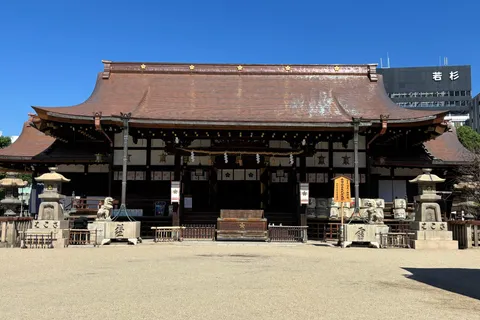
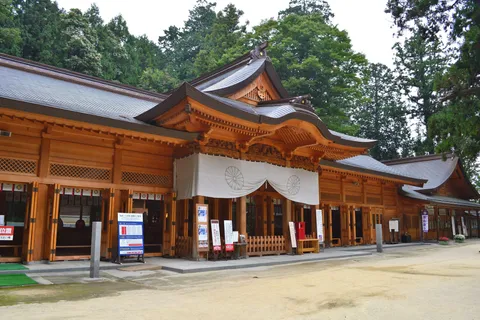
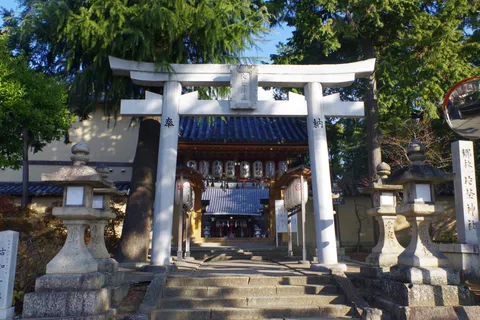
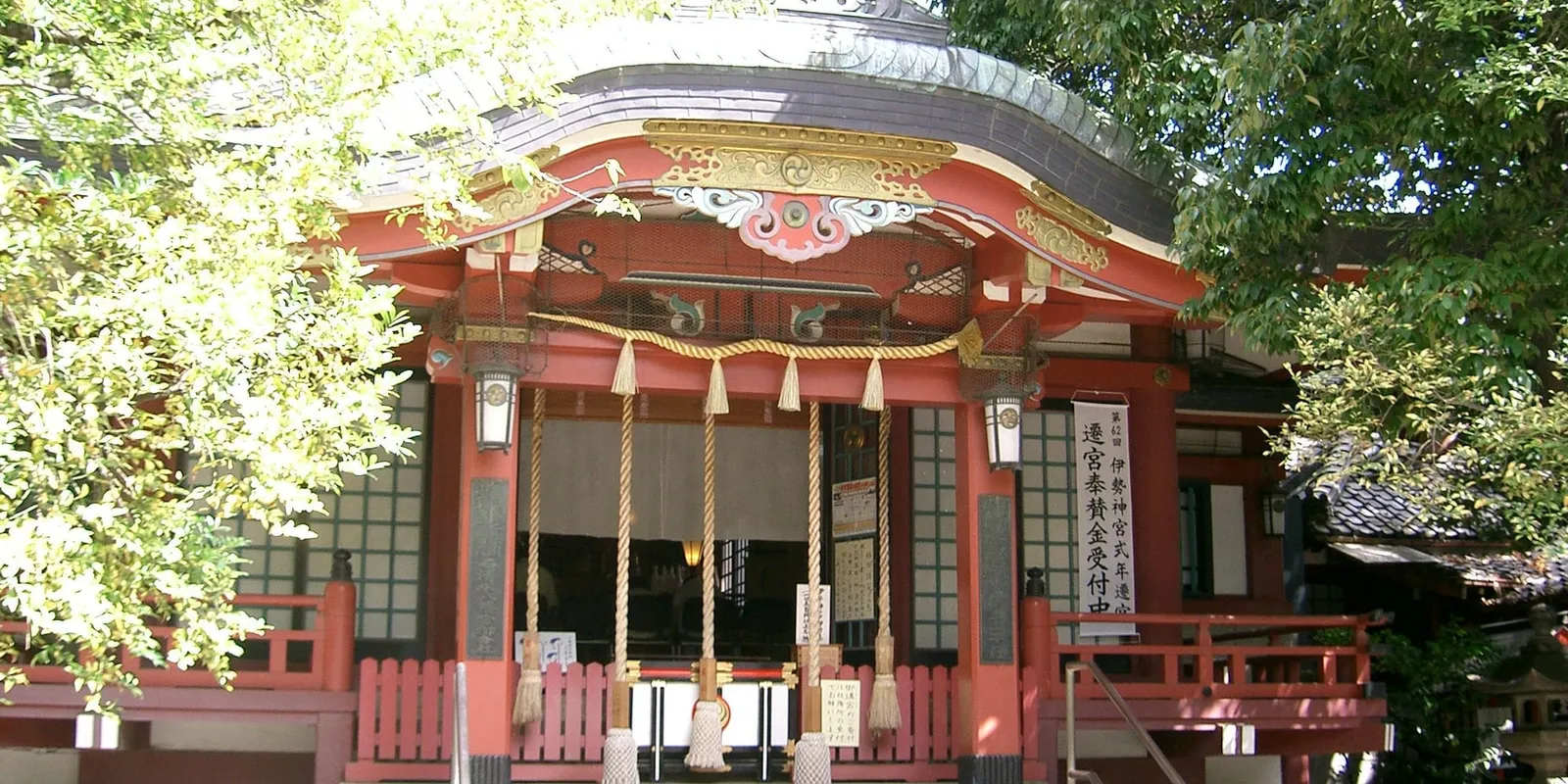
Abeoji Shrine stands along the Kumano Kaido in Abeno Ward, Osaka, and its name is read “Abeoji-jinja” (the reading is given in the history page of the official site). According to the official site, it is said to have been founded by Emperor Nintoku, and one theory holds that it was founded by the Abe clan, who had their base in Abeno since ancient times. The official site’s wedding-ceremony page names the enshrined deities as the two great kami Izanagi and Izanami, described as kami of marital harmony.
According to the official history, in the early Heian period the monk Kobo Daishi Kukai performed a prayer ritual here to ward off an epidemic, by imperial order of Emperor Junna. When Kumano faith flourished in the late Heian period, so many Oji shrines arose along the route from Kyoto to Wakayama that they were called the “Kumano Ninety-nine Oji,” and this shrine became “Abeno Oji.” Despite changes after the conflicts of the Nanboku-cho period, it kept the faith of the people as the local guardian deity of Abeno and is said to have been called the “Kumano Second Oji” in the Edo period. Some tourism sites call it the “Fourth Oji” of the Kumano Ninety-nine Oji, so the numbering differs by source.
In the Meiji era it was renamed Oe Shrine and became a village shrine; in 1907 it merged with Otokoyama Hachiman Shrine from Azuchi-machi in the old Higashi Ward and was renamed Oe Hachiman Shrine; in 1911 it returned to the name Abeoji Shrine, and in 1913 it became a district shrine. In 1970 the shrine buildings and assembly hall were built and the sacred precinct was put in order. The official site states that it is now the only Oji shrine in Osaka Prefecture that survives at its original location.
Highlights
On its history page the official site lists as “historic sites” the former Kumano Kaido and “the only Kumano Oji shrine in Osaka Prefecture surviving at its original site,” both recognized by Osaka City, and a stone marker for the former Kumano Kaido stands near the entrance to the approach. As protected trees, the site lists three large camphor trees about 600 years old, two more camphor trees and one enoki tree, recognized by Osaka City.
The shrine’s picture scroll, the “Sesshu Higashinari-gun Abe Gongen Engi,” is about 10 m 65 cm long. According to the official site, it is a copy made in 1714 (Shotoku 4) of an original dated 1559 (Eiroku 2). In its foundation legend, a child messenger of the Kumano deity appears in Emperor Nintoku’s dream and tells him to build a shrine on the island the god shows him; a crow with a white head and three legs, a Yatagarasu, is found perched in a pine on Abe Island, and a shrine to the Kumano deity is built. The official site also mentions a statue of the Yatagarasu deity and a memorial stone for the Tennoji turnip, a traditional Naniwa vegetable, in the grounds.
Kuzunoha Inari Shrine is also enshrined in the grounds, and its first-horse-day festival is held each April. Abe Seimei Shrine, by contrast, is a detached subsidiary shrine of Abeoji Shrine on a separate site at 5-16 Abenomotomachi (the official site places it about 50 m before Abeoji Shrine). It is regarded as the traditional birthplace of the Heian-period onmyoji Abe no Seimei, and Abe Seimei Shrine’s own official site says it is said to have been founded in 1007 (Kanko 4) by Retired Emperor Kazan.
It is also one of the venues of the TV anime わたしの幸せな結婚 (special edition) shrine and temple collaboration (per the organizer Fuuuu’s event page; see the FAQ).
Visiting Tips
Prayer services in the main hall need no reservation and are accepted every day from 9:00 AM to 3:30 PM (open all year) at the counter. The fee is ¥6,000 per prayer, covering requests such as protection from misfortune, protection from all directions, recovery from illness, traffic safety and safe childbirth. The official site says the shrine has long been revered as a deity of warding off misfortune, with especially many visitors from January 1 to Setsubun. A first shrine visit for a baby starts from ¥10,000, and Shichi-Go-San prayers are accepted from October 1 to November 30 at ¥8,000 for one child (¥14,000 for two siblings). The Shichi-Go-San prayer takes about 20 minutes, and the official announcement says weekend lunchtimes are the busiest. Shinto weddings start from ¥80,000 (reservation required).
Offerings include shrine talismans, various amulets, the Yatagarasu fortune slip (¥700) and the crow ema (¥700); the good-relationships amulet is ¥700 and the pentagram protection sticker amulet is ¥500. The official top page also lists goshuin, but the fee and hours of the regular goshuin are not stated separately.
There are only a few parking spaces, and nearby parking is recommended when the lot is full or during festivals. It is about a 5-minute walk from Higashi-Tengachaya Station on the Hankai Tramway (per the Osaka tourism site), so going by train is convenient.
Annual Festivals
Main events from the official site’s annual schedule (dates and times as given there):
- Monthly festival and Yutate rite (1st and 15th of each month, January: 2nd and 15th / 10:00 AM): A hot-water ritual (Yudate Shinji, also called “Oyu Kagura”) is performed.
- New Year Festival (January 1–3): Lucky New Year rice cakes are given out at 2:00 PM on January 3.
- Setsubun Festival and fire ritual (the day before Risshun / 7:00 PM): Lucky beans (five-colored beans) are given out, and a fire ritual for warding off misfortune and bringing good luck is held.
- Kuzunoha Inari Shrine first-horse-day festival (first horse day in April / 1:30 PM): The festival of Kuzunoha Inari Shrine in the grounds, with red-and-white votive lanterns lined up.
- Abe Seimei Shrine Tanabata Festival (July 7 / 2:00 PM): Held as a star festival for Seimei.
- Summer festival (July 27 eve, July 28): On the 28th, the summer grand festival of parishioners (noon) and the mikoshi procession (departing 1:00 PM, touring Abeno Ward), with night stalls in and around the grounds from 4:00 to 10:00 PM on the 27th and 28th.
- Abe Seimei Shrine Grand Festival (September 26 / 2:00 PM)
- Shichi-Go-San reception (October 1 to the end of November)
- Autumn grand festival (October 15 / ceremony at 1:00 PM): October 14 is the eve. On the national holiday near the festival (Sports Day), the Kannagi Festival brings a mikoshi and lion procession, and the “Abeno Oji Minori Market” is held in the grounds.
- Parishioner youth association rice-cake pounding (a Sunday in mid-December / 2:00 PM): Small rice cakes are given to worshippers.
Dates can change, so check the “Events” page of the official site for the latest.
Nearby Food & Sightseeing
- Abe Seimei Shrine: A detached subsidiary shrine of Abeoji Shrine, about 50 m before it according to the official site. It is regarded as the traditional birthplace of Abe no Seimei, and Abeoji Shrine’s official announcement says there is a fortune-telling corner inside its shrine office (daily 1:00–4:30 PM, consultation fee from ¥2,000 per case).
- Kumano Kaido (around Abeno): The pilgrimage route from Kyoto toward Kumano; the official site presents Abeoji Shrine as an Oji shrine along the Kumano Kaido. Walking the road lets you trace the history of the Oji shrines.
- Hankai Tramway Higashi-Tengachaya Stop: The nearest tram stop (about a 5-minute walk to the shrine, per the Osaka tourism site).
Frequently Asked Questions
- Q. What are the visiting hours and when can I book a prayer service?
- A. According to the official site, the shrine office is open 9:00 AM–5:00 PM. Prayer services in the main hall need no reservation: they are accepted every day from 9:00 AM to 3:30 PM (open all year), and you tell the counter you would like a prayer. The fee is ¥6,000 per prayer, and requests such as protection from misfortune, protection from all directions, recovery from illness, traffic safety and safe childbirth are accepted. Opening hours for the grounds themselves are not stated on the official site.
- Q. Can I get a goshuin at Abeoji Shrine?
- A. The official site's top page lists goshuin among its amulets and offerings. However, the fee and hours for the regular goshuin are not stated separately on the official site (the shrine office is open 9:00 AM–5:00 PM). A special New Year goshuin is issued each year, and the official announcement says the 2026 "Shinme" (sacred horse) goshuin was ¥1,000, limited to 1,000. According to the official site of Abe Seimei Shrine, when its own amulet counter is unstaffed, goshuin and amulets are handed out at Abeoji Shrine (Abe Seimei Shrine's shrine office is open 11:00 AM–4:00 PM).
- Q. How do I get there, and is there parking?
- A. According to the Osaka tourism site, it is about a 5-minute walk from Higashi-Tengachaya Station on the Hankai Tramway Uemachi Line, or about 15 minutes on foot from Exit 4 of Showamachi Station on the Osaka Metro Midosuji Line. The official site says that if you go up the slope from the tram and follow the Kumano Kaido, you first reach Abe Seimei Shrine, and about 50 m further on you reach Abeoji Shrine. There are only a few parking spaces, and when the lot is full or during festivals nearby parking is recommended.
- Q. How is it related to Abe Seimei Shrine?
- A. According to the official site, Abe Seimei Shrine is a detached subsidiary shrine (kengai massha) of Abeoji Shrine. It stands at 5-16 Abenomotomachi, a separate site from Abeoji Shrine (9-4), and has its own official website (abeseimeijinjya.jp). It enshrines Abe no Seimei and is recognized by Osaka City as the traditional birthplace of Abe no Seimei. Abeoji Shrine's official site also notes that Kuzunoha Inari Shrine stands within Abeoji Shrine's own grounds.
- Q. Is Abeoji Shrine part of the わたしの幸せな結婚 anime shrine collaboration?
- A. According to the organizer Fuuuu's event page, Abeoji Shrine is one of the venues of the shrine and temple collaboration for the TV anime わたしの幸せな結婚 (special edition), held October 16 to November 30, 2026, with distribution hours of 9:00 AM–5:00 PM. Original amulets and goshuin are distributed in the event; at Abeoji Shrine payment is cash only, no numbered tickets are handed out, and there is no online sale. Sold-out information is posted on Fuuuu's official X account, and people are asked not to inquire at the shrines. Details can change without notice, so check the organizer's page and the shrine's official site for the latest.
Plan Your Visit
Before you go, you can book a stay and get your shrine-visit items ready.
Amazon links open Amazon.co.jp (Japan) in English; whether an item ships overseas depends on the product.
※ Contains ads (PR). Links open external sites such as Amazon, Rakuten, Trip.com and Booking.com.