History
Katano Shrine (Katano-jinja) stands in Makinosaka, Hirakata, Osaka. According to the Shinto shrine association’s page, it is an Engishiki-listed ancient shrine, on land that was once Makisato-saka village in Katano District, Kawachi Province. The official site names Takehayasusanoo no Okami, Sugawara no Michizane, and Kotoshironushi no Okami and nine other deities, and its history says that deities of neighboring shrines were enshrined here in the Meiji era.
According to the history on the official site, the shrine began in the reign of the 11th emperor, Suinin, when Nomi no Sukune of Izumo received this land and enshrined Takehayasusanoo no Okami as the guardian deity of the Haji clan. In the reign of Emperor Kinmei it was granted the name “Katano Shrine” and became the tutelary shrine of Katano District, and the Engishiki (927) lists it as a small Engishiki shrine. Sugawara no Michizane was enshrined alongside in 960, and in the late Heian period it is said to have changed its name to “Ichinomiya.” It suffered war fires in the Kamakura and Muromachi periods, repeatedly falling into ruin and being rebuilt, and in the Meiji era neighboring shrines were merged into it and the original name “Katano Shrine” was restored, which remains the name today.
Its ties to the Toyotomi family are central to its history. The official site says that in 1583 Toyotomi Hideyoshi designated it as the guardian of the “demon gate” (northeast) of Osaka Castle, which also made it known as a shrine for warding off bad directions. In 1602 Toyotomi Hideyori sponsored a major reconstruction of the main hall and other buildings. Hirakata City’s cultural property information likewise says that, based on the ridge-tag, Hideyori rebuilt the present main hall with Katagiri Katsumoto as general supervisor. In the Edo period it was also called “Ichinomiya Gozu Tenno,” and the shrine association’s page adds a note that a separate shrine nearby, “Ichinomiya Tennosha,” should not be confused with it.
Highlights
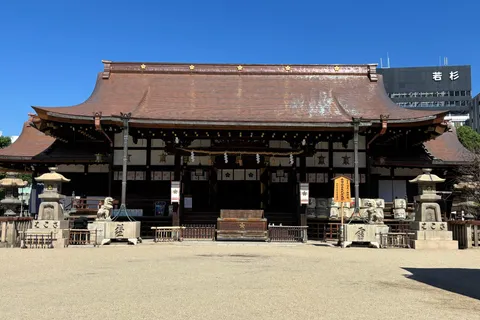
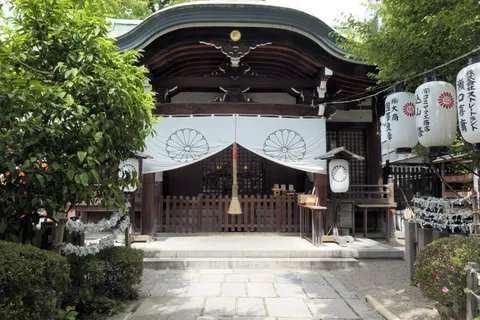
The main attraction is the main hall, a national Important Cultural Property. According to Hirakata City, it is a three-bay nagare-zukuri building with a cypress-bark roof, and it preserves the splendid Momoyama style, with vermilion lacquer and richly colored carvings. The city’s material says the frog-leg struts (kaerumata) on all four sides carry carvings such as bamboo and tiger and peonies, and that the Toyotomi paulownia crest can be seen on the east gable. The roof was re-thatched and the paintwork redone around 2009–2011 (sources differ on the exact years).
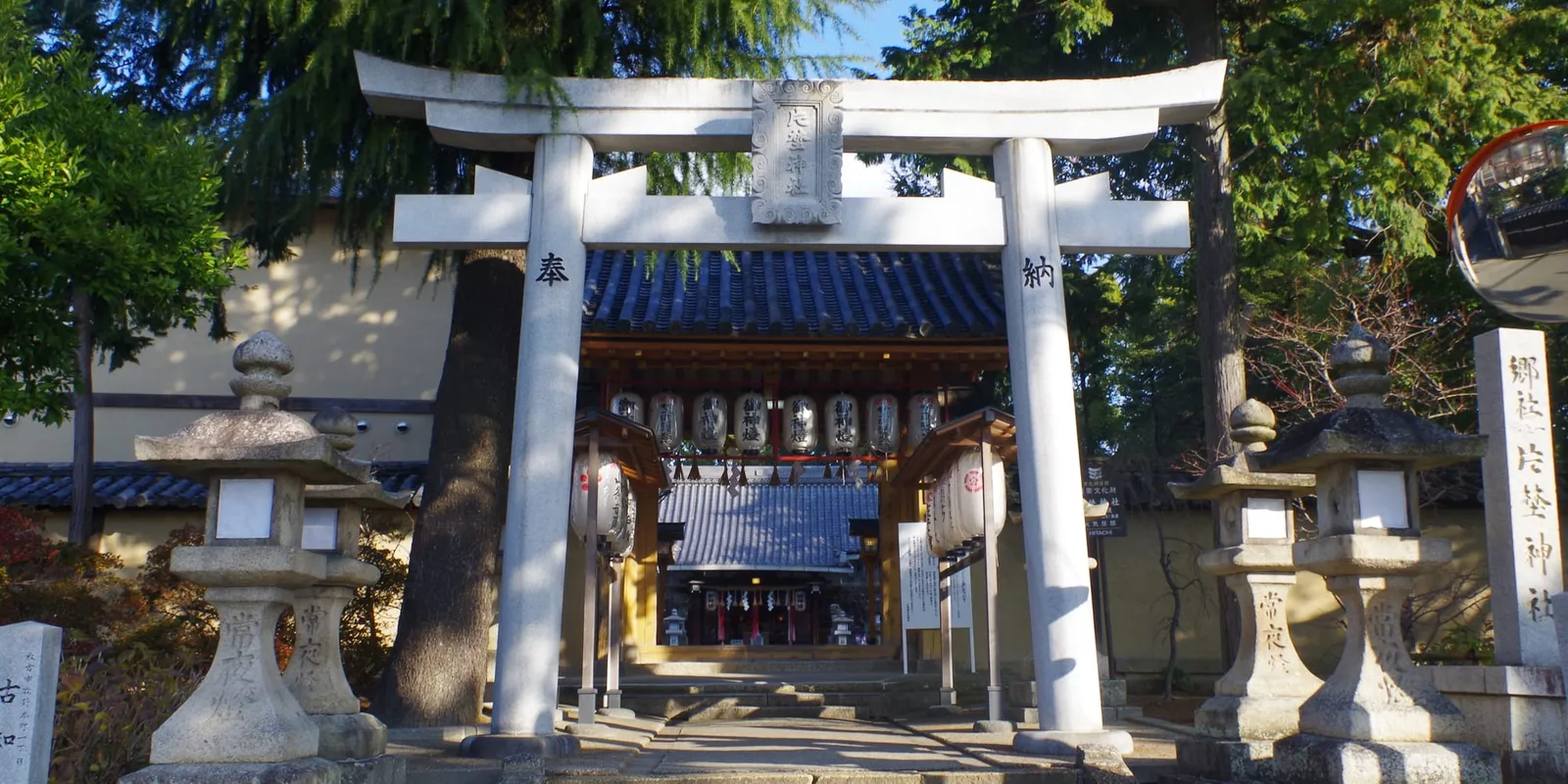
There are other cultural properties besides the main hall. The official site lists the main hall and ridge-tag (Momoyama period, national Important Cultural Property), the main gate (Momoyama period, prefectural), the East Gate (Muromachi period, prefectural), and one stone lantern (Kamakura period, prefectural). Osaka Prefecture’s list, on the other hand, gives “Katano Shrine East Gate and South Gate” (Momoyama period) as prefectural tangible cultural properties, so the names and periods of the gates differ by source. It is worth checking the signs in the grounds when you visit.
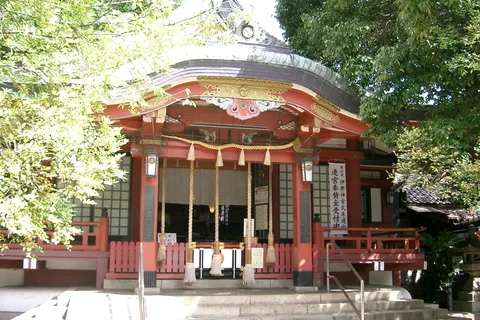
The grounds also include a corner with a statue of a sacred ox beside a small vermilion shrine, and stone guardian dogs. The top page of the official site also mentions an Edo-period drum kept at the shrine that was later restored by a drum center in Kyoto.
Visiting Tips
The shrine office and the amulet/omikuji counter are open daily 9:00 AM–4:00 PM. The official site gives no restriction on visiting the grounds, and its English page says visiting is possible at any time. Prayer services start at 9:00 AM every 30 minutes, with the last slot at 3:30 PM, by reservation by phone (072-857-7775) or at the counter (online reservations are not accepted). The official site lists the fee as ¥6,000 (¥10,000 for a baby’s first shrine visit). There is a dedicated spot for car purification (traffic-safety prayer), reached by a different route from the one to the parking lot.
The goshuin costs ¥500 (English page of the official site). The official site gives no separate goshuin hours, so aim to arrive by 4:00 PM, when the counter closes. The top page of the official site shows a “Kimen (demon-mask) goshuin” heading, but it does not say what it is or when it is available, so it is safest to ask the shrine office.
It is about a 5-minute walk from Makino Station on the Keihan Main Line. The official site only says that parking is available, without capacity or fees. Hours change around New Year, according to the official site: 11:00 PM on December 31 to 2:00 AM on January 1, then 7:00 AM–7:00 PM on January 1, 8:00 AM–6:00 PM on January 2–3, and normal hours from January 4.
Annual Festivals
According to the annual events listed on the official site, the main events are as follows. Dates and times can change from year to year.
- Saitan-sai (January 1, 6:00 AM): The first ceremony of the new year.
- Ebisu Festival (January 9–11): 9:00 AM–9:00 PM on the official site’s event list. Volunteer information for the festival’s “fuku-musume” is also posted on the official site as the “Makino Hirakata Ebisu Festival.”
- Tondo Festival (January 15, 7:00 AM–noon)
- Inari Festival (first Horse day of February)
- Setsubun Festival (February 2, 6:00 PM): The official top page says February 2 at 6:00 PM, while its English page says February 3 at 5:00 PM, so the sources differ.
- Spring Festival (April 15, 11:00 AM)
- Summer Purification, Nagoshi no Oharae (June 30, 6:00 PM)
- Autumn Festival (October 14 eve, October 15 main day): The annual festival is on October 15, with the grand ceremony and a hot-water purification rite (yudate shinji) from 10:00 AM. In the 2026 (Reiwa 8) schedule, there was an outdoor tea ceremony and taiko drum offering on the 14th, and a night kagura performance by the Kasai troupe (Yoshida-style kagura) on the evening of the 15th. Hirakata City’s information also lists a public viewing of the decorated portable shrine in the grounds.
- Chinka-sai (December 13, 5:30 PM): Written “Ohitaki-sai” in the shrine association’s material.
Check the official site’s events and schedule pages for the latest dates.
Nearby Food & Sightseeing
- Makino Park: A park just north of the shrine that, according to the Japanese Wikipedia, was once part of the shrine grounds (the article carries a note that its sourcing is insufficient, so check the signs on site). The park is also used as a landmark in the shrine’s parking directions.
- Kuzuha Mall SANZEN-HIROBA: A spot inside a shopping mall along the Keihan line, known for its display of a former Keihan limited-express train (according to a guide site). A good stop for a meal or shopping.
- Kudara-ji Temple Ruins: A nationally designated Special Historic Site in Hirakata, where you can touch on ancient history (according to a guide site). It is away from the shrine, so the train is convenient.
Frequently Asked Questions
- Q. What are the visiting hours, and when are prayer services held?
- A. The official site lists the shrine office and the amulet/omikuji counter as open daily 9:00 AM–4:00 PM. It does not restrict visiting the grounds, and its English page says visiting is possible at any time. Prayer services start at 9:00 AM every 30 minutes (last slot 3:30 PM) and are by reservation, by phone or at the counter; online reservations are not accepted. The fee is listed as ¥6,000 (¥10,000 for a baby's first shrine visit), with ¥3,000 for each additional prayer.
- Q. Can I get a goshuin at Katano Shrine?
- A. Yes. The English page of the official site lists the goshuin at ¥500. Separate goshuin hours are not given, so use the amulet counter's 9:00 AM–4:00 PM as a guide. The top page of the official site shows a "Kimen (demon-mask) goshuin" heading but no details on what it is or when it is available, so it is best to ask the shrine office (072-857-7775).
- Q. How do I get there, and is there parking?
- A. It is about a 5-minute walk from Makino Station on the Keihan Main Line (official site). The official site also says parking is available; from Route 17, turn into the road to the left of the white triangular building at the large curve between Osaka Dental University and Makino Park, and the lot is on the left after about 50 m. Capacity and fees are not stated.
- Q. Is the main hall a national Important Cultural Property?
- A. Yes. According to Hirakata City's cultural property information, the main hall of Katano Shrine was designated a national Important Cultural Property on August 29, 1950 (it had earlier been designated a Specially Protected Building in 1917). The official site says Toyotomi Hideyori sponsored a major reconstruction of the main hall and other buildings in 1602, and that the main hall and its ridge-tag (Momoyama period) are nationally designated. Osaka Prefecture lists the East Gate and South Gate as prefectural tangible cultural properties.
- Q. Why is it called the shrine guarding Osaka Castle's "demon gate"?
- A. According to the history on the official site, in 1583 Toyotomi Hideyoshi designated the shrine as the guardian of the "demon gate" (the northeast) of Osaka Castle, and it became known as a shrine for warding off bad directions. The English page of the official site says the same. Many visitors come for protection from bad directions and misfortune.
Plan Your Visit
Before you go, you can book a stay and get your shrine-visit items ready.
Amazon links open Amazon.co.jp (Japan) in English; whether an item ships overseas depends on the product.
※ Contains ads (PR). Links open external sites such as Amazon, Rakuten, Trip.com and Booking.com.