History
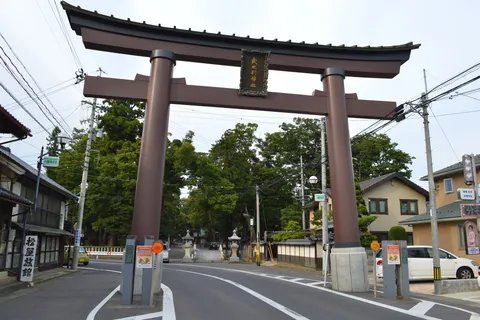
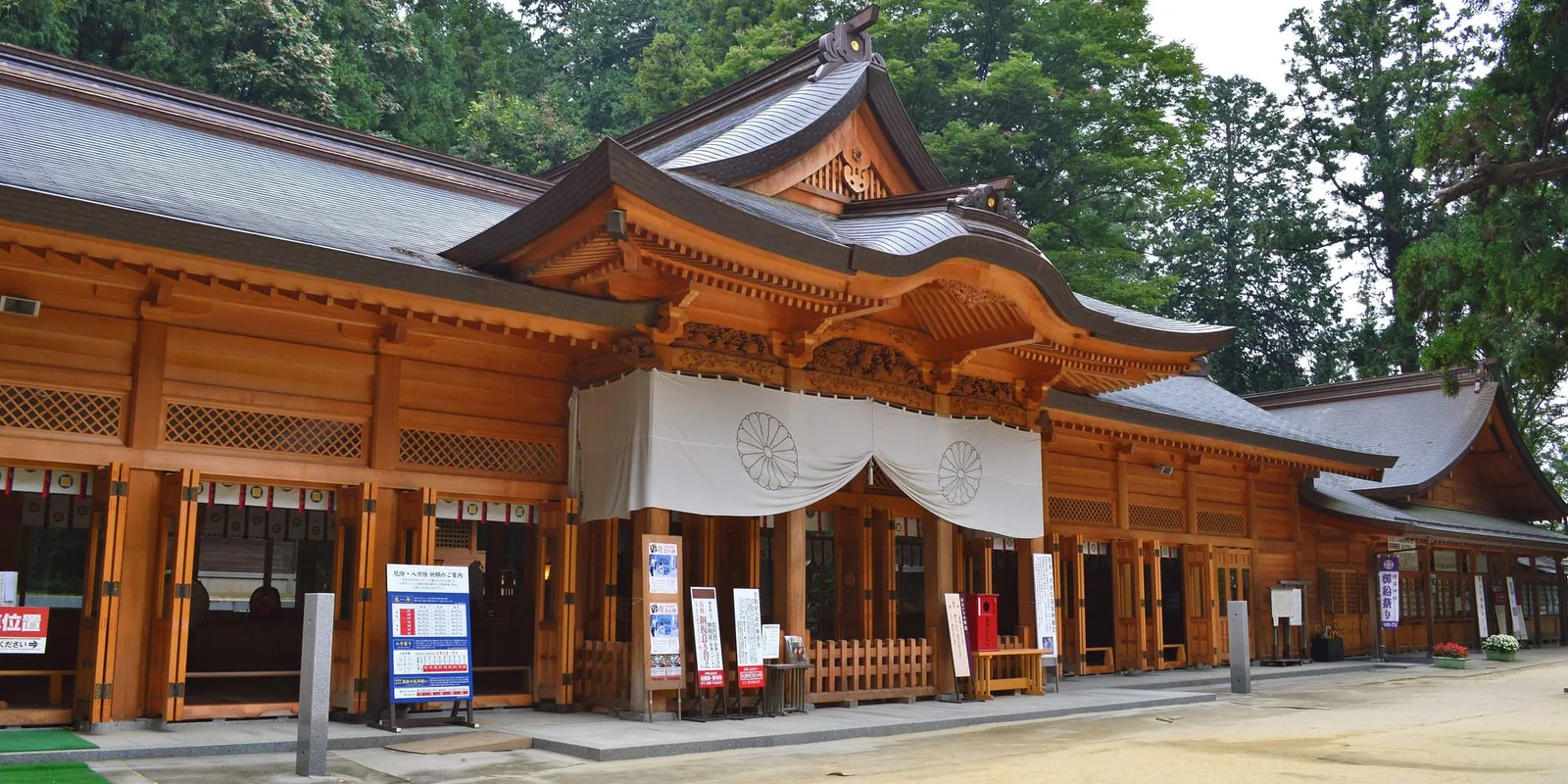
Hotaka Jinja stands in Hotaka, Azumino, Nagano Prefecture. It is read “Hotaka Jinja.” The official site names Hotakami no Mikoto as the enshrined deity and describes the shrine as standing in Hotaka, Azumino, at the center of Shinshu. Hotakami no Mikoto is described as an ancestral god of the Watatsumi sea-god lineage, and the Azumi people, his descendants, are said to have handled sea transport around northern Kyushu and traded with the continent. The shrine has three sanctuaries: Hotakami no Mikoto in the center, Watatsumi no Mikoto on the left and Ninigi no Mikoto on the right, with Amaterasu Omikami in a separate shrine and Azumi no Muraji Hirafu no Mikoto in the Wakamiya.
The official site gives no founding year. The shrine is listed as a Myojin Taisha in the Engishiki Jinmyocho (Encho 5, 927) and is said to have been revered by the imperial court as a major shrine of Shinano. The earliest surviving record of its reconstruction is the 1483 (Bunmei 15) “Sanno Hotakasha Gozogu Sadame Nikki,” though the official site considers that such work was probably carried out much earlier. It is said to have rendered great service to the development of Shinano as a deity of industry, and is venerated as the chief guardian of the Japan Alps and a protector of traffic safety and industrial development. Visits for first shrine visits for babies, protection from misfortune and protection from all directions are also said to be common in recent years.
Besides the main shrine in Azumino, Hotaka Jinja has an “Okumiya” beside Myojin Pond in Kamikochi and a “Minemiya” on the summit of Mt. Okuhotaka. The official site describes the Okumiya as the chief guardian of the Japan Alps and a protector of travel by land and sea, and says that records such as the 1770 “Hotakadake Gozoei Hogacho” suggest it was already built before then.
Highlights
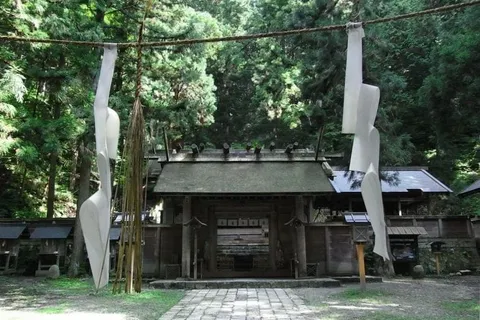
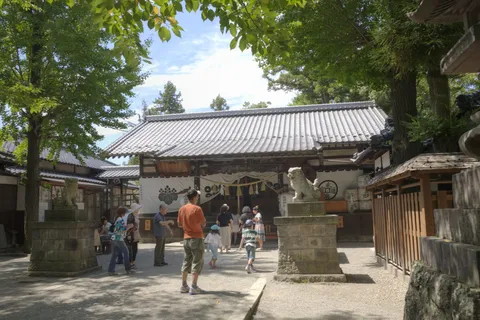
The grounds hold two Azumino City-designated cultural properties, the “Zelkova west of Wakamiya” and the “Zelkova at Daimon” (both designated October 29, 2008), each said to be more than 500 years old (official site). The Wakamiya, north of the kagura hall, is lined with small massha shrines. The “Sengu-sai” rebuilding festival is designated a city intangible folk cultural property. As the photo shows, the grounds also hold the sacred boat “Hotaka-maru” (the name given in the Wikimedia Commons description).
The “Mifune Hall” in the grounds is a museum showing the boat-shaped floats pulled out at the festival and the traditional doll decorations designated as an intangible folk cultural property of Nagano Prefecture. According to the official site, it also displays ancient plows, old masks, magatama beads, straight swords and old documents, photos and information on Azumino’s roadside Dosojin deities, and, on the second floor, votive Hyakunin Isshu pictures (a city-designated folk cultural property). It is open 9:00 AM–4:30 PM, with admission of ¥300 for adults, ¥200 for junior high and high school students and ¥100 for elementary school students (closed days are not stated).
Hand-stroking visits to the Dosojin are another feature, introduced on the official site for health and longevity and for marital harmony and good relationships. Dosojin talismans (¥1,000), charms (¥800) and ema (¥800) are among the items offered.
Myojin Pond, where the Okumiya stands, consists of the First Pond and the Second Pond and is introduced as a pond that does not freeze. The Minemiya stands on the summit of Mt. Okuhotaka (3,190 m); a new shrine was built on the true summit in July 2013, and a remote-worship shrine (Minemiya Yohaisha) was built in 2016 to mark the periodic reconstruction (official site).
Visiting Tips
Worship is possible 24 hours a day. The shrine office takes reception from 8:30 AM to 5:00 PM, and prayer services run from 9:00 AM to 4:30 PM (the FAQ page says 9:00 AM–4:00 PM, so the official pages differ). Prayer services need no reservation and are first come, first served, taking about 30 minutes. They are not held for about 30 minutes before a festival or wedding, and photography is not allowed during the service. Pets are allowed on a short leash, according to the shrine.
Goshuin are issued daily from 9:00 AM to 5:00 PM at the shrine office. The regular goshuin and the Dosojin goshuin are ¥500 each and the embroidered main-hall goshuin is ¥1,000. Limited-edition goshuin are offered during the Ofune Matsuri period (September), from New Year’s Day to mid-January, and on March 17 for the Hoshaku-sai, among others (official site). The Okumiya goshuin is ¥500 and the Minemiya goshuin is ¥1,000. Goshuin are not sent by mail.
It is a 3-minute walk from Hotaka Station on the JR Oito Line, and about 10 minutes by car from Azumino IC on the Nagano Expressway. The official site gives no parking capacity or fee. To reach the Okumiya, the official site gives about a 60–70 minute walk from the Kamikochi Bus Terminal (also described as about an hour from Kappabashi Bridge), with no buses or taxis. Private cars are restricted in Kamikochi. If you are coming from the Kamikochi side, leave plenty of time.
Annual Festivals
- New Year’s Prayer Festival (January 1–8): Listed in the official annual events.
- Setsubun-sai and Kamado-gami-sai (around February 3): Held at 4:00 PM.
- Hoshaku-sai and Toshigoi-sai (March 17): Limited-edition goshuin are also offered.
- Dosojin Festival (April 18): Held at 10:00 AM.
- Kamikochi Opening Ceremony (April 27): Held at the foot of Kappabashi Bridge to pray for safety in the mountain season.
- Great Purification and Chinowa Rite (June 30): Held at 5:00 PM.
- Wind Chime Festival (early July to around August 20): Listed in the official annual events.
- Hotaka Reisha Mitama Festival (August 15): Begins at 8:00 PM, with “Sankenichi Tezutsu” hand-held fireworks offered.
- Ofune Matsuri (September 26 eve festival, 27 main festival, 28 day-after festival): The shrine’s annual festival, described as a Nagano Prefecture intangible folk cultural property.
- Japan Alps Mountain Accident Victims Memorial (October 7): Held at the memorial song monument.
- Okumiya Annual Festival and Boat Ceremony (October 8): On Myojin Pond in Kamikochi, two boats with dragon and sea-bird prows circle the pond in the boat ceremony, followed by a memorial service at 11:00 AM.
- Kamikochi Closing Ceremony (November 15): Held at the foot of Kappabashi Bridge.
- Commemorative Festival of Rank Elevation and Niiname-sai (November 19): Held at the main shrine.
- Great Purification and Joya-sai (December 31): Held at 3:00 PM.
There are also monthly events such as the Otsuitachi-mairi (1st of each month, from 8:15 AM, except in January) and the monthly festival (27th of each month). Dates and times change from year to year, so check the “Annual Events” page on the official site for the latest.
Nearby Food & Sightseeing
- Rokuzan Art Museum: A museum of the work of Azumino-born sculptor Ogiwara Rokuzan (1879–1910). According to its official site it opened in 1958, and its church-style Rokuzan Hall is a registered national tangible cultural property. It is listed as a 7-minute walk from JR Hotaka Station. It has closed days, including Mondays, so check the official site first.
- Daio Wasabi Farm: A wasabi farm in the same Hotaka area that its official site calls “one of the largest wasabi farms in Japan.” Admission is free, and it is about 10 minutes by taxi from Hotaka Station.
- Myojin Pond, Kamikochi: The scenic spot where the shrine’s Okumiya stands. According to the official site, the pond consists of the First and Second Ponds and does not freeze. Okumiya viewing is ¥500 for adults and ¥200 for elementary school students.
Frequently Asked Questions
- Q. What are the visiting hours of Hotaka Jinja?
- A. The official site says worship is possible 24 hours a day. The shrine office takes reception from 8:30 AM to 5:00 PM, and prayer services run from 9:00 AM to 4:30 PM according to the worship page (the FAQ page says 9:00 AM–4:00 PM, so the official pages differ). Prayer services need no reservation and are first come, first served. The amulet counter and goshuin are available 9:00 AM–5:00 PM.
- Q. Can I get a goshuin at Hotaka Jinja?
- A. Yes. They are issued daily from 9:00 AM to 5:00 PM at the shrine office (not by mail). The official site lists the regular goshuin and the Dosojin goshuin at ¥500 each, and the embroidered main-hall goshuin at ¥1,000. The Okumiya goshuin is ¥500 and the Minemiya goshuin is ¥1,000, given to those who have worshipped at the Minemiya (or its remote-worship shrine on Mt. Okuhotaka). The goshuin book is ¥2,000.
- Q. How do I get there, and is there parking?
- A. It is a 3-minute walk from Hotaka Station on the JR Oito Line (official access map). By car, it is about 10 minutes (6.5 km) from Azumino IC on the Nagano Expressway. The official site gives no parking capacity or fee, and other sources disagree on the number of spaces, so it is safest to ask the shrine office (0263-82-2003).
- Q. What is the Ofune Matsuri?
- A. It is the shrine's annual festival. The official site lists September 26 as the eve festival, September 27 as the main festival (Ofune Matsuri), and September 28 as the day-after festival. According to the Mifune Hall guide, large boat-shaped floats about 12 m long and small ones about 8.4 m long are pulled into the shrine, and on the main day two large and three small floats are pulled out, with the two large floats colliding in a "fight" (kenka). It is described as a rare offering of boats in landlocked Nagano, reflecting the heritage of the seafaring Azumi people.
- Q. Can I visit the Okumiya in Kamikochi or the Minemiya on Mt. Okuhotaka?
- A. Yes. Hotaka Jinja also enshrines an Okumiya beside Myojin Pond in Kamikochi and a Minemiya on the summit of Mt. Okuhotaka (3,190 m) (official site). The Okumiya viewing hours are 6:00 AM–5:00 PM (listed as April 17 to November 15), with a fee of ¥500 for adults and ¥200 for elementary school students. Another official page gives the Okumiya season as April 27 to November 15, so the pages differ. The Minemiya requires a climb, but a remote-worship shrine also stands on the summit, and praying there is said to count as praying at the Minemiya.
Plan Your Visit
Before you go, you can book a stay and get your shrine-visit items ready.
Amazon links open Amazon.co.jp (Japan) in English; whether an item ships overseas depends on the product.
※ Contains ads (PR). Links open external sites such as Amazon, Rakuten, Trip.com and Booking.com.