History
Ariakeyama Jinja stands in Hotaka Ariake, Azumino, Nagano, and is a mountain-worship shrine that takes Mt. Ariake, rising behind it, as its sacred body (goshintai). The reading “Ariakeyama-jinja” comes from Japanese Wikipedia; no official shrine website could be found. This page draws on the Azumino Tourism Association, the City of Azumino’s official pages, the Azumino City Tourism Division’s location guide, Japanese Wikipedia and similar sources, and where there is no official notice it says “not stated.”
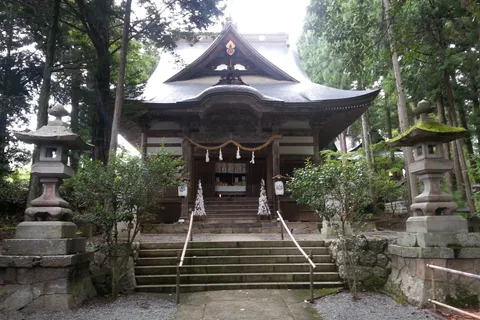
According to Japanese Wikipedia, the lower shrine (satomiya) stands at Miyagi in Hotaka Ariake, Azumino, with a summit shrine (minemiya) on the mountain. The Azumino Tourism Association page likewise says the main hall is on the summit of Mt. Ariake, also called “Shinano Fuji.” For the enshrined deities, Japanese Wikipedia lists Tajikarao no Mikoto, Yagokoro Omoikane no Mikoto, Onamuchi no Mikoto, Amaterasu Omikami, Ame no Uzume no Mikoto and Konpira Gongen.
The founding date is not given in the public sources I could confirm. According to a local history site (“Nagano Prefecture: History, Sightseeing, Highlights”), the present lower shrine was built in 1875 (Meiji 8) and the Zuijin Gate in 1902 (Meiji 35). That site draws on on-site signs and similar materials, so please treat the dates as reference information.
The Azumino City Tourism Division’s location guide also introduces the rock cave 魏石鬼の岩屋, said to be the setting of the Azumino legend of Hachimen Daio, which lies beyond a mountain path lined with stone Buddhas.
According to TV Tokyo’s official program page, the October 31, 2026 episode of a TV Tokyo travel variety program featured a trip that started at Bunkui Pass, passed Lake Suwa, and ended at this Ariakeyama Shrine.
Highlights
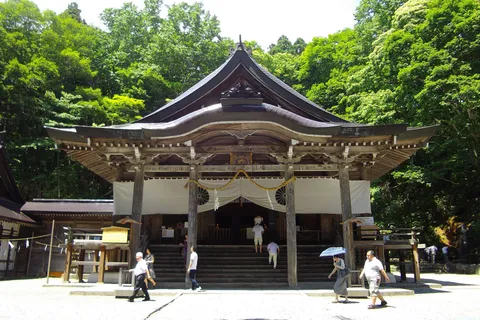
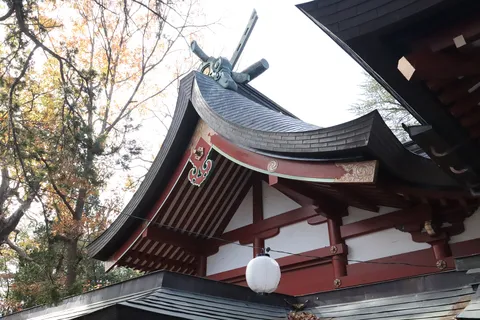
The core of the grounds is the Yumei Gate and the water pavilion. The City of Azumino’s cultural property list names “the Yumei Gate and water pavilion of Ariakeyama Shrine” (2 structures) as a city tangible cultural property (designated October 29, 2008), and the Azumino Tourism Association page says the water pavilion and Yumei Gate carry carvings of dragons, phoenixes and the twelve zodiac animals. The location guide also says the Yumei Gate, with its zodiac carvings, is designated a city cultural property. A local history site says this Zuijin Gate is modeled on the Yomeimon of Nikko Toshogu and was also called “Shinano Nikko.”
The same city list also names the small coffered ceiling panel paintings of the Kagura Hall (82 panels) and the poetry collection “Zangetsushu” (12 volumes) as city tangible cultural properties designated on the same day. The tourism association page adds that the ceiling paintings along the passage are well worth seeing.
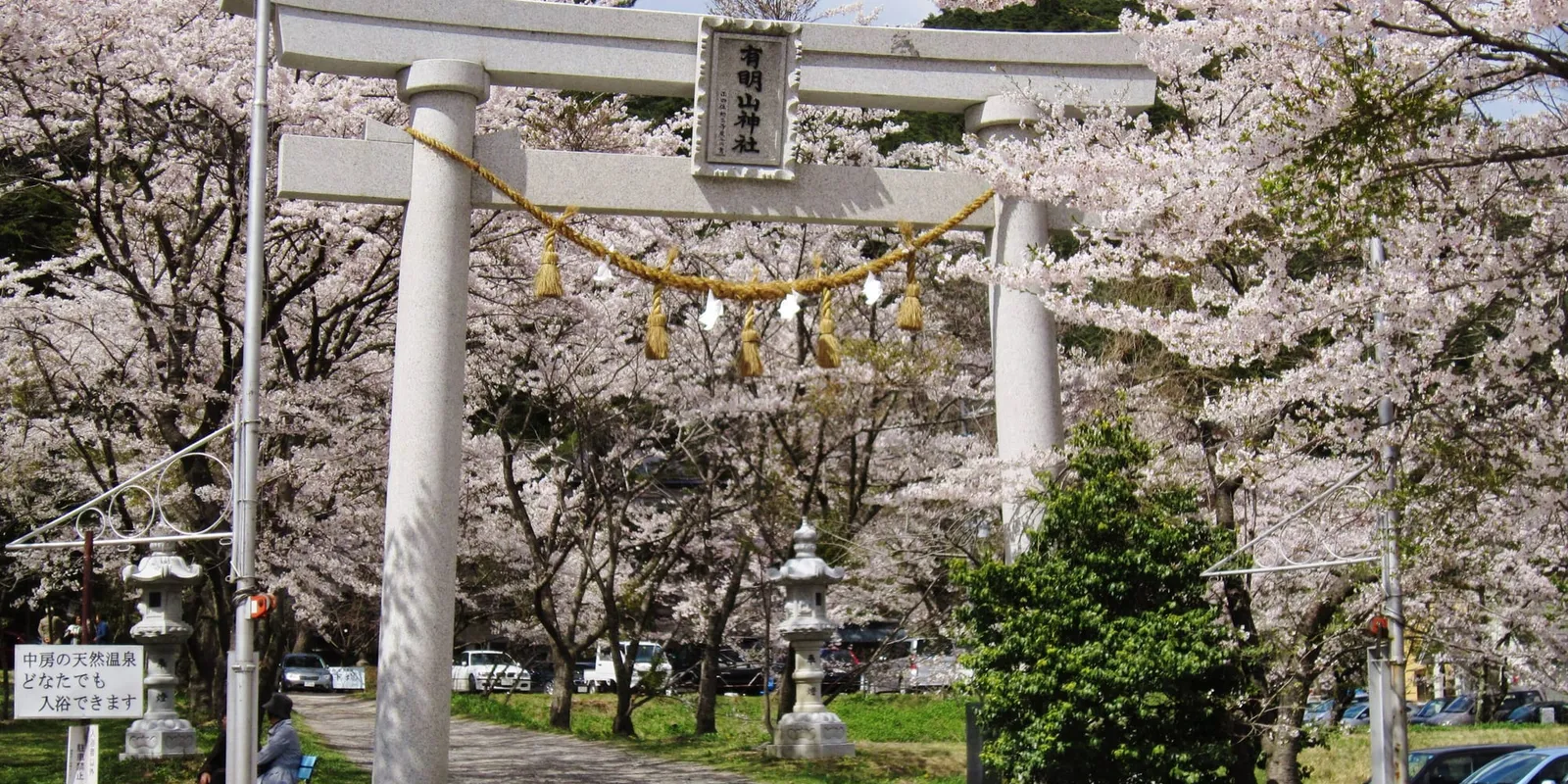
According to the tourism association page, the grounds, at 743 m, are a cherry-blossom spot that comes into full bloom in mid-to-late April. One guide article (dated October 30, 2026) describes a “Kaiun Shofuku stone” shaped like an old coin with a square hole in the middle, said to bring good fortune if you pass through the hole. This stone is not confirmed on the city or tourism association pages and comes from a single guide article.
Visiting Tips
Visiting hours, goshuin hours and the goshuin fee are not given in the sources I could confirm. Since no official shrine website could be found either, it is safest to call the number on the tourism association page (0263-83-3764) before you go, especially if a goshuin is your goal.
By car, Japanese Wikipedia gives about 30 minutes from Azumino IC on the Nagano Expressway, and parking is said to hold about 30 ordinary cars (several guide sites give the same figure, but this is not an official notice). By train, it is about 20 minutes by taxi from Hotaka Station on the JR Oito Line. A seasonal bus to Nakabusa Onsen has an “Ariakeyama Jinja” stop, and an Azumino Tourism Association notice dated September 3, 2026 also mentions the stop in connection with transfers. Operating dates and times change from year to year, so check with the tourism association or similar.
Reaching the summit shrine means climbing Mt. Ariake, so be prepared for a real mountain trip and check current information. The local history site “Nagano Prefecture: History, Sightseeing, Highlights” says an Okusha festival is held every year in mid-July, with a climb open to people recruited from the public, but I could not confirm whether it is held now.
Annual Festivals
- Annual festival (April 28): Listed as the main festival in Japanese Wikipedia.
- Cherry blossoms (mid-to-late April): According to the Azumino Tourism Association page, the cherry blossoms in the grounds come into full bloom and make it a well-known spot.
- Okusha festival (mid-July): According to the local history site, held every year in mid-July, with a climb to the summit of Mt. Ariake by people recruited from the public. I could not confirm whether it is held now.
Dates can change from year to year, so check with the shrine or the tourism association for the latest information.
Nearby Food & Sightseeing
- 魏石鬼の岩屋 (rock cave): According to the Azumino City Tourism Division’s location guide, a rock cave beyond a mountain path lined with stone Buddhas, said to be the setting of the legend of Hachimen Daio. It is a mountain path, so mind your footing and the weather.
- Hotaka Shrine: A different shrine, with Hotakami no Mikoto as its chief deity (described as about a 3-minute walk from JR Hotaka Station). This site also has a dedicated page for it.
- Nakabusa Onsen: A hot-spring area named in an Azumino Tourism Association notice as the destination of the seasonal bus that has an Ariakeyama Jinja stop.
Frequently Asked Questions
- Q. What are the visiting hours?
- A. No visiting hours appeared in the sources I could confirm, and no official shrine website could be found. The Azumino Tourism Association page lists the phone number 0263-83-3764, so if the hours matter to you, it is safest to ask in advance.
- Q. Can I get a goshuin at Ariakeyama Jinja?
- A. Whether goshuin are offered, and the hours and fee, are not given in the sources I could confirm. One guide site lists it as "not published," while another article says goshuin have been offered in the past but notes that reception hours and the fee may change, and advises calling ahead (0263-83-3764) if a goshuin is your goal.
- Q. How do I get there, and is there parking?
- A. According to Japanese Wikipedia, it is about 20 minutes by taxi from Hotaka Station on the JR Oito Line, or about 30 minutes by car from Azumino IC on the Nagano Expressway. Parking is said to hold about 30 ordinary cars (per Wikipedia and guide sites; no fee given). A seasonal bus to Nakabusa Onsen has an "Ariakeyama Jinja" stop, so check the operating dates and times with the Azumino Tourism Association or similar.
- Q. What cultural properties does the shrine have?
- A. The City of Azumino's cultural property list (updated June 27, 2024) includes the Yumei Gate and water pavilion (2 structures), the small coffered ceiling panel paintings of the Kagura Hall (82 panels), and the poetry collection "Zangetsushu" (12 volumes), all as city tangible cultural properties designated on October 29, 2008 (Heisei 20). According to the Azumino Tourism Association page, the water pavilion and Yumei Gate carry carvings of dragons, phoenixes and the twelve zodiac animals.
- Q. Has the shrine been featured on TV?
- A. According to TV Tokyo's official program page, the TV Tokyo travel variety program episode broadcast on Saturday, October 31, 2026 (a 2.5-hour special) was a trip across Nagano that started at Bunkui Pass, passed Lake Suwa, and ended at Ariakeyama Shrine in Azumino.
Plan Your Visit
Before you go, you can book a stay and get your shrine-visit items ready.
Amazon links open Amazon.co.jp (Japan) in English; whether an item ships overseas depends on the product.
※ Contains ads (PR). Links open external sites such as Amazon, Rakuten, Trip.com and Booking.com.