History
Ikushima Tarushima Jinja stands in the Shioda Plain of Ueda, Nagano Prefecture, and ranks among Shinano Province’s foremost ancient shrines. Its deities are Ikushima no Okami, who gives life force to all living things, and Tarushima no Okami, who brings all things to fulfillment — two deities long worshipped as fundamental guardians of the land of Japan itself. The date of the shrine’s founding is unknown, but tradition holds that Takeminakata no Mikoto stopped here on his way down to Suwa and offered rice porridge to Ikushima no Okami and Tarushima no Okami, praying for a safe journey. This episode is preserved today in the Okomori Festival, a ritual still performed at the shrine.
The 10th-century Engishiki shrine register, compiled in 927, lists the shrine under Chiisagata District, Shinano Province, as “Ikushima Tarushima Jinja, two seats, both ranked Myojin Taisha” — the same elevated classification held by Suwa Taisha, Shinano’s ichinomiya (chief shrine), a fact that reflects how deeply the Imperial court revered this shrine in antiquity. Under the later ichinomiya–ninomiya–sangu system that took shape in the medieval period, however, Shinano’s ichinomiya title belongs to Suwa Taisha alone, and Ikushima Tarushima Jinja itself is not counted among that ranking. Even so, the founding legend describing Takeminakata’s visit here on his way to Suwa, together with the enshrinement of Suwa no Okami at the shrine’s own subsidiary Lower Shrine today, shows how closely the two shrines have long been linked — two of Shinano’s most storied ancient shrines standing side by side in the region’s religious history. The shrine was ranked a prefectural shrine in 1871 and elevated to Kokuhei Chusha (a national shrine of middle rank) in 1899; since the postwar reorganization of Shinto administration it has held the status of a beppyo shrine under the Association of Shinto Shrines, and remains the tutelary shrine of the entire Shioda Plain to this day.
From the medieval period onward, the shrine also drew deep reverence from regional warlords, receiving generous patronage from Takeda Shingen and, later, from Sanada Masayuki and his son Nobuyuki, successive lords of Ueda Castle. The shrine still preserves an extraordinary collection of historical documents from this era, bearing witness to the tense politics of the Sengoku period.
Highlights: A Honden Made of the Earth Itself
The single most distinctive feature of Ikushima Tarushima Jinja is that it has no honden, or main hall. The Upper Shrine — its principal sanctuary — stands on a small sacred island encircled by a pond, and the floor of its inner sanctum is left completely bare: the earth itself is considered the go-shintai, the sacred object in which the deities dwell. This unusual form of worship stems from the belief that Ikushima no Okami and Tarushima no Okami are deities of the land itself, and it preserves one of Japan’s rare, primal forms of nature worship at a site the shrine describes as standing near the very center of the Japanese archipelago.
By contrast, the subsidiary Lower Shrine (Suwa Shrine) on the grounds has a completely conventional honden, built in 1610 through a donation from Sanada Nobuyuki, lord of Ueda Castle — an intriguing architectural contrast to the earthen sanctuary of the Upper Shrine just steps away. Each year, from November through around April, the Okomori Festival is held: a distinctive rite in which Suwa no Okami is said to move from the Lower Shrine into the inner sanctum of the Upper Shrine to spend the winter months there.
Highlights: The Kishomon of Takeda Shingen and the Sanada Clan
Ikushima Tarushima Jinja preserves a collection of 94 historical documents, the Ikushima Tarushima Jinja Monjo, designated an Important Cultural Property of Japan. Its centerpiece is a set of 83 kishomon, or written oaths, that Takeda Shingen had 237 of his retainers submit in 1567. At the time Shingen had brought most of Shinano Province, along with parts of Kai and Kozuke, under his control, and he required his vassals to swear loyalty before the gods of Shimonogo Daimyojin (as the shrine was then known) to guard against betrayal and defection within his ranks. Each oath bears the Kumano Gyuo seal on its reverse and states that the signer would accept divine punishment should the oath be broken — a rare nationwide example of just how carefully a Sengoku-era warlord worked to bind the loyalty of his vassals.
The collection also includes donation certificates and prayer documents connected to Sanada Masayuki and his son Nobuyuki, showing that Ikushima Tarushima Jinja held special significance for the Sanada clan as well, during their years based at nearby Ueda Castle. Reproductions of these documents are displayed in the shrine’s treasure hall, with the originals occasionally shown in special exhibitions.
Visiting Tips
The shrine office is open roughly 9:00–16:30, and the standard goshuin costs ¥500, with limited seasonal or special goshuin — including kirie cut-paper designs — sometimes offered for ¥1,000. Tradition holds that visitors should worship at both the Upper Shrine (main sanctuary) and the subsidiary Suwa Shrine (Lower Shrine) before receiving the goshuin. The shrine is easily reached by public transport, about a 5-minute walk from Shimonogo Station on the Ueda Dentetsu Bessho Line, and about a 15-minute drive from JR Ueda Station; free parking for roughly 100 vehicles is available on the grounds.
Annual Festivals
- Onbashira Festival: Held once every six years, in April of Tiger and Monkey years, on the same cycle as the famous Onbashira Festival at Suwa Taisha, when sacred pillars are hauled and raised around the shrine precinct.
- Okomori Festival: Held roughly from November through the following April, this rite is said to bring Suwa no Okami from the Lower Shrine into the Upper Shrine’s inner sanctum to spend the winter. Rice porridge is offered to Suwa no Okami each week, then to Ikushima no Okami and Tarushima no Okami as well, continuing a practice handed down since ancient times.
- Reitaisai Grand Festival: Held every April, the shrine’s most important annual festival, celebrated with ceremonies and dedicatory events by parishioners and worshippers.
Nearby Food & Sightseeing
The Shioda Plain, sometimes called “Shinshu’s Kamakura” for its cluster of historic temples and shrines, draws many visitors who combine a visit to Ikushima Tarushima Jinja with a tour of the area’s other ancient sites. Ueda Castle and Bessho Onsen are both about a 20–30 minute drive away, making the shrine a convenient base for exploring sites connected to the Sanada clan.
- Ueda Castle Ruins Park: The site of the castle built by Sanada Masayuki, now home to a museum on the Sanada clan’s history and a popular cherry-blossom spot.
- Bessho Onsen: One of Shinshu’s oldest hot spring resorts, tucked in the hills overlooking the Shioda Plain, home to the National Treasure octagonal three-story pagoda of Anraku-ji Temple.
- Around JR Ueda Station: Ueda’s central station area, with restaurants and shops that make a convenient stop before or after a visit to the shrine.
Frequently Asked Questions
- Q. What kind of shrine is Ikushima Tarushima Jinja, and who are its deities?
- A. Ikushima Tarushima Jinja stands in the Shioda Plain of Ueda, Nagano Prefecture, and enshrines two ancient deities: Ikushima no Okami, who gives life force to all things, and Tarushima no Okami, who brings all things to fulfillment. Since antiquity these two deities have been revered as guardians of the land of Japan itself, and the shrine appears in the Engishiki shrine register as a Myojin Taisha — one of the most prestigious ancient shrines in Shinano Province. Suwa no Okami is also enshrined at the subsidiary Lower Shrine on the grounds.
- Q. Is it true that Ikushima Tarushima Jinja has no honden (main hall)?
- A. Yes. The Upper Shrine (the main sanctuary) stands on a small sacred island surrounded by a pond, and its inner sanctum has no floor at all — the bare earth itself is considered the go-shintai, the sacred object of worship. This reflects the belief that Ikushima no Okami and Tarushima no Okami are deities of the land itself, and it preserves one of Japan's rare, primal forms of nature worship at a site near the very center of the Japanese archipelago. The subsidiary Suwa Shrine on the grounds, by contrast, does have a conventional honden, built in 1610 through a donation from Sanada Nobuyuki, lord of Ueda Castle.
- Q. Is Ikushima Tarushima Jinja, like Suwa Taisha, considered the ichinomiya of Shinano Province?
- A. Suwa Taisha is recognized as the ichinomiya (chief shrine) of Shinano Province, and Ikushima Tarushima Jinja itself is not counted among the province's ichinomiya, ninomiya, or sangu rankings. That said, the Engishiki shrine register ranks Ikushima Tarushima Jinja as a Myojin Taisha, the same high classification held by Suwa Taisha, and the Imperial court held both shrines in comparably high regard as leading shrines of ancient Shinano. According to shrine tradition, Takeminakata no Mikoto stopped here on his way down to Suwa and offered rice porridge to Ikushima no Okami and Tarushima no Okami, and to this day Suwa no Okami is enshrined at the subsidiary Lower Shrine — a sign of the deep, longstanding connection between the two shrines.
- Q. What are the kishomon oath documents, and how are they connected to Takeda Shingen and the Sanada clan?
- A. A kishomon is a written oath sworn before the gods and buddhas. Ikushima Tarushima Jinja preserves a collection of 94 historical documents known as the Ikushima Tarushima Jinja Monjo, designated an Important Cultural Property of Japan. At its core are 83 kishomon that Takeda Shingen had 237 of his retainers submit in 1567, along with documents connected to Sanada Masayuki and his son Nobuyuki. Each oath bears the Kumano Gyuo seal on its reverse and warns of divine punishment for any betrayal — a rare and valuable record of how a Sengoku-era warlord worked to bind his vassals' loyalty.
- Q. What are the goshuin reception hours and fee, and how do I get to the shrine?
- A. The shrine office is open roughly 9:00–16:30, and the standard goshuin costs ¥500 (limited seasonal or special goshuin, such as kirie cut-paper designs, cost ¥1,000). Tradition holds that visitors should worship at both the Upper Shrine (main sanctuary) and the subsidiary Suwa Shrine (Lower Shrine) before receiving the goshuin. The shrine is about a 5-minute walk from Shimonogo Station on the Ueda Dentetsu Bessho Line, or about a 15-minute drive from JR Ueda Station; free parking for about 100 vehicles is available on the grounds.
Related Shrines
Nagano, Nagano
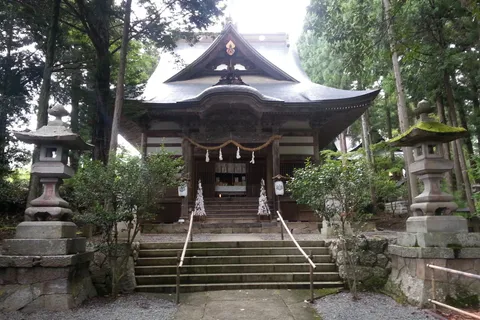
Kumano Idehayao Jinja
Kumano Idehayao-jinja
- Bountiful Harvest
- Success in New Ventures
- Good Health
Nagano, Nagano
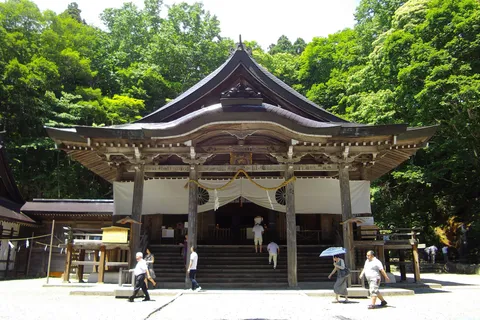
Togakushi Jinja (Chusha)
Togakushi-jinja Chūsha
- Academic Success
- Exam Success
- Good Fortune
Shimane, Tsuwano
Taikodani Inari Jinja
Taikodani Inari-jinja
- Business Prosperity
- Bountiful Harvest
- Good Fortune