History
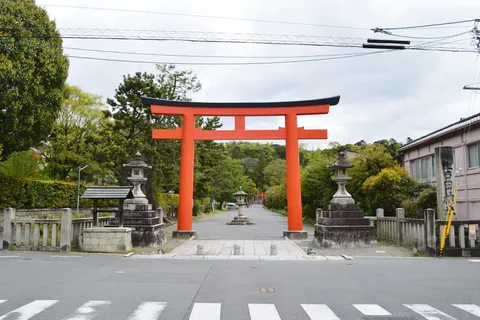
Fujinomori Shrine stands in Fukakusa, Fushimi Ward, Kyoto. The official site bills it as a “shrine of victory luck and horses” and introduces it as a protector of the south of Heian-kyo and the local guardian shrine of Fukakusa, revered from the imperial court to samurai and ordinary people. According to the shrine’s own account, Empress Jingu, after returning in triumph from Silla in the 3rd year of her regency (203), designated this place a sacred land of the kami, built a flag mound (hata-zuka) and enshrined the deities there (the top page says it was founded about 1,800 years ago). All of this is the shrine’s own explanation, not something this page has confirmed as historical fact. The official site gives “Fujinomori Festival” the reading “Fujinomori Matsuri,” so the shrine’s name is also read “Fujinomori.”
The official history also records that in 794 (Enryaku 13) Emperor Kanmu bestowed on it the title “Yuhei Mandokoro,” and that an offering ceremony held in 863 (Jogan 5) at the time of Emperor Seiwa’s accession is said to be the origin of the Fujinomori Festival.
According to the official site, the central seat of the main hall enshrines seven deities: Susanoo no Mikoto, Wakeikazuchi no Mikoto, Yamato Takeru no Mikoto, Emperor Ojin, Emperor Nintoku, Empress Jingu and Takeuchi no Sukune. The east seat holds Prince Toneri and Emperor Tenmu, and the west seat holds Prince Sawara, Prince Iyo and Princess Inoue. Prince Toneri is said to be the compiler of the Nihon Shoki and is also revered as a deity of learning and the arts, the official site explains.
Highlights
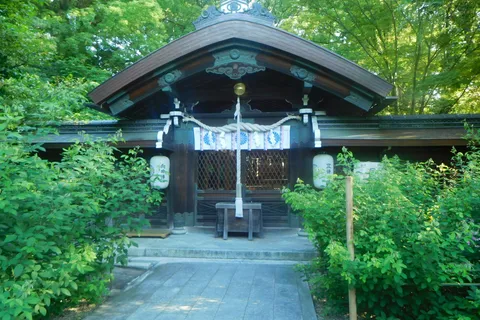
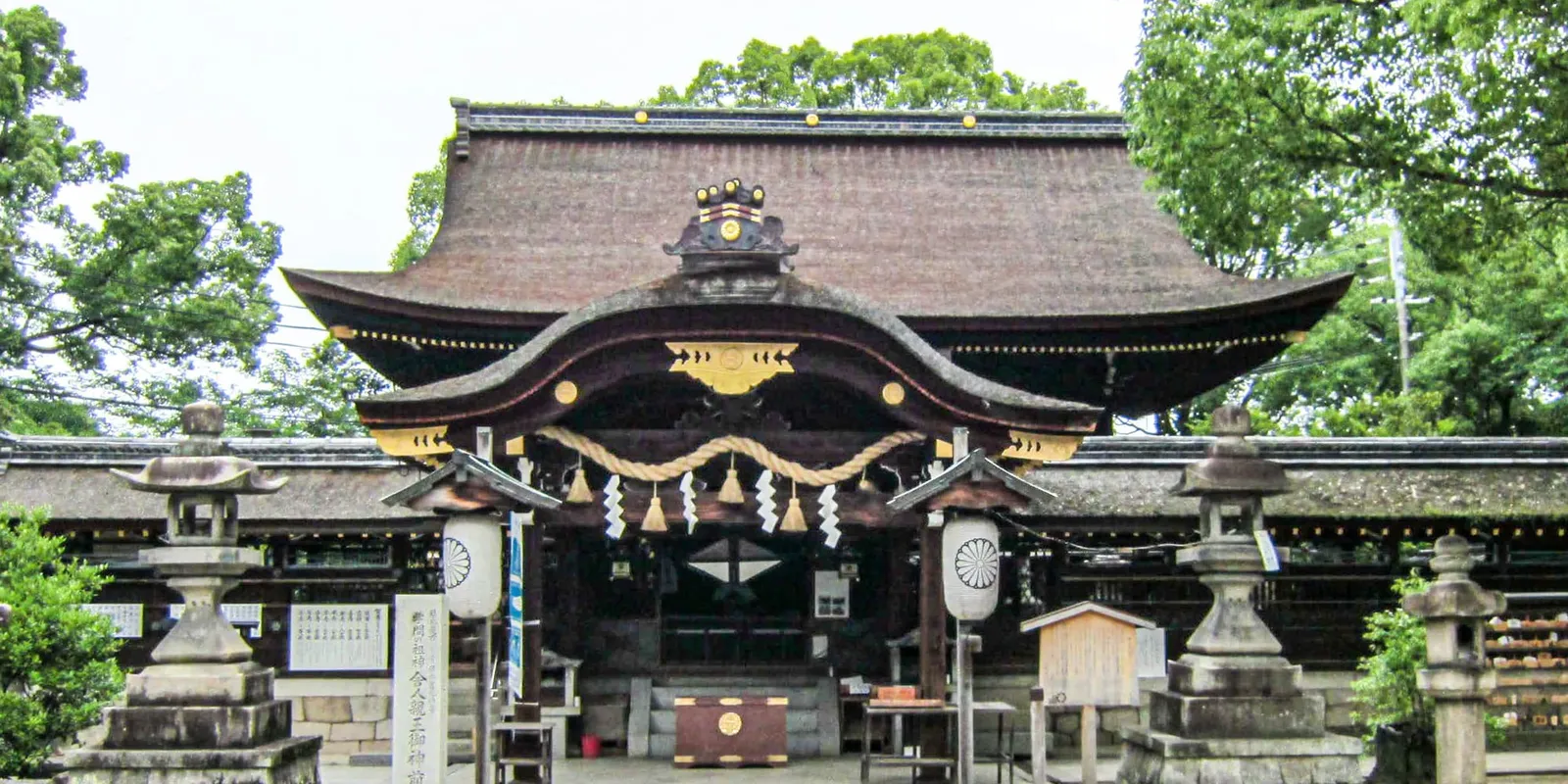
According to the official grounds guide, the main hall is a building that was the Naishidokoro (Kashikodokoro) in the imperial palace and was granted by Emperor Nakamikado in 1712 (Shotoku 2); it is a Kyoto City designated cultural property. The worship hall was also granted from the palace and is a “wari-haiden” with a passage through the center. The current buildings of the auxiliary shrines Hachimangu-sha and Daishogun-sha date from 1438 (Eikyo 10) and are national Important Cultural Properties. Daishogun-sha enshrines Iwanagahime no Mikoto, a deity who protects against bad directions, and is described as the southern guardian of the shrines placed at the four sides of the capital at the time of the move to Heian-kyo.
The flag mound (hata-zuka) in the grounds is said to be where Empress Jingu raised her banner and enshrined the deities, and the adjacent Ichii-gashi oak (“Ichinoki-san”) is venerated for relief from back pain; Kondo Isami is said to have visited in the late Edo period and been cured. Horses appear throughout the grounds: the spout of the hand-washing basin is a horse figure, and a sacred-horse statue symbolizes the Kakeuma ritual. The water called “Fuji no Mizu,” said to rise from about 100 meters underground, is said to bring victory luck. The grounds also hold a Seven Lucky Gods statue group, a monument to Prince Toneri, a Kintaro statue (described as symbolizing the place where the Iris Festival, or “Shobu no Sekku,” is said to have originated), and part of the stone walls of Fushimi Castle. The treasure hall is introduced as housing an Important Cultural Property, a suit of armor laced with purple silk (Murasaki-ito-odoshi o-yoroi). Viewing hours for the treasure hall are not stated on the official site.
Visiting Tips
Visiting hours and shrine office hours are 9:00 AM–5:00 PM (official site). Prayer services need no booking, are accepted 9:00 AM–4:00 PM except during ceremonies, and start from ¥5,000. Prayer categories listed include victory, horse victory (kachiuma), exam success, traffic safety and protection from misfortune.
The official amulet list includes Kakeuma-mamori (¥1,000), Kachiuma-mamori (¥1,000), a victory-luck amulet (¥800), an exam-success amulet (¥800), Toneri academic amulet (¥1,000) and a back-pain amulet (¥800). For goshuin, the shrine’s notice says that in 2026, a Year of the Horse, it has offered a “gold-leaf hidari-uma” since the start of the year, with a new seal added for a special November edition at ¥1,000. No hours are given for goshuin, so an earlier visit is safer.
It is a 5-minute walk from Fujinomori Station (JR Nara Line) and 7 minutes from Sumizome Station (Keihan Main Line). The official site gives no parking information for ordinary cars; tour buses must reserve by phone at least a week ahead. Public transport is the safer choice.
Annual Festivals
Main events from the official annual-events list. Dates are as listed on the official site and may change from year to year.
- Fujinomori Festival (May 1–5): The spring festival. The official site says it was once called the “Fukakusa Jogan Festival” and is “said to be the festival where the Iris Festival (Shobu no Sekku) originated” (the shrine’s explanation, not presented as established history). On May 3 the divine spirits are transferred into the portable shrines, and on May 5 the Shinko-sai has portable shrines, a costumed procession and a fife-and-drum corps go around the parish.
- Kakeuma Shinji (May 5): Held at the riding ground along the south approach at 1:00 PM and 3:00 PM. The Kakeuma Preservation Society performs feats such as “Fuji-sagari,” “Tazuna-kuguri” and “Ichiji-gaki” on galloping horses.
- Hydrangea Festival (June 15): Listed in the annual-events list. Opening dates and admission for the hydrangea garden were not stated on the pages checked, so check the official announcements.
- Nagoshi-no-Oharae and Chinowa ritual (June 30, from 3:00 PM)
- Autumn Grand Festival and Hitaki-sai (November 5, from 10:00 AM)
- Shinshin-sai (second or third Monday of November): Described as a gathering of people who love horses and horse racing; in 2026 it is on Monday, November 9 at noon. After the ceremony there is a draw for shikishi boards signed by jockeys, according to the official notice.
- Niiname-sai (November 23)
Nearby Food & Sightseeing
- Fushimi Inari Taisha: A shrine in Fukakusa, Fushimi Ward, known as the head shrine of Inari shrines nationwide. You can combine it with Fujinomori Shrine for a tour of Fushimi’s shrines.
- Sumizome-dera: A temple near Keihan Sumizome Station, introduced on a guide site under the nickname “Sakura-dera” (cherry-blossom temple). A good stop for a stroll around Sumizome Station, one of the stations for Fujinomori Shrine.
Frequently Asked Questions
- Q. What are the visiting hours?
- A. The official access page lists both visiting hours and shrine office hours (for prayer services and other inquiries) as 9:00 AM–5:00 PM. Prayer services are accepted 9:00 AM–4:00 PM, except during ceremonies. No booking is needed, but prayers cannot be offered while a ceremony is held in the main hall, so the shrine advises calling ahead. Prayer fees start at ¥5,000.
- Q. Can I get the left-horse (hidari-uma) goshuin?
- A. According to the official site's notice dated October 15, 2026, because 2026 is a Year of the Horse the shrine has offered a "gold-leaf hidari-uma" goshuin since the start of the year, and in November only a new seal is added to make a special edition. The fee is ¥1,000. The notice gives no hours, so the shrine office hours (9:00 AM–5:00 PM) are a rough guide. Offerings may change from year to year, so check the official site before you go.
- Q. How do I get there, and is there parking?
- A. Per the official site, it is a 5-minute walk from Fujinomori Station (JR Nara Line) or 7 minutes from Sumizome Station (Keihan Main Line). From Kintetsu Takeda Station, Kyoto City Bus route 南8 or 南6 stops at "Fujinomori Jinja-mae," right in front. The official site gives no information on parking for ordinary cars. There is no dedicated tour-bus parking; tour buses must reserve by phone at least a week ahead, and parking may be unavailable around New Year's and event days.
- Q. When can I see the Kakeuma Shinji (horse-riding ritual)?
- A. According to the official site, during the Fujinomori Festival (May 1–5), the Kakeuma Shinji is held on May 5 at the riding ground along the south approach, at 1:00 PM and 3:00 PM. Members of the Kakeuma Preservation Society perform feats such as "Fuji-sagari," "Tazuna-kuguri" and "Ichiji-gaki" atop galloping horses. The relevant official page does not mention a viewing fee. Details may change, so check with the shrine office (075-641-1045, 9:00 AM–5:00 PM) or the official site beforehand.
- Q. Why is it called a shrine of victory and horses?
- A. The official site's top page bills the shrine as a "shrine of victory luck and horses," and describes it as revered by samurai and commoners as a deity leading to victory and as known as a guardian of horses. The grounds hold a sacred-horse statue, and the official amulet list includes Kakeuma-mamori, Kachiuma-mamori and Kachiun-mamori (victory-luck amulet). The official site also says that on the second or third Monday of November the shrine holds the Shinshin-sai, described as a gathering of people who love horses and horse racing (November 9, Monday, at noon in 2026).
Plan Your Visit
Before you go, you can book a stay and get your shrine-visit items ready.
Amazon links open Amazon.co.jp (Japan) in English; whether an item ships overseas depends on the product.
※ Contains ads (PR). Links open external sites such as Amazon, Rakuten, Trip.com and Booking.com.