History
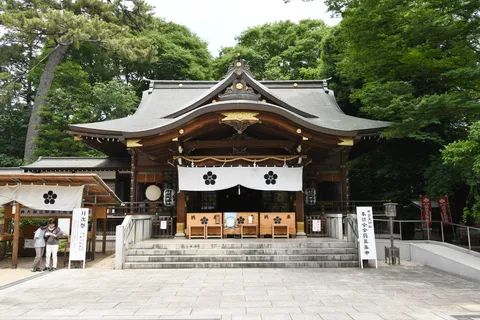
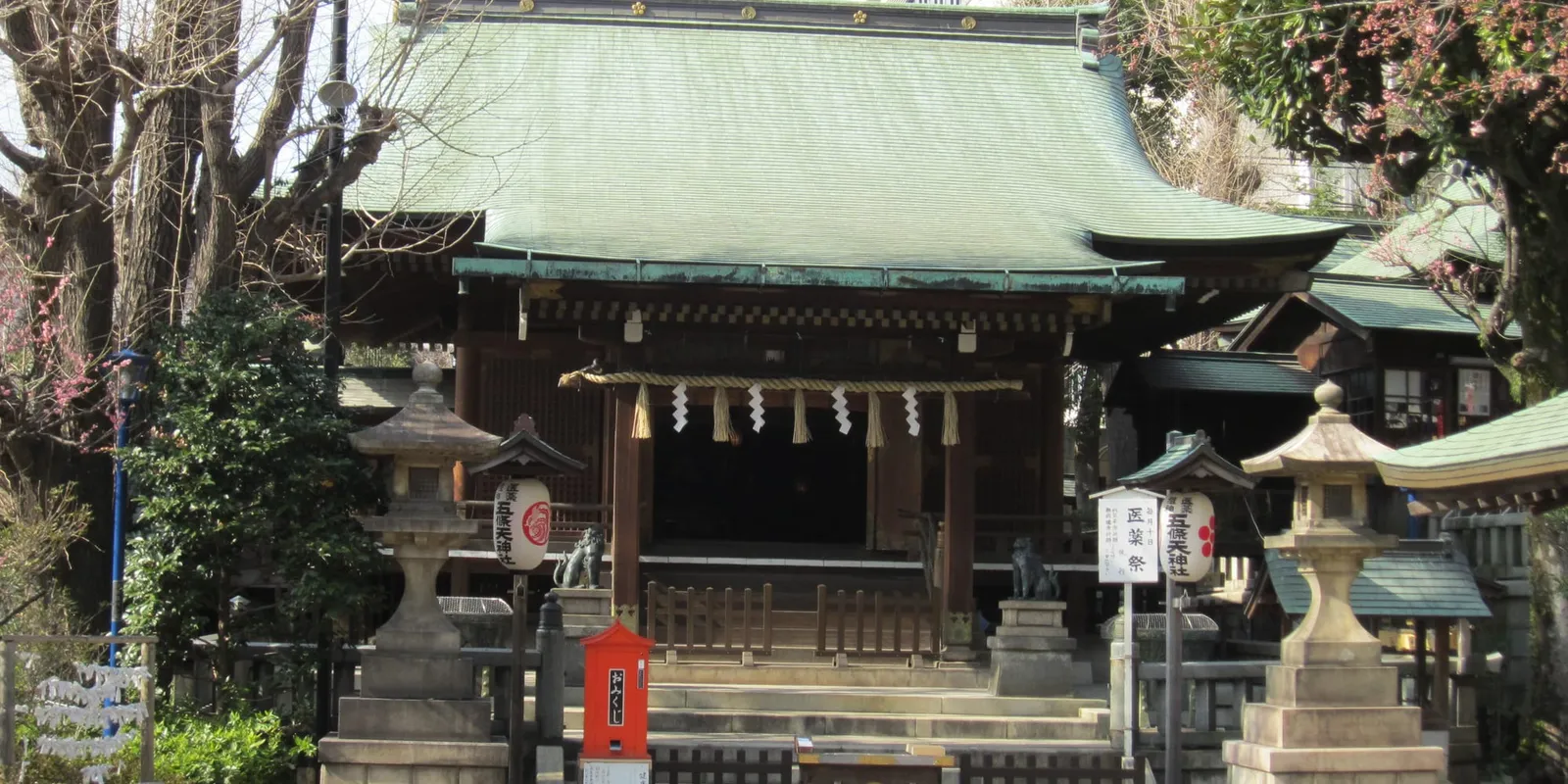
Gojo Tenjin Shrine (Gojo Tenjinja) stands inside Ueno Park in Taito, Tokyo. The enshrined deities are Onamuji no Mikoto (Okuninushi) and Sukunahikona no Mikoto, described on the official site as the ancestral deities of medicine, with Sugawara no Michizane enshrined alongside them. The archived official site does not give the shrine’s reading; “Gojo Tenjinja” follows Japanese Wikipedia. Also note that the current official site’s address could not be opened, so the official information on this page is based on the official site as preserved in the Internet Archive (a record from around 2017).
According to the official history, when Yamato Takeru passed Shinobugaoka in Ueno on his campaign against the eastern barbarians in the reign of the 12th emperor, Keiko, he gave thanks for the protection of the two medicine-ancestor deities and enshrined them there (the site says “about 1,890 years ago”). Some guide sites give the founding year as 110 CE, but no such Western date appears in the archived official site. In 2010 a festival marking 1,900 years since the enshrinement was held, with a procession of the great mikoshi.
The official site also cites the travel diary Hokkoku Kiko by the priest Gyoe, which, as the site describes it, records a visit at the end of the first month of Bunmei 18 (the site says “about 500 years ago”) to a shrine at Shinobugaoka called “Gojo Tenjin,” and presents this as evidence that it is quite an old shrine. Sugawara no Michizane was enshrined alongside the original deities in Kan’ei 18 and, as the god who presides over the way of poetry, the shrine was popularly also called “Shitaya Tenmangu.”
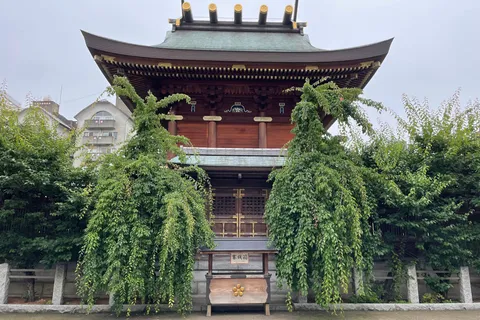
Since its founding the shrine’s site has moved several times, including to Tenjin-yama (today’s Suribachi-yama) and the Segawa residence (at the entrance of Ameyoko), before it was moved in September of Showa 3 to its present site, the closest to its original ground (next to Hanazono Inari Shrine). The official site also says that on the roof of the Pharmaceutical Association building in Nihonbashi Honcho, a branch spirit is enshrined as Yakuso Shrine, where people in the pharmaceutical trade hold a festival every October 17.
Highlights
The official site’s “viewing” section lists the ceiling painting of 88 kinds of medicinal and aquatic plants in the worship hall (viewable on festival days), relics and calligraphy of the Ako ronin (December 14), the Kotetsu well, a Koshin memorial pillar, and the gravestone of “Udo Daio,” listed as a cousin of Takasugi Shinsaku (a yin-yang stone). Just to the right at the foot of the main stairs is the Shichifuku-sha (Seven Lucky Gods shrine), said to be one of the shrines to the Seven Lucky Gods placed at the entrances of Ueno’s hill in the early Edo period to pray for its prosperity.
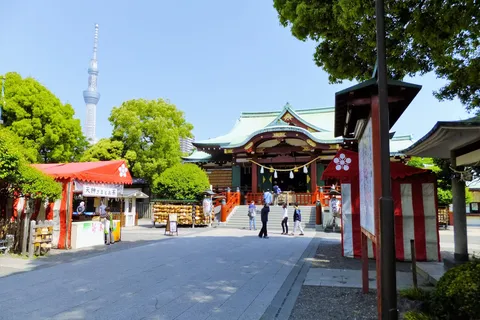
In the same precinct stands Hanazono Inari Shrine (also called Shinobugaoka Inari; enshrined deity Ugano Mitama no Mikoto), known for its lines of red torii. According to the official site, it is popularly called “Ana Inari” or “Oana-sama” because it stood above a rock cave, and during the Shogitai fighting at the end of the shogunate it is remembered as the last fierce battleground, the “Battle of the Ana Inari Gate.”
The viewing items above are as listed on the archived official site. Whether they are open to the public, and when, is best confirmed in advance with the shrine office.
Visiting Tips
Visiting hours and shrine office hours are not given on the archived official site. Taito City’s page lists Gojo Tenjin Shrine (tel. 03-3821-4306) as the contact. The official site says that every early morning, paper figures (hitogata) applied for by the previous day are offered before the deity to pray for good health; you write your address, name and age on the figure and hand it in with the offering at the reception desk, and attendance is not required.
Several guide sites say goshuin are given out at the shrine office in the grounds. The official site gives no fee, and one guide site says the neighbouring Hanazono Inari Shrine’s goshuin is issued at the same office for ¥300, but that is a single source, so treat it only as a guide.
According to the archived official site, it is about 3 minutes on foot from the Park Exit of JR Ueno Station and from Keisei Ueno Station, and about 5 minutes from Ueno Station on the Tokyo Metro. Parking is not mentioned on the official site, and one guide site says there is none. Visiting on foot through Ueno Park is the norm.
Annual Festivals
- Takarabune Shinji (January 1–2): The official site says a lucky treasure-ship print is given out to bring good fortune in the new year.
- Uso-kae Shinji (January 25): On this Hatsu-Tenjin day, the previous year’s uso (bullfinch) charm is returned before the deity and exchanged for a new one to ward off ill fortune and welcome good (also given out over the New Year’s holidays).
- Ukera Shinji (February, Setsubun): A tsuina rite held on the evening of Setsubun. According to Taito City, in 2026 it was held on February 3 and required advance registration. It includes the Hikime-shiki, a dialogue with the demon of illness and bean-throwing, with ukera burned to ward off evil.
- Annual festival (May 25): According to the official site, every three years a great mikoshi, also called the “Senkan Mikoshi,” is carried in procession with a phoenix palanquin through the parish area (from Ueno Park to the Ueno Hirokoji district). The latest and next years could not be confirmed.
- Iyaku-sai (10th of every month): A prayer service for recovery from illness.
- Oharae (June and December): A half-year purification using paper figures (katashiro), with a chinowa reed ring set up in front of the hall for about a week. The archived official site gives December 31 (also the evening burning of old amulets), while Japanese Wikipedia says December 30, so sources differ on the date.
Festival dates can change, so please check with the shrine office before visiting.
Nearby Food & Sightseeing
- Shinobazu Pond: The pond in Ueno Park. Gojo Tenjin Shrine is inside Ueno Park, so it is an easy stop on a stroll.
- Ueno Toshogu Shrine: Another shrine in Ueno Park. This site has a page on it too.
- Kiyomizu Kannon-do: A temple hall inside Ueno Park.
- Tokyo National Museum: A museum in Ueno Park, handy for pairing a shrine visit with some culture.
Frequently Asked Questions
- Q. What are the visiting hours?
- A. The archived version of the official site does not list visiting hours or shrine office hours. The contact number given on Taito City's page is Gojo Tenjin Shrine, tel. 03-3821-4306. If you want purification or a prayer service, it is safest to check with the shrine office first.
- Q. Can I get a goshuin at Gojo Tenjin Shrine?
- A. Several guide sites say goshuin are given out at the shrine office in the grounds. The official site gives no fee or hours, however, and one guide site says the neighbouring Hanazono Inari Shrine's goshuin is also issued at Gojo Tenjin's office for ¥300. Details can change, so confirm with the shrine office.
- Q. How do I get there, and is there parking?
- A. The archived official site gives about 3 minutes on foot from the Park Exit of JR Ueno Station, about 3 minutes from Keisei Ueno Station, about 5 minutes from Ueno Station on the Tokyo Metro (Ginza and Hibiya lines), and about 5 minutes from the Toei Bus stop "Ueno Koen Yamashita." Taito City's page likewise gives 3 minutes from JR and Keisei and 5 minutes from the Tokyo Metro. Parking is not mentioned on the official site, so public transport is convenient.
- Q. Which deities are enshrined here, and what are the benefits?
- A. According to the official site, the enshrined deities are Onamuji no Mikoto (Okuninushi) and Sukunahikona no Mikoto, described as the ancestral deities of medicine, with Sugawara no Michizane enshrined alongside them. The official site lists recovery from illness, health prayers and exam success, and says a prayer service for healing (the Iyaku-sai) is held on the 10th of every month.
- Q. What is the Ukera Shinji?
- A. It is a Setsubun demon-expelling (tsuina) rite. According to Taito City, it follows the old Heian-period style of driving out evil spirits to welcome the new spring, proceeding through the Setsubun ceremony, the Hikime-shiki (a rite with whistling arrows), a dialogue with the demon of illness, and bean-throwing, with ukera (a plant of the daisy family) kept burning throughout to ward off evil. In 2026 it was held on February 3 and required advance registration. Future dates could not be confirmed, so please ask the shrine office.
Plan Your Visit
Before you go, you can book a stay and get your shrine-visit items ready.
Amazon links open Amazon.co.jp (Japan) in English; whether an item ships overseas depends on the product.
※ Contains ads (PR). Links open external sites such as Amazon, Rakuten, Trip.com and Booking.com.