History
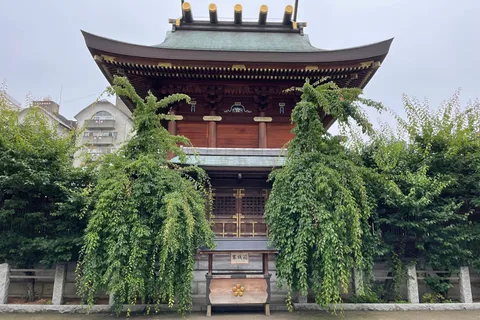
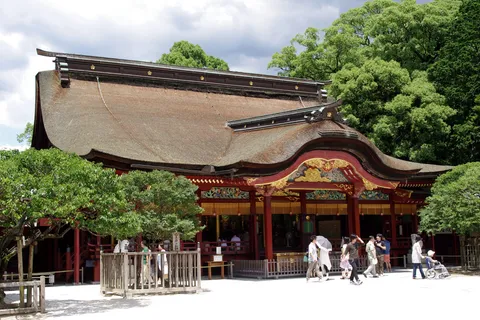
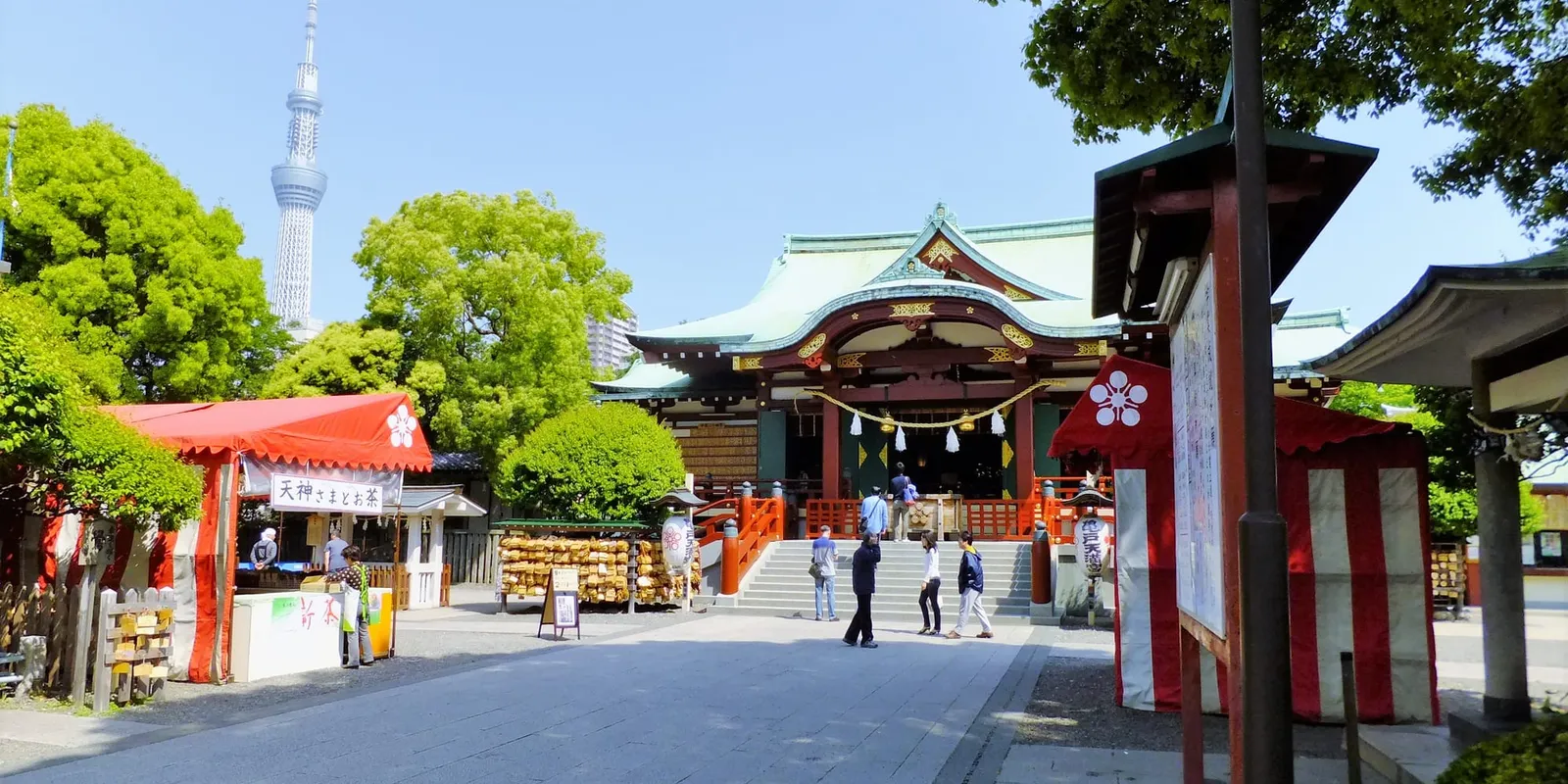
Kameido Tenjin was founded in 1662 by Sugawara Ootorii Shinyu, an official of Dazaifu Tenmangu in Kyushu said to be a 25th-generation descendant of Sugawara no Michizane. Shinyu enshrined a sacred image of Michizane on this site, and modeled the entire layout of the shrine grounds — the main hall, corridors, the heart-shaped Shinji-ike pond, and the drum bridge — directly after Dazaifu Tenmangu itself.
The shrine’s principal deity is Tenman Okami, the deified spirit of Sugawara no Michizane, worshipped alongside Ame-no-Hohi no Mikoto, an ancestral deity of the Sugawara clan, enshrined as an associated deity. For roughly 360 years since its founding, the shrine has served as the leading center of Tenjin worship in eastern Japan, and is affectionately known by nicknames such as “Toh-Dazaifu Tenmangu” and “Kameido Tenmangu.”
Reflecting Michizane’s own reputation as a brilliant scholar, the shrine has long been revered as a deity of academic success, and it draws students and parents from across the country, especially during exam season.
Highlights
The greatest highlight of Kameido Tenjin is its wisteria, celebrated as “Edo’s number one wisteria spot.” More than 50 wisteria vines drape over trellises above the Shinji-ike pond and its drum bridge, reaching full bloom each year from mid-April to early May. The pairing of wisteria and drum bridge, immortalized in ukiyo-e prints by Utagawa Hiroshige, has been a celebrated sight since the Edo period, and in recent years the same view framed together with Tokyo Skytree in the background has become one of the most photographed seasonal scenes in the city.
The Shinji-ike pond and its three bridges — the drum bridge and two flat bridges, all modeled on Dazaifu Tenmangu — are worth a close look as well. Traditionally said to represent the past, present, and future, crossing them in sequence on the way to the main hall is considered part of the proper way to pay one’s respects here.
Visiting Tips
The grounds are accessible at all times, but the shrine’s official visiting hours are 6:00–17:00. Goshuin stamps are available at the office to the right of the worship hall. During the Wisteria Festival and other seasonal events such as the plum and chrysanthemum festivals, the grounds get extremely crowded and the roughly 30-space east gate parking lot fills up early, so public transportation is recommended. Both routes in are convenient: about a 12-minute walk from JR Sobu Line Kameido Station, or straight off the bus at the Kameido Tenjin-mae stop.
Annual Festivals
- Plum Festival (early February–early March): About 300 red and white plum trees bloom across the grounds, heralding the arrival of spring.
- Wisteria Festival (mid-April–early May): The shrine’s signature event, with more than 50 wisteria vines draping the Shinji-ike pond and drum bridge, illuminated at night during the festival period.
- Grand Festival (August 24–25): The shrine’s largest annual festival honoring Sugawara no Michizane, featuring a mikoshi (portable shrine) procession through the surrounding parish neighborhoods.
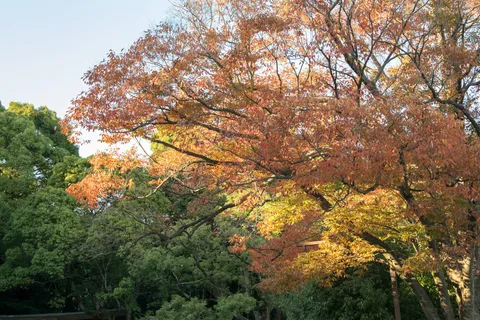
- Chrysanthemum Festival (late October–mid-November): Carefully cultivated chrysanthemums fill the grounds, a fitting autumn scene for a shrine nicknamed “the Tenjin of flowers.”
- Usokae Festival (January 24–25): Said to have begun in 1820 in imitation of a similar rite at Dazaifu Tenmangu, this festival involves exchanging carved wooden “uso” (bullfinch) charms for new ones, symbolically turning the past year’s misfortunes into “uso” (a lie) and welcoming good fortune instead.
Nearby Food & Sightseeing
- Funabashiya Kameido Tenjin-mae Main Shop: Founded in 1805, this long-established confectioner is credited with originating fermented kuzu mochi. Its main shop, right on the shrine’s approach, serves the signature “original kuzu mochi” on the spot.
- Kameido Masumoto: A restaurant founded in 1901 celebrated for dishes built around “Kameido daikon,” a historic Edo-Tokyo heirloom vegetable, including pickled and tempura preparations found nowhere else.
- Tokyo Skytree: Within walking distance to the northwest of the shrine, Skytree forms the backdrop to the classic view of wisteria and the drum bridge across the Shinji-ike pond, one of the shrine’s most photographed compositions.
Frequently Asked Questions
- Q. What are the visiting hours?
- A. The shrine's official visiting hours are 6:00–17:00 (grounds accessible at all times).
- Q. When is the goshuin office open?
- A. 9:00–17:00, for ¥500.
- Q. Is there parking?
- A. Yes, east gate parking is available (roughly 8:00–17:00, about 30 spaces).
- Q. When is the best time to see the wisteria?
- A. Usually mid-April to early May, when more than 50 wisteria vines drape the Shinji-ike pond and drum bridge, earning the shrine its reputation as 'Edo's number one wisteria spot.'
- Q. How do I get there?
- A. About a 12-minute walk from JR Sobu Line Kameido Station, or directly at the Kameido Tenjin-mae Toei bus stop.