History
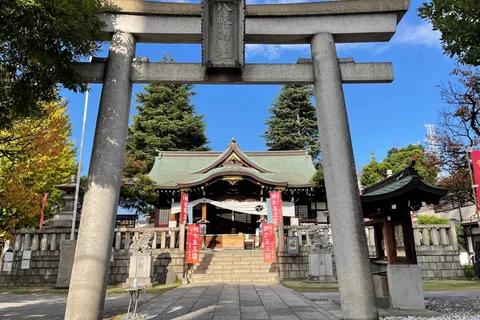
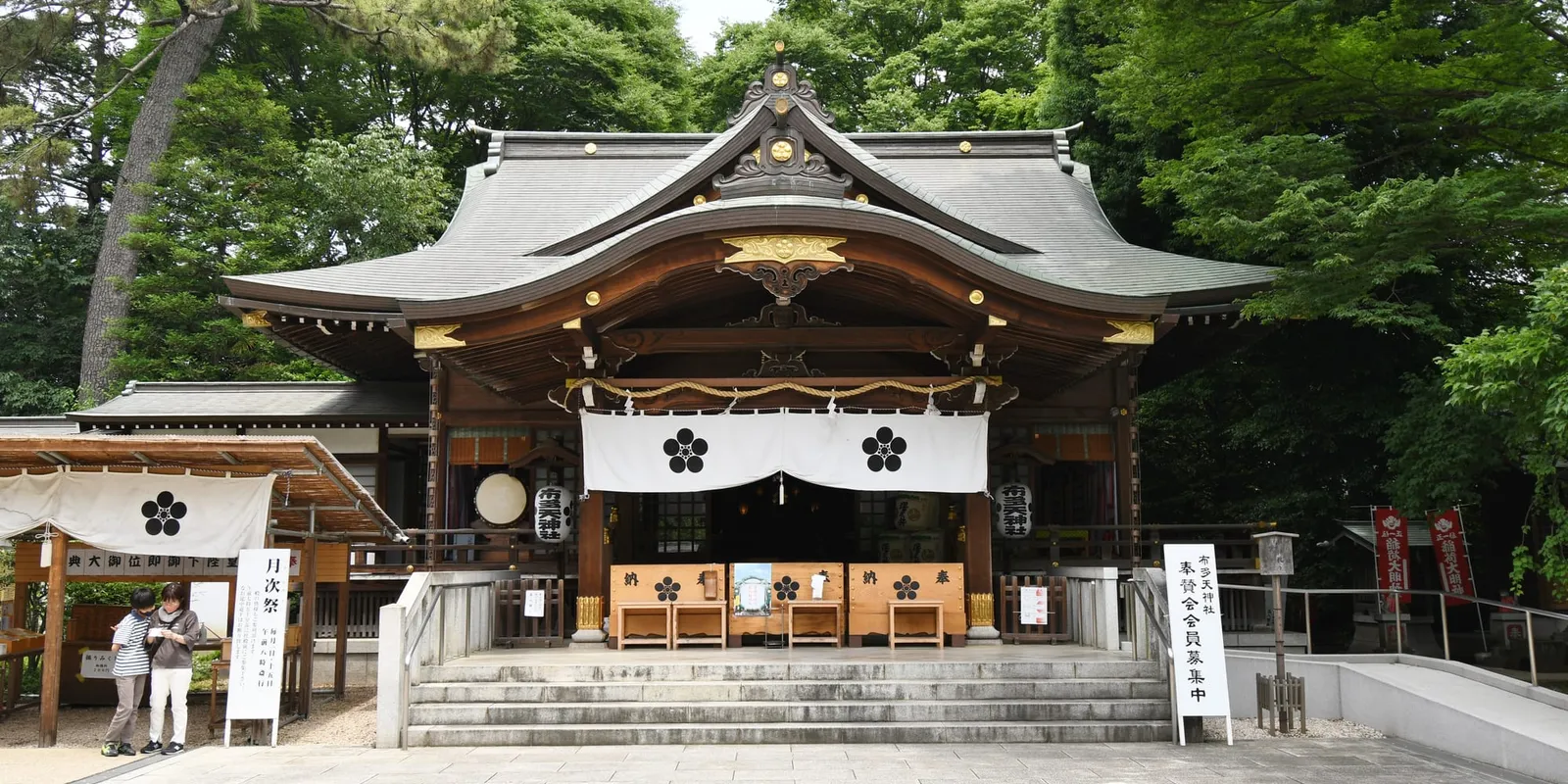
Fuda Tenjinsha stands in a residential area a short walk north of Chofu Station on the Keio Line in Chofu, Tokyo. Its name is read “Fuda Tenjinsha,” and the official site calls it “the guardian shrine of the Chofu community.” The enshrined deities are Sukunabikona no Kami and Sugawara no Michizane. According to the official site, Sukunabikona is revered as a god of business, sake brewing, hot springs and medicine, and rites for warding off childhood ailments, recovery from illness, good health and business prosperity have long been performed here.
The date of founding is uncertain, but the official site says the shrine is one of the oldest in the Tama region, named in the Engishiki code compiled in 927. Shrine tradition places its founding in the reign of the 11th emperor, Suinin, about 1,940 years ago. In 1477 it was moved from an earlier site called Kotenjin (古天神) to its present site to escape floods of the Tama River, and at that time Sugawara no Michizane was enshrined alongside Sukunabikona no Mikoto.
In the Edo period, five post towns (Kami-Ishihara, Shimo-Ishihara, Kami-Fuda, Shimo-Fuda and Kokuryo) grew up along the Koshu Kaido highway and were called the “Fuda Gojuku.” The shrine was their chief guardian, worshipped as the “Gojuku Tenjin.” When the five towns merged with Tobitakyu and Kamigakyu in 1889 to form Chofu Town, the shrine became the town’s chief guardian. (All of this is as explained on the shrine’s official site.)
According to Chofu City’s official pages, the Tenjin-dori shopping association on the approach to the shrine has monuments of GeGeGe no Kitaro characters, and in the city’s “Gegege-ki” events around the anniversary of Shigeru Mizuki’s death, a “Gegege-ki limited special goshuin” from the shrine was listed as one of the initiatives in 2024 and 2025.
Highlights
The main hall, rebuilt in 1706, is a single-bay nagare-zukuri building with elephant-nose and lion-head carvings on the porch pillars, reflecting mid-Edo architecture, says the official site. It is a tangible cultural property designated by Chofu City, but it is enclosed in a protective building and cannot be seen directly.
The pair of guardian dogs before the worship hall was erected in 1796 to pray for the town’s prosperity and business success, and is designated a tangible cultural property of the city as the oldest guardian-dog pair in Chofu. The official site notes that the donors are listed as “all parishioners” and “all merchants,” suggesting that a Tenjin market was already held there about 200 years ago.
The shrine holds a “Taiko no Seisatsu,” a notice board issued by Toyotomi Hideyoshi in April 1590 to reassure local people when he attacked the Odawara Hojo clan. It shows that “Fuda” was once written with different characters, and the official site calls it a valuable record as the only pre-modern notice board surviving in the Chofu area.
Other features include the zelkova sacred tree in front of the hall (about 500 years old, currently being cared for), the sacred ox statue that recalls legends about the ox of Sugawara no Michizane, weeping plum trees that begin blooming in mid-February, and the “Tama River monument,” an inscription erected in 1846. The grounds also hold auxiliary shrines to Kotohira, Otori, Inari (two), Mitake, Haraedo, Hosogami and Itsukushima.
Visiting Tips
The official site does not give visiting hours for the grounds. Prayer services are accepted about hourly from 9:30 AM, with reservations preferred. Book by phone (042-489-0022) or online; the phone line for prayer reservations is open 9:30 AM–4:30 PM (excluding Butsumetsu weekdays). If you cannot print the application form in advance, the shrine asks you to arrive 30–40 minutes before your slot. Services include protection from misfortune, household safety, traffic safety, exam success, safe childbirth, first shrine visits for babies and Shichi-Go-San, and amulets are not mailed.
The official site gives no goshuin fee or hours. One individual’s guide article lists ¥500, but it may vary by time and type, so please confirm at the shrine.
It is about a 5-minute walk from the central ticket gate of Chofu Station on the Keio Line. By car from the Shinjuku side, the official site advises turning right at the Chofugaoka intersection, two signals before the “Futa Tenjin-mae” intersection on the Koshu Kaido (right turns are not possible at the latter). The number of parking spaces and fees are not stated, and New Year’s is expected to be crowded.
Annual Festivals
The following is based on the annual events listed on the official site.
- Gantan-sai and New Year’s visit (January 1): Held at midnight on New Year’s Day, with many visitors for the first shrine visit.
- Setsubun-sai and Mamemaki (February 3): Year-men and year-women of the supporters’ association scatter beans from the kagura hall from 12:30 PM, and local elementary school children join the final round.
- Nagoshi-no-Harae and Chinowa ritual (June 25): Visitors pass through a straw ring three times to purify the past half-year.
- Tanabata Festival (July 7): Bamboo is set along the approach with wish strips, and there are performances at the kagura hall and evening lighting.
- Annual Grand Festival (September 23–25): The most important rite of the year. On the 23rd (the autumnal equinox) portable shrines parade around the station area, and at sunset a firewood-lit kagura is offered.
- Tori-no-Ichi market (first Tori day in November): Held with the festival of the Otori Shrine on the grounds.
- Shichi-Go-San Festival (November 15) and Niiname-sai (November 25)
- Monthly festival and sato-kagura (the 25th of each month): Sato-kagura is offered at the kagura hall (the monthly festival is not held in February and November).
Dates may change, so check the “Annual Events” page on the official site for the latest.
Nearby Food & Sightseeing
- Tenjin-dori Shopping Street: The shopping street on the approach to the shrine from the old Koshu Kaido near the north exit of Chofu Station (Chofu City’s official page). A pleasant stroll before or after your visit.
- Kokuryo Shrine: A shrine in Chofu. According to a guide article, it was formed by merging two shrines that once stood by the Tama River, and is known for an old wisteria called “Sennen no Fuji.”
- Jindai-ji Temple: A historic temple in Chofu. According to a guide article, it is said to have been founded in 733 by the priest Mangan and counts among Tokyo’s oldest temples after Sensoji.
Frequently Asked Questions
- Q. What are the visiting hours and prayer times?
- A. The official site does not list visiting hours for the grounds. Prayer services are accepted about hourly from 9:30 AM, with reservations preferred (times may change for events). The phone line for prayer reservations is open 9:30 AM–4:30 PM (excluding Butsumetsu weekdays). You can book by phone (042-489-0022) or online.
- Q. Can I get a goshuin at Fuda Tenjinsha?
- A. The official site does not state the goshuin fee or hours. One individual's guide article gives ¥500, but fees and hours can change, so please confirm with the shrine. The official site notes that amulets are not mailed.
- Q. How do I get there, and is there parking?
- A. It is about a 5-minute walk from the central ticket gate of Chofu Station on the Keio Line (official site). A new parking lot is available, and large buses may enter the grounds with advance notice. The number of spaces and fees are not stated on the official site, and it gets crowded at New Year's, so allow extra time. Motorbikes and bicycles use the dedicated parking area on the left just inside the torii.
- Q. Is the shrine connected to GeGeGe no Kitaro?
- A. According to Chofu City's official pages, the Tenjin-dori shopping association on the approach to the shrine has monuments of GeGeGe no Kitaro characters. In the city's "Gegege-ki" events held around the anniversary of Shigeru Mizuki's death (November 30), a "Gegege-ki limited special goshuin" from Fuda Tenjinsha was listed as one of the initiatives in 2024 and 2025. The city's 2026 Gegege-ki page (November 18–30) did not mention the shrine, so please check with the shrine about availability.
- Q. What are the cultural properties and highlights?
- A. According to the official site, the main hall was rebuilt in 1706 and is a tangible cultural property designated by Chofu City, but it is enclosed in a protective building and cannot be seen directly. The pair of guardian dogs in front of the worship hall dates from 1796 and is described as the oldest in the city, and the shrine also holds a notice board issued by Toyotomi Hideyoshi in 1590. A zelkova tree of about 500 years stands as the sacred tree in front of the hall (currently being cared for).
Plan Your Visit
Before you go, you can book a stay and get your shrine-visit items ready.
Amazon links open Amazon.co.jp (Japan) in English; whether an item ships overseas depends on the product.
※ Contains ads (PR). Links open external sites such as Amazon, Rakuten, Trip.com and Booking.com.