History
Hiromine Shrine stands at 52 広嶺山 in Himeji, Hyogo Prefecture. Its name is read “Hiromine-jinja” (according to the furigana on the official site). It is often written 広峯神社 or 広峰神社, but the official site uses the spelling 廣峯神社.
According to the Origins page of the official site, the shrine began in the Yayoi period, in the reign of Emperor Sujin, when Susanoo-no-Mikoto and Isotakeru-no-Mikoto were enshrined on Mt. Hakuhei. The shrine’s tradition says that Empress Jingu stopped here on her way to the Korean campaign and prayed to Susanoo-no-Mikoto for victory. In 733 (Tenpyo 5), in the Nara period, Kibi no Makibi, who had been to Tang China as an envoy, is said to have received an oracle from Susanoo-no-Mikoto on his way home and reported it to the emperor, and the next year he built a shrine on Mt. Hakuhei and called it Hiromine Shrine. The main hall is said to have been moved to its present site in 972 (Tenroku 3).
The same official site says that Makibi, wishing to spread the Onmyodo he had studied in Tang China, assigned Susanoo-no-Mikoto, the chief deity, to Gozu Tenno and made him a deity of the calendar. As a result, it says, Hiromine Shrine became a sacred site revered by onmyoji. It also introduces a passage from the “Hoso-ki” saying that in the Kamakura period worshippers gathered in numbers rivaling the Kumano pilgrimage.
The shrine’s relationship with Yasaka Shrine in Kyoto is another topic on the official site. The “Hoso-ki” says the deity was invited to Gion to guard the east when Heian-kyo was built, and Hiromine Shrine is described as the “Moto-Gion” (original Gion) of Yasaka Shrine. On the other hand, the site says that in 1311 Mt. Hiromine was donated to Yasaka Shrine by Retired Emperor Fushimi, after which it was ranked as a “Gion subsidiary shrine” and the two shrines contended over which was the true home of Gozu Tenno. These are the shrine’s own explanations, not facts this page asserts.
Highlights
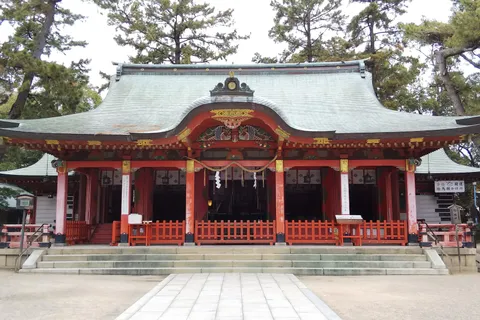
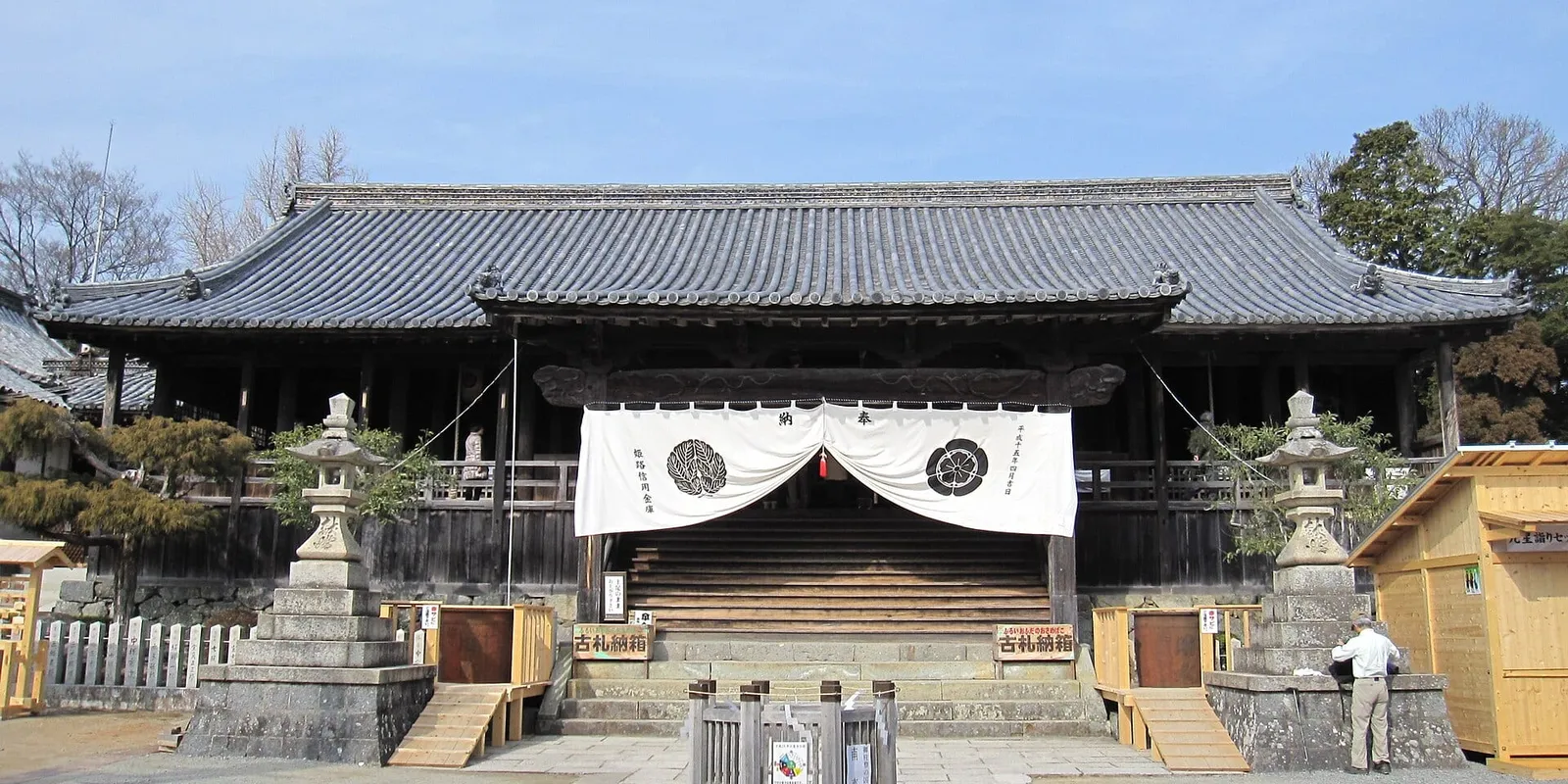
According to the precinct guide on the official site, the haiden (worship hall; built in 1459 and rebuilt in 1626) and the honden (main hall; built in 972 and rebuilt in 1444) are national Important Cultural Properties. The official site explains that the honden is divided into three parts: the center hall (Shoden) enshrines Susanoo-no-Mikoto and Isotakeru-no-Mikoto, the left hall (Saden) Kushinadahime-no-Mikoto and Ashinazuchi-no-Mikoto, and the right hall (Uden) the Hachioji deities. The Zuijinmon and front gate (built in 1697), the 軍殿八幡社, the Inari shrine, the auxiliary shrine 地養社 and the Ebisu shrine are city-designated Important Cultural Properties, and the Hokyoin-to pagoda, thought to date from the late Kamakura period, is a national Important Cultural Property.
Another highlight is the “Onmyo Kyusei Mairi.” The official site describes the nine holes behind the main hall as the home of the guardian deities of the nine stars, from Ippaku Suisei to Kyushi Kasei, and says the custom unique to Hiromine Shrine is to whisper your wish three times toward the hole of your own destiny star. A plaque for each destiny star hangs above its hole, and the official site says the plaques are swapped in the dead of night between February 3 and 4.
Mt. Hakuhei, said to be the origin of the shrine, is revered as the Oku-no-in (inner sanctuary), and the official site says it is about a 10-minute walk from Hiromine Shrine. At the summit are the Kibi shrine, dedicated to Kibi no Makibi, and the Kojin shrine, dedicated to the rough spirit of Susanoo-no-Mikoto, with a sacred rock (iwakura) between them. The official site introduces this as “said to be the place where the deity first descended.” Other treasures, such as the prefecturally designated Important Cultural Property votive ema depicting a jewel (offered in 1485), are listed under “Knowledge and Cultural Properties” on the official site.
Visiting Tips
Prayer requests are accepted 9:00 AM–4:00 PM and the shrine office is open 9:00 AM–4:30 PM (both per the official site). Prayers for protection from misfortune, safe childbirth, exam success, household safety, business prosperity, recovery from illness and protection from bad directions, among others, are accepted at any time. The order the shrine suggests is to first bow twice, clap twice and bow once at the front worship hall to give thanks, then go around behind the main hall for the Kyusei Mairi.
The goshuin, the Kanbei goshuin and the Reiwa commemorative goshuin are each ¥500 on the official site’s page on amulets and offerings. Separate hours for goshuin are not given, so use the shrine office hours as a guide.
For access, the official guide is about 20 minutes by Shinki Bus from Himeji Station to “Keibajo-mae,” then about 10 minutes by taxi. By car it is about 27 minutes from Himeji Station to the parking lot, and about 10 minutes from the lot in front of the torii to the grounds. Parking capacity and fees are not given on the official site, and since the road is narrow, large vehicles are asked to use the lot below the torii.
The stories about Kuroda Kanbei on the grounds come from the shrine’s own “Gunshi Kanbei Den” page. It says his grandfather Kuroda Shigetaka, helped by the shrine’s priestly families, later entered the service of the Kodera clan, that there is a Kanbei Shrine in the precincts, and that Kanbei and Mitsuhime fortune slips (¥200 each) and a Kanbei goshuin are available.
Annual Festivals
The official site’s “Annual Events” page lists the following (as of November 2026; dates may change from year to year).
- Saitan-sai (January 1): A festival praying for prosperity through the coming year.
- Ekijin-sai (January 14): According to the official site, before the Meiji Restoration it was the most important festival of this imperially sponsored shrine; today it is a major festival to quell epidemics and pray for recovery from illness and long life.
- Setsubun and Risshun Yakuyoke Taisai (February 3–4): Observing the custom of receiving a year-end purification at Setsubun and a new-year prayer at Risshun.
- Otaue-sai (April 3) and Kikoku-sai (April 18): The official site says they are designated by Himeji City as intangible folk cultural properties (on some pages it writes “Important Intangible Folk Cultural Property”). The Kikoku-sai includes the 穂揃式 (rice-ear ceremony) and the 走馬式 (horse-riding rite).
- Nagoshi no Oharae and Chinowa Shinji (June 30): The official site explains that the chinowa (reed ring) custom comes from the tale of Susanoo-no-Mikoto and Somin Shorai at the auxiliary shrine 地養社.
- Sendo-sai (July 1) and Yakushi-sai (July 18): At the Yakushi-sai, prayer sticks are burned at the Yakushi-do.
- Kibi-sai (October 2): A festival of thanks to Kibi no Makibi. Another page on the official site says “Old October 2,” so the pages differ.
- Mihashira-sai (November 15): In the evening a pillar about five meters tall is burned, and the direction in which it falls marks the unlucky direction from the following Setsubun. The 2026 date has already passed.
- Susuharai Shinji (December 13) and Toshikoshi no Oharae (December 31).
Nearby Food & Sightseeing
The shrine’s official site gives no guide to nearby food, so these are places mentioned on its Kanbei-related pages. We have not checked distances or travel times, so please look up how to get there beforehand.
- Himeji Castle: The official site’s “Gunshi Kanbei Den” page says Kuroda Kanbei was born at Himeji Castle.
- Shoshazan Engyoji: In the shrine’s introduction of places connected with Kanbei, it is described as a Tendai-sect training temple opened by the priest Shōkū in Koho 3.
- Masuiyama Zuiganji: The same page says Kanbei’s uncle Kodera Kyumu built a Jizoin near it and lived there, and that Kanbei went there to study.
Frequently Asked Questions
- Q. What are the visiting hours and prayer hours?
- A. The official site lists prayer requests as accepted 9:00 AM–4:00 PM, and the shrine office (reception, amulets and fortune slips) as open 9:00 AM–4:30 PM. The official site does not state hours for entering the grounds themselves. Because the shrine is up on the mountain, it is best to allow plenty of time.
- Q. Can I get a goshuin at Hiromine Shrine?
- A. Yes. The official site's page on amulets and offerings lists the goshuin, the Kanbei goshuin and the Reiwa commemorative goshuin at ¥500 each. Separate hours for goshuin are not given, so it is safest to arrive by about 4:00 PM, using the shrine office hours (9:00 AM–4:30 PM) as a guide.
- Q. How do I get there, and is there parking?
- A. According to the official site, it is about 20 minutes by Shinki Bus from JR/Sanyo Electric Railway Himeji Station to the "Keibajo-mae" stop, then about 10 minutes by taxi from a taxi company near the stop. By car it is about 27 minutes from Himeji Station to the parking lot and about 30 minutes from Hanada IC on the Bantan Toll Road. There is a municipal parking lot in front of the torii, and the official site says it is about 10 minutes from there to the grounds. Capacity and fees are not given, and since the road to the worshippers' lot is narrow, large vehicles are asked to use the lot below the torii.
- Q. What is Kyusei Mairi (Onmyo Kyusei Mairi)?
- A. According to the official site, nine holes behind the main hall are home to the guardian deities of the nine stars, from Ippaku Suisei to Kyushi Kasei, and the custom is to whisper your wish three times toward the hole of your own destiny star. It is a worship style unique to Hiromine Shrine. First bow twice, clap twice and bow once at the front worship hall to thank the deities for their daily blessings, then go around behind the main hall. A "Kyusei Mairi set" that includes a Kyusei prayer tag (on which you write your wish and name) is listed at ¥1,000.
- Q. What is the shrine's connection to Kuroda Kanbei?
- A. According to the "Gunshi Kanbei Den" page on the official site, Kanbei's grandfather Kuroda Shigetaka visited Hiromine Shrine often after moving to Himeji, and with the help of the shrine's priestly families (oshi) he distributed the Kuroda family's secret eye medicine together with the shrine's talismans, built up wealth, and later entered the service of the Kodera clan. The grounds hold a Kanbei Shrine, and Kanbei and Mitsuhime fortune slips (¥200 each) and a Kanbei goshuin (¥500) are available. All of this is the shrine's own account.
Plan Your Visit
Before you go, you can book a stay and get your shrine-visit items ready.
Amazon links open Amazon.co.jp (Japan) in English; whether an item ships overseas depends on the product.
※ Contains ads (PR). Links open external sites such as Amazon, Rakuten, Trip.com and Booking.com.