History
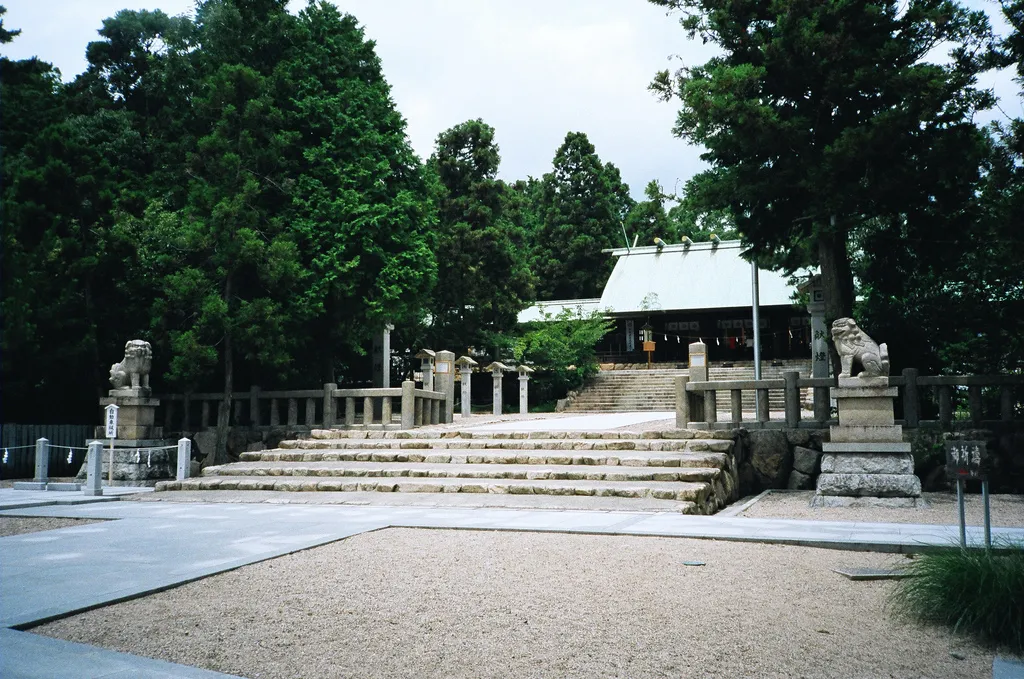
Hirota Jinja, in the city of Nishinomiya in Hyogo Prefecture, has its founding legend recorded in the Nihon Shoki, Japan’s second-oldest chronicle. According to tradition, in 201 CE — the first year of Empress Jingu’s regency — the fleet carrying the empress home from her legendary campaign against the Korean kingdoms found itself unable to proceed off the coast of Mukō. A divine oracle from Amaterasu Omikami instructed that her “aramitama,” the fierce and active aspect of the sun goddess, should be enshrined not at the empress’s side but in the land of Hirota. Jingu followed the oracle and enshrined the aramitama here as a guardian deity protecting the nation against foreign threats. The deity’s formal name is Amaterasu Omikami’s Aramitama, also known by the alternate name Tsukisakaki Itsu no Mitama Amasakaru Mukatsuhime no Mikoto, and the shrine has been an object of deep reverence for more than 1,800 years since.
During the Heian period, Hirota Jinja was ranked among the “Twenty-Two Shrines” singled out for special court patronage, and was visited by generations of emperors and nobility, including the retired emperor Shirakawa, as a patron of poetry — uta-awase poetry competitions were reportedly held on its grounds during the same Heian courtly era that produced the Tale of Genji. In 1184, amid the Genpei War between the Minamoto and Taira clans, Minamoto no Yoritomo is recorded to have donated land in Awaji Province to the shrine in prayer for the destruction of the Taira clan, tying Hirota Jinja closely to that turbulent chapter of Heian-era history. In 1871 it became the first shrine in Hyogo Prefecture to be ranked under the modern shrine system, and it is still described today as “Hyogo Prefecture’s foremost old shrine.”
Highlights
The shrine grounds are home to a colony of Kobano-mitsuba azaleas, a natural monument designated by Hyogo Prefecture, with around 20,000 shrubs bursting into bloom in early April. The current main hall was rebuilt in 1984 after a fire in 1981, the latest chapter in a long history of reconstruction under successive patrons — from a major rebuilding funded by Toyotomi Hideyori in 1604 to a relocation to Mount Hirota under Tokugawa Yoshimune after flood damage.
Hirota Jinja has long been known as a deity of victory. Since its founding, the Hanshin Tigers professional baseball team has made it a tradition for the entire roster, manager, and coaching staff to visit together every March before the season opener to pray for victory, and the JT Marvelous women’s volleyball team is among other sports organizations that visit to pray for a championship. The martial spirit that led to the aramitama’s enshrinement here in ancient times lives on today in this modern tradition of praying for victory in competition — a distinctive feature of the shrine.
Visiting Tips
The grounds are compact enough that a visit takes about 30 minutes, but arriving in early April lets visitors combine the azaleas at their peak with the Tsutsuji Matsuri festival, complete with bugaku court dance and a children’s procession. Goshuin stamps can be received at the shrine office to the right of the worship hall, open from 8:30 to 16:30. Koshien Stadium is only about 30 minutes away by train and bus, so many visitors combine a baseball game or a stroll through the nearby sake district with a stop here to pray for victory.
Annual Festivals
- Setsubun Festival (February 3): A rite praying for good health through the year ahead, with a limited-edition goshuin available.
- Reisai Grand Festival (March 16): The shrine’s most important annual festival, marked by solemn Shinto rites performed by the priesthood.
- Tsutsuji Matsuri, the Azalea Festival (first Sunday of April): Held as the shrine’s protected Kobano-mitsuba azaleas reach full bloom, featuring bugaku court dance performances and a procession of children in traditional dress.
- Kangetsusai, the Moon-Viewing Festival (October 15): A rite held around the night of the harvest moon, giving thanks for divine blessings under the clear autumn sky.
Nearby Food & Sightseeing
- Hakushika Memorial Museum of Sake: Located in the Nishinomiya-go district of Nada-Gogo, Japan’s foremost sake-brewing region, this museum of sake and cherry blossoms occupies a working Edo-period brewery building where visitors can see traditional brewing tools and techniques up close.
- Koshien Stadium: The hallowed home ground of the Hanshin Tigers and Japan’s national high school baseball tournaments, located in the same city as Hirota Jinja — many baseball fans combine a visit here with a stop at the shrine famed for the Tigers’ own victory prayers.
- Nishinomiya Shrine: Head shrine of the nationwide Ebisu faith, famous for the “Fukuotoko” lucky-man footrace held at its gates every January 10 — historically a related shrine to Hirota Jinja, once counted among its subsidiary shrines.
Frequently Asked Questions
- Q. What are the visiting hours at Hirota Jinja?
- A. The grounds are open to visitors at all times (the shrine office is open 8:30–16:30).
- Q. When can I get a goshuin, and how much does it cost?
- A. Goshuin are available at the shrine office from 8:30 to 16:30, for ¥500 (¥1,000 for the special goshuin).
- Q. Is there parking at Hirota Jinja?
- A. Yes, free visitor parking is available on the grounds.
- Q. What is the connection between Hirota Jinja and the Hanshin Tigers?
- A. Hirota Jinja has long been known as a deity of victory. Since the team's founding, the Hanshin Tigers professional baseball team has made it a tradition for the entire roster, manager, and coaching staff to visit together every March before the season opener to pray for victory.
- Q. How do I get to Hirota Jinja?
- A. By bus bound for Koto-en from the south exit of Hankyu Nishinomiya-Kitaguchi Station, get off at Hirota-jinja-mae; or by Hanshin bus on the Yamate-Higashi route from the north exit of Hanshin Nishinomiya Station, same stop.
Related Shrines
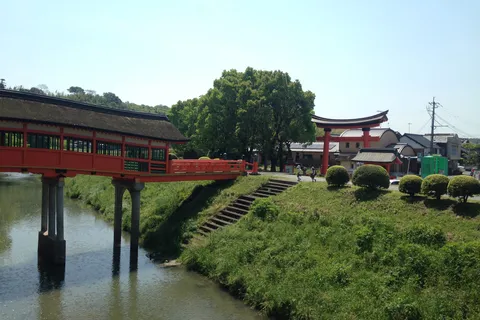
Oita Prefecture, Usa
Usa Jingu
Usa-jingū
- Victory in Competition
- Protection from Misfortune
- Household Safety
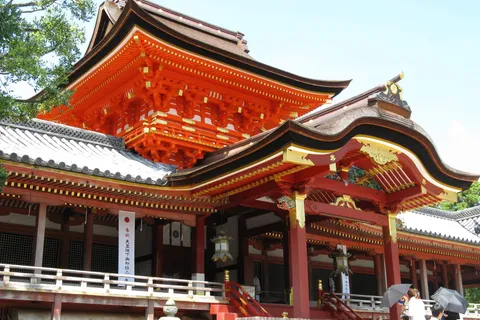
Kyoto Prefecture, Yawata
Iwashimizu Hachimangu
Iwashimizu Hachimangū
- Protection from Misfortune
- Victory in Competition
- Household Safety
Kanagawa Prefecture, Kamakura
Tsurugaoka Hachimangu
Tsurugaoka Hachiman-gū
- Victory in Competition
- Good Relationships
- Protection from Misfortune