History
Nagata Jinja stands in Nagata Ward, Kobe, and is affectionately known locally as “Nagata-san.” The official site names Kotoshironushi-no-kami as the enshrined deity, also called “Ebisu-sama” and a god of fortune, and describes him as a guardian of commerce and all industries and a deity of everyday good fortune and protection from misfortune. (The official site gives no reading for the name; “Nagata-jinja” follows Japanese Wikipedia.)
According to the official history, Empress Jingu, on her return from the Silla expedition, received a divine message at the Muko harbor to enshrine the deity in the land of Nagata, and the Nihon Shoki entry for the first year of her regency (traditionally dated to 201 CE) records this. The ancient land of Nagata is said to have stretched east to the Minato River (today’s Shinkaichi) and west to Suma Ichinotani, and the shrine originally stood on a sandbar of the Karimo River. Under the Engishiki it was ranked as a Myojin Taisha, and in 1896 (Meiji 29) it was raised to the rank of Kanpei Chusha. An old tradition holds that an oracle named a village where chickens crow as the destined site, and chickens are honored here as messengers of the deity.
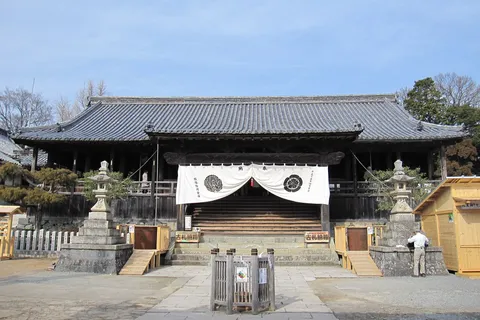
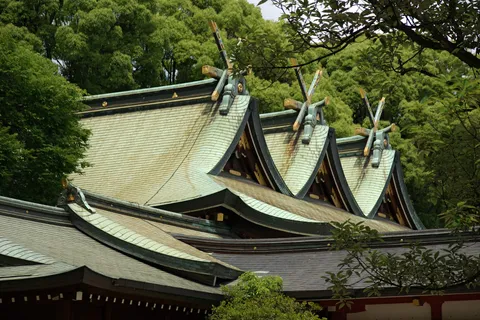
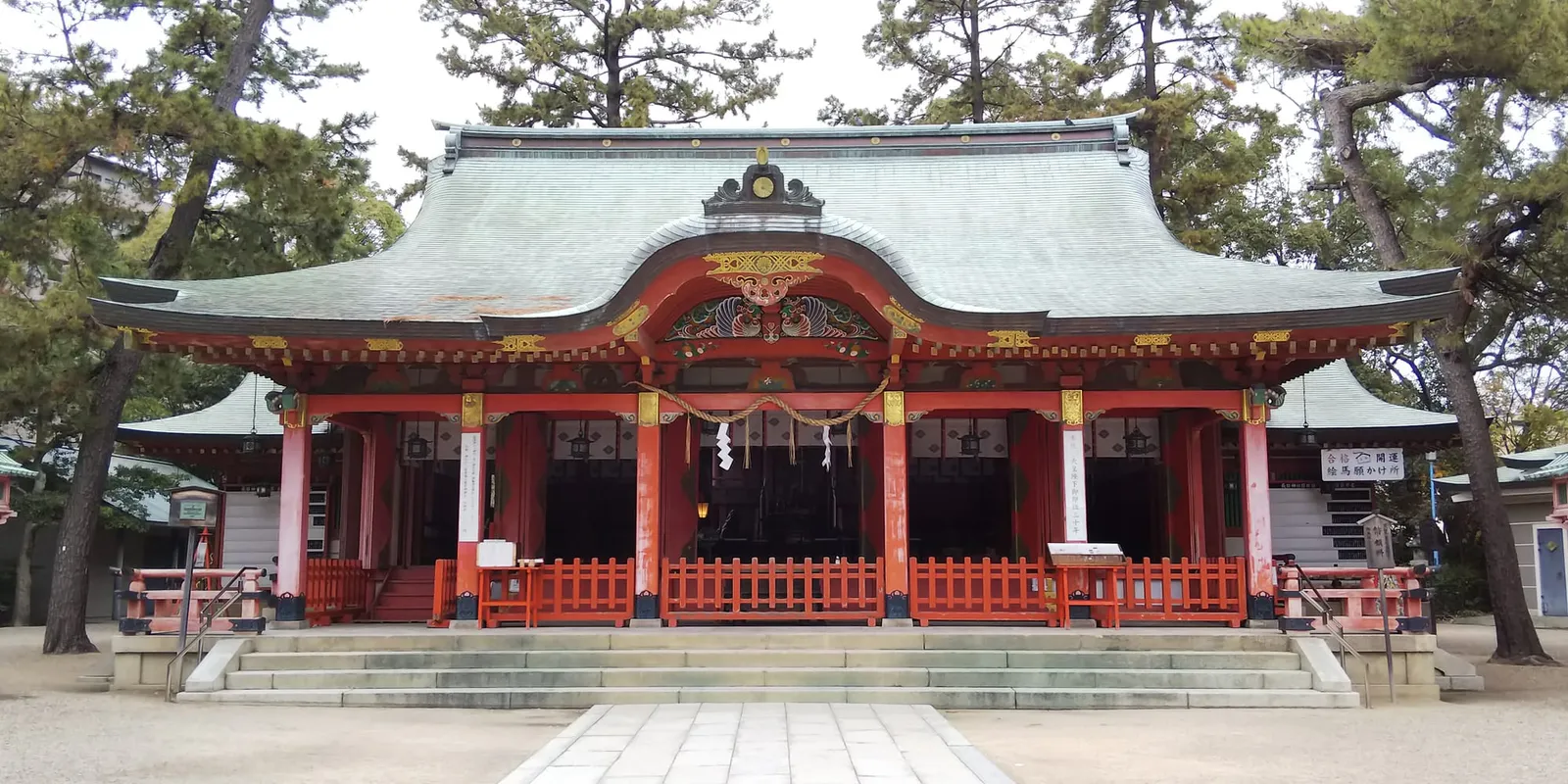
According to the official site, the shrine buildings were destroyed by an electrical fire in January 1924 (Taisho 13) and rebuilt in 1928 (Showa 3); that rebuilding is today’s complex. The Great Hanshin-Awaji Earthquake of January 17, 1995 (Heisei 7) caused severe damage, and the restoration was completed with a ceremony on July 14, 2000 (Heisei 12). The site also records that the assembly hall served as a temporary shelter right after the quake, taking in about 150 people over roughly a month.
Highlights
According to the official site’s “Designated Cultural Properties” page, these are: the black-lacquered gilt-bronze mikoshi (a national Important Cultural Property, designated 1969); the Nagata Jinja Koshiki Tsuina-shiki (an Important Intangible Folk Cultural Property of Hyogo Prefecture, designated 1970); a stone lantern (a Hyogo Prefecture Important Tangible Cultural Property, bearing an inscription dated 1286, Koan 9; designated 1971); and two camphor trees of Nagata Jinja (a Kobe City Natural Monument, designated 1999).
The Tsuina rite is held in the afternoon of Setsubun day on a stage in front of the main hall. The official site says the oni are not bringers of misfortune but messengers of the gods who purify disasters in their place; the climax comes when they dance with torches and split rice cakes with an axe and a mallet. The designation covers the oni masks and the full set of ritual items, and participation is limited to families of the former Nagata village, the site explains.
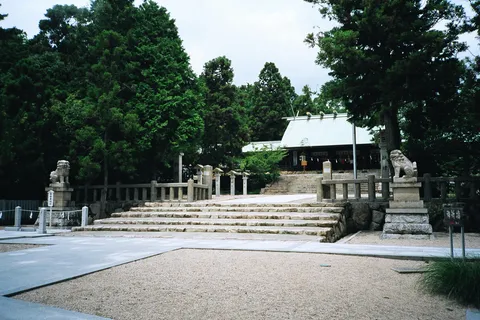
The sacred camphor tree on the grounds has a trunk girth of about 5 m, a height of about 30 m and an estimated age of over 800 years, per the official precinct guide. Standing near Kusunomiya Inari Shrine, it has drawn prayers for recovery from illness through a legend of the red stingray. The custom is to write your age, zodiac sign and sex on an ema depicting a red stingray and hang it on the lattice fence around the tree; the official site says it is believed to help with all illnesses, though most visitors pray for relief from hemorrhoids. The grounds also hold a custom of not eating chicken or eggs, a folk tale of the Night-Crying Stone, an eyeglass monument (erected in 1959), and statues of Ebisu and Daikoku.
Visiting Tips
The gates open at 5:00 AM from April to September and 6:00 AM from October to March, and close at 6:00 PM all year (per the official site’s notice). Times may change during festivals, so check the official site on event days. Shrine office hours are not given on the official site.
Goshuin are available at the shrine office in three types (Nagata Jinja, Kusunomiya Inari Shrine and Ebisu), each for a ¥500 offering (official site). Per the official site, the Ebisu goshuin relates to the shrine being one of Kobe’s Seven Lucky Gods shrines. Goshuin hours are not stated.
The official site gives about a 5-minute walk north through the shopping street from Nagata (Nagata Jinja-mae) Station. It gives no parking information, so please call the shrine to check.
Annual Festivals
This list follows the official site’s annual events page, which does not state a year. The official site has not published 2027 dates, so please check it before visiting.
- Setsubun Festival and Tsuina-shiki (Setsubun day): The Hyogo-designated ancient oni-driving rite. According to the official site, the Setsubun festival starts at about 12:30 PM and the rite at about 1:30 PM. The official site says the distribution of bundled torch remnants has carried a ¥500 offering since 2025.
- Natsugoshi-sai (July 17 and 18): Includes the chinowa (reed ring) purification ritual.
- Eyeglass Appreciation Festival (October 1): Held at the eyeglass monument, giving thanks to glasses used for many years.
- Nagata Matsuri (October): The list gives the 17th as the eve festival, the 18th as the annual festival and the 19th as the procession. In 2026 the schedule changed: according to the notice of September 28, 2026, a parishioners’ prosperity prayer was held on the afternoon of the 17th, and the annual festival and the afternoon procession on the 18th. The mikoshi was due to leave at about 1:30 PM.
- Niiname-sai (November 23): Listed as a major festival.
Nearby Food & Sightseeing
- Nagata Jinja-mae Shopping Street: The shopping street leading from Nagata Station to the shrine. The official directions say to walk north through it for about 5 minutes.
- Tetsujin 28-go Monument (Wakamatsu Park): According to Kobe City documents, a life-size monument of Mitsuteru Yokoyama’s work stands in the square (Tetsujin Hiroba) inside Wakamatsu Park in 6-chome, Wakamatsu-cho, Nagata Ward, and is regarded as a landmark of Nagata.
Frequently Asked Questions
- Q. What are the visiting hours?
- A. According to the official site's notice (September 19, 2024), the gates open at 5:00 AM from April to September and 6:00 AM from October to March, and close at 6:00 PM all year. Closing time may differ during festivals and is announced on the official site each time. Shrine office hours are not given on the official site, so for amulets or goshuin a daytime visit is the safe choice.
- Q. Can I get a goshuin at Nagata Jinja?
- A. Yes. Per the official site, goshuin are available at the shrine office (just inside the automatic door of the hall building) in three types: Nagata Jinja, Kusunomiya Inari Shrine and Ebisu, each for a ¥500 offering. Goshuin hours and goshuin books are not mentioned on the official site. The shrine has also announced seasonal goshuin in its news (2025).
- Q. How do I get there, and is there parking?
- A. It is about a 5-minute walk north through the Nagata Jinja-mae shopping street from West Exit 2 of Nagata (Nagata Jinja-mae) Station on the Kobe Municipal Subway (official site). City bus lines 3, 4 and 17 stop at "Nagata Jinja-mae" right in front. The official access page gives no parking information, so call the shrine (078-691-0333) to check, or use public transport.
- Q. When is the Setsubun Tsuina rite (oni-oi), and what is it?
- A. The official site presents the "Nagata Jinja Koshiki Tsuina-shiki" as held on Setsubun day each year. It is designated an Important Intangible Folk Cultural Property of Hyogo Prefecture. According to the official site, the Setsubun festival starts at about 12:30 PM and the rite at about 1:30 PM, when seven oni dance with torches and finally split rice cakes. The Nagata oni are described not as bringers of misfortune but as messengers of the gods who purify disasters on their behalf. Detailed times for 2027 were not found on the official site, so check before you go.
- Q. Has the shrine been used as a filming location?
- A. According to a notice on the official site (October 26, 2025), the grounds were used as a location for the Netflix series 今際の国のアリス シーズン3 (Alice in Borderland, Season 3). The notice says the shrine appears as one of the stages, under a different name in the story, and that filming took place at night while the shrine was closed.
Plan Your Visit
Before you go, you can book a stay and get your shrine-visit items ready.
Amazon links open Amazon.co.jp (Japan) in English; whether an item ships overseas depends on the product.
※ Contains ads (PR). Links open external sites such as Amazon, Rakuten, Trip.com and Booking.com.