History
Hotoku Ninomiya Jinja enshrines Ninomiya Sontoku, a farmer, agricultural reformer, and moral philosopher of the late Edo period, widely known by his childhood name Ninomiya Kinjiro. Born in 1787 into a farming family in Kayama village, in what is now Odawara, Sontoku lost his father while still a boy and saw the family’s fields wiped out by a flood of the Sakawa River. Forced into poverty, he is said to have spent his days working the fields and gathering firewood, and his evenings and spare moments teaching himself to read — rebuilding his family’s fortunes through discipline, hard work, and thrift.
As an adult, Sontoku drew on this personal experience to develop a distinctive philosophy known as “Hotoku,” which held that morality and economic practicality were inseparable — that virtuous conduct and sound management went hand in hand. Word of his success spread, and he was called upon by villages and domains across Japan to help rebuild their finances and revive agricultural communities left in ruin; over the course of his life he is credited with reforming more than 600 villages and domains. In his later years, he was employed by the shogunate to apply his methods to lands in the Nikko region, and he died in 1856 in Imaichi, in what is now Nikko, Tochigi Prefecture.
After his death, followers who carried on his teachings through “Hotoku-sha” societies worked to honor his memory, and in 1891 Sontoku was posthumously granted a court rank. This recognition spurred residents of Odawara — his birthplace — to organize a movement to build a shrine in his honor, and on April 15, 1894, Hotoku Ninomiya Jinja was established within the grounds of Odawara Castle, on the very land where he was born.
Highlights
The shrine’s most striking feature is its statue of the young Sontoku, depicted walking while reading a book with a bundle of firewood strapped to his back. This image of “working while learning” became, from the Meiji through the Showa era, a symbol of diligence and academic devotion installed at elementary schools throughout Japan, and for generations it was one of the most familiar sights in the country. In more recent years, some schools have reconsidered the statue’s depiction of reading while walking out of safety concerns, but at Hotoku Ninomiya Jinja the statue remains carefully preserved as a reminder of the real, historical Sontoku, who continued to study even amid hardship.
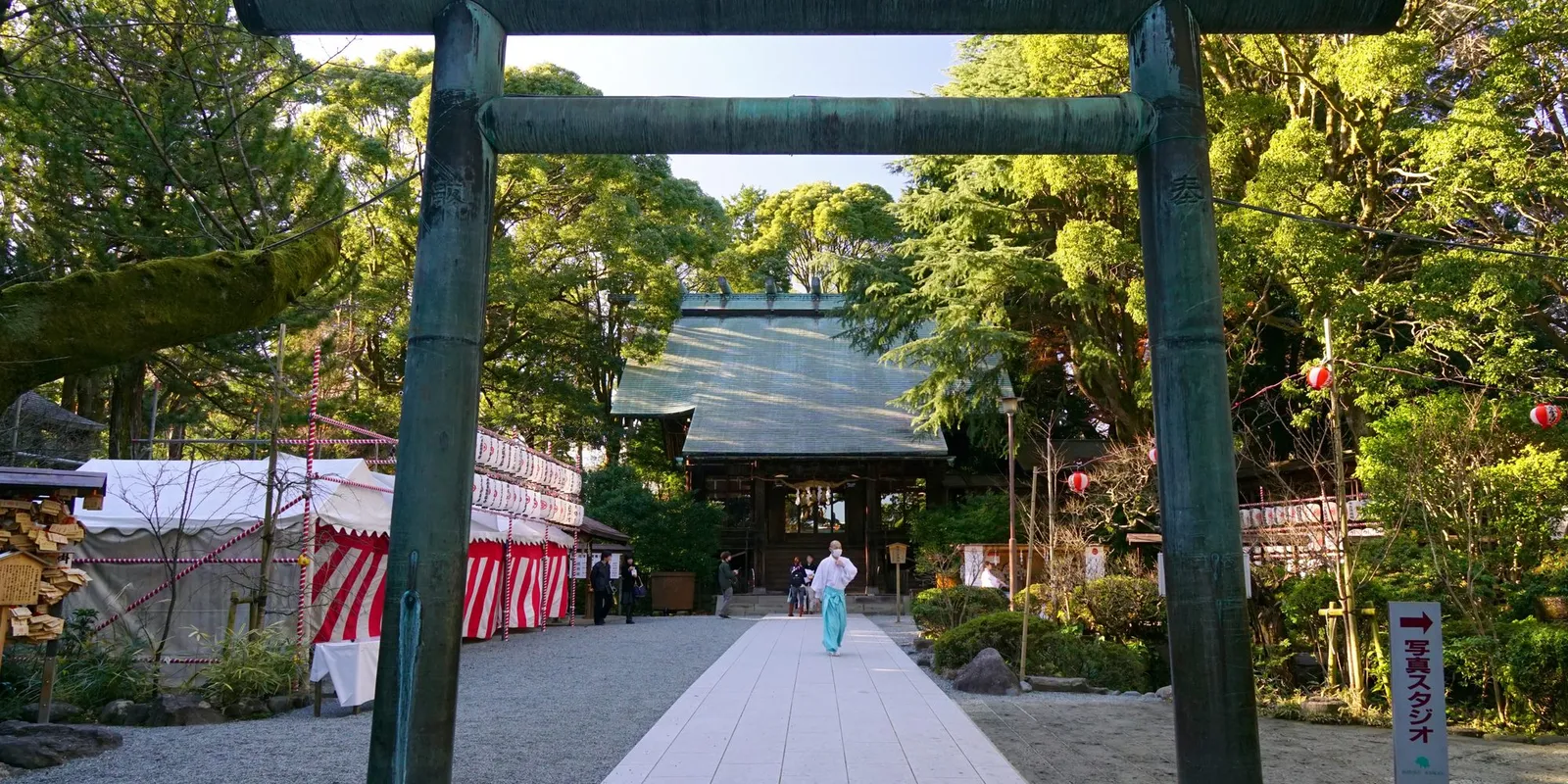
The main shrine building, built in the shinmei-zukuri style, stands amid the lush greenery of Odawara Castle Park. The adjacent Hotoku Museum offers exhibits on Sontoku’s life and the Hotoku method, while the on-site Kinjiro Cafe provides a place to rest during a stroll through the grounds. With Odawara Castle’s keep and main plaza nearby, many visitors incorporate the shrine into a broader walk through the castle park.
Visiting Tips
Drawing on Sontoku’s rise from poverty through self-directed study, the shrine is known for blessings related to academic success and career advancement, and it’s common to see students preparing for exams and working professionals hoping to advance their careers among the visitors. Approaching the shrine with an appreciation for Sontoku’s teachings — grounded in real, practical principles of diligence, thrift, and moral reciprocity rather than mere legend — makes for a more meaningful visit.
Because on-site parking is limited and fills quickly, the shrine’s convenient location about 10 minutes on foot from Odawara Station’s East Exit makes arriving by train the better option. Many visitors combine their visit with sightseeing at Odawara Castle, so it’s worth setting aside time to explore the wider castle park.
Annual Festivals
- Main Festival (April 15): The shrine’s most important annual observance, held on the anniversary of its founding in 1894.
- New Year (Hatsumode): A busy season for the shrine, drawing students and working professionals hoping for success in exams or their careers in the year ahead.
- As a shrine dedicated to a real historical figure and founded only in the late 19th century, Hotoku Ninomiya Jinja does not carry the large-scale seasonal rites of much older shrines. Its distinctive character comes instead from the day-to-day devotion of visitors and the ongoing transmission of Sontoku’s teachings through the adjacent Hotoku Museum and Hotoku-sha society.
Nearby Food & Sightseeing
- Odawara Castle: The centerpiece of the castle park in which the shrine stands. Highlights include the reconstructed keep, a small zoo, and the Tokiwagi Gate — a natural pairing with a shrine visit.
- Hotoku Museum: Located near the shrine, this museum explores Sontoku’s life and the Hotoku method in depth — a good stop before or after paying your respects.
- Honmaru Chaya: A teahouse on Odawara Castle’s main plaza serving local specialties such as Odawara-don rice bowls — a convenient rest stop while exploring the castle grounds.
Frequently Asked Questions
- Q. Who is enshrined at Hotoku Ninomiya Jinja?
- A. The shrine enshrines Ninomiya Sontoku (also known by his childhood name, Ninomiya Kinjiro), a farmer-philosopher and agricultural reformer of the late Edo period. Born into poverty, he taught himself to read and write, went on to found the "Hotoku" method of rural economic and moral reform, and rebuilt the finances of hundreds of struggling villages and domains across Japan — becoming a lasting symbol of diligence and self-improvement.
- Q. What blessings is this shrine known for?
- A. Drawing on Ninomiya Sontoku's life story — a man who rose from poverty through self-directed study and hard work — the shrine is known for blessings related to academic success and career advancement. It draws many visitors preparing for exams or professional qualifications.
- Q. Can I receive a goshuin (shrine stamp) here?
- A. Yes, starting from ¥1,000, available 9:00–16:00. Limited-edition goshuin commemorating the shrine's 130th anniversary have also been offered.
- Q. How do I get to Hotoku Ninomiya Jinja?
- A. It's about a 10-minute walk from the East Exit of Odawara Station. Since the shrine sits within Odawara Castle Park, it's easy to combine a visit with sightseeing at the castle.
- Q. Is there parking at Hotoku Ninomiya Jinja?
- A. A small on-site parking area is available, but it fills up quickly. The first 20 minutes are free, and visitors who apply for a prayer service of ¥5,000 or more receive a one-hour free parking ticket. If the lot is full, nearby coin-operated parking is available.