History
Ikuta Jinja is one of Japan’s oldest shrines, with its founding legend recorded in the Nihon Shoki. According to shrine tradition, in 201, during Empress Jingu’s return voyage from a military campaign on the Korean peninsula, her ship became unable to move in the waters off what is now Kobe. A divination revealed that the deity Wakahirume no Mikoto wished to dwell in the “land of Ikuta-no-nagao,” and so a man named Unagami no Isachi was appointed as priest to enshrine her there. Wakahirume no Mikoto, said to be either a childhood name of Amaterasu Omikami or her younger sister deity, embodies youthful, vital life force, and has long been worshipped as a guardian of weaving and of daily life itself, from food and clothing to shelter.
The very name “Ikuta” is said to derive from the shrine, and the growth of central Kobe itself traces back to this shrine as its historical anchor. Beyond its long-standing role in local devotion, the shrine’s grounds hold a place in military history as well: in 1184, during the Battle of Ichi-no-Tani in the Genpei War, the Taira general Taira no Tomomori is said to have set up his headquarters in the sacred forest on the shrine’s north side, known as Ikuta-no-Mori. Having been rebuilt time and again by parishioners and devotees after repeated fires, wartime destruction, and the 1995 Great Hanshin-Awaji Earthquake, the shrine is known as a place that “rises again, beautiful every time.”
Highlights
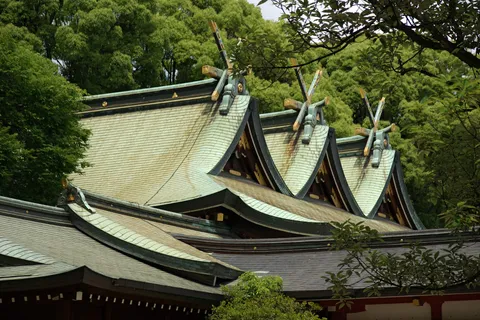
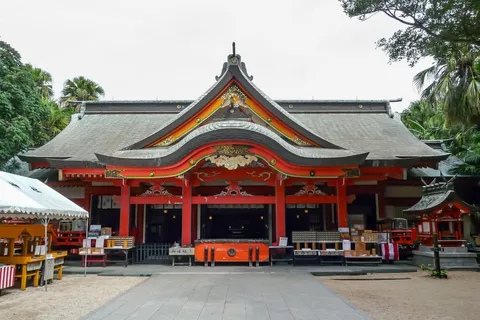
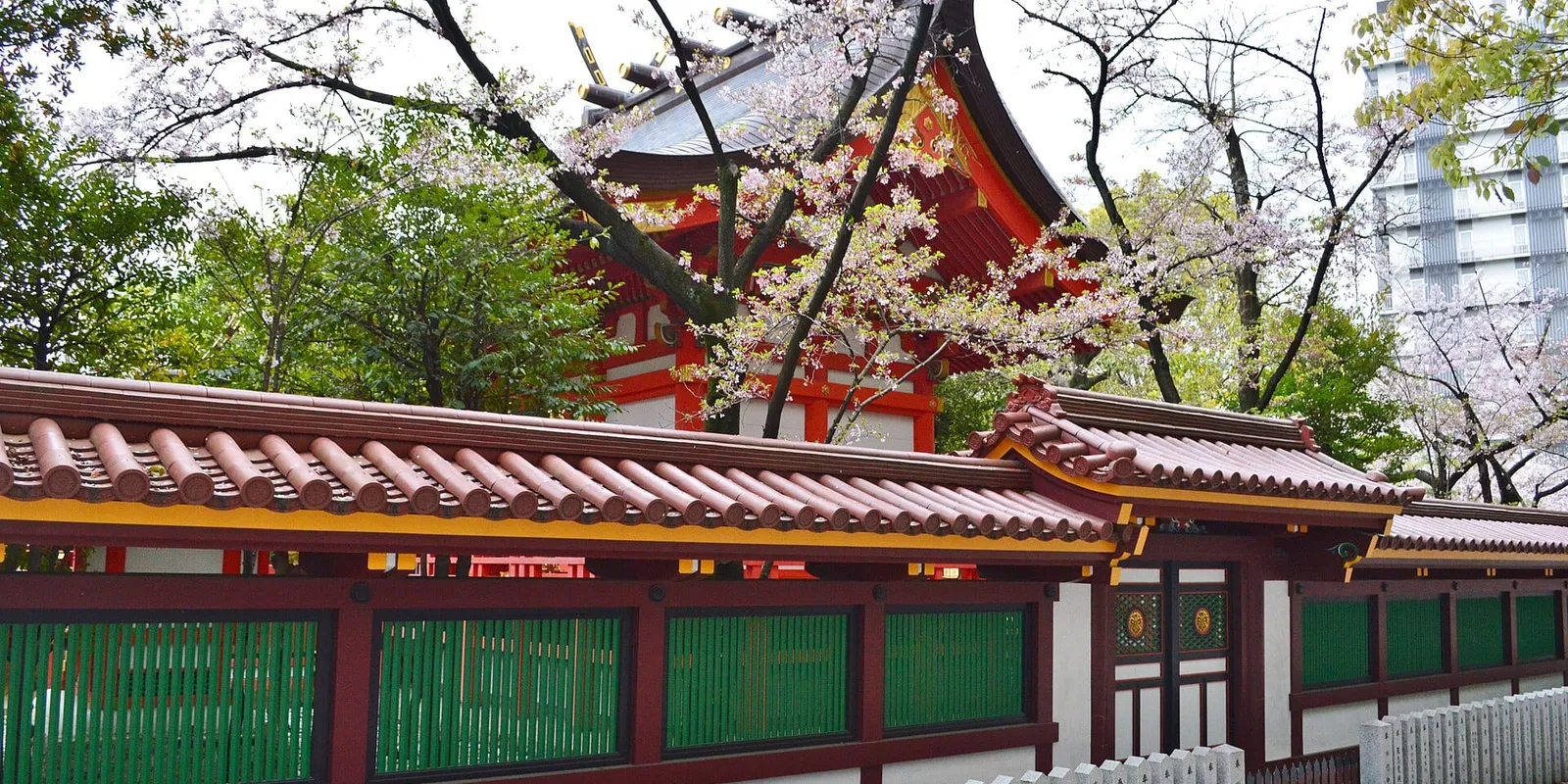
The greatest highlight of Ikuta Jinja is the striking contrast between its vermillion gate and halls, standing with quiet dignity amid the office towers of central Sannomiya. Ikuta Road, the street leading to the shrine, developed historically as its approach and today serves as a beloved landmark connecting the shrine to Kobe’s liveliest shopping district. Stepping just a few paces off the busy street into the solemn atmosphere of the shrine grounds is itself part of the experience.
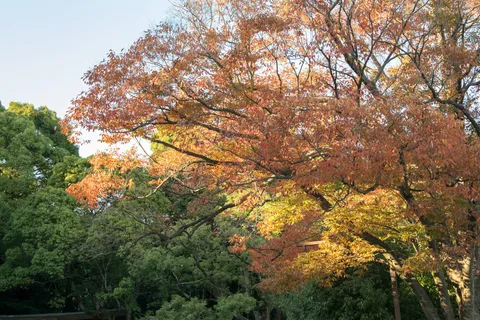
Behind the main hall lies Ikuta-no-Mori, the historic forest that appears in the Tale of the Heike as the setting of the Battle of Ichi-no-Tani — a pocket of deep green and stillness that feels far removed from the city outside its borders. Within the forest stands a sacred camphor tree closely associated with Wakahirume no Mikoto, before which many visitors pause to pray. As a shrine known for blessing good relationships, Ikuta Jinja draws many young women, and its varied matchmaking charms are especially popular.
Visiting Tips
The grounds are compact, so a visit typically takes 15–30 minutes, or about 45 minutes if you also want to walk through Ikuta-no-Mori at a relaxed pace. Its excellent access from the Sannomiya and Motomachi area makes it an easy stop to combine with shopping or a meal. Goshuin stamps are available at the office to the right just past the gate, from 9:00 AM to 4:30 PM, with seasonal limited-edition designs offered throughout the year.
Annual Festivals
- Setsubun Festival (February 3): Following a rite at the main hall, celebrities and athletes join in scattering lucky beans from a special stage on the grounds, drawing large crowds.
- Ikuta Festival / Grand Festival (April 15): The shrine’s most important festival, held on an 11-year rotation among 11 districts of Kobe’s Chuo and Hyogo wards, with a procession of more than 500 people parading through the parish.
- Nikku Hajime Festival (January 2): The year’s first daily food-offering rite, held together with a Noh performance ritual known as “Okina Men-kake Shinji.”
- New Year’s Eve Purification and Hatsumode (December 31–January 3): The shrine becomes one of Kobe’s busiest hatsumode destinations, drawing crowds from New Year’s Eve through the first three days of the year.
Nearby Food & Sightseeing
- Ikuta Road: A street that developed as the shrine’s approach, now lined with cafes, boutiques, and restaurants — a fashionable thoroughfare at the heart of Sannomiya.
- Kobe Beef Steak Hanahoubi: A teppanyaki restaurant tucked down a side street about a minute’s walk from the shrine, serving Kobe beef alongside fresh seafood from nearby ports — a perfect stop after paying your respects.
- Nankinmachi (Kobe Chinatown): One of Japan’s three great Chinatowns, within easy walking distance of the shrine, known for street food and long-established Chinese restaurants — a classic Kobe sightseeing stop.
Frequently Asked Questions
- Q. What are the visiting hours?
- A. The grounds are open to visitors at all times (gates open around 7:00 AM); the amulet office is open 9:00 AM–4:30 PM.
- Q. When is the goshuin office open?
- A. 9:00 AM–4:30 PM, for ¥500 (seasonal limited-edition goshuin ¥1,000).
- Q. Is there parking?
- A. Yes, on-site parking is available (partly paid).
- Q. What is Ikuta no Mori?
- A. A historic forest behind the main hall, famous as a battlefield of the Genpei War and mentioned in "The Tale of the Heike."
- Q. How do I get there?
- A. About a 10-minute walk north from Sannomiya Station (JR, Hanshin, Hankyu lines).