History
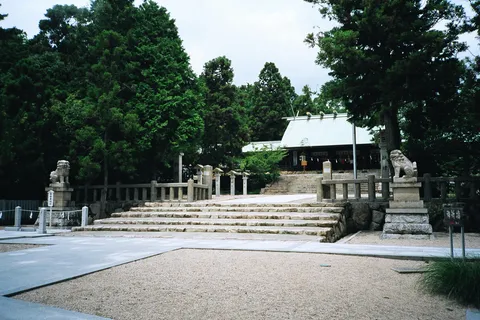
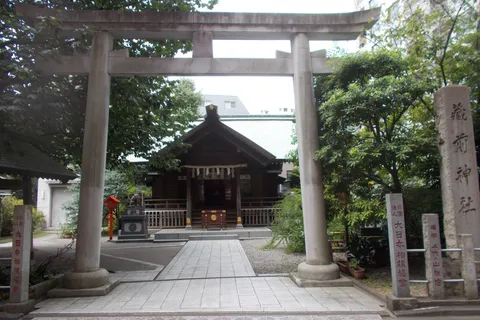
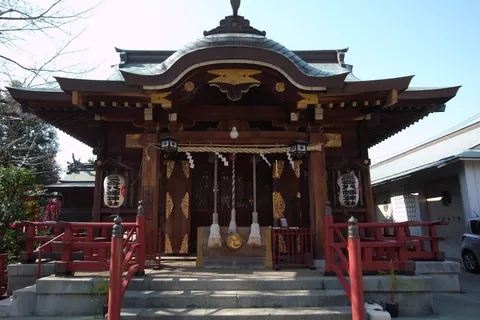
Yuzuruha Shrine (Yuzuruha Jinja) stands in Mikage-gunge, Higashinada Ward, Kobe, Hyogo. The official site does not appear to give the reading in kana, but the title of the shrine’s newsletter, “Yuzuruha,” and the site’s domain name both point to it, and the Japanese Wikipedia also gives “Yuzuruha Jinja.” (A different shrine on Awaji Island in Minamiawaji City, written 諭鶴羽神社, shares the reading, per the Japanese Wikipedia.) The official site lists the enshrined deities as the “Konpon Kumano Sansho Okami”: Izanami no Mikoto, Kotosaka no O no Mikoto and Hayatama no O no Mikoto.
According to the official history, the shrine’s tradition says that Empress Jingu, on her way home from the Three Han campaign, learned of the uprising of Prince Oshikuma, laid down her bow, arrows and armor at this place, and prayed to the Kumano deities, after which she is said to have won a great victory. The peak behind the shrine came to be called “Yuzuruha-dake” after the bow and arrows, and also “Rokko” after the armor, and the village is said to have been named “Mikage” because the empress’s figure was reflected in a spring in the village. The site says that at the end of the 8th century the Yuzuruha forest was designated shrine land, and that on the 14th day of the first month of Kasho 2 (849) a small shrine was built and the Kumano deities were enshrined. All of this is the shrine’s own account.
The buildings have been built and rebuilt repeatedly, for example with the main hall rebuilt as three shrines in 1309 (Enkei 2). In 1995 the Great Hanshin-Awaji Earthquake brought down the shrine office, torii gate, stone lanterns and more, and in 2019 (Reiwa 1) the roof of the main hall was re-covered. The official site describes the shrine as one for protection from misfortune and good fortune, household safety, traffic safety and the fulfillment of wishes, and says that in recent years it has also drawn devotion as a shrine for praying for “victory” under the guidance of the yatagarasu.
Highlights
The yatagarasu on the roof of the shrine office is the shrine’s symbol. In Japanese mythology it is the crow that guided the way from Kumano to Yamato during Emperor Jinmu’s eastern expedition. The grounds also hold a soccer ball made of Mikage granite, decorated with a yatagarasu riding an arrow, and the official site says the shrine’s connection with soccer began about 1,200 years ago with the enshrinement of the Kumano deities.
The grove (pine, muku, camphor and oak) is Kobe City’s first Protected Tree Grove, and the muku tree is a Kobe City designated natural monument, introduced in the precinct guide on the official site as a 370-year-old muku tree. The festival with danjiri floats is Kobe City’s first Registered Intangible Folk Cultural Property. The Juni-sha auxiliary shrine was newly built in 1847 (Koka 4) by combining the grounds’ small shrines and is described as the shrine’s oldest building, and the Matsuo-sha auxiliary shrine is said to draw the devotion of sake brewers as a protector of brewing. The grounds also have a worship spot for bowing toward Ise Jingu, the Imperial Palace and the Three Kumano Shrines, a hyakudo-ishi, strength stones, and a water fountain for dogs.
Among goshuin, the official site introduces a paper-cut goshuin themed on the Noh play Funa Benkei (舩弁慶), distributed since October 1, 2026 (Reiwa 8) for ¥1,200. Cut from black paper, it shows the ghost of Taira no Tomomori with a naginata, Minamoto no Yoshitsune on a boat, Benkei praying with prayer beads, rough waves and the mountain of Yuzuruha. The official site’s “Supporters’ Association and Culture Classes” page also describes tea, incense and sencha classes and the monthly tea gatherings (Yuzuruha-kai monthly meetings, called “tsukigama”).
Visiting Tips
The official site does not give opening and closing times for the grounds. The amulet office (talismans, amulets, goshuin) is listed as 9:00 AM–5:00 PM, and prayer services as accepted 9:30 AM–4:00 PM. A prayer takes about 20 minutes after reception, and reservations are not accepted for shrine-front prayers. The guideline offering is ¥8,000 or more for protection from misfortune and ¥10,000 or more for a first shrine visit (hatsu-miyamairi). Because some times are unavailable owing to ceremonies, call (078-851-2800) if you are unsure.
The paper-cut goshuin is ¥1,200 and is not sent by mail. The fee for the regular goshuin and whether pre-written sheets are offered are not stated on the official site. Goshuin books are ¥2,000 (goshuin fee included). Amulets include yatagarasu amulets, soccer amulets and goods featuring the character “Yuzumaru,” a yatagarasu serving the Yuzuruha deity (the yatagarasu amulets and Yuzumaru goods cannot be mailed).
It is about 5 minutes on foot southeast of Mikage Station on the Hankyu Kobe Line and about 10 minutes on foot northwest of Sumiyoshi Station on the JR Kobe Line (official site). The number of parking spaces and fees are not stated on the official site, and drivers are told to approach from the south side of the shrine.
Annual Festivals
- New Year’s visit (from January 1): The official events page lists a sake-tasting event from midnight on January 1 (barrel sake) and the first prayers of the new year. On January 3, from 12:00 to 3:00 PM, there is also a New Year tea gathering (tea and sweets ¥500).
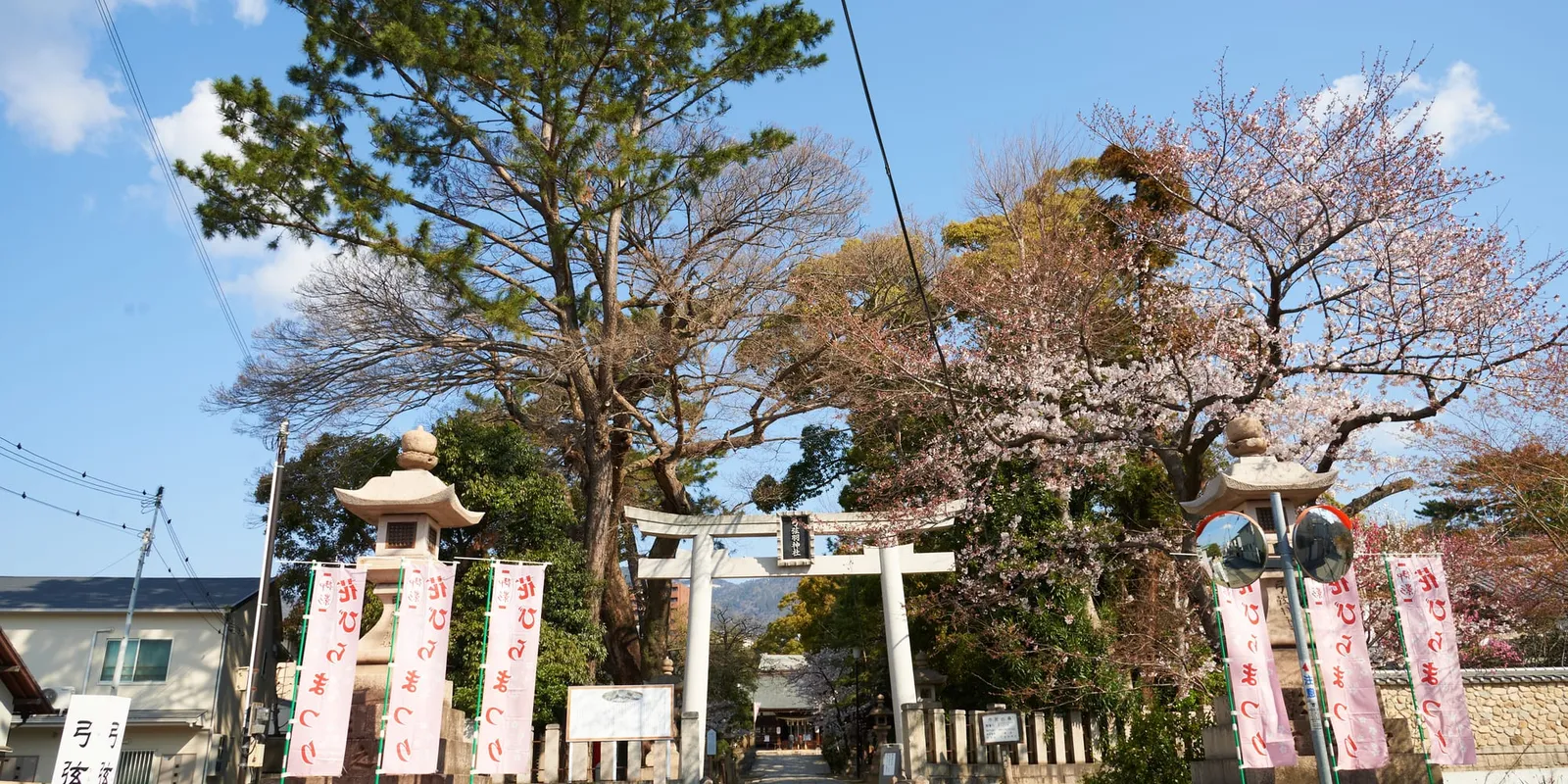
- Cherry blossoms (April): The official site points to the red weeping cherry in front of the main hall and says the approach becomes a tunnel of cherry blossoms (no dates given).
- Grand May Festival, danjiri festival (May 3–4): Danjiri floats from eight parishioner districts gather at the shrine. The main event is the float display in the grounds from 10:30 AM on the 4th.
- Summer purification, Nagoshi no Oharae (June 30): Held from 5:00 PM, with visitors passing through a ring of woven grass to pray for good health.
- Supporters’ Association festival (third Sunday of July): Listed on the Supporters’ Association page of the official site.
- Annual festival and Shinko-sai (October): The Shinko-sai procession is held once every three years, and the official site words the date as “October 15 or the Sunday before” (10月15日もしくは15日前の日曜日). In 2025 (Reiwa 7) it was Sunday, October 12, and children from age three to fourth grade can join as part of the procession.
- Shichi-Go-San (mid-September to mid-December): Accepted daily with no reservation. The offering is ¥8,000 for one child (¥12,000 for two siblings, ¥15,000 for three).
- Tsukigama tea gatherings (Yuzuruha-kai monthly meetings): ¥1,000 per seating for non-members, with entry from 9:00 AM to 3:00 PM. They are not held in July, August, November and January; the remaining one for fiscal 2026 (Reiwa 8) is scheduled for December 13 (Edo Senke school) (official site).
- Year-end purification (December 31): Held from 4:00 PM.
Dates can change from year to year, so check the “Annual Events” page on the official site for the latest.
Nearby Food & Sightseeing
The shrine’s annual events include a sake-tasting event (“Nada no Umazake Nomikurabe”), and the grounds hold the Matsuo-sha auxiliary shrine for sake brewers (official site). The places below come from introductions of each facility rather than from the shrine’s official site, so check opening days and visiting conditions with each facility before you go.
- Kikumasamune Shuzo Kinenkan: A sake-brewing museum in Uozaki-nishimachi, Higashinada Ward, introduced as holding the nationally designated Important Tangible Folk Cultural Property “Nada sake-brewing tools.” Admission is described as free, and it is closed over the New Year holidays.
- Hakutsuru Bijutsukan: An art museum in Sumiyoshi-yamate, Higashinada Ward, introduced as having opened in May 1934. It is described as closed on Mondays (the next day if Monday is a holiday).
- Sawanotsuru Shiryokan: A facility in Nada Ward that is introduced as an old sake brewery opened to the public as a museum. It is farther away than the other two, so check how to get there and the travel time in advance.
Frequently Asked Questions
- Q. What are the visiting hours and amulet office hours?
- A. The official site does not state opening and closing times for the grounds. It lists the amulet office (talismans, amulets, goshuin) as 9:00 AM–5:00 PM and prayer services as accepted 9:30 AM–4:00 PM. Prayer services may be unavailable at certain times because of shrine ceremonies, so it is safest to check first (tel. 078-851-2800).
- Q. Can I get a goshuin? What is the paper-cut goshuin?
- A. According to the official site, a paper-cut (kirie) goshuin themed on the Noh play Funa Benkei (舩弁慶) has been distributed at the amulet office since October 1, 2026 (Reiwa 8). It costs ¥1,200 and is not sent by mail. The site describes a cut-paper design on black paper showing the ghost of Taira no Tomomori, Minamoto no Yoshitsune, Benkei, rough waves and the mountain of Yuzuruha, with the shrine seal and date in gold. The fee for the regular goshuin and whether pre-written sheets are offered are not stated on the official site, so please ask at the amulet office.
- Q. How do I get there, and is there parking?
- A. The official site gives about 5 minutes on foot southeast of Mikage Station (Hankyu Kobe Line), about 10 minutes on foot northwest of Sumiyoshi Station (JR Kobe Line), and about 15 minutes on foot north of Mikage Station (Hanshin Main Line). The number of parking spaces and fees are not stated on the official site. Drivers are told to approach from the south side of the shrine.
- Q. What is the yatagarasu (Yata-no-Karasu)?
- A. According to the precinct guide on the official site, the yatagarasu is the shrine's symbol and sits on the roof of the shrine office. In Japanese mythology, it is the crow sent by Takamimusubi no Mikoto during Emperor Jinmu's eastern expedition to guide the way from Kumano to Yamato. The amulet office offers yatagarasu amulets and goods featuring the character "Yuzumaru," a yatagarasu serving the Yuzuruha deity. The official site also describes a soccer ball made of Mikage granite in the grounds, decorated with a yatagarasu riding an arrow.
- Q. When can I do Shichi-Go-San prayers, and how much does it cost?
- A. The official Shichi-Go-San page says prayers are accepted daily from mid-September to mid-December, with no reservation needed. On weekends and holidays, however, there are times when prayers cannot be accepted because of shrine events and weddings, so it advises calling ahead. The offering is ¥8,000 for one child, ¥12,000 for two siblings and ¥15,000 for three.
Plan Your Visit
Before you go, you can book a stay and get your shrine-visit items ready.
Amazon links open Amazon.co.jp (Japan) in English; whether an item ships overseas depends on the product.
※ Contains ads (PR). Links open external sites such as Amazon, Rakuten, Trip.com and Booking.com.