History
According to shrine tradition, Ikutama Jinja was founded when Emperor Jimmu, upon landing in Naniwa, enshrined Ikushima no Okami and Tarushima no Okami — deities embodying the very land of Japan — at Ishiyamasaki, the site now occupied by Osaka Castle. This makes it one of the oldest shrines in Osaka. Listed as a Myojin Taisha in the Engishiki, and ranked as an Imperial shrine (Kanpei Taisha) in the pre-war shrine system, it has long been revered by the Imperial court, and to locals it is affectionately known simply as “Ikutama-san.” As guardian shrine of the Uemachi plateau, its history is deeply intertwined with the growth of the city of Osaka itself.
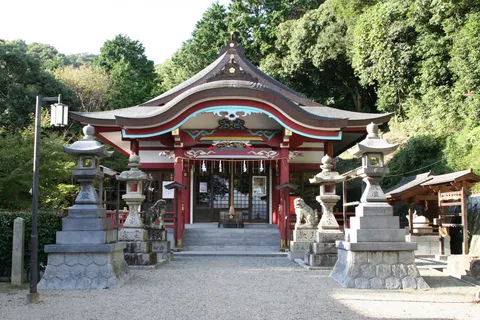
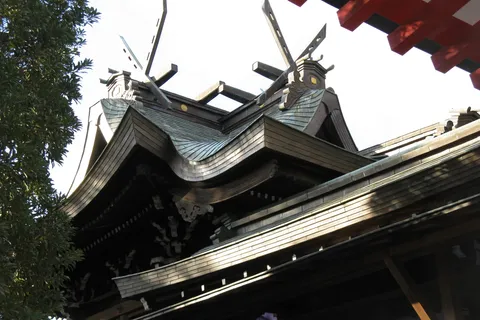
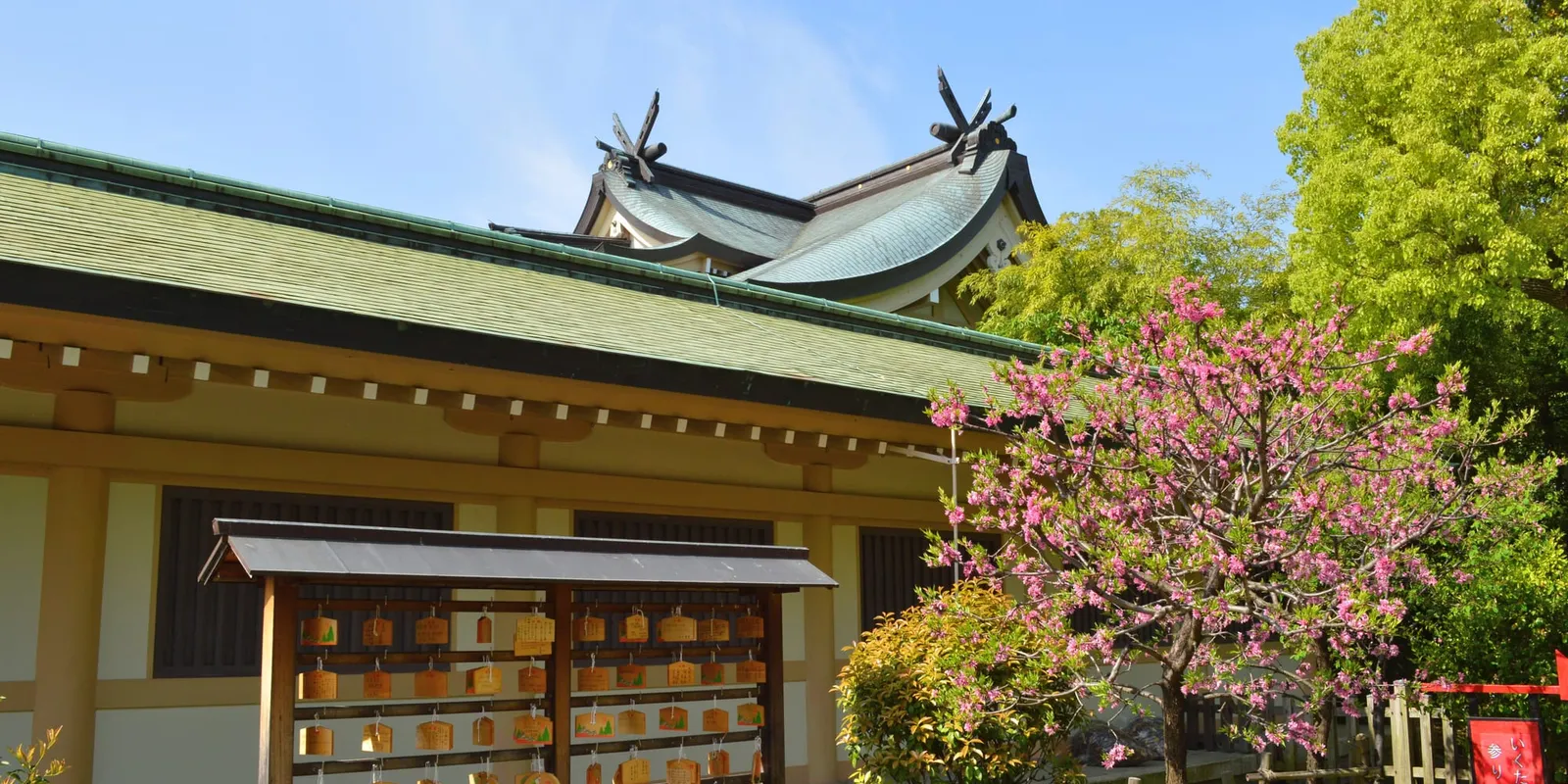
In 1585, when Toyotomi Hideyoshi built Osaka Castle, the shrine — which had stood within what became the castle grounds — was relocated to its present site in what is now Ikutamacho, Tennoji-ku. Its buildings have been rebuilt many times since, following repeated fires and wartime destruction; the current halls date from the postwar period, but they preserve the shrine’s distinctive “Ikukunitama-zukuri” architectural style, marked by twin chidori gables on the facade — a design found nowhere else. The grounds are also home to twelve subsidiary shrines, including Joruri Jinja, Fuigo Jinja, Sumiyoshi Jinja, Kotai Jingu, and a Tenmangu, each associated with its own particular blessing.
Highlights
One notable feature along the approach is a gently arched taiko-bashi bridge. The plateau on which the shrine stands is said to have once commanded sweeping views as far as Osaka Bay, and this high ground has drawn worshippers since ancient times as a key point on the Uemachi plateau. Among the subsidiary shrines, Joruri Jinja is a rare shrine dedicated to figures associated with Bunraku puppet theater and joruri narrative chanting, including the playwright Chikamatsu Monzaemon, and it still draws visits from performers and other entertainment professionals today.
Ikutama Jinja is also considered the birthplace of Kamigata rakugo (Osaka-style comic storytelling): in the late 17th and early 18th centuries, the performer Yonezawa Hikohachi is said to have entertained crowds on these grounds with comic narration that became a forerunner of the art form. A stone monument honoring his achievements stands in the precincts, and the shrine hosts the “Hikohachi Matsuri,” organized by the Kamigata Rakugo Association, in his memory.
Visiting Tips
A quick circuit of the main hall and subsidiary shrines takes about 30 minutes, but allow around an hour if you want to visit all twelve subsidiary shrines in turn. The shrine’s location just a few minutes from Tanimachi-kyuchome Station makes it a convenient starting point for exploring the historic Uemachi plateau on foot. Goshuin stamps are available at the shrine office beside the worship hall, and special seasonal stamps are sometimes offered around festivals, so it’s worth checking the shrine’s official site or social media before you go.
Annual Festivals
- Ikukunitama Festival (July 11–12): One of Osaka’s three great summer festivals. On the main festival day, a roughly 500-person “land procession” (riku-togyo) parades along Tanimachi-suji toward the site of Osaka Castle, the shrine’s original location.
- Hikohachi Matsuri (mid-May, dates vary): Organized by the Kamigata Rakugo Association in honor of Yonezawa Hikohachi, the founder of Kamigata rakugo, with stages and stalls filling the grounds for rakugo fans.
- Oharae, the Great Purification (June 30): A rite to cleanse the impurities of the first half of the year and pray for continued health through the rest of it.
- New Year’s Visit (January 1–3): Opening hours are extended over the New Year period, drawing large crowds for hatsumode, the first shrine visit of the year.
Nearby Food & Sightseeing
- Shitennoji Temple: Said to be Japan’s oldest officially administered Buddhist temple, founded by Prince Shotoku, and within easy walking distance of Ikutama Jinja — a natural pairing for a walk through the history of the Uemachi plateau.
- Tennoji Ichiba Shopping Street: A nostalgic covered arcade lined with unpretentious diners and standing bars, offering an easy taste of old-school downtown Osaka food culture.
- Otama Chaya: A tea stand within the shrine grounds themselves, open mainly on weekends, holidays, and festival days, serving matcha and fresh Japanese sweets — a perfect break between stops on your visit.
Frequently Asked Questions
- Q. What are the visiting hours?
- A. 9:00 AM–5:00 PM.
- Q. When is the goshuin office open?
- A. 9:00 AM–4:30 PM, for ¥500.
- Q. Is there parking?
- A. Yes, on-site parking is available for worshippers.
- Q. Is it really the birthplace of Kamigata rakugo?
- A. Yes — comic storytelling performed here in the late 17th century by Yonezawa Hikohachi I is considered the origin of today's rakugo, and a monument to him stands on the grounds.
- Q. How do I get there?
- A. About a 5-minute walk from Tanimachi-kyuchome Station.