History
Kureha Jinja enshrines Kurehatori no Daimyojin, credited with bringing weaving and dyeing techniques to Japan. According to shrine tradition, during the reign of Emperor Ojin, Inatsuhiko no Mikoto was dispatched to the Kingdom of Wu in China to find master weavers and tailors. Guided there by two men named Kurewa and Kureshi, he returned with four skilled weavers — Kureha, Ayahatori, and two more women referred to as the elder and younger princesses — brought back at the request of the King of Wu. Kureha is said to have settled in this area and spread the art of weaving throughout Japan for the first time, and her name later gave rise to the Japanese word “gofuku,” meaning fine woven textiles or kimono fabric.
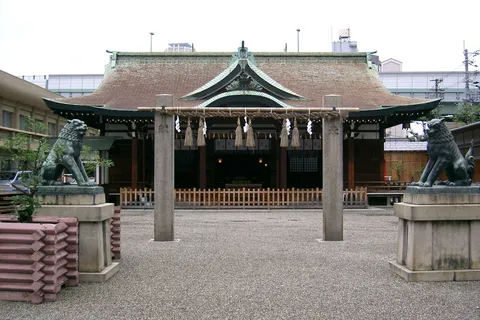
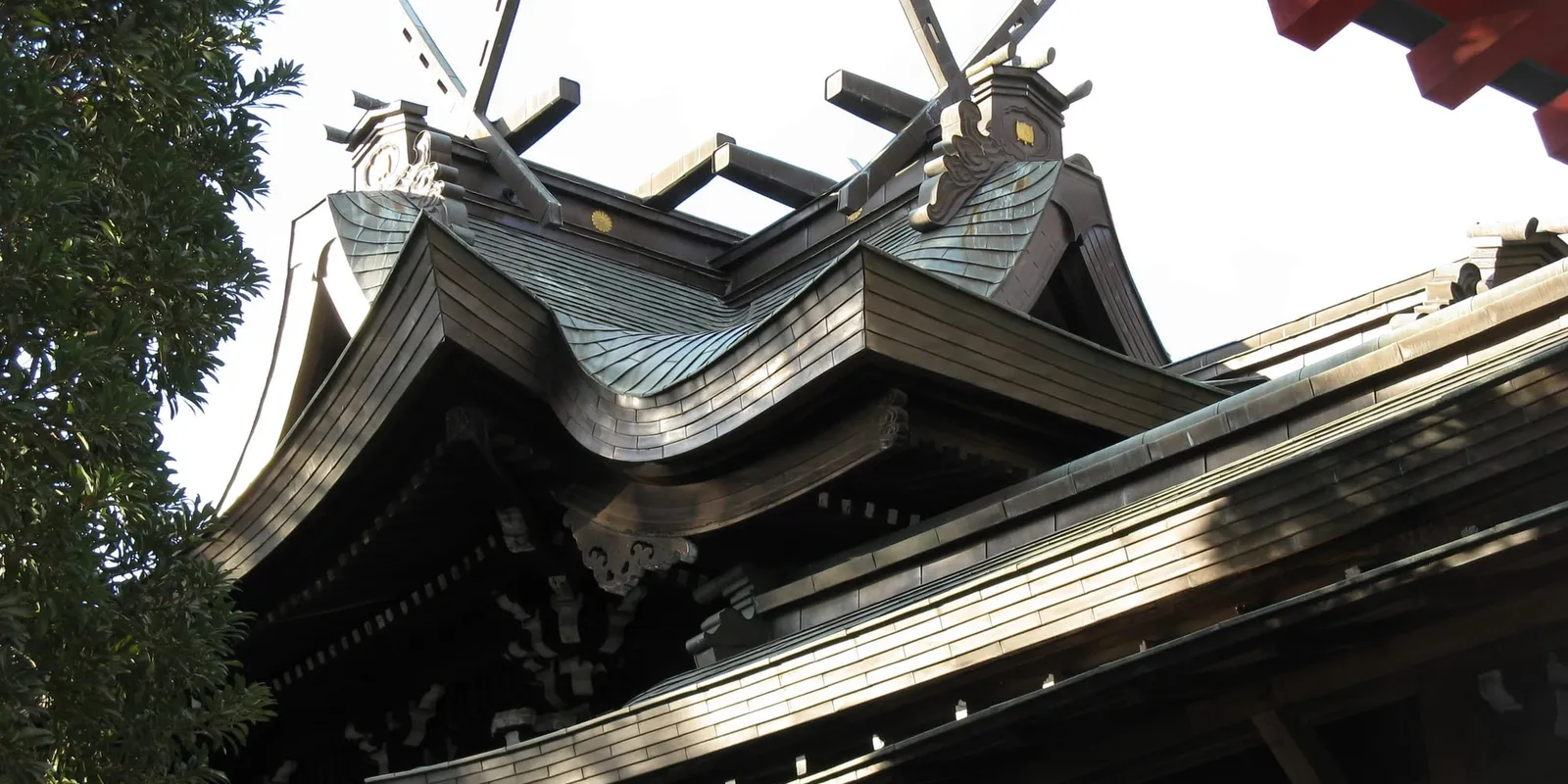
Alongside Kurehatori no Daimyojin, the shrine also enshrines Emperor Nintoku, who is said to have honored her spirit. The current main hall was rebuilt in 1604 by Toyotomi Hideyori, with the reconstruction overseen by his retainer Katagiri Katsumoto — a valuable example of Momoyama-era architecture. The worship hall, by contrast, was rebuilt in 1969, and its facade is set with stained glass windows, an extraordinarily unusual feature for a Shinto shrine. Introduced during the postwar period of rapid economic growth, as shrine architecture across Japan experimented with blending tradition and modern design, the glass catches and scatters colored light in a way that continues to draw the eye of visitors and photographers alike.
Highlights
The single greatest highlight of Kureha Jinja is undoubtedly the stained glass adorning the front of the worship hall. Shrines that make extensive use of colored glass in their architecture are exceedingly rare in Japan, and the result is a striking meeting point between traditional shrine design and modern styling. The grounds also include a subsidiary Ebisu shrine, and given the shrine’s origin story tied to weaving and tailoring, it continues to draw worship from people connected to the fashion and textile industries.
Despite standing only three minutes on foot from Hankyu Ikeda Station, the shrine grounds offer a quiet space for prayer that feels worlds away from the bustle in front of the station.
Visiting Tips
The compact grounds mean a visit typically takes about 15 minutes. Since the shrine has no dedicated parking of its own, visitors arriving by car should plan to use one of the paid parking lots near Ikeda Station. Goshuin stamps are available whenever the shrine office is staffed. The stained glass is at its most striking on a clear day when sunlight streams directly through it, so photographers may want to time their visit accordingly.
Annual Festivals
- Toka Ebisu (January 9–11): Also known as “Ikeda Ebisu,” this New Year Ebisu festival unfolds over three days — Yoi-ebisu (the 9th), Hon-ebisu (the 10th), and Nokori-ebisu (the 11th) — filling the grounds and approach with food stalls and worshippers praying for business prosperity and household safety.
- New Year’s Visit (January 1–3): Thanks to its convenient location near Ikeda Station, the shrine draws large crowds for hatsumode, the first shrine visit of the new year.
- Grand Festival: An annual rite giving thanks to the goddess of weaving and sewing and praying for the community’s continued prosperity.
- Monthly Rites (Tsukinami-sai): Regular rites are held each month to pray for peace in daily life.
Nearby Food & Sightseeing
- Cup Noodles Museum Osaka Ikeda: About a 10-minute walk from Kureha Jinja, this hands-on museum celebrates Ikeda’s status as the birthplace of instant ramen.
- Ikeda Sakaemachi Shopping Street: An arcade stretching roughly 350 meters north from Ikeda Station, closely tied to the history of Kureha Jinja’s own Ebisu shrine, and lined with food stalls and everyday shops perfect for a stroll after your visit.
- Itsuo Art Museum: A museum housing the art collection of Ichizo Kobayashi, founder of the Hankyu Railway, with an adjoining tea house offering a further taste of Ikeda’s cultural heritage.
Frequently Asked Questions
- Q. What are the visiting hours?
- A. The grounds are open to visitors at all times; the shrine office is generally open 9:00 AM–5:00 PM.
- Q. When is the goshuin office open?
- A. Roughly 9:00 AM–5:00 PM when the shrine office is staffed, for around ¥500.
- Q. Is there parking?
- A. No dedicated shrine parking — use paid parking lots near Ikeda Station.
- Q. Why does it have stained glass?
- A. It was added during the 1969 rebuilding of the worship hall to blend traditional architecture with modern design — a rare sight at a Shinto shrine.
- Q. How do I get there?
- A. About a 3-minute walk from Hankyu Ikeda Station.