History
Meiji Jingu was founded in 1920 to enshrine Emperor Meiji, who guided Japan’s modernization, and his consort, Empress Shoken. After Emperor Meiji’s death, voices from across the country calling to honor his memory led to the shrine’s construction on land in Yoyogi that had, at the time, been left largely untouched.
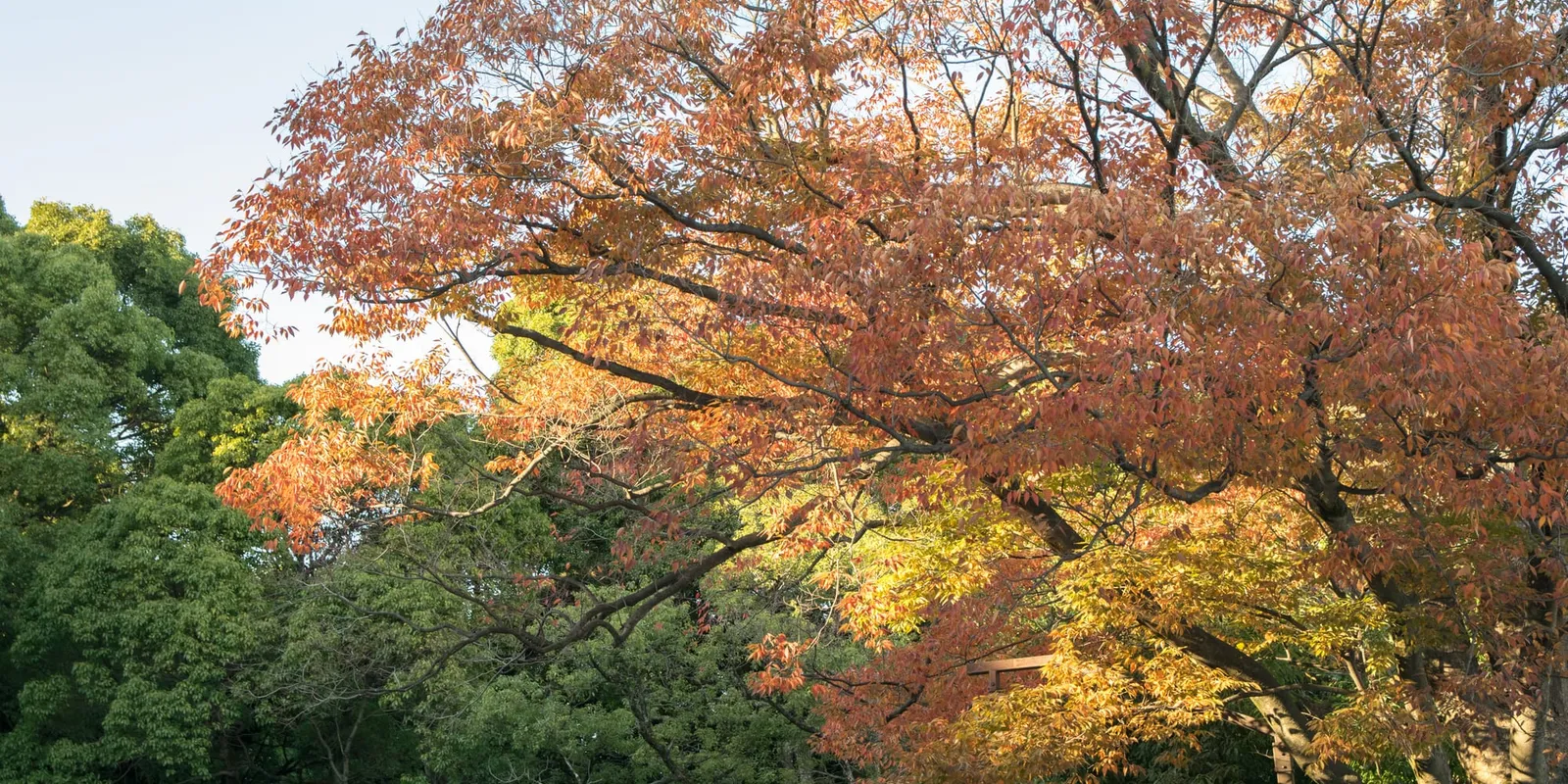
The shrine’s most distinctive feature is the roughly 700,000-square-meter forest surrounding the grounds, known as the “Meiji Jingu Forest” — a man-made forest deliberately planned to look a century into the future. Around 100,000 trees of 365 species were donated and planted from across Japan, designed according to the principle of “secondary succession,” in which the forest naturally regenerates itself and endures across generations. More than a century after it was planted, it has grown into a forest so rich it’s hard to believe it stands in the middle of Tokyo.
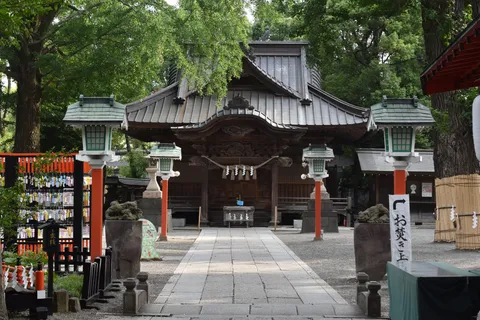
The original shrine buildings, including the main hall and worship hall, were destroyed in an air raid in April 1945. After the war, under the rallying cry “there can be no postwar recovery for Japan without the recovery of Meiji Jingu,” the Meiji Jingu Restoration Association was formed, and reconstruction proceeded on donations gathered from Japan and abroad. The current shrine buildings were completed in 1958, and the rebuilding is regarded as one of the symbols of postwar Japan’s recovery.
Highlights
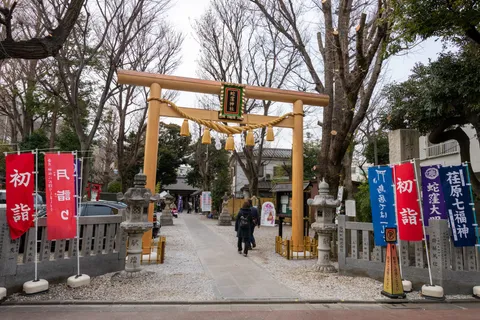
The great torii gate at the entrance to the approach stands about 12 meters tall, one of the largest wooden torii in Japan, made from a cypress tree over 1,500 years old donated from Taiwan. On the grounds, “Kiyomasa’s Well” is a spring said to have been dug by the feudal lord Kato Kiyomasa, widely known today as a “power spot.” The Gyoen Garden, beautiful with iris blossoms through the seasons, is also a popular strolling spot associated with Emperor Meiji and Empress Shoken.
Meiji Jingu consistently records the highest number of New Year’s visitors of any shrine in Japan, making it one of Tokyo’s most popular shrines, and it is also widely known as a venue for Shinto wedding ceremonies.
Visiting Tips
Although just steps from Harajuku Station, the shrine has a magic all its own: pass through the great torii and walk the approach, and the noise of the city gradually fades, replaced by the quiet air of the forest. Take your time and enjoy the crunch of the gravel underfoot as you make your way toward the shrine.
Annual Festivals
- Autumn Grand Festival (November 1–3): Meiji Jingu’s most important festival; on November 3, Emperor Meiji’s birthday, an imperial envoy is sent from the court for the main rite, and the period also features celebratory performances of court music and dance.
- New Year’s Visit (from January 1): Known for drawing more visitors than any other shrine in Japan each year, with huge crowds from New Year’s Eve through the first three days of the year.
- Shinto Wedding Ceremonies: Held throughout the year; you may well encounter a bridal procession along the approach.
Nearby Food & Sightseeing
The neighboring Meiji Jingu Gaien park has its own attractions, including the Meiji Memorial Picture Gallery and its famous ginkgo-lined avenue. The Harajuku and Omotesando area nearby is packed with popular fashion and dining spots, making it perfect to explore after your visit.
- “Mori no Terrace” Café: Near Harajuku Station at the gateway to Meiji Jingu, this cafe uses wood cleared from the shrine grounds in its interior, offering a relaxing break amid a forest atmosphere.
- Takeshita Street: A hub of youth culture stretching from in front of Harajuku Station, lined with street food and fashion boutiques.
- Omotesando Hills: A commercial complex along Omotesando, popular for shopping and cafe-hopping.
Frequently Asked Questions
- Q. What are Meiji Jingu's opening hours?
- A. From sunrise to sunset, which varies by month.
- Q. When is the goshuin office open?
- A. Around 9:00–16:00, for a fee of ¥500.
- Q. How far is it from the station?
- A. About a 1-minute walk from JR Harajuku Station or Meiji-jingumae Station.
- Q. Where is Kiyomasa's Well?
- A. It's inside the Gyoen garden within the shrine grounds — a spring said to have been dug by Kato Kiyomasa, and a popular "power spot."
- Q. Is parking available?
- A. Paid parking is available nearby.