History
Kamado Jinja stands on Mount Homan, a sacred peak rising 829.6 meters above the town of Dazaifu. According to shrine tradition, it was founded in 673, when the monk Shinren, practicing austerities on the mountain, was visited by the goddess Tamayori-hime, prompting the construction of a sanctuary at the summit; archaeological evidence suggests the site was already a place of worship by the latter half of the 8th century. When the Dazaifu government headquarters was established here in the Nara period, Mount Homan lay to its northeast — the “kimon,” or spirit gate, a direction traditionally considered inauspicious — and the shrine came to be deeply revered as the guardian protecting the government seat, and all of Kyushu, from misfortune.
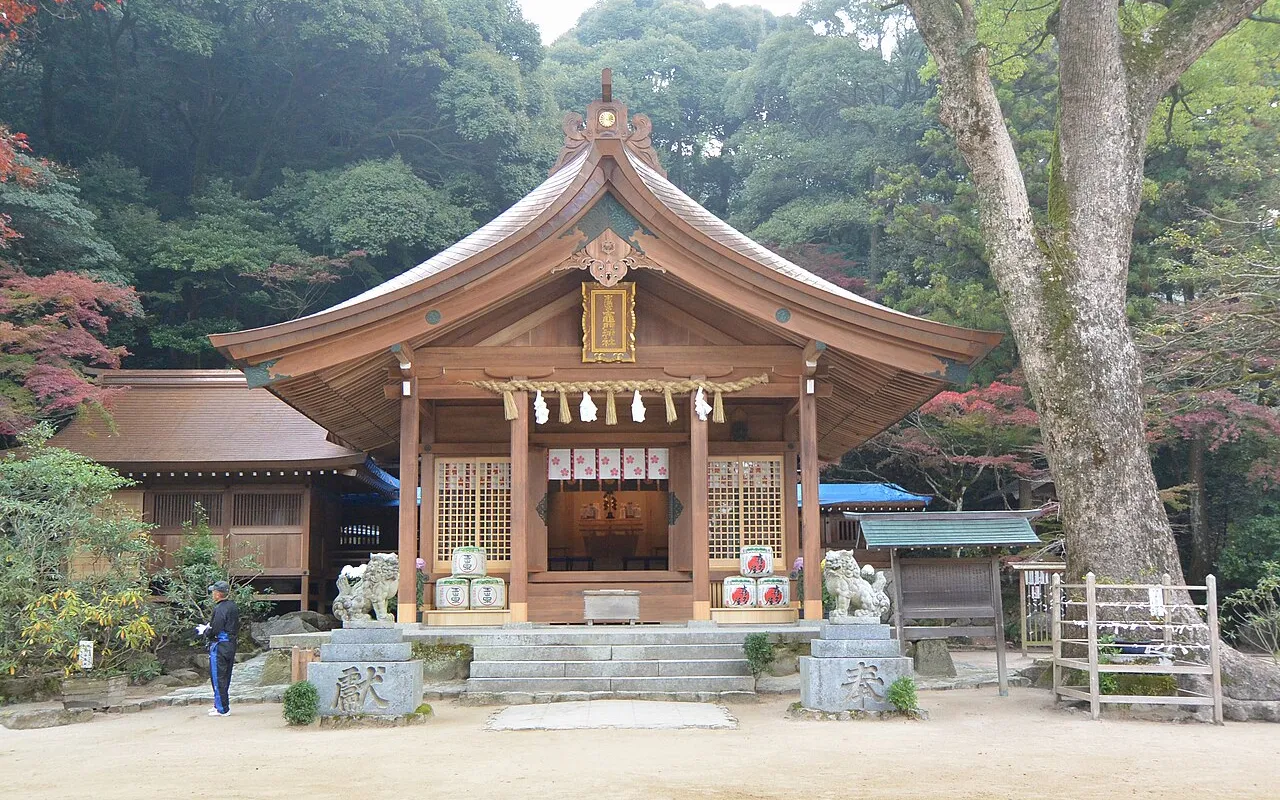
The shrine’s principal deity is Tamayori-hime no Mikoto, worshipped alongside Empress Jingu and Emperor Ojin. Tamayori-hime is the mother of Japan’s legendary first emperor, Jimmu, and her divine virtue has long made her an object of devotion as a goddess of good relationships. The shrine is structured as two sanctuaries — an upper shrine (Kamigu) at the summit and a lower shrine (Shimogu) at the mountain’s base; a middle shrine once stood partway up the mountain but was abolished in the Meiji era. Today the lower shrine serves as the main place of worship, its striking modern architecture and famous autumn foliage drawing steady crowds of visitors.
Highlights
The lower shrine of Kamado Jinja is cradled in the lush greenery of Mount Homan, and its greatest appeal lies in being able to worship amid beautiful natural surroundings through every season. During the autumn foliage season in particular, the grounds turn brilliant shades of red and gold, making it one of Kyushu’s premier spots for maple viewing and drawing photographers and sightseers alike. The shrine’s recently rebuilt amulet office, with its glass-walled modern design blended with traditional shrine architecture, has become a popular subject of conversation and draws younger visitors seeking charms for good relationships.
For those with the time and stamina, a proper mountain trail leads from the lower shrine up to the summit’s upper shrine; the path, part of the Kyushu Nature Trail, passes landmarks such as the “Aikei no Iwa” rock, associated with love fortune-telling, and the ruins of the former middle shrine. From the summit, a sweeping panorama unfolds over the town of Dazaifu and all the way to Hakata Bay, rewarding those who make the climb.
Visiting Tips
A visit to the lower shrine alone takes about 30 minutes, but allow an hour if you plan to explore the grounds or view the autumn colors. If you intend to climb to the upper shrine, budget 2–3 hours round trip, and be sure to wear comfortable walking shoes and bring water. Goshuin stamps are available at the amulet office from 9:00 to 17:00, and staff at the shrine office can sometimes accommodate requests until 19:00. Since the shrine is an easy trip from Dazaifu Tenmangu by bus or on foot, many visitors combine the two shrines in a single outing.
Annual Festivals
- Setsubun Festival (February 3): A rite to drive away evil spirits and pray for good health through the year ahead, including a bean-scattering ceremony.
- Iwato Kagura Dance Dedication (spring and autumn): A sacred dance rooted in Mount Homan’s ancient mountain worship, performed in a classical style for visitors to witness.
- Autumn Foliage Illumination (November): The grounds are lit up at night during the peak of the autumn colors, transforming the approach into a dreamlike scene very different from its daytime appearance.
- Nagoshi no Oharae (June 30): A purification rite that clears away the first half-year’s impurities and prays for continued health, featuring a ritual passage through a large woven grass ring.
Nearby Food & Sightseeing
- Dazaifu Tenmangu: The head shrine of all Tenmangu shrines nationwide, dedicated to the scholar-deity Sugawara no Michizane, easily reached from Kamado Jinja by bus or on foot and well worth pairing with a stroll through its lively approach and townscape.
- Umegae-mochi Yasutake Honten: A long-established shop along the approach to Dazaifu Tenmangu serving Dazaifu’s signature sweet, umegae-mochi — sweet bean paste wrapped in thin mochi dough and grilled to a fragrant finish on an iron plate.
- Kyushu National Museum: Japan’s fourth national museum, tracing the formation of Japanese culture from a broader Asian historical perspective, located next to Dazaifu Tenmangu and featuring the hands-on “Ajippa” exhibit zone.
Frequently Asked Questions
- Q. What are the visiting hours?
- A. The grounds are open to visitors at all times; the amulet office is open 8:30–18:00.
- Q. When is the goshuin office open?
- A. 9:00–17:00 (staff can sometimes accommodate requests until 19:00), for ¥500.
- Q. Is there parking?
- A. Yes, visitor parking is available (about 100 spaces, ¥400 per visit).
- Q. Can I get here from Dazaifu Tenmangu?
- A. Yes — about a 30-minute walk, or via the Mahoroba-go community bus. Many visitors combine both shrines in one trip.
- Q. How do I get there?
- A. About a 10-minute ride from Nishitetsu Dazaifu Station on the Mahoroba-go community bus, getting off at the Uchiyama stop.
Related Shrines
Fukuoka, Higashi Ward, Fukuoka
Kashii-gu
Kashii-gū
- Marital Harmony
- Good Relationships
- Safe Childbirth
Nara Prefecture, Nara
Kasuga Taisha
Kasuga-taisha
- Protection from Misfortune
- Good Fortune
- Good Relationships
Kyoto Prefecture, Kita Ward, Kyoto
Kamigamo Jinja
Kamigamo-jinja
- Protection from Misfortune
- Protection from Lightning
- Protection from Bad Directions