History
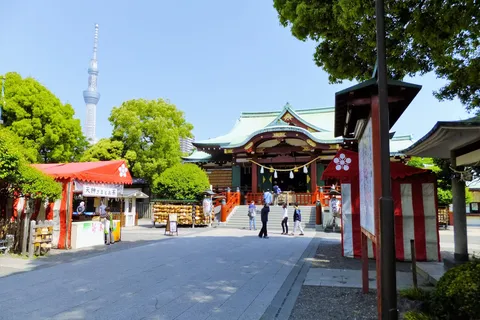
Yabo Tenmangu stands on the edge of the Tachikawa terrace in the south of Kunitachi, Tokyo, overlooking the Tama River. Its name is read “Yabo,” and it is also called “Yabo Tenjin.” The official site names Sugawara no Michizane and Sugawara no Michitake as the enshrined deities, and the shrine bills itself as “the oldest Tenmangu in eastern Japan” and “the birthplace of traffic-safety prayer.” (The nearest station is spelled Yaho, but the original reading of the place and the shrine is said to be “Yabo.”)
According to the official history, when Michizane was demoted to Tsukushi (Dazaifu) in 901, his third son Michitake was exiled to Kuribara village in Bubai Estate, Tama District, Musashi Province, in what is now Yabo, Kunitachi. In 903 (Engi 3), on learning that his father had died, Michitake is said to have carved his likeness and enshrined it, which is the origin of the shrine. In 947 a building was erected by order of Emperor Murakami and the shrine became a state-recognized shrine, and in 1181 Michitake’s descendant Tsudo Saburo Tamemori is said to have moved it from its former site (near today’s Kunitachi-Fuchu Interchange) to its present location. In 1885 it was raised to prefectural-shrine rank and has been counted among the “Kanto Three Great Tenjin” alongside Yushima Tenjin and Kameido Tenjin. All of this is the shrine’s own account of its history.
“Yabo” is also the sound of the word “yabo” (野暮), meaning unrefined or tactless, and the shrine is often tied to it. A famous anecdote says the word “yabo-ten” came from a comic poem by the Edo-period poet Ota Nanpo (Shokusanjin) that includes the line “yabo no tenjin.” Encyclopedias such as the Japanese Wikipedia, however, regard this as a later attribution, and the shrine’s official site does not appear to mention this etymology.
TV Tokyo’s “Shutsubotsu! Ad-machic Tengoku” featured the shrine at No. 4 in its Kunitachi episode broadcast on December 17, 2022 (according to the program’s official page). The page describes it as the oldest Tenmangu in eastern Japan, said to have been founded in Engi 3 by Michitake, a child of Sugawara no Michizane, counted among the Kanto Three Great Tenjin alongside Kameido Tenjin Shrine and Yushima Tenmangu, with 150,000 visitors for New Year’s visits in a typical year. “Oldest in eastern Japan” is the claim of the shrine and the program, and is not presented here as an officially certified fact.
Highlights
The shrine grove is designated a Tokyo Metropolitan Natural Monument (“Yabo Tenmangu Shaso,” designated in February 1924). According to Kunitachi City, it was once a dense cedar forest and is now dominated by zelkova, muku and enoki trees, with spring water from the river terrace adding to its character. The approach is also known as a “kudari-miya” — a rare shrine that you enter by descending steps from the road.
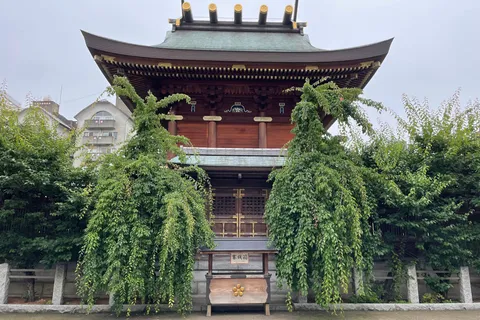
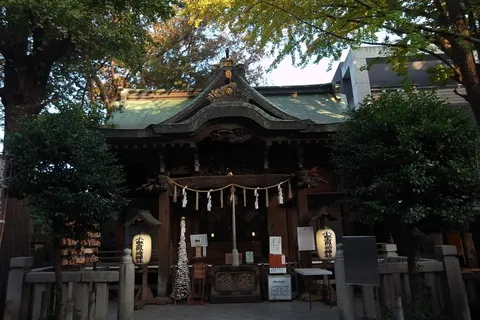
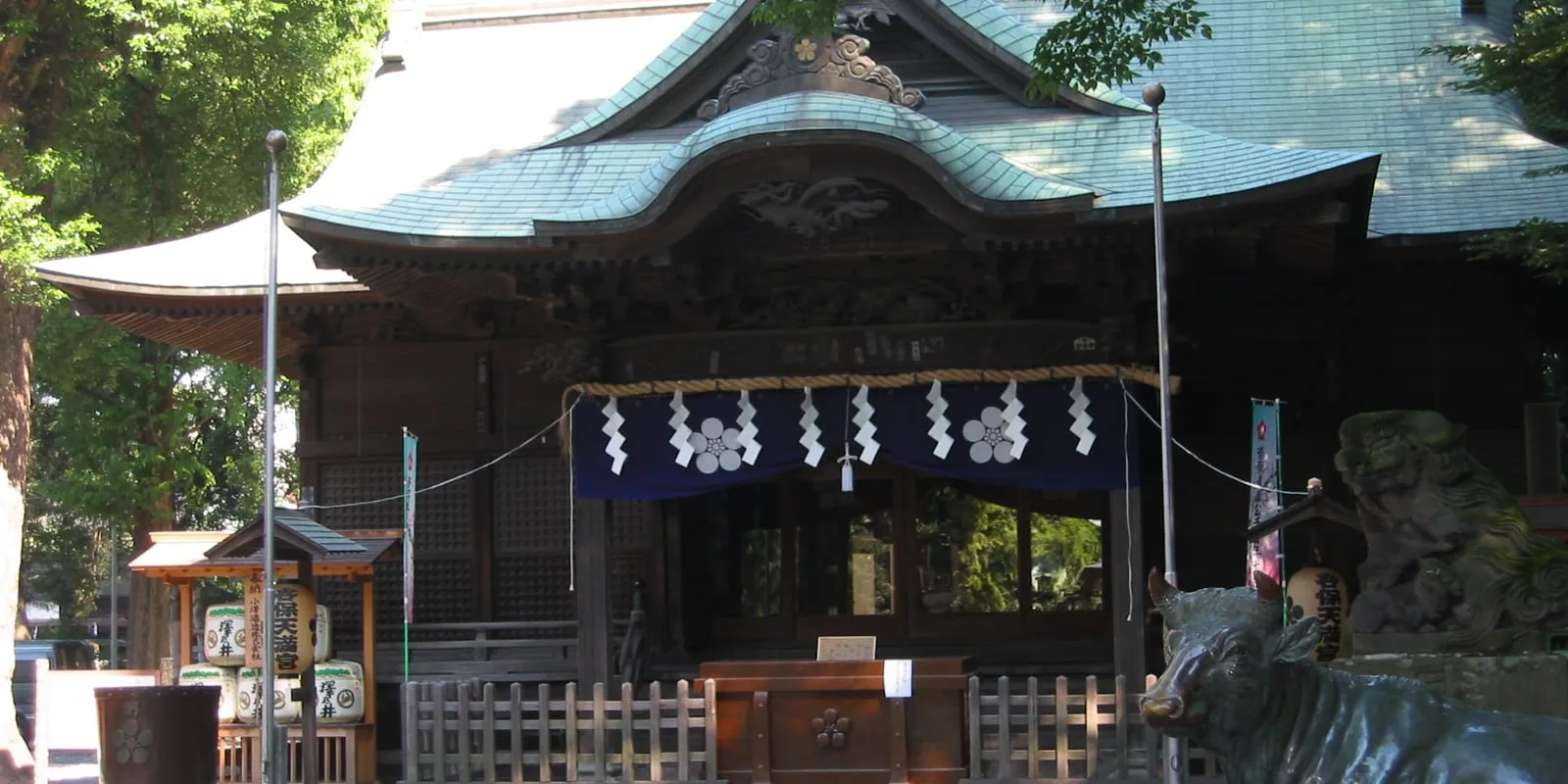
Among its treasures, the wooden “Tenmangu” plaque (inscribed with the date 1275 and attributed to Fujiwara no Tsunetomo’s calligraphy) and the pair of wooden lion-dog guardians (kept in the treasure hall) are national Important Cultural Properties. The official site says they can be viewed free of charge on Sundays and holidays from 11:00 AM to 3:00 PM. The main hall (built in 1749) and the worship hall (thought to date from 1851) are designated tangible cultural properties of Kunitachi City (1971), and the lion dance performed at the autumn festival is a city-designated intangible folk cultural property. Kunitachi City notes that the lion heads are uniquely decorated with the long tail feathers of tōtenkō fowl, which have no counterpart elsewhere.
The grounds also hold a pair of seated ox statues recalling the legend that the ox pulling Michizane’s funeral cart stopped and would not move, Itsukushima Shrine on Benten Pond, a hydrangea garden, the plum grove, and shrines such as the Gosha and Inari. The plum grove holds both white and red trees, a literary monument to the writer Hitomi Yamaguchi, and a monument commemorating Prince Arisugawa Takehito’s 1908 motoring outing, described as Japan’s first drive tour. The official site explains this event as the basis of the shrine’s claim to be the birthplace of traffic-safety prayer.
Visiting Tips
The official site lists visiting hours of 10:00 AM–4:00 PM, open every day of the year, with prayer services accepted until 3:30 PM. Individuals do not need to book, and the tamagushi offering starts from ¥5,000 for individuals. There is a dedicated purification area for cars (register at the shrine office first). As a shrine of learning it draws many exam-season visitors, and the grounds fill with ema.
The goshuin costs ¥500, and goshuin books are ¥2,000 (small) or ¥2,500 (large). The official site gives no separate hours for goshuin and does not say whether they are limited-edition (one guide article mentions a design whose plum-blossom stamp changes color for a limited time). Hours can change, so avoid arriving late in the day.
It is about a 3-minute walk from Yabo Station on the JR Nambu Line, and buses from Kunitachi and Fuchu stations stop right in front at “Yabo Tenjin.” There are about 30 parking spaces, but on New Year’s and festival days public transport is the better choice.
Annual Festivals
- Hatsu-Tenjin and Fude Kuyo (January 25): A memorial burning of worn-out brushes and stationery. In 2026 it ran 10:00 AM to noon.
- Ume Matsuri (February): February 21 (Saturday) in the official 2026 schedule. A guide article cites about 350 plum trees, which start blooming around mid-January.
- Annual festival (September 25): The lion dance (a city-designated intangible folk cultural property) is offered on the Sunday nearest September 25. In 2026 the festival ran from September 15 to 27, with events including the lion-head welcoming rite, the eve-of-festival visit, and the lantern procession.
- Uso-kae Shinji and Okagara-bi (November 2–3): The Uso-kae rite exchanges “uso” bird charms to make up for the past year’s untrue or unpleasant words and deeds, and on the 3rd at 6:00 PM bonfires of wood are lit in front of the hall in the Okagara-bi (Teiryo-sai) (2026).
- Otori-sama (Tori no Hi days in November): Lucky rakes (kumade) are distributed.
- Niiname-sai (November 23): A harvest thanksgiving, with a sale of vegetables from local farmers (2026).
- Classic Car Festival (December): A gathering of classic cars, held on Sunday, December 13 in 2026.
- New Year’s visit (January): The TV Tokyo program page says about 150,000 people visit in a typical year.
- 1,125th Memorial Grand Festival of Sugawara no Michizane (September 2027): The official site announces it for September of Reiwa 9 (2027).
Festival dates change from year to year, so check the “Festivals” page on the official site for the latest.
Nearby Food & Sightseeing
- Yabo no Shiroyama (Historic Environment Conservation Area): A green area in the same Yabo district that includes the Tokyo-designated historic site “Mita-shi Yakata Ato.” According to the Tokyo Metropolitan Government’s environment bureau, a 1659 map records it as the castle of Tsudo Saburo Tamemori, said to be a descendant of Michitake.
- Mamashita Spring: A spring in the Yabo area, featured at No. 14 in the same TV Tokyo Kunitachi episode. “Mama” is an old word for a cliff, and the program page describes it as one of the 57 Famous Springs of Tokyo.
- Kunitachi Dia-gai Shopping Street: Introduced at No. 3 (“23 Shopping Streets”) in the same program as a street in Yabo marked by a charming arcade. A good stop on a stroll.
Frequently Asked Questions
- Q. What are the visiting hours?
- A. The official site lists visiting hours of 10:00 AM–4:00 PM, open every day of the year. Prayer services are accepted until 3:30 PM, and individuals do not need to book. The amulet counter is open 9:00 AM–4:50 PM.
- Q. Can I get a goshuin at Yabo Tenmangu?
- A. Yes. The official site lists the goshuin at ¥500, with goshuin books at ¥2,000 (small) and ¥2,500 (large). Separate hours for goshuin are not given, so it is safest to go by about 4:00 PM, using the amulet counter (9:00 AM–4:50 PM) and shrine (10:00 AM–4:00 PM) hours as a guide.
- Q. How do I get there, and is there parking?
- A. It is about a 3-minute walk from Yabo Station on the JR Nambu Line (official site). Buses from Kunitachi, Fuchu and Seiseki-Sakuragaoka stations take about 10 minutes and stop right in front at "Yabo Tenjin." There are about 30 parking spaces, but the shrine advises using public transport on New Year's and festival days, when it is very crowded.
- Q. Has the shrine been featured on TV?
- A. Yes. TV Tokyo's "Shutsubotsu! Ad-machic Tengoku" (出没!アド街ック天国) featured Yabo Tenmangu at No. 4 in its Kunitachi episode broadcast on Saturday, December 17, 2022 (according to the program's official page). The page describes it as the oldest Tenmangu in eastern Japan, said to have been founded in Engi 3 by Michitake, a child of Sugawara no Michizane, counted among the Kanto Three Great Tenjin alongside Kameido Tenjin Shrine and Yushima Tenmangu, with 150,000 visitors for New Year's visits in a typical year (information as of the 2022 broadcast).
- Q. When is the plum festival?
- A. The official 2026 event list gives the plum festival (Ume Matsuri) as Saturday, February 21. The plum grove has red and white trees (about 350 according to one guide article) that start blooming around mid-January. Dates and blooming vary by year, so check the official site before you go.
Plan Your Visit
Before you go, you can book a stay and get your shrine-visit items ready.
Amazon links open Amazon.co.jp (Japan) in English; whether an item ships overseas depends on the product.
※ Contains ads (PR). Links open external sites such as Amazon, Rakuten, Trip.com and Booking.com.