History
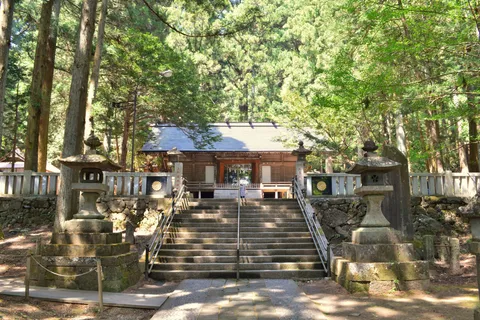
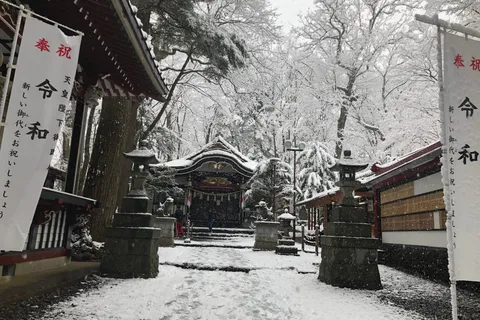
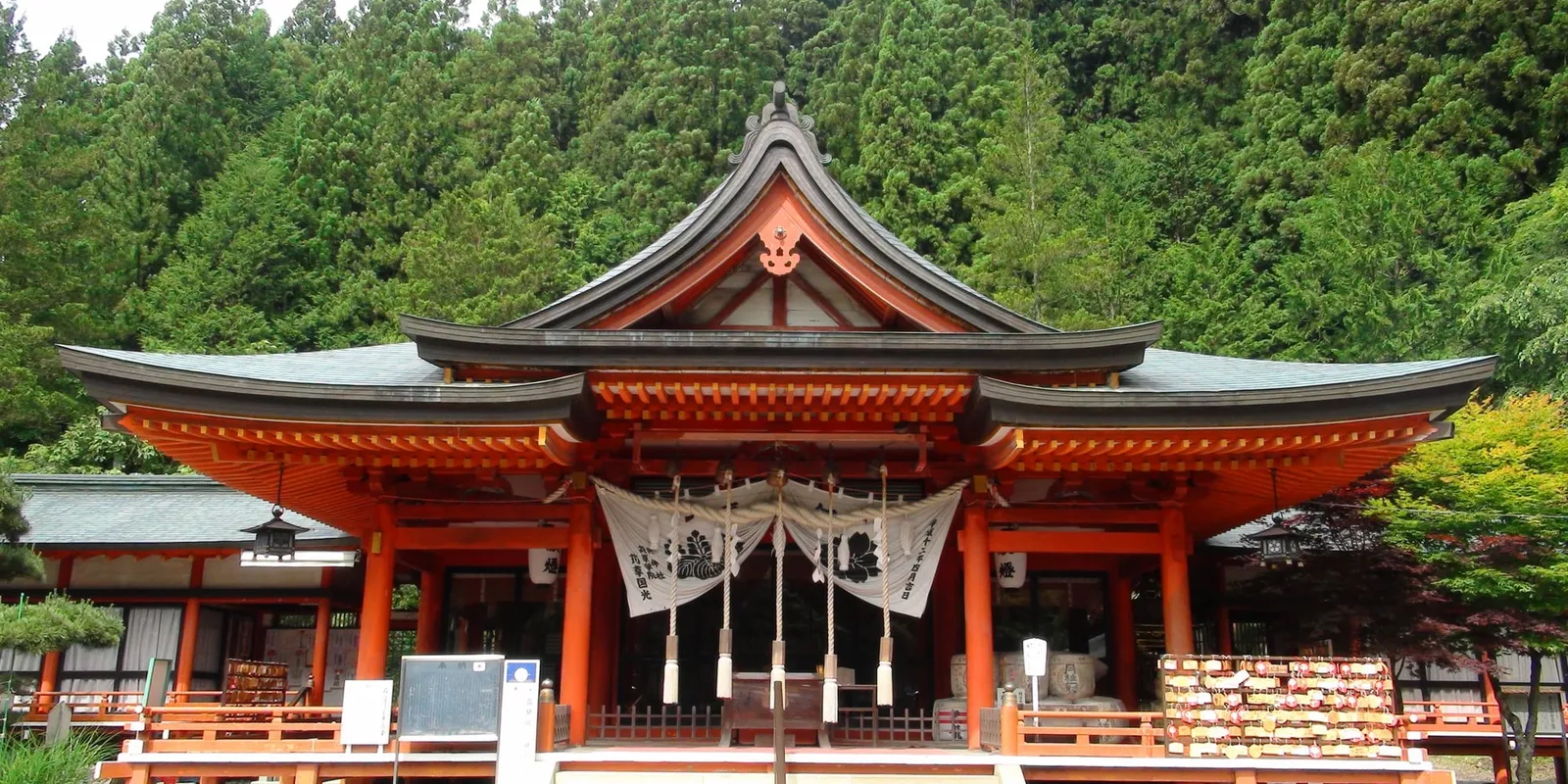
Kanazakura Shrine stands in Mitakecho, at the top of Shosenkyo Gorge, a scenic spot in Kofu, Yamanashi, and treats Mt. Kinpu (Kinpusan) as its sacred object (goshintai). The official site calls itself “Mitakesan Kanazakura Shrine.” This page uses the official character 櫻, though the shrine is also commonly written 金桜神社.
According to the official history, when epidemics spread across the country in the reign of Emperor Sujin (about 2,000 years ago) and shrines were founded in the provinces to drive out plague and pray for the people’s well-being, Sukunabikona is said to have been enshrined on the summit of Mt. Kinpu in Kai Province, which is the shrine’s origin. Later, in the reign of Emperor Keiko, when Yamato Takeru toured the eastern provinces, Susanoo and Onamuji (written 大巳貴命 on the official site) were enshrined together with him for the development of the land, bringing the total to three deities. In the 2nd year of Emperor Tenmu, Zao Gongen of Yoshino’s Mt. Kinpu was also enshrined (until the early Meiji era), and Shinto and Buddhist rites were performed together. The official site also says the shrine corresponds to the “Kanazakura Shrine” of Yamanashi District, Kai Province, in the Engishiki. As for the deities, the Yamanashi prefectural tourism site lists five, adding Yamato Takeru and Kushinadahime, so sources differ.
In the medieval period, the official history says more than a hundred priests and monks served here, faith reached the Kanto region, Echigo, Sado, Shinano and Suruga, and talismans were distributed twice a year. After the Meiji-era separation of Shinto and Buddhism, it became a prefectural shrine in 1916 (Taisho 5) and, in 1946, a religious corporation under the Association of Shinto Shrines. In the early hours of December 18, 1955, a fire that started at the amulet office spread to the Zuijin gate, the main hall and other buildings, destroying 13 buildings, including some said to have stood for about 700 years. The official site says the deity’s sacred body was moved safely to a temporary shrine.
Highlights
The shrine’s best-known feature is its sacred tree, the “Kanazakura” (ukon-zakura). According to the official page for the Cherry Blossom Festival, it bears pale yellow flowers, and those who pray before it in full bloom are said to be blessed with good relationships. Together with the double-flowered cherries, it is listed as peaking from mid to late April, later than Somei-Yoshino. A travel guide site said to be supervised by the shrine calls it a “money tree” (the Yamanashi prefectural tourism site has a similar description).
The official site calls the shrine the birthplace of crystal and says its crystal amulet has a history of over 600 years as a lifelong charm. On the left just before the torii is a spring the official site calls “shinsui” (sacred water), described as water dug as the “Nyorai pond” when Zao Gongen of Yoshino was enshrined, which keeps flowing. The official site also introduces the “Shofuku Daikokuten,” carved from a 2,000-year-old cedar that was burned in the 1955 fire. The Yamanashi prefectural tourism site lists prefecturally designated cultural properties, including a Noh mask and maki-e boxes and drum bodies.
Visiting Tips
The official site gives reception hours of 9:00 AM–5:00 PM (the Yamanashi prefectural tourism site also gives 9:00 AM–5:00 PM for the worship area, but a travel guide site said to be supervised by the shrine says it is open all day, so sources differ). Goshuin are listed as available on that guide site and the prefectural tourism site, but the official site does not mention them and the fee is unknown. Please check with the shrine (055-287-2011).
For access, the official site gives JR Chuo Line Kofu Station as the nearest station, and by car it is about 30 minutes from Nirasaki IC or about 45 minutes from Kofu-Showa IC on the Chuo Expressway. The Yamanashi prefectural tourism site says to take a Yamanashi Kotsu bus from Kofu Station (about 50 minutes) to “Shosenkyo Takinoue” and walk about 25 minutes (another listing mentions a reservation-based demand bus of about 7 minutes from Takinoue, so sources differ; check in advance).
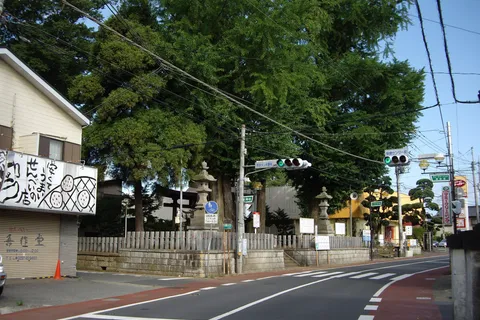
Parking is free, and there are toilets. The lot at the upper torii is small, there is also parking along the street below the torii, and temporary parking is set up during events. Visitors are asked not to park on the road. According to the official site, the high elevation means the cherries bloom somewhat late.
Annual Festivals
The official site’s annual events are as follows (dates may change).
- Mitake first-prayer ceremony (during January): A New Year prayer ceremony.
- Setsubun Festival (February 3): The site notes the date may change.
- Spring grand festival (4th Saturday and Sunday of April): The official kagura page says dances are dedicated at the spring and autumn grand festivals.
- Cherry Blossom Festival (April 28 to May 5): The ukon cherry and double-flowered cherry season. Another page says “usually mid-April to early May,” and lists dedicated kagura, performances by local junior and senior high school brass bands and cheer squads, and drumming. Cancelled in the rain.
- Summer purification (Nagoshi no Oharai) (June 30)
- Gion Festival (July 15)
- Autumn festival (October 17)
- Fire-quelling festival (Chinka-sai) (first Sunday of December): Described as an ancient Shinto rite.
- Akibasha Festival (December 18)
- Year-end purification (Toshikoshi no Oharai) (December 31)
Note that the “Memories” page on the official site gives the main festival days as April 21 and 22, which differs from the annual events list. Check the “Events Schedule” page on the official site for the latest.
Nearby Food & Sightseeing
- Shosenkyo Gorge: The gorge the official site calls a scenic spot of Kofu, with the shrine at the top of it. The Yamanashi prefectural tourism site’s access directions start from the “Shosenkyo Takinoue” bus stop.
- Mt. Kinpu: The mountain that is the shrine’s sacred object. According to the Yamanashi prefectural tourism site, there is an inner shrine on the summit.
Frequently Asked Questions
- Q. What are the visiting hours?
- A. The official site gives reception hours of 9:00 AM–5:00 PM. The Yamanashi prefectural tourism site also lists the worship area as 9:00 AM–5:00 PM, but a travel guide site said to be supervised by the shrine says it is open all day, so sources differ. If you want to receive anything or use the office, visit between 9:00 AM and 5:00 PM.
- Q. Can I get a goshuin at Kanazakura Shrine?
- A. The FAQ of a travel guide site said to be supervised by the shrine says goshuin are available, and the Yamanashi prefectural tourism site's shrine page also lists them as available. The shrine's own site, however, does not mention goshuin, so the fee and hours could not be confirmed. Office hours are given as 9:00 AM–5:00 PM, so visit within that time. Calling the shrine (055-287-2011) is the surest way to check.
- Q. How do I get there, and is there parking?
- A. The official site gives JR Chuo Line Kofu Station as the nearest station (no bus routes or timetables are listed). According to the Yamanashi prefectural tourism site, it is about 50 minutes by Yamanashi Kotsu bus from Kofu Station to "Shosenkyo Takinoue," then about a 25-minute walk. By car, it is about 30 minutes from Nirasaki IC and about 45 minutes from Kofu-Showa IC (official site). Parking is free; the lot at the upper torii is small, there is also parking along the street below the torii, and visitors are asked not to park on the road.
- Q. When is the best time to see the ukon cherry blossoms?
- A. The official site says the sacred ukon cherry (ukon-zakura) and the double-flowered cherries bloom later than Somei-Yoshino and weeping cherries, peaking from mid to late April, and that the high elevation makes them bloom somewhat later. The Cherry Blossom Festival is listed as April 28 to May 5 in the annual events, while another page says "usually mid-April to early May." It is cancelled in the rain, and bloom timing varies by year, so check ahead.
- Q. What is the crystal amulet?
- A. The official site calls the shrine the birthplace of crystal ("Suisho Hasshō no Jinja"), says it has a history of two thousand years as a deity of medicine and warding off misfortune, and says its crystal amulet has a history of over 600 years and is meant to be kept for life. A travel guide site said to be supervised by the shrine adds that receiving it in ukon-cherry season (late April to early May) is said to be good for warding off misfortune and for financial luck (the price is not stated on the official site).
Plan Your Visit
Before you go, you can book a stay and get your shrine-visit items ready.
Amazon links open Amazon.co.jp (Japan) in English; whether an item ships overseas depends on the product.
※ Contains ads (PR). Links open external sites such as Amazon, Rakuten, Trip.com and Booking.com.