History
Araya Yama Shrine (Araya Yama Jinja) stands in the Araya district of Fujiyoshida, at the northern foot of Mt. Fuji, and is affectionately called “Yama no Kami-sama” (“the Mountain God”) by locals. According to the official site, it is traditionally said to have been founded on October 17, 1534 (Tenbun 3) in the late Muromachi period. It was repaired in 1727, its heiden and haiden were built in 1890, and its honden was rebuilt in 1934, when the subsidiary Sengen and Okami shrines were enshrined here. In 1973 the heiden and haiden were rebuilt and the shrine office was established, giving the shrine its present form.
The chief deity is Oyamatsumi no Mikoto, god of the mountains, enshrined together with Amaterasu Sumeomikami and Konohanasakuya-hime no Mikoto. The shrine has long been revered as a guardian of the mountains and a god of industry, worshipped by people in forestry and farming and by craftspeople such as carpenters. The official site records local sayings such as “the Mountain God is a living god, so you must not take even a single leaf” and “if you cut a tree of the Mountain God, you must plant another.” In recent years it has been said to bring financial luck, business prosperity, and prosperity in agriculture and forestry, and visitors come from all over Japan, drawn by its reputation as a shrine for financial luck.
Highlights
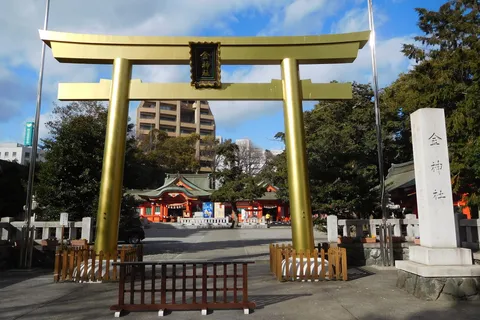
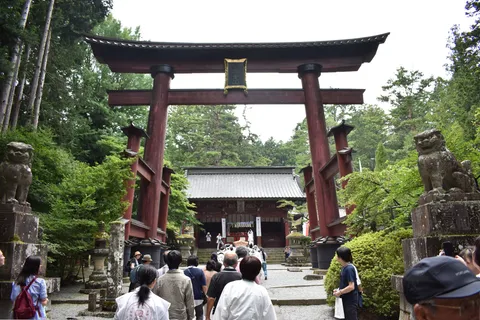
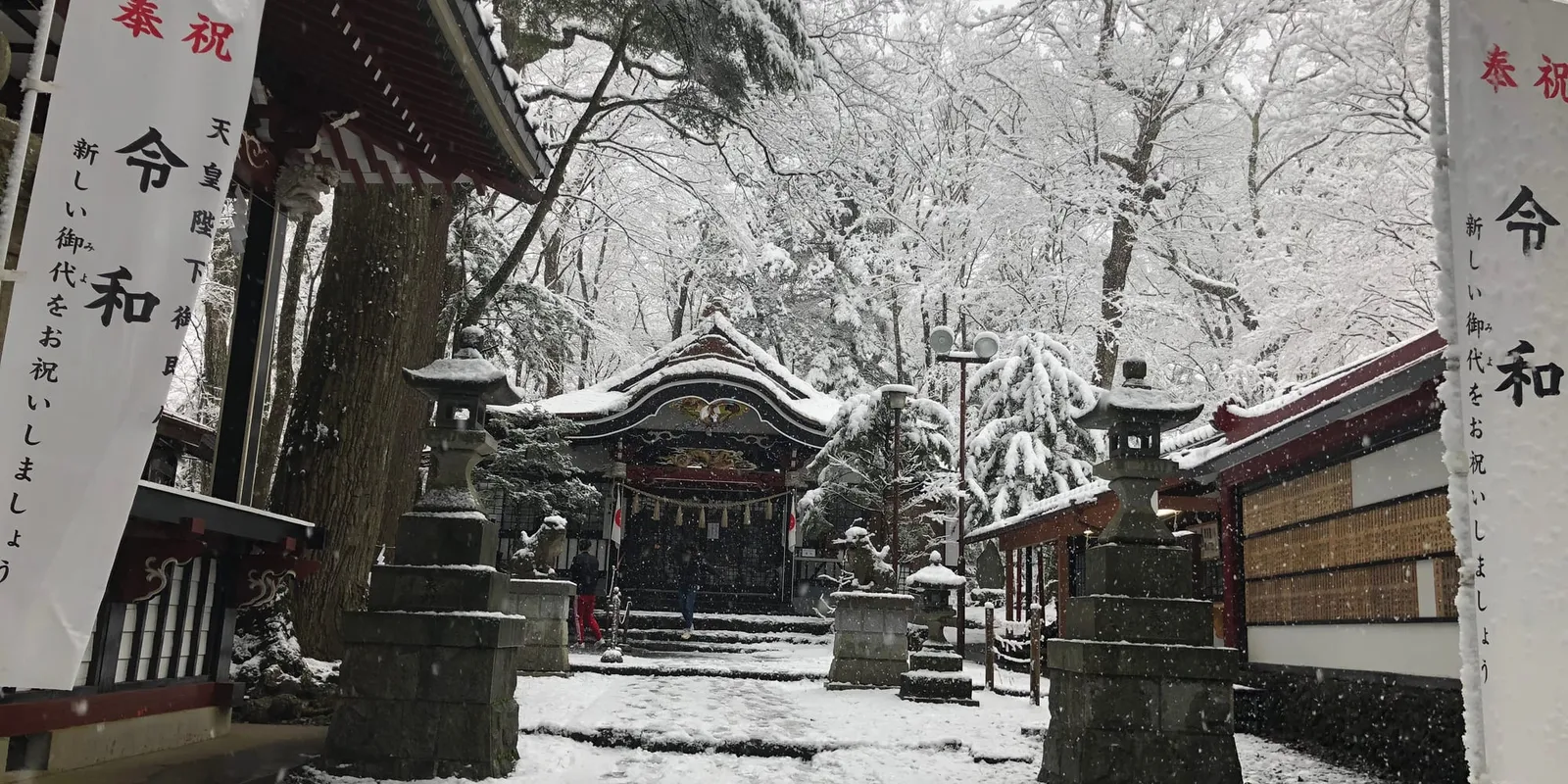
The main shrine sits on a small hill covered in old-growth forest, close to a water source. It faces north with Mt. Fuji at its back, and the approach is lined with torii gates donated by people whose wishes were granted. The grounds also hold the subsidiary Komitake and Inari shrines and a pair of “meoto” trees. In the worship hall there is a Mt. Fuji-shaped stone called the Gojinseki (the “asking stone”), which is lifted three times to sense a change in weight as a way of seeking the deity’s guidance; the official site says it is currently unavailable as a COVID-19 precaution.
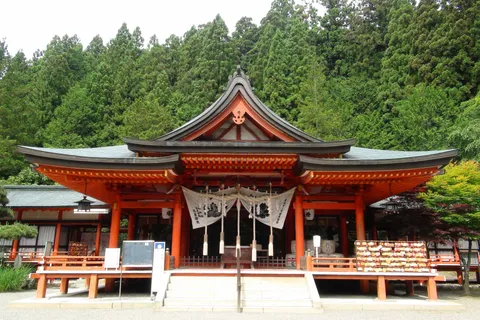
The Okunomiya stands at Hedano-tsuji on the second station of Mt. Fuji (Kamiyoshida, Fujiyoshida). It was once a resting place for people working in the mountains, on the border between grassland and forest, and is said to have begun as a stone shrine enclosing a red rock. The present building was newly constructed in 2011 and the deity was transferred there on August 7. The Okunomiya includes a shrine surrounded by a ring of stones (a stone circle), and visitors are asked to pray from the front without walking around it.
Visiting Tips
There is no admission fee at either shrine. As a guide, the main shrine is open 9:00 AM–4:00 PM and the Okunomiya 10:00 AM–3:00 PM, and goshuin are available at both. At the Okunomiya they are reportedly offered only as pre-written sheets, and the official site does not list the fee, so please confirm it at the shrine office.
The Okunomiya is on the second station of Mt. Fuji and cannot be reached by train or bus. Because the forest road is closed in winter, visits are generally possible from around late April to around November, but the opening and closing dates change with the year and the weather, so please check the official site or official X account beforehand. The road is paved but narrow, with two-way traffic and poor visibility, and the official site asks drivers to slow down and keep to the left. There are reports that vehicles seating 11 or more people cannot enter the forest road. At the stone-circle shrine, pray from the front with two bows, two claps, and one bow, without walking around it.
The official site states plainly that the shrine does not sell crystals or other lucky items and does not sell anything online. Talismans and amulets are not mailed, and prayers on someone’s behalf are accepted only for family members. It also warns that the shrine has no connection with other websites that use its name, so please rely on the official site for information.
Annual Festivals
- Gantan-sai (January 1): The first festival of the new year.
- Shogatsu-sai (January 16 eve, January 17): The 16th is the eve of the festival, and the main rites and kagura are held on the 17th. The official site also describes the “Yumiiri” rite on the early morning of the 17th, in which men bring bows and loose arrows.
- Okumiya-sai (morning of October 16): A rite at the Okunomiya in which, after offerings are made, the shrine’s spirit is received and carried down to the main shrine (called “Omitama no Omukae”). The official site posts the notice for 2026 (Reiwa 8).
- Reitaisai (October 17; Yomiya-sai on the evening of the 16th): The shrine’s annual grand festival. Kagura is offered from the morning and sumo is held in the grounds. The official site notes that many people in mountain work and construction come to pray, along with many making wishes.
Nearby Food & Sightseeing
- Kitaguchi Hongu Fuji Sengen Shrine: A shrine in the same city that stands at the start of the Yoshida climbing trail, offering a look at the history of Mt. Fuji worship.
- Arakurayama Sengen Park: A park where you can see Mt. Fuji together with the five-story Chureito pagoda, and a popular cherry blossom spot in spring.
- Yoshida udon: Fujiyoshida’s local specialty, known for noodles firmer than ordinary udon. The city has many shops specializing in it.
Frequently Asked Questions
- Q. What are the visiting hours and is there an admission fee?
- A. There is no admission fee. As a guide, the main shrine is open 9:00 AM–4:00 PM and the Okunomiya on the second station of Mt. Fuji is open 10:00 AM–3:00 PM (closed in winter). Hours can change, so check the official site or call 0555-24-0932 (9:00 AM–4:00 PM, Japanese).
- Q. Can I get a goshuin?
- A. Yes, at both the main shrine and the Okunomiya. As a guide, the main shrine office is open 9:00 AM–4:00 PM and the Okunomiya 10:00 AM–3:00 PM; at the Okunomiya it is reportedly offered only as a pre-written sheet. The official site does not list the offering fee, so please confirm it when you visit.
- Q. Is there parking?
- A. The main shrine has free visitor parking, and the official site posts a parking map. The Okunomiya has only a small number of spaces along the forest road, so arrive early on busy days.
- Q. When and how can I visit the Okunomiya?
- A. The Okunomiya stands at the second station of Mt. Fuji (Hedano-tsuji) and cannot be reached by public transport, so you need to go by car. Because the forest road is closed in winter, visits are generally possible from around late April to around November, depending on the year and the weather. Check the official site or the shrine's official X account for the latest status.
- Q. Can amulets be mailed, or prayers be made on someone else's behalf?
- A. According to the official site, the shrine does not mail talismans or amulets and does not sell anything online. Prayers on someone's behalf are accepted only for family members. The shrine also does not sell crystals or similar lucky items.
Plan Your Visit
Before you go, you can book a stay and get your shrine-visit items ready.
Amazon links open Amazon.co.jp (Japan) in English; whether an item ships overseas depends on the product.
※ Contains ads (PR). Links open external sites such as Amazon, Rakuten, Trip.com and Booking.com.