History
Karakama Jinja carries a documented history of nearly 1,300 years, appearing as “Karakama no Yashiro” in the Izumo no Kuni Fudoki (733) and as “Karakama Jinja” in the Engishiki Jinmyocho, the register of officially recognized shrines compiled in 927. The sole enshrined deity is Susanoo no Mikoto, and the shrine sits quietly deep in the mountains of Karakawa-cho, northeast of Izumo Taisha and close to Gakuenji Temple.
The origin of the shrine’s name is widely explained through a tradition holding that Susanoo no Mikoto brought forestry techniques and ironworking culture — including tatara steelmaking — to this region from Silla, an ancient kingdom on the Korean peninsula, with “kama” said to reference a furnace or hearth used for smelting iron. It’s worth noting, however, that this reading of “Kara” as a direct reference to the Korean peninsula is best understood as long-transmitted tradition and folk etymology rather than settled academic fact. A large boulder standing near the torii gate is known as “Iwafune” (the rock ship), said to be the very vessel Susanoo rode when he crossed over to this land.
Despite its ancient pedigree, the shrine remained largely a local concern for centuries. In recent years, however, it has drawn nationwide and even international attention as “the shrine that’s brutally hard to reach,” featured on social media and television, and now attracts a steady stream of visitors as one of the region’s most talked-about power spots.
Highlights
The single greatest highlight of Karakama Jinja is the approach itself. Beyond the torii gate, roughly 300 steep stone steps made of unevenly sized natural rock lead upward, culminating in a gap between two boulders only about 40–45cm wide, which visitors must turn sideways to pass through. Some larger-framed visitors are unable to fit and must turn back. For those who make it through, the small main hall — built to fit snugly into a sheer rock face on the other side — appears in a moment of tension and relief unlike anything found at a conventional shrine.
The massive “Iwafune” boulder near the torii is also worth pausing for: tradition holds it to be the ship Susanoo no Mikoto rode when he crossed over from Silla, and it stands amid a grove of cedars with a genuinely otherworldly atmosphere. Partway up the approach, openings in the trees offer views over the surrounding mountains of the Izumo region, reinforcing the sense of having left the everyday world behind.
Visiting Tips
Because of how physically demanding the approach is, Karakama Jinja is not a shrine to visit casually or underprepared. Please keep the following points firmly in mind before setting out.
- Clothing and footwear: Wear easy-to-move-in trousers and sneakers or slip-resistant hiking shoes. The stone steps are made of unevenly sized natural rock, some sections are covered in moss, and the whole route can be extremely slippery.
- Avoid rain and wet conditions: Visiting during or right after rain, when the rocks and steps are wet, is genuinely dangerous. Wait for a dry day whenever possible.
- No handrails or ropes: There is no handrail, rope, or chain anywhere along the stone steps or the rock passage. A single misstep could cause a serious fall, so proceed carefully and deliberately at every step.
- The width of the rock gap: The passage just before the main hall is only about 40–45cm wide. Visitors with a larger build, or carrying a bulky backpack, may not be able to get through. Pack light, and if you cannot fit through the gap, it is fine to stop and pay respects from the approach rather than forcing it.
- Mobile signal: Parts of the area between the parking lot and the shrine have no cell phone reception. Visiting with at least one other person, rather than alone, is strongly recommended.
- Allow plenty of time: Budget roughly an hour round trip — 800m on foot from the parking area to the torii, then the stone steps and rock gap up to the main hall and back. Footing becomes very hard to see after dark, so plan to arrive with enough daylight left to descend safely.
- Goshuin: None are available at the shrine itself. See the FAQ above for the weekday and weekend/holiday pickup locations.
Annual Festivals
- Reisai (Annual Festival) — November 3: The shrine’s yearly festival, held at the worship hall down in the settlement.
- Karakawa Kagura (biennial, night of November 2 into the small hours of November 3): An Izumo City-designated intangible folk cultural property performed every other year alongside the reisai. Tradition dates its origin to 1825, and the full program of sacred dances is performed through the night from evening until dawn.
Nearby Food & Sightseeing
- Gakuenji Temple: A Tendai-sect temple said to have been founded in 594, located in the same mountainous area not far from Karakama Jinja. Known as a spot for autumn foliage, it holds a bell associated with the warrior-monk Benkei (a nationally designated Important Cultural Property) and a garden praised by the Kyoto Rinsen Association as among the finest in the Izumo region.
- Ocha no Sato Karakawa-kan: A local specialty shop in the same Karakawa-cho neighborhood as the shrine, selling the area’s noted Karakawa bancha roasted tea, handmade soba noodles, and Karakawa manju sweets — a welcome stop after the demanding climb.
- Izumo Taisha: One of Japan’s most important shrines, about a 40–50 minute drive away. Many visitors pair a visit here with Karakama Jinja as a contrast between Izumo’s grandest shrine and one of its most hidden.
Frequently Asked Questions
- Q. How difficult is it to visit Karakama Jinja?
- A. Karakama Jinja is widely regarded as one of Japan's hardest shrines to physically reach. From the parking area it's an 800m walk to the torii gate, followed by roughly 300 steep, unevenly sized natural-stone steps, and finally a rock gap only about 40–45cm wide that visitors must turn sideways to squeeze through before reaching the main hall. There are no handrails or ropes anywhere on the route, and visitors with a larger build sometimes cannot fit through the gap and have to turn back. The stone steps and rock surfaces become especially slippery after rain, so weather matters a great deal.
- Q. Can I receive a goshuin (shrine seal) here?
- A. No goshuin are issued at the shrine itself, since it is unmanned. On weekdays they are available at the Wanibuchi Community Center (720-1 Kawashimo-cho, Izumo; tel. 0853-66-0001), and on Saturdays, Sundays, and public holidays at the Momijiya shop (599-1 Kawashimo-cho, Izumo; tel. 0853-66-0033).
- Q. Who is enshrined here, and what blessings does the shrine offer?
- A. The sole enshrined deity is Susanoo no Mikoto. Tradition holds that he brought forestry and ironworking (tatara steelmaking) techniques to this region from Silla, on the Korean peninsula, and the shrine is regarded as a source of industrial prosperity as well as a powerful "power spot" for good fortune. In recent years, the narrow rock passage just before the main hall has come to be seen as symbolic of a birth canal, drawing many young women who come to pray for safe childbirth.
- Q. How do I get to Karakama Jinja by car or public transportation?
- A. There are three small parking areas with about 10 spaces combined, free of charge. By public transportation, take the Ichibata Electric Railway to Unshu-Hirata Station, then the Hirata Life Bus's Wanibuchi Line to the Shishigahana stop, followed by a 30–40 minute walk. The surrounding area is unpaved and has patches with no mobile phone signal, so visiting with at least one companion rather than alone is recommended.
- Q. Are there any annual festivals at Karakama Jinja?
- A. The shrine's annual festival (reisai) is held every year on November 3 at the worship hall down in the settlement. Every other year, it is accompanied by Karakawa Kagura, a sacred dance designated as an Izumo City intangible folk cultural property, performed through the night from the evening of November 2 into the small hours of November 3.
Related Shrines
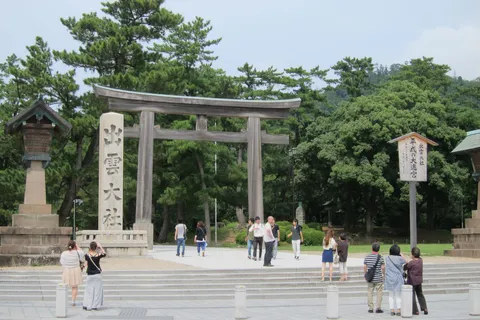
Shimane Prefecture, Izumo
Izumo Taisha
Izumo Ōyashiro
- Good Relationships
- Marital Harmony
- Business Prosperity
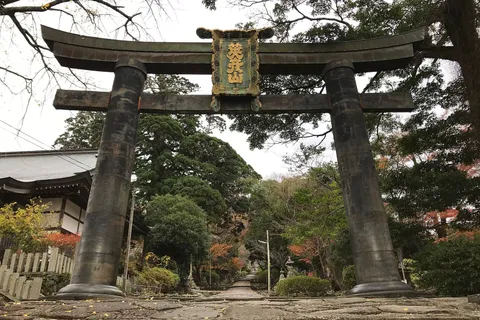
Fukuoka, Soeda, Tagawa District
Hikosan Jingu
Hikosan Jingu
- Good Fortune
- Protection from Misfortune
- Household Safety
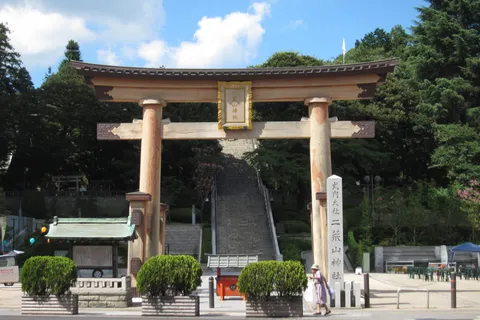
Tochigi, Utsunomiya
Utsunomiya Futaarayama Jinja
Utsunomiya Futaarayama-jinja
- Good Fortune
- Household Safety
- Industrial Prosperity