History
Kashihara Jingu was founded in 1890, based on an account recorded in the Nihon Shoki. According to that chronicle, Emperor Jimmu — traditionally regarded as Japan’s first emperor — established his imperial palace, Kashihara-no-miya, on this very site upon his accession to the throne. In response to a petition from local supporters, Emperor Meiji granted permission for a shrine to be built on that exact legendary site.
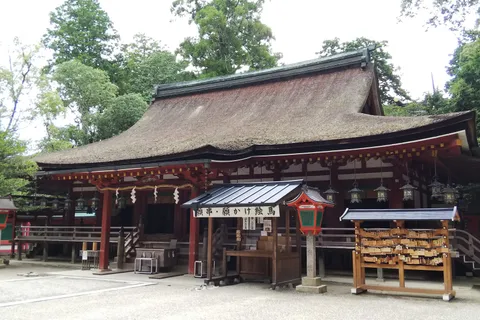
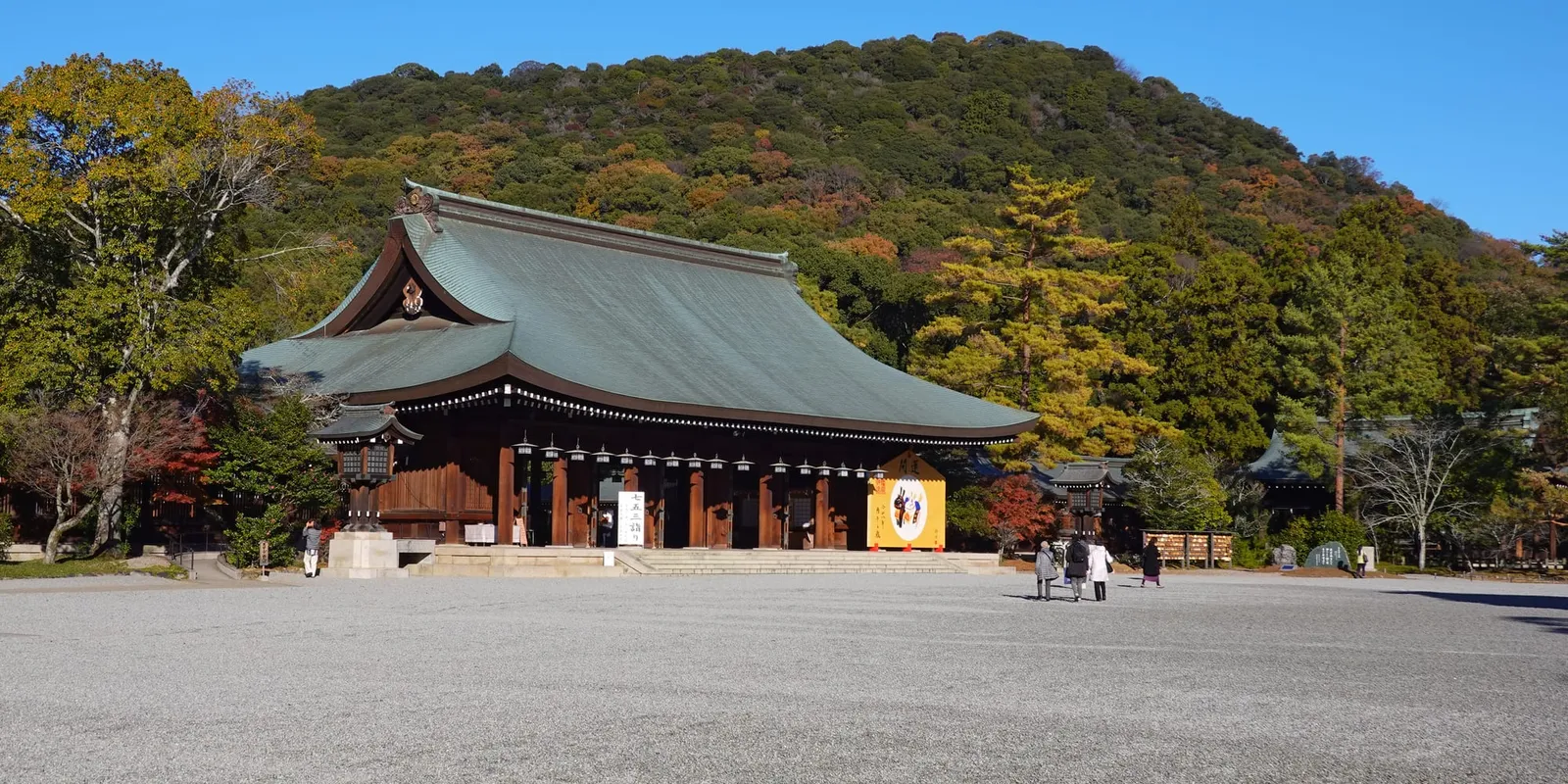
The shrine enshrines Emperor Jimmu together with his empress, Himetatara Isuzuhime. Its main hall was relocated here as a gift from Emperor Meiji, having originally served as the Kashikodokoro hall of the Kyoto Imperial Palace, and its stately presence remains striking to this day. Both the honden and the Bunkaden building are designated Important Cultural Properties, making Kashihara Jingu one of the Meiji era’s most significant shrines, inseparably bound up with the founding mythology of the Japanese nation.
Highlights
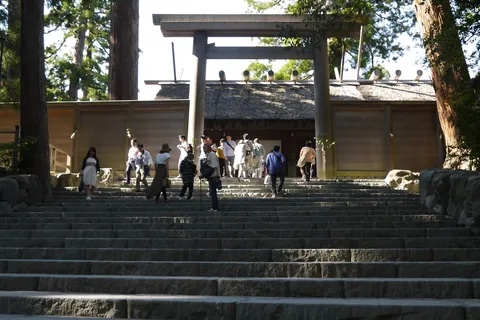
The single greatest highlight of Kashihara Jingu is its vast, solemn precinct, befitting a site tied to the legendary founding of Japan. Walking the main approach from the first torii gate, visitors pass through a lush forest overlooking Fukada Pond before arriving at the sequence of structures — great torii, outer worship hall, inner worship hall, and main hall — that together inspire a hushed reverence.
The main hall, relocated from the Kyoto Imperial Palace’s Kashikodokoro, and the Bunkaden building, both designated Important Cultural Properties, are highlights not to be missed. The Mausoleum of Emperor Jimmu (Unebiyama-no-Ushitora-no-Sumi-no-Misasagi) lies adjacent to the shrine’s eastern side, and visiting both together offers a deeper sense of the setting for Japan’s founding mythology.
Visiting Tips
Visiting hours vary by season, running roughly 6:00–18:00 (around 6:30–17:00 in winter). Goshuin can be received at the office to the left of the worship hall from 9:00 to 16:00, for ¥500. On-site parking accommodates about 800 vehicles (around 1,500 including overflow lots during New Year’s) at ¥500/day for cars with 24-hour entry and exit, making a visit by car convenient. The shrine is especially crowded during the Kigensai festival on February 11 and the first three days of the New Year, so it’s worth allowing extra time then.
Annual Festivals
- Kigensai, Empire Day (February 11): The shrine’s most important festival, commemorating the accession day of Emperor Jimmu, held on a grand scale to coincide with National Foundation Day.
- Jinmu Tenno-sai (April 3): A festival honoring the memory and divine virtue of Emperor Jimmu.
- Autumn Grand Festival (around October): A festival marking the autumn harvest, featuring dedications of sacred kagura dance and bugaku court music.
- New Year’s Festival and Hatsumode (January 1–3): One of Nara Prefecture’s leading hatsumode destinations, drawing large crowds of worshippers.
Nearby Food & Sightseeing
- Nara Prefectural Archaeological Institute Museum: A museum devoted to archaeology within walking distance of Kashihara Jingu, displaying valuable artifacts from the Kofun period, including haniwa clay figures.
- Imai-cho: A designated Important Preservation District for Groups of Historic Buildings, where Edo-period streetscapes survive largely intact, and where wandering among old townhouses turned cafes and shops is a favorite pastime.
- Cafe Tamayura: A cafe set in a traditional townhouse in Imai-cho, serving plate lunches built around locally grown seasonal vegetables.
Frequently Asked Questions
- Q. What are the visiting hours at Kashihara Jingu?
- A. Hours vary by season, but are roughly 6:00–18:00 (around 6:30–17:00 in winter).
- Q. When can I get a goshuin at Kashihara Jingu, and how much does it cost?
- A. Goshuin are available at the office to the left of the worship hall from 9:00 to 16:00, for ¥500.
- Q. Is there parking at Kashihara Jingu?
- A. Yes, on-site parking is available for about 800 vehicles (around 1,500 including overflow lots during New Year's), at ¥500/day for cars, with 24-hour entry and exit.
- Q. Why is Emperor Jimmu enshrined at Kashihara Jingu?
- A. The Nihon Shoki records that Emperor Jimmu, Japan's legendary first emperor, established his imperial palace, Kashihara-no-miya, on this very site upon his accession. Kashihara Jingu was founded in 1890 on that traditional site. Its main hall was relocated here as a gift from Emperor Meiji, originally the Kashikodokoro hall of the Kyoto Imperial Palace, and both the honden and the Bunkaden building are designated Important Cultural Properties.
- Q. How do I get to Kashihara Jingu?
- A. About a 10-minute walk from the central exit of Kashiharajingu-mae Station on the Kintetsu Minami-Osaka, Yoshino, and Kashihara lines.