History
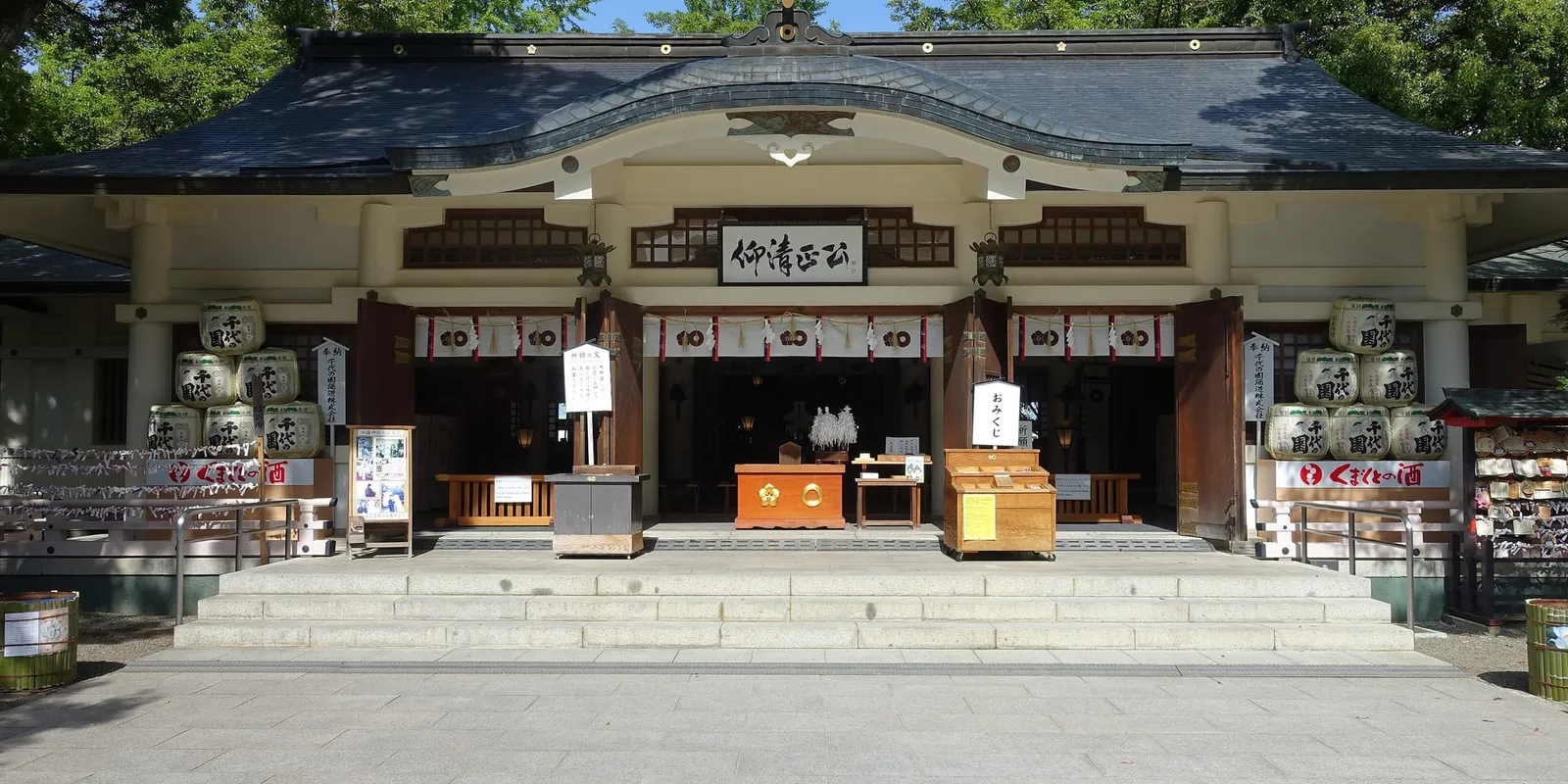
Kato Shrine stands in the main enclosure (Honmaru) of Kumamoto Castle in Chuo-ku, Kumamoto, and enshrines Kato Kiyomasa, known as a master castle builder. According to the official site, the principal deity is Kato Kiyomasa (1562–1611), and two retainers of the Kato house who followed him in death, 大木兼能 and 韓人 (Korean) 金宦 (also written 良甫鑑), are co-enshrined. The people of Kumamoto are said to call Kiyomasa “Seishoko-san” with affection, and the shrine uses the same name. (The reading “Kato-jinja” does not appear on the official site; it follows the spelling on a travel information site.)
According to the official history, in the first year of Meiji the court ordered that Shinto rites be held, and the Jochi Mausoleum at Honmyoji Temple (Hanazono, Nishi-ku) came to be guarded with Shinto ceremony. In Meiji 4, following the order separating Shinto and Buddhism, a shrine was founded inside Kumamoto Castle under the name “Nishikiyama Shrine.” Because the Kumamoto Garrison was placed in the castle in Meiji 6, it was moved to Kyomachi-dai in Meiji 7. After the shrine buildings were destroyed in the Satsuma Rebellion, reconstruction began in Meiji 17 and was completed in Meiji 19. In Showa 37, the long-held wish of returning inside Kumamoto Castle was fulfilled, and the shrine now stands at its present spot, the site of the former Hazekata Kaisho. The official site says the name “Kato Shrine” was adopted in Meiji 42 in connection with the 300th anniversary of Kiyomasa (a Ministry of Land, Infrastructure, Transport and Tourism multilingual information sheet gives the rename as taking place in 1884 at the time of reconstruction, so sources differ).
According to the official site, the grounds were heavily damaged in the 2016 Kumamoto earthquake, just like Kumamoto Castle, and the shrine office and amulet counter were also found to lack earthquake resistance. A reconstruction project, the “Reiwa no Daizoei,” marking the shrine’s 150th anniversary, began in Reiwa 4 and was completed in January of Reiwa 7. It included repainting the main hall, worship hall and torii, rebuilding the hall of the auxiliary shrine, building a new amulet counter and assembly hall and a new shrine office, and improving the approach.
Highlights
From the grounds you can see the keep of Kumamoto Castle and the Uto Yagura turret all in one view, and the official site also introduces this as a famous photo spot. On the ceiling of the worship hall is a large ceiling painting dedicated by Inoue Bunta, showing Kiyomasa living in harmony with a tiger, with tigers modeled on the wind and thunder gods on either side. It may not be viewable during weddings or at busy prayer times.
The grounds hold many things associated with Kiyomasa. The drum bridge is said to have been brought back by Kiyomasa as a memento of the Bunroku campaign, and is said to have been the model for bridge-building after his return; crossing it is said to bring guidance toward success. The flag-stand stone was used before the Bunroku campaign and was moved here from Hizen-Nagoya Castle in Meiji 42. There is also a ginkgo tree said to have been planted by Kiyomasa himself (during the construction of Kumamoto Castle, from Keicho 6 to 12), and a camphor tree, now a sacred tree, that grew up on the site of the former Hazekata Kaisho (an office that managed wax from sumac trees). A stone monument, “Nishikiyama Jinja Kaikenki,” carved in classical Chinese, records the origins of the shrine at its founding in Meiji 4.
At the back right of the grounds stands the auxiliary shrine Shirahige Shrine, which enshrines four deities: Sarutahiko no Okami, Sugawara no Michizane, Okuninushi no Okami and Ebisu no Okami. According to the official site, it is a shrine moved here from the shrine’s former location and from around Kumamoto Castle. There is also a branch shrine, enshrined on April 20, 2021, on the 3rd floor of Amu Plaza Kumamoto beside JR Kumamoto Station.
Visiting Tips
The main hall gates are open 6:00 AM–6:00 PM (varies by season), and the shrine office and amulet counter are open 8:00 AM–5:00 PM. Individual prayers are accepted the same day without a reservation, and the official site gives a guide of ¥5,000–¥10,000 per person for the offering. On weekends and holidays there may be a wait because of weddings and other events. Besides prayers for life milestones, the shrine also accepts prayers for traffic safety, business prosperity, recovery from illness, victory and construction safety.
Goshuin are written directly in your own goshuin book at the amulet counter. Limited-edition goshuin are also offered at certain times, announced in the “News” section of the official site and on the official Instagram. The fee is not stated on the official site, and guide articles disagree (¥300 versus ¥500), so please confirm at the counter.
From JR Kumamoto Station, take the streetcar to “Kumamoto-jo / Shiyakusho-mae” and walk about 9 minutes. By car, you can park in the grounds while praying or worshipping, but space is limited, and you cannot leave your car there while you go sightseeing at Kumamoto Castle. According to Kumamoto Castle’s official site, Ninomaru Parking charges ¥400 for up to 2 hours for a regular car and ¥200 for each additional hour (checked as of November 2026).
A note on timing. According to the shrine’s official site, after the 2026 Kumamoto earthquake (July 2026) the road to the shrine remained impassable because of collapsed stone walls, and it reopened on August 7 with alternating one-lane traffic near the site of Kita-Otemon Gate. Kumamoto Castle’s official site says the one-lane traffic restriction around Kato Shrine was lifted at 3:00 PM on November 18, 2026 (as of November 2026). The shrine says repairing the stone walls will still take a long time, so please check the latest information before you set out.
Annual Festivals
- Seishoko Matsuri (fourth Sunday of April): In the shrine’s official announcement, the procession of the deity (Shinko-sai) for 2026 was scheduled for April 26, with a children’s procession, a procession of shrine maidens, a “Sennin Kiyomasa” procession in which elementary-school pupils dress as Kiyomasa, and an offering of 18 portable shrines. About a thousand people take part in all, and the festival moves through the city center, including Kamitori, Shimotori and Shinshigai.
- Nagoshi no Oharae (June 30): For 2026, a notice said the rite would begin at 2:00 PM on June 30. From the end of the rite until 10:00 PM, anyone can pass through the ring of reeds (chinowa).
- Seishoko Night Market (July 25, 2026): The shrine announced this as a “one-night-only summer festival” marking ten years of recovery from the Kumamoto earthquake (in the grounds, 5:00–9:00 PM). It was planned to include a ¥100 night market, stage events and the distribution of a limited-edition paper-cut goshuin.
- Shichi-Go-San: The shrine’s prayer guide lists Shichi-Go-San prayers for children aged three, five and seven, and says the shrine has its own photo studio. The grounds are described as crowded at this time, and Ninomaru Parking is recommended.
Festival dates change from year to year, so check the “News” section of the official site for the latest.
Nearby Food & Sightseeing
- Kumamoto Castle: The castle’s main enclosure, where Kato Shrine stands. According to the castle’s official site, opening hours are 9:00 AM–5:00 PM (last entry 4:00 PM) from September to June and 9:00 AM–7:00 PM (last entry 6:00 PM) in July and August, and admission is ¥800 for high school students and older (checked as of November 2026). It is described as open to visitors through “Special Viewing” while restoration work after the 2016 Kumamoto earthquake continues.
- Sakuranobaba Josaien: On Kumamoto Castle’s official site, the group ticket window is listed inside its Wakuwakuza building, and it is the departure point for the free shuttle bus linking Sakuranobaba Josaien and Ninomaru Parking.
- Amu Plaza Kumamoto: A facility beside JR Kumamoto Station, with a branch of Kato Shrine on the 3rd floor, in the “Ooyane Terrace” (official site). You can pay your respects at the station before or after heading to the castle.
Frequently Asked Questions
- Q. What are the visiting hours of Kato Shrine?
- A. The official site lists the main hall gates as open 6:00 AM–6:00 PM (varies by season) and the shrine office and amulet counter as open 8:00 AM–5:00 PM (may change depending on the season or events). Individual prayers are accepted the same day between 8:00 AM and 5:00 PM, and reservations are not taken. On weekends and holidays there may be a wait because of weddings and other events.
- Q. Can I get a goshuin at Kato Shrine?
- A. Yes. According to the official site, goshuin are written directly in your own goshuin book at the amulet counter. Limited-edition goshuin are also offered at certain times and announced in the "News" section and on the official social media. Goshuin written on the spot may not be available at certain times, such as New Year's. The fee is not stated on the official site, and guide articles disagree (¥300 versus ¥500), so please confirm at the counter.
- Q. How do I get there, and is there parking?
- A. From JR Kumamoto Station, take the streetcar to "Kumamoto-jo / Shiyakusho-mae" and walk about 9 minutes (official site). By car it is about 30 minutes from Kumamoto IC on the Kyushu Expressway, and you can park in the grounds while praying or worshipping. Space is limited, though, and on weekends, holidays and the Shichi-Go-San season the shrine recommends Ninomaru Parking (4 minutes on foot) or similar lots. The shrine also says you cannot leave your car in its lot while you go sightseeing at Kumamoto Castle.
- Q. Can I visit right now, given the earthquake?
- A. According to the shrine's official site, after the 2026 Kumamoto earthquake (Reiwa 8, July 2026) the grounds had no major damage that prevented worship, but the Kumamoto Castle area was closed and the road to the shrine remained impassable because of collapsed stone walls (notice dated August 1, 2026). The road reopened at 9:00 AM on August 7, with alternating one-lane traffic near the site of Kita-Otemon Gate. According to Kumamoto Castle's official site, the one-lane traffic restriction around Kato Shrine was lifted at 3:00 PM on November 18, 2026, following completion of emergency repair work (as of November 2026). The shrine also says that repairing the stone walls will still take a long time, and conditions can change, so please check the shrine's and the castle's official sites for the latest information before you go.
- Q. What blessings is the shrine known for?
- A. The official site says Kato Kiyomasa is revered as a god of civil engineering, flood control and construction because of his achievements in building castles and managing rivers. Because "Kato" sounds like "katou" ("let's win"), the shrine also accepts prayers for victory, and it explains that he has been worshipped as a god of career advancement and work, a god who wards off epidemics and misfortune, and a god of pioneers. Prayers accepted include traffic safety, household safety, business prosperity, recovery from illness, victory and construction safety.
Plan Your Visit
Before you go, you can book a stay and get your shrine-visit items ready.
Amazon links open Amazon.co.jp (Japan) in English; whether an item ships overseas depends on the product.
※ Contains ads (PR). Links open external sites such as Amazon, Rakuten, Trip.com and Booking.com.