History
Aso Jinja, seated within the Aso caldera, is the head shrine of roughly 500 shrines across Japan that share the name “Aso Shrine.” Its exact founding date is unknown, but shrine tradition places its history at more than 2,000 years, and it has long been revered as the ichinomiya (chief shrine) of the former Higo Province. The principal deity, Takeiwatatsu-no-Mikoto, a grandson of Emperor Jinmu, is said to have carved an outlet through the caldera’s outer rim to drain what was once a crater lake, opening up the vast basin that exists today and teaching its people to farm — making him a deity of pioneering development as much as of the harvest.
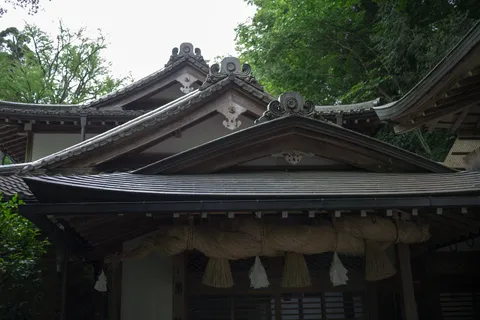
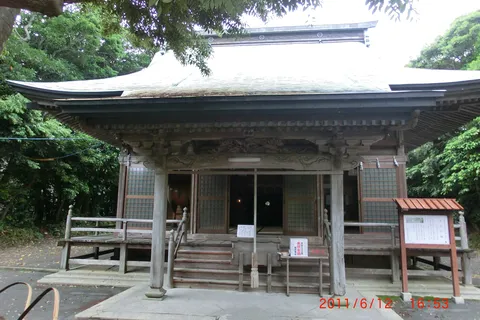
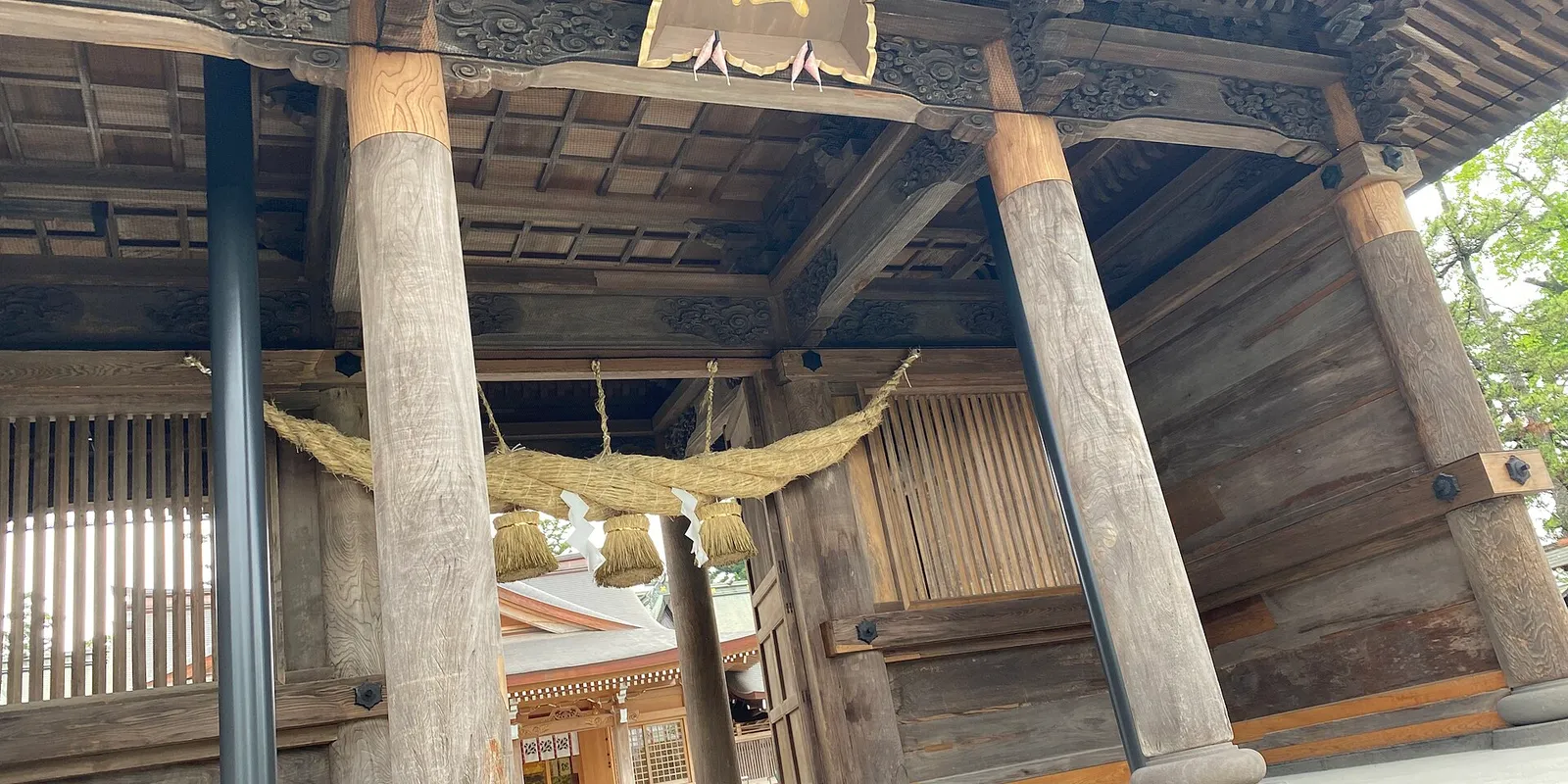
The current shrine buildings were rebuilt between 1835 and 1850 through the patronage of the Hosokawa clan, lords of the Kumamoto domain. Six structures — including the First, Second, and Third Shrine Halls and the Romon tower gate, one of the largest in Kyushu and counted among Japan’s three great tower gates — are designated Important Cultural Properties.
The 2016 Kumamoto Earthquake caused severe damage to the shrine, collapsing the Romon gate and the worship hall along with much of the rest of the complex. Restoration proceeded with support from the national government, Kumamoto Prefecture, and Aso City, reusing about 70 percent of the original materials while reinforcing the structures against future quakes. Work on the Romon gate was completed in December 2023, restoring it to its former splendor.
Highlights
The Romon gate, standing about 18 meters tall in an imposing two-story irimoya style, now stands as a symbol of the shrine’s recovery and draws many visitors eager to see it restored. On the grounds is the “Takasago Pine,” a roughly 1,000-year-old tree revered as a spot for good relationships and popular with younger visitors seeking good matches. The shrine halls are arranged symmetrically: the First Hall enshrines five male deities, the Second Hall five female deities, and the Third Hall two further gods — together forming the “Twelve Deities of Aso,” a rare arrangement of an entire family of gods enshrined side by side.
The Ichinomiya Monzen-machi shopping street leading from the shrine’s approach is dotted with about 30 natural spring-water taps known as “mizuki,” making a stroll through the district — sampling the water and local street food along the way — one of the shrine’s distinctive pleasures.
Visiting Tips
Set within Aso’s dramatic natural landscape, the shrine grounds take on a different character morning and evening. The newly restored Romon gate is especially beautiful, and it’s worth pausing to take it in before heading to worship. Afterward, a stroll through the monzen-machi shopping street, tasting the local spring water and street food, rounds out the visit nicely.
Annual Festivals
- Uno no Matsuri (March): Held over 13 days starting on the day of the Hare, this festival marks the start of Aso’s agricultural rites and is said to represent the homecoming of the region’s deities.
- Tatsukuri Matsuri and Hiburi Shinji (Day of the Monkey during the Uno no Matsuri period; scheduled for March 23, 2026): A dramatic fire ritual in which giant torches are swung through the air to pray for a bountiful harvest — the centerpiece of the “Agricultural Rites of Aso,” a nationally designated Important Intangible Folk Cultural Property.
- Onda Matsuri (July 28): A rice-planting ritual in which a procession of women dressed in white, known as unari, carry offerings on their heads as part of the divine procession.
- Tanomi Matsuri (September 25): An autumn harvest thanksgiving festival at which newly harvested grain is offered to the deities.
Nearby Food & Sightseeing
- Imakin Shokudo: A century-old diner in the Aso-Uchinomaki hot spring district, famous for its “akaushi-don” — Aso red beef rice bowl topped with a runny hot-spring egg.
- Ichinomiya Monzen-machi Shopping Street: The street lining the shrine’s approach, packed with street food made from local horse meat and Aso red beef, plus the region’s famous local cider.
- Mizuki Spring Water Walk: A walking course through the monzen-machi district linking natural spring-water taps, where visitors can sample Aso’s famed filtered mountain water along the way.
Frequently Asked Questions
- Q. What are the visiting hours?
- A. 6:00 AM–6:00 PM (shrine office 9:00 AM–5:00 PM).
- Q. When is the goshuin office open?
- A. 9:00 AM–5:00 PM, for ¥300.
- Q. Is there parking?
- A. Yes, free parking is available (about 115 spaces, free for the first 30 minutes, paid after that), plus an adjacent paid municipal lot (about 70 spaces).
- Q. Was the tower gate damaged by an earthquake?
- A. Yes — it collapsed in the 2016 Kumamoto earthquake, but restoration was completed in December 2023, returning it to its pre-quake appearance.
- Q. How do I get there?
- A. About a 15-minute walk from Miyaji Station on the JR Hohi Line.