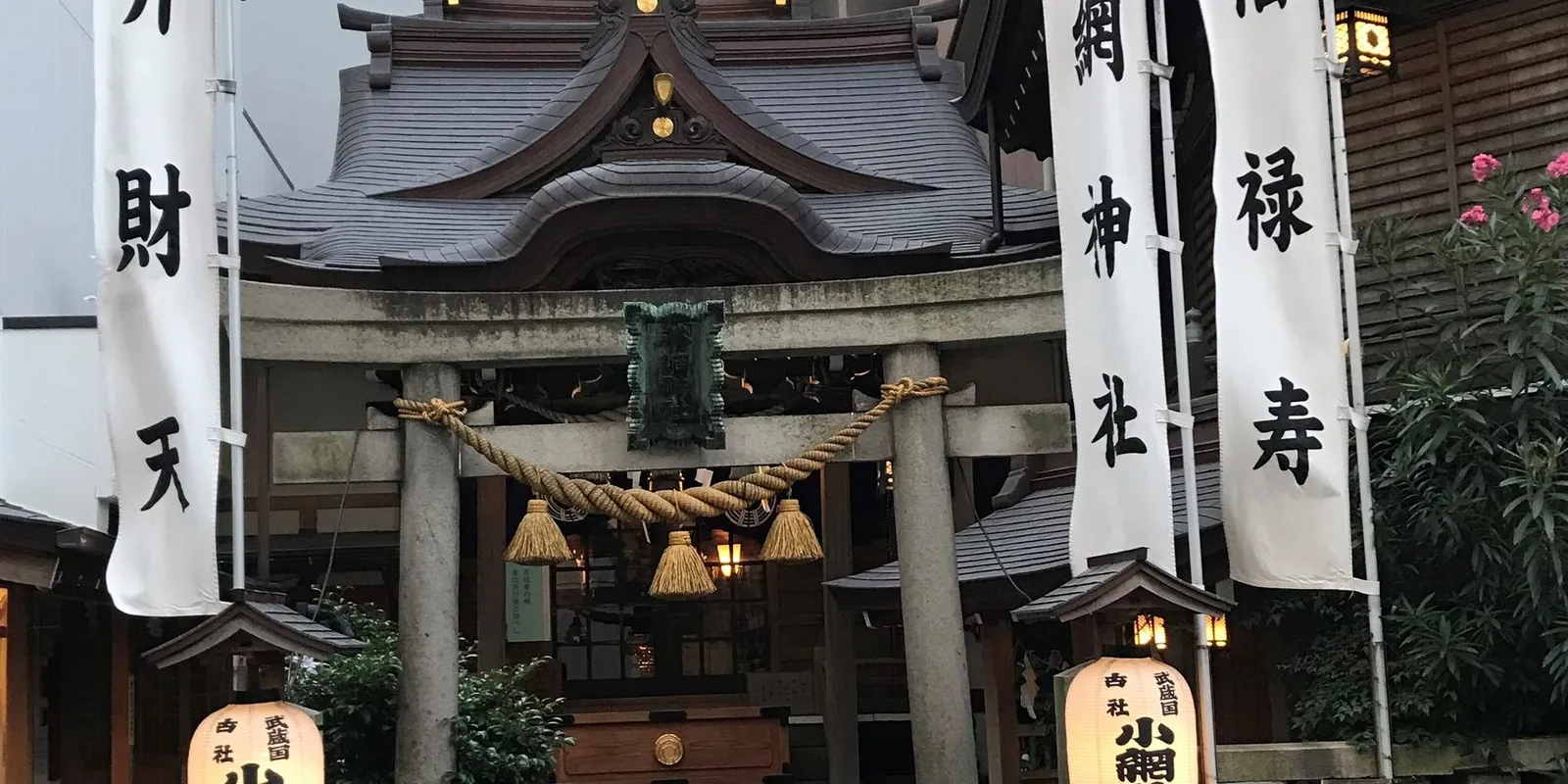
History
Koami Jinja traces its founding to 1466, during the Muromachi period. According to tradition, an epidemic was sweeping the area at the time, and a mysterious old man carrying rice stalks appeared before a hermit living at a small hermitage on this site. That night, the hermit dreamed of the eminent monk Eshin Sozu (Genshin), who told him that enshrining the old man as the Inari deity would end the plague. By morning the old man had vanished, and once a shrine to Inari was built as instructed, the epidemic is said to have subsided soon after. This episode marks the origin of Koami Jinja as “Koami Inari Jinja.”
Land later donated by the warlord Ota Dokan supported the construction of an associated temple, Koamisan Inari-in Manpuku-ji, and shrine and temple were worshipped together for centuries. Following the 1868 edict separating Buddhism and Shinto, the two were formally split; the shrine was designated the village shrine “Koami Inari Jinja” in 1873, and its present site was fixed in 1876. The current shrine hall and kagura stage were rebuilt in 1929, after the original buildings burned in the 1923 Great Kanto Earthquake, by the master carpenter Naito Komasaburo — who also worked on Meiji Jingu. Remarkably, this wooden structure survived the firebombing of Tokyo in World War II, making it one of the few surviving prewar buildings in the Nihonbashi district.
Today the shrine enshrines three deities: Ukanomitama no Kami (the Inari deity), Ichikishimahime no Kami (worshipped as Benzaiten), and Fukurokuju. It is known for its blessings of strong luck and protection from misfortune, and in recent years has drawn devoted worshippers seeking financial fortune as “Tokyo’s money-washing Benzaiten.”
Highlights
The shrine’s single most distinctive feature is the “money-washing well” (zeni-arai no i), located beneath the statue of Benzaiten to the left of the main hall. Visitors use a provided strainer to wash coins or bills, with no restriction on amount or denomination. Tradition holds that money washed here and kept unspent for a year becomes tanesen, or “seed money,” believed to multiply and attract further wealth when eventually put back into circulation — many visitors carry their washed bills carefully folded in their wallets afterward.
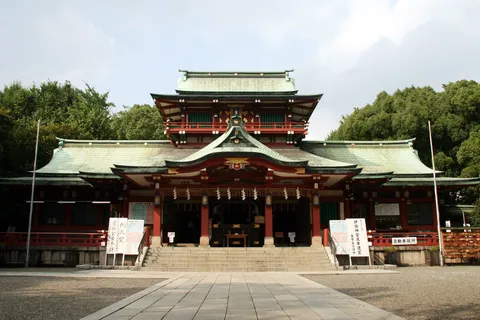
The 1929 wooden shrine hall and kagura stage are equally worth seeing. Rebuilt during the reconstruction era following the Great Kanto Earthquake by a master carpenter who had also worked on Meiji Jingu, the buildings stand quietly amid the office towers of Nihonbashi, having survived the wartime bombing that destroyed so much of central Tokyo — a rare piece of prewar architecture now registered as a Chuo Ward cultural property. Though the grounds are small, the shrine offers a hushed, dignified pocket of calm in the middle of one of Tokyo’s busiest business districts.
Visiting Tips
The grounds themselves can be visited at any time, but the shrine office — for amulets and goshuin — is open 9:00–17:00. If you plan to wash money, bringing a small pouch or handkerchief to carry it afterward is handy. Koami Jinja is one of the shrines on the Nihonbashi Seven Lucky Gods pilgrimage route and gets especially busy during the first three days of the New Year, so an early weekday morning is the best time for a quiet visit. There is no parking for visitors on the grounds, so anyone arriving by car should use one of the nearby coin-operated lots.
Annual Festivals
- Doburoku Festival (November 28): Named for the homemade doburoku (unrefined sake) served to visitors during this annual festival, alongside limited-quantity susuki-mimizuku amulets made from pampas grass.
- New Year visits and strong-luck charms (January 1–3): Known for its blessings of strong luck and protection from misfortune, the shrine draws large numbers of worshippers from the surrounding office district for hatsumode.
- Nihonbashi Seven Lucky Gods Pilgrimage (New Year period): Koami Jinja is one of the stops on this pilgrimage route through the Nihonbashi area, honored here as the home of Fukurokuju.
Nearby Food & Sightseeing
- Nihonbashi Ningyocho: A downtown-flavored neighborhood within walking distance of Koami Jinja, home to the historic Amazake Yokocho lane and long-established ningyo-yaki (doll-shaped cake) shops.
- Suitengu Shrine: Known for blessings of safe childbirth and children, this shrine is about a 10-minute walk from Koami Jinja and is another stop on the Nihonbashi Seven Lucky Gods route.
- COREDO Nihonbashi: A shopping and dining complex directly connected to Nihonbashi Station, with a range of restaurants and cafes serving classic Japanese cuisine — convenient for a break after visiting the shrine.
Frequently Asked Questions
- Q. What are the goshuin hours and fee at Koami Jinja?
- A. Goshuin are available 9:00–17:00 for ¥500. Three designs are offered — Koami Jinja, Benzaiten, and Fukurokuju — and limited-edition cut-paper (kirie) goshuin are sometimes released as well.
- Q. Is there parking at Koami Jinja?
- A. No, there is no parking for visitors on the grounds. Several coin-operated lots are available nearby, including one directly behind the shrine.
- Q. Where can I wash money (zeni-arai) at Koami Jinja?
- A. The money-washing well is located beneath the statue of Benzaiten to the left of the main hall. A strainer is provided for washing coins or bills, with no limit on amount or denomination. Tradition holds that money washed here and kept unspent for a year becomes tanesen — "seed money" believed to attract further wealth.
- Q. How do I get to Koami Jinja?
- A. The closest route is a 5-minute walk from Exit A2 of Ningyocho Station on the Tokyo Metro Hibiya Line. It's also a 7-minute walk from Exit A5 of Ningyocho Station on the Toei Asakusa Line, or 10 minutes from Exit 8 of Suitengumae Station on the Tokyo Metro Hanzomon Line.
- Q. What is the Doburoku Festival at Koami Jinja?
- A. Held every year on November 28, this festival takes its name from the homemade doburoku (unrefined sake) offered to visitors. It's also known for its limited-quantity susuki-mimizuku (eared owl made from pampas grass) amulets.