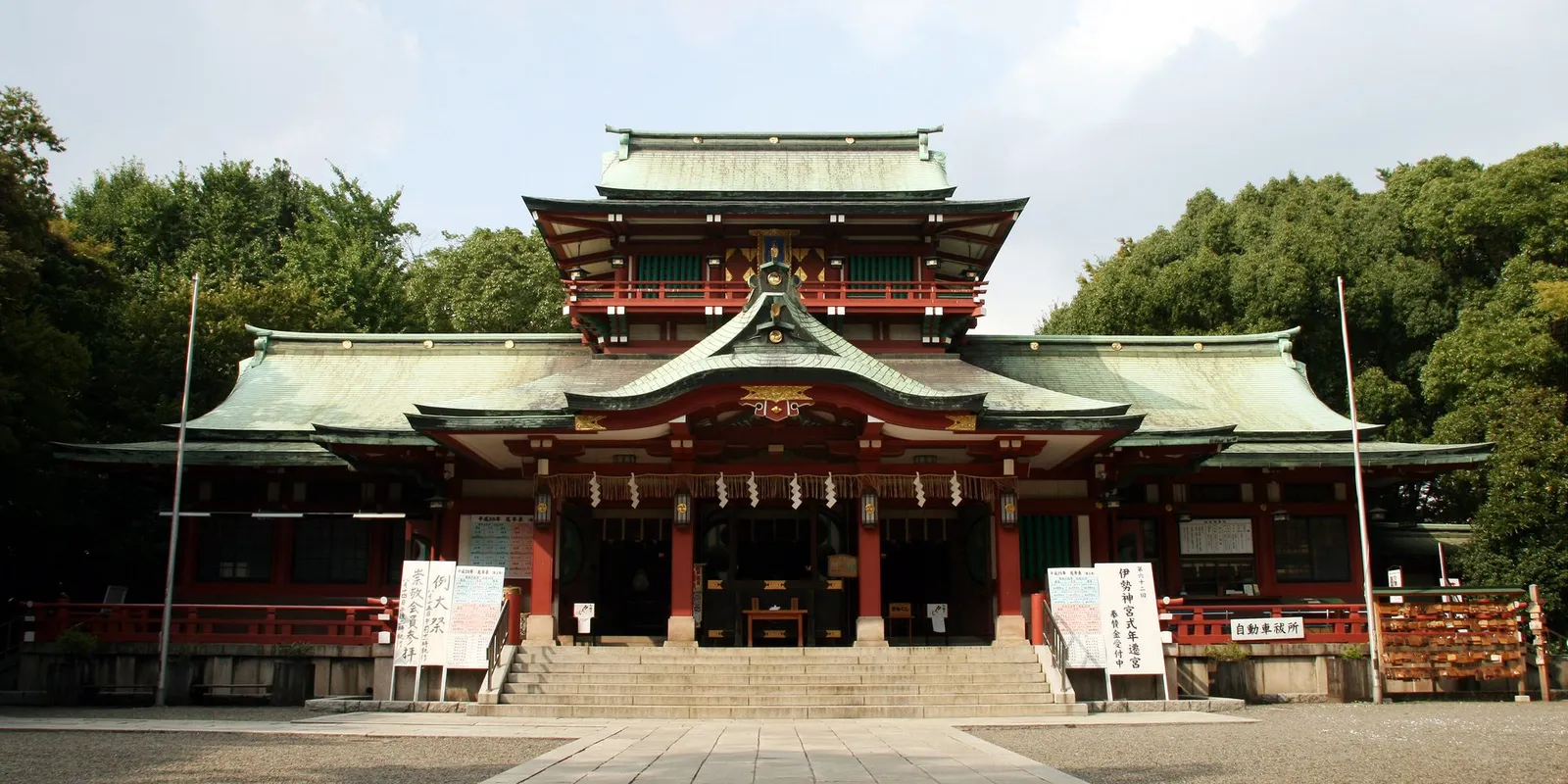
History
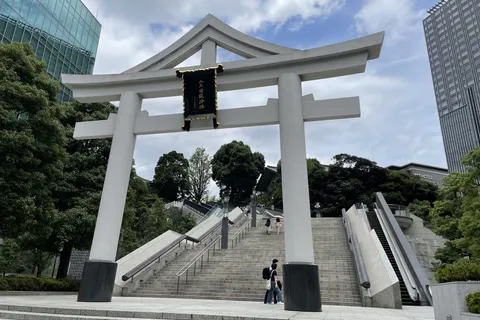
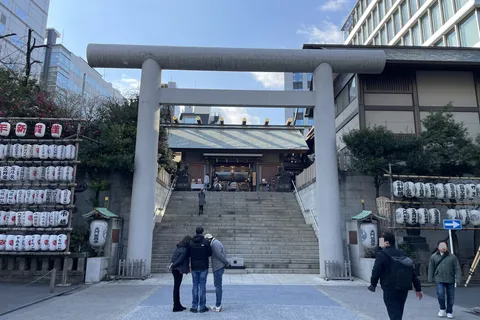
Tomioka Hachimangu’s founding is traditionally dated to 1627, when a Kyoto monk named Choso is said to have received a divine oracle instructing him to enshrine Hachiman on Eitaijima, a stretch of land then being reclaimed from Edo Bay. He brought a divided spirit of the deity from the Tomioka Hachimangu shrine in Sagami Province (present-day Kanagawa) to establish the new shrine. At the time, the surrounding area was little more than a sandbar undergoing land reclamation, but as the shrine’s buildings went up, a bustling approach town grew alongside it — laying the foundation for what would become the Fukagawa neighborhood.
Throughout the Edo period, Tomioka Hachimangu was affectionately known as “Fukagawa’s Hachiman-sama” and grew into what was called the largest Hachiman shrine in Edo, drawing devotion from ordinary townspeople. In 1642, a ceremony was reportedly held on the grounds to celebrate the coming-of-age of Tokugawa Iemitsu’s eldest son (the future fourth shogun, Ietsuna), reflecting the shrine’s standing with the shogunal family as well.
In 1684, the Edo shogunate — which had repeatedly banned sumo exhibitions after years of trouble surrounding them — granted an exception allowing official kanjin-zumo tournaments to be held twice yearly, in spring and autumn, on the grounds of Tomioka Hachimangu. This marked the beginning of organized sumo in Edo, and the shrine is remembered today as the birthplace of modern professional sumo. Tournaments continued to be held here for roughly a century, during which time the regular tournament system and the ranking hierarchy that still define sumo took shape. Today the shrine is counted among the Tokyo Ten Shrines, and continues to be affectionately known in the Fukagawa neighborhood by its old nickname, “Fukagawa’s Hachiman-sama.”
Highlights
The centerpiece of a visit to Tomioka Hachimangu is its collection of sumo-related stone monuments. Most striking is the Yokozuna Rikishi Monument, erected in 1900 at the initiative of the 12th yokozuna, Jinmaku Kyugoro — an imposing stone stele roughly 3.5 meters tall, 3 meters wide, and weighing some 20 tons. Carved into its surface are the ring names of every yokozuna in sumo history, from the very first, Akashi Shiganosuke, down to the present day. Whenever a new yokozuna is promoted, the Japan Sumo Association holds a formal naming ceremony before the monument, followed by the new champion’s ring-entering ceremony — a tradition that continues to this day. A companion Ozeki Rikishi Monument stands nearby, giving the shrine grounds something of the air of a sumo pilgrimage site.
The grounds are also home to a bronze statue of Ino Tadataka, the surveyor renowned for creating Japan’s first accurate maps of the entire country. Tadataka spent his later years living in Fukagawa, and it’s said that before setting out on each of his nationwide surveying expeditions — which he began after the age of 50 — he would always visit Tomioka Hachimangu to pray for safe travels. The statue, erected in 2001 in his honor, depicts him holding a surveyor’s staff fitted with a compass, and stands just inside the shrine’s torii gate.
Another highlight is the antique flea market held on the grounds several times a month, drawing as many as 100 vendor stalls and crowds of treasure hunters. Paired with the neighboring Fukagawa Fudodo temple, the area offers a distinctly old-Tokyo, downtown atmosphere well suited to an afternoon of strolling.
Visiting Tips
The shrine grounds can be visited freely at any time, but the office for goshuin and amulets closes at 17:00. Access is excellent — just 3 minutes on foot from Exit 1 of Monzen-nakacho Station — and one of the shrine’s distinguishing features is how often visitors pair it with a stop at the neighboring Fukagawa Fudodo temple.
While touring the grounds, be sure not to miss the Yokozuna and Ozeki Rikishi Monuments and the Ino Tadataka statue in addition to the main worship hall. On flea market days (held on Sundays around the 1st, 15th, and 28th of most months — check the official site for exact dates) the grounds get lively with visitors, so a weekday visit is best if you’re after a quieter experience. During the Fukagawa Matsuri in August, both the shrine grounds and the surrounding streets become extremely crowded and subject to traffic restrictions, so it’s worth checking the official website for the latest access information beforehand.
Annual Festivals
- Fukagawa Hachiman Festival (Fukagawa Matsuri; mid-August, main festival every three years): Tomioka Hachimangu’s grand annual festival, ranked alongside Hie Jinja’s Sanno Matsuri and Kanda Myojin’s Kanda Matsuri as one of Edo’s three great festivals. It’s also known as the “Water-Splashing Festival” because onlookers along the parade route douse the mikoshi bearers with purifying water as they pass. Once every three years, the festival’s main event sees more than 50 large mikoshi from the parish neighborhoods paraded together through Fukagawa in a spectacular joint procession — the next main festival is in 2026.
- New Yokozuna Ring-Entering Ceremony: Whenever a wrestler is promoted to yokozuna, a naming ceremony at the Yokozuna Rikishi Monument is followed by a ring-entering ceremony performed by the new champion on the shrine grounds.
- Antique Flea Market (held several times a month): An open-air antique market on the shrine grounds that draws treasure hunters from across the city — a beloved fixture of old-Tokyo Fukagawa life.
- New Year’s Visit (January): As “Fukagawa’s Hachiman-sama,” the shrine draws its largest crowds of the year from across Koto Ward and beyond during the New Year holiday.
Nearby Food & Sightseeing
- Fukagawa Fudodo (Naritasan Tokyo Betsuin): Standing right next to Tomioka Hachimangu, this Tokyo branch temple of Naritasan Shinshoji is known for its ornate inner hall and daily goma fire rituals. Very commonly visited together with the shrine.
- Fukagawa-juku Tomioka Hachiman Branch: A well-regarded restaurant specializing in fukagawa-meshi, the local clam-and-rice specialty, served either poured over rice or cooked together with it — a perfect meal after visiting the shrine.
- Monzen-nakacho Shopping Street: A nostalgic, old-Tokyo shopping street spreading out from the approach to Tomioka Hachimangu and Fukagawa Fudodo, lined with long-established sweet shops and delicatessens — great for a food-focused stroll.
- Fukagawa Edo Museum: A museum that recreates a full-scale Fukagawa streetscape from the late Edo period. Within walking distance of the shrine, it offers a vivid sense of what daily life looked like for ordinary townspeople of the era.
Frequently Asked Questions
- Q. What are the visiting hours?
- A. The grounds can be visited at any time, but the office where you can receive a goshuin or amulet is open 9:00–17:00.
- Q. Can I get a goshuin here?
- A. Yes, at the shrine office between 9:00 and 17:00, starting at ¥500. Limited-edition goshuin for the subsidiary Nanawatari Shrine are occasionally offered as well.
- Q. How do I get to Tomioka Hachimangu?
- A. It's just a 3-minute walk from Exit 1 of Monzen-nakacho Station on the Tokyo Metro Tozai Line or Toei Oedo Line — one of the most convenient shrine locations in Tokyo. Many visitors combine their visit with the neighboring Fukagawa Fudodo temple.
- Q. Is parking available?
- A. There's free parking for worshippers on the grounds (about 20 spaces), though it's locked from 21:00 to 6:00 and unavailable from December 31 through January 3. It gets very crowded on flea market days and during the Fukagawa Matsuri, so public transport is recommended at those times.
- Q. What's the connection to sumo and the Yokozuna monument? And what is the Fukagawa Matsuri?
- A. In 1684, the Edo shogunate authorized official sumo tournaments (kanjin-zumo) to be held twice a year, in spring and autumn, on the grounds of Tomioka Hachimangu — making it the birthplace of organized professional sumo in Edo. Tournaments continued to be held here for roughly a century, during which the ranking system and regular tournament format that underpin modern sumo took shape. In 1900, the 12th yokozuna, Jinmaku Kyugoro, spearheaded the construction of the Yokozuna Rikishi Monument, a massive stone inscribed with the names of every yokozuna from the first, Akashi Shiganosuke, onward; each time a new yokozuna is promoted, a naming ceremony is held before the monument and the new champion performs a ring-entering ceremony there. The shrine's grand annual festival, the Fukagawa Matsuri (also called the Fukagawa Hachiman Festival), is held in mid-August and ranks alongside Hie Jinja's Sanno Matsuri and Kanda Myojin's Kanda Matsuri as one of Edo's three great festivals. It's also nicknamed the "Water-Splashing Festival" because spectators douse the mikoshi bearers with purifying water as they pass. Once every three years, the festival's main event brings out more than 50 large mikoshi from the parish neighborhoods in a spectacular joint procession (the next main festival falls in 2026).