History
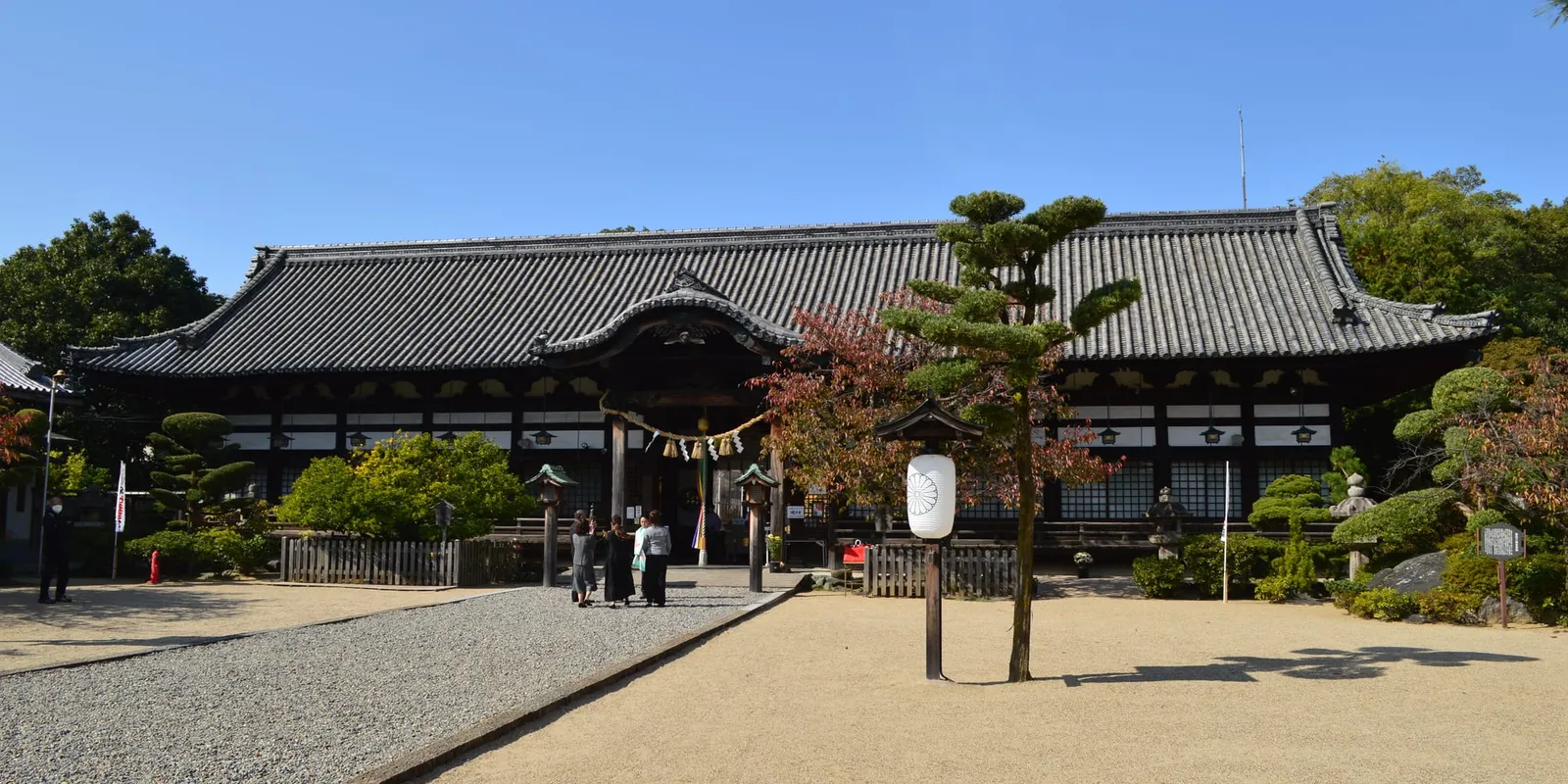
Konda Hachimangu, in Habikino City, Osaka Prefecture, is known as Japan’s oldest Hachiman shrine. According to shrine tradition, in 559 — the 20th year of Emperor Kinmei’s reign — a sacred hall was built at his imperial command before the round rear mound of the Kondayama Kofun (also known as Konda-Gobyoyama Kofun), traditionally identified as the mausoleum of Emperor Ojin, and Emperor Ojin was enshrined there as the Hachiman deity. This is regarded as the shrine’s founding. Emperor Ojin, also known as Homuda-wake-no-Mikoto, is said to have spent part of his youth in this very area of Konda, and the shrine has long been revered as guardian of his mausoleum.
In 1051, in the mid-Heian period, following a visit by Emperor Go-Reizei, the shrine’s halls were relocated about 110 meters south of the original site to their present location, and it was at this time that the shrine came to be called “Konda Hachimangu.” From the medieval period onward, it was venerated as the tutelary shrine of the Seiwa Genji, the branch of the Minamoto clan descended from Emperor Seiwa, and received deep patronage from Minamoto no Yoritomo and successive shoguns of the Kamakura and Muromachi periods. Around 1190, Yoritomo is said to have donated the shrine’s National Treasure mikoshi. After much of the shrine complex was lost to fires of war during the Kyoroku and Tenbun eras of the Sengoku period, Toyotomi Hideyori rebuilt the main hall and other principal structures around 1606, forming the basis of the buildings that stand today.
Today, Konda Hachimangu is deeply venerated by the local community as a guardian of safe childbirth and protection from misfortune, and its location within sight of Emperor Ojin’s mausoleum makes it a site of particular interest to those exploring Japan’s ancient imperial and kofun-era history.
Highlights
The defining feature of Konda Hachimangu is its position immediately south of the Kondayama Kofun (Konda-Gobyoyama Kofun), a massive keyhole-shaped mounded tomb some 425 meters long, traditionally identified as the mausoleum of Emperor Ojin. Second in size only to the Daisen-ryo Kofun (mausoleum of Emperor Nintoku), it was inscribed in July 2019 as part of the UNESCO World Heritage Site “Mozu-Furuichi Kofun Group: Mounded Tombs of Ancient Japan.” Just outside the shrine’s south gate, visitors can look out over the kofun’s moat — a rare glimpse of the setting in which ancient imperial mausoleum rites were once performed.
The shrine’s treasure hall (open Saturdays only, 13:00–16:00, admission ¥500) holds two National Treasures. The first is the “Chiriji Raden Kondo-so Shinyo,” a lacquered mikoshi inlaid with mother-of-pearl and gilt-bronze fittings, said to have been donated by Minamoto no Yoritomo around 1190 — a showcase of Kamakura-period lacquerware, metalwork, and textile craftsmanship. The second is a set of gilt-bronze openwork saddle fittings, engraved with dragon motifs, reportedly excavated from Emperor Ojin’s mausoleum in the Meiji era and ranked among Japan’s finest surviving Kofun-period horse tack. The shrine also holds numerous Important Cultural Properties, including illustrated scrolls depicting the legendary origins of Empress Jingu and of the shrine itself, and a set of Kamakura-period bugaku dance masks.
Visiting Tips
The shrine grounds are open 8:00–17:00, but the goshuin office keeps shorter hours (8:30–16:30), and the treasure hall is open to the public only on Saturday afternoons — so it’s worth planning your visit around these hours if you want to see the National Treasures. Access is convenient, about a 10-minute walk from Furuichi Station on the Kintetsu Minami-Osaka Line, and a stroll along the moat of the adjacent Emperor Ojin mausoleum makes a natural extension of a visit. The grounds also hold smaller points of interest, including a votive-tablet hall filled with worshippers’ ema, well worth a look if you have time to spare.
Annual Festivals
- Autumn Grand Festival and O-watari rite, with the Konda Danjiri Matsuri (September 14–15): The shrine’s largest festival. On the eve of the 14th, wooden danjiri floats are paraded into the shrine grounds; on the night of the 15th, a solemn procession — led by the deity Sarutahiko and accompanied by child attendants — carries the National Treasure mikoshi, the “Chiriji Raden Kondo-so Shinyo,” from the main hall to the front of Emperor Ojin’s mausoleum. Known as the O-watari, this rite offers the only day of the year when ordinary visitors may set foot on the mausoleum’s embankment, and crowds gather to pass beneath the mikoshi in prayer for good health.
- Monthly Festival (1st and 15th of each month): A rite praying for peace and well-being through the month ahead.
- Setsubun Festival (early February): A bean-throwing ritual to drive away misfortune.
- New Year’s Visit (January): As a shrine known for blessings of safe childbirth and protection from misfortune, Konda Hachimangu draws large crowds during the first three days of the New Year.
Nearby Food & Sightseeing
The area around Konda Hachimangu is scattered with numerous kofun as part of the Mozu-Furuichi Kofun Group, making it a rewarding area for a historical walk.
- Shiratori-ryo Kofun (Maenoyama Kofun): A keyhole-shaped mounded tomb traditionally identified as the mausoleum of the legendary prince Yamato Takeru, just a short walk from Furuichi Station — many visitors combine it with a visit to Konda Hachimangu.
- Kawachi Wine House: The Komagatani district of Habikino is known for its vineyards and winemaking; this popular visitor facility offers tastings and sales of local wine.
- Furuichi Station shopping street: The station area serving as the gateway to Konda Hachimangu is lined with old-fashioned shops, a convenient stop before or after your visit.
Frequently Asked Questions
- Q. Who are the enshrined deities?
- A. Emperor Ojin (Homuda-wake-no-Mikoto) is enshrined at the center, with Emperor Chuai to his left and Empress Jingu to his right. Emperor Ojin, worshipped as the Hachiman deity, is regarded as one of the primary sources of the roughly 44,000 Hachiman shrines found across Japan.
- Q. Can I get a goshuin here?
- A. Yes, at the shrine office open 8:30–16:30, for ¥500 each. Two different goshuin designs are offered, both stamped with the shrine seal alongside a dove — the messenger of the Hachiman deity — and a design based on a haniwa horse figure linked to Emperor Ojin's mausoleum.
- Q. How do I get to Konda Hachimangu?
- A. It's about a 10-minute walk from Furuichi Station on the Kintetsu Minami-Osaka Line. By car, it's roughly 15 minutes from the Fujiidera Interchange on the Nishi-Meihan Expressway, though the streets right around the shrine are residential and can be narrow.
- Q. Is parking available?
- A. Yes, there is a parking area for worshippers on the shrine grounds. Because the surrounding streets are narrow residential lanes, extra care is needed when driving, especially with a larger vehicle or during busy festival periods.
- Q. What is the shrine's connection to the Kondayama Kofun (Emperor Ojin's mausoleum)?
- A. Konda Hachimangu stands immediately south of the round rear mound of the Kondayama Kofun (also called Konda-Gobyoyama Kofun), traditionally identified as Emperor Ojin's mausoleum, and was originally founded to guard and venerate that tomb. The kofun was inscribed in 2019 as part of the UNESCO World Heritage Site "Mozu-Furuichi Kofun Group: Mounded Tombs of Ancient Japan." Each year on September 15, during the O-watari rite of the autumn grand festival, the shrine's National Treasure mikoshi is carried in procession to the moat of the mausoleum — the one day of the year when ordinary visitors are permitted onto the mausoleum's embankment.
Related Shrines
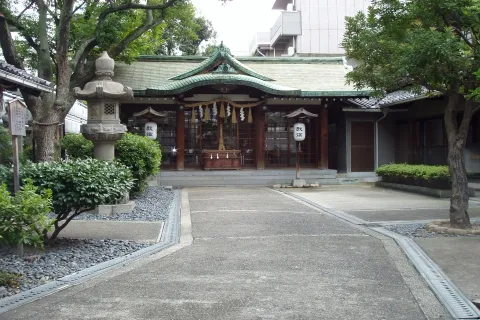
Osaka Prefecture, Nishi Ward, Osaka
Samuhara Shrine
Samuhara-jinja
- Protection from Misfortune
- Good Fortune
- Good Health
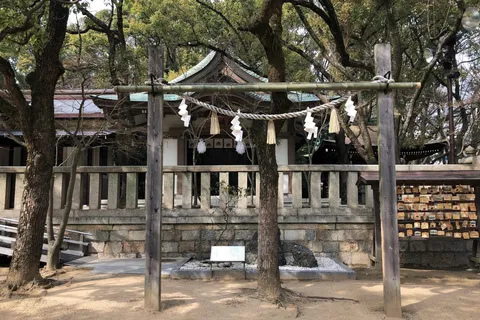
Hyogo, Kobe (Chuo Ward)
Minatogawa Jinja
Minatogawa-jinja
- Good Fortune
- Victory in Competition
- Luck in Competition
Shiga, Otsu
Takebe Taisha
Takebe Taisha
- Victory in Competition
- Victory in Battle
- Good Fortune