History
The ground on which Minatogawa Jinja stands is itself a historic battlefield — the site where Kusunoki Masashige and his clansmen met a dramatic end in 1336, during the Nanboku-cho period of civil war between the Northern and Southern Imperial Courts. Acting on the orders of Emperor Go-Daigo, Masashige had fought to topple the Kamakura shogunate, and later took up arms again against Ashikaga Takauji, who was moving to establish a rival warrior government. Vastly outnumbered, Masashige’s forces were defeated at Minatogawa after a fierce battle, and he is said to have taken his own life there alongside his younger brother Masasue and fourteen other clansmen, the brothers vowing to be “reborn seven times to destroy the enemies of the court.” According to tradition, on his way to Minatogawa, Masashige stopped at Sakurai (in present-day Shimamoto, Osaka Prefecture) to deliver a famous set of final instructions to his young son Masatsura before sending him home to Kawachi — an episode remembered ever after as the “Parting at Sakurai.”
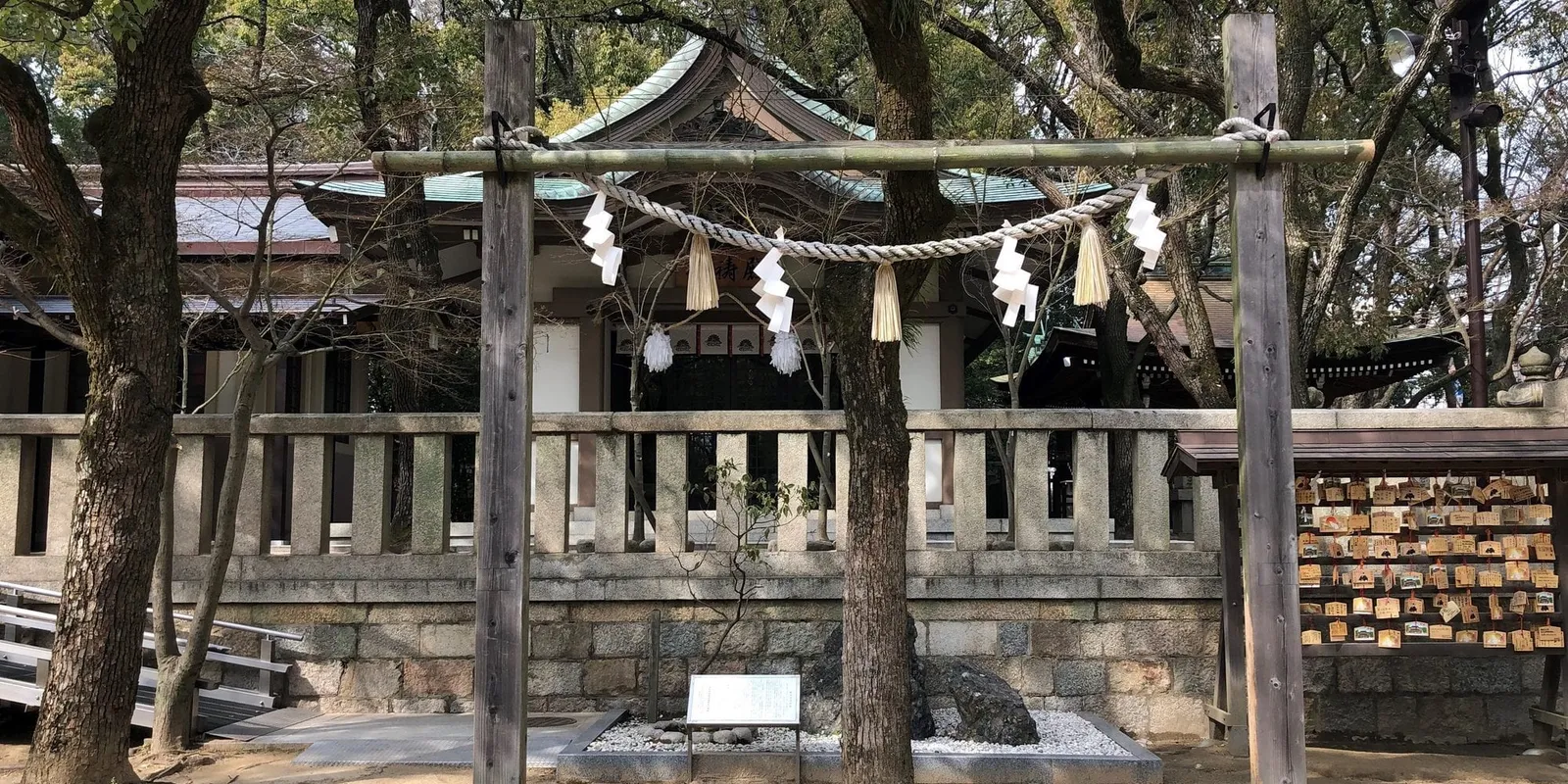
Masashige’s grave was quietly tended for centuries after his death, until 1692, when Tokugawa Mitsukuni — the lord of the Mito domain, popularly known as “Mito Komon” — had the site restored and erected a stone monument in his own hand, inscribed “Ah, the Grave of the Loyal Retainer Kusunoki.” Resting on a tortoise-shaped pedestal (kifu), the monument became widely known thereafter as the “Grave of the Great Lord Kusunoki,” and is said to have drawn numerous visitors in the final years of the shogunate — including figures such as Sakamoto Ryoma and Kondo Isami — who came to pay their respects to Masashige’s loyalty. The monument still stands on the shrine grounds today and has been designated a National Historic Site.
With the Meiji Restoration, Kusunoki Masashige was held up as the supreme model of loyalty to the imperial throne, and in 1868 Emperor Meiji ordered that a shrine be built in his honor. Minatogawa Jinja was formally established on May 24, 1872, on the very spot where Masashige had died, and became the first shrine ever ranked as a bekkaku kanpeisha — a special category of imperially-endowed shrine created specifically to honor such figures of loyal service. More than 150 years since its founding, the shrine is still known with deep affection by its local nickname, “Nanko-san,” and remains one of Kobe’s most revered shrines.
Highlights
The single most historically significant site within the shrine grounds is the “Ah, the Grave of the Loyal Retainer Kusunoki” monument, erected by Tokugawa Mitsukuni in 1692. A grand stone stele rests atop a pedestal carved in the shape of the mythical tortoise-like creature kifu, its inscription written in Mitsukuni’s own hand. Both this monument and the nearby site traditionally identified as the spot where Masashige and his clan took their own lives have been designated National Historic Sites — a reminder that Minatogawa Jinja is not merely a modern foundation, but stands on the actual ground where its story took place.
The main hall is decorated throughout with the kikusui (chrysanthemum-and-water) crest of the Kusunoki family, and the grounds include several subsidiary shrines: Kannabi Shrine, dedicated to Masashige’s wife, and Kusunoki Inari Shrine, known for blessings of business prosperity, among others. A hall dedicated to Bishamonten, one of Kobe’s Seven Lucky Gods, also stands within the grounds, making the shrine a stop on Kobe’s Seven Lucky Gods pilgrimage route as well as a destination for those tracing Masashige’s story.
The grounds are further home to a Noh theater hall, Shinnoden, and a treasure house holding items of armor and sutras designated as Important Cultural Properties. Despite standing within easy walking distance of JR Kobe Station and Kosoku-Kobe Station, right in the heart of the city, the shrine’s leafy grounds retain a genuine sense of calm, and it remains one of Kobe’s most beloved power spots.
Visiting Tips
Visiting hours run 9:00–17:00. One of the shrine’s great advantages is its location — just 3 minutes from JR Kobe Station and immediately outside Kosoku-Kobe Station — making it an easy addition to a day of sightseeing in central Kobe.
After paying respects at the worship hall, make your way to the “Ah, the Grave of the Loyal Retainer Kusunoki” monument and the traditional death site toward the back of the grounds. Standing before a monument raised by Tokugawa Mitsukuni himself, at a site said to have drawn Sakamoto Ryoma and other figures of the late shogunate, brings a weight to the visit that goes beyond ordinary sightseeing. Goshuin are available at the shrine office between 9:00 and 17:00, with several varieties on offer beyond the main shrine’s own, so it’s worth bringing a goshuin book along. Roughly a million visitors come through during the first three days of the New Year, making it one of Hyogo Prefecture’s busiest hatsumode destinations — worth keeping in mind if you’d prefer to avoid the crowds.
Annual Festivals
- Nanko Festival (Nanko-sai; eve festival on May 24, main festival on May 25, closing festival on May 26): A lively festival organized by parishioners to commemorate the anniversary of Masashige’s death at Minatogawa on the 25th day of the fifth lunar month in 1336. Costumed samurai processions and other celebratory events mark the occasion, making it a beloved early-summer tradition in Kobe.
- Reisai, the Shrine’s Official Annual Festival (July 12): The date corresponding, on the modern solar calendar, to the 25th day of the fifth lunar month that gave rise to the Nanko Festival — this is the shrine’s formally designated annual festival day, marked with solemn rites performed by the shrine’s priests.
- Summer Festival (late July–August): A seasonal festival featuring night stalls and dedication ceremonies, well-loved by the local community.
- New Year’s Visit (January): Thanks to its location so close to Kobe Station, the shrine draws roughly a million visitors during the first three days of the New Year, making it one of Hyogo Prefecture’s busiest hatsumode destinations.
Nearby Food & Sightseeing
- Nankinmachi (Kobe Chinatown): One of Japan’s three great Chinatowns, within easy walking distance of Minatogawa Jinja. Lined with stalls selling steamed buns and dim sum, it’s a great spot for a food-focused stroll.
- Kobe Harborland: About a 10-minute walk from the shrine, this waterfront district — home to the Umie shopping complex and a row of restored brick warehouses — is a classic Kobe sightseeing spot, with views of the Kobe Port Tower and the harbor.
- Kobe Station-front Shopping Street: The shopping street just outside Minatogawa Jinja’s torii gate, dotted with long-established sweet shops and eateries — a convenient stop before or after a visit.
- Ikuta Jinja: Another of the “Three Great Shrines of Kobe” alongside Minatogawa Jinja. Located in the Sannomiya area and known for blessings of good relationships, it’s a popular pairing for visitors touring Kobe’s shrines.
Frequently Asked Questions
- Q. What are the visiting hours?
- A. Visiting hours are 9:00–17:00.
- Q. Can I get a goshuin here?
- A. Yes, at the shrine office between 9:00 and 17:00, for ¥500 per goshuin. Besides the main shrine's goshuin, you can also receive one for the subsidiary Kannabi Shrine, which honors Masashige's wife, among other varieties.
- Q. How do I get to Minatogawa Jinja?
- A. It's a 3-minute walk from JR Kobe Station on the JR Kobe Line, or you'll find yourself right outside the shrine when exiting Kosoku-Kobe Station. It's also about a 5-minute walk from Okurayama Station on the Kobe Municipal Subway Yamate Line or Harborland Station on the Kaigan Line — an easy stop from central Kobe.
- Q. Is parking available?
- A. There is parking for worshippers on the grounds, but space is limited. It often fills up during busy periods like New Year's, so using a nearby paid lot or public transport is recommended at those times.
- Q. Who was Kusunoki Masashige, and why is the shrine affectionately called "Nanko-san"?
- A. Kusunoki Masashige was a general of the Nanboku-cho (Northern and Southern Courts) period, celebrated for his unwavering loyalty to Emperor Go-Daigo — first in the campaign against the Kamakura shogunate, and later against the forces of Ashikaga Takauji. On May 25, 1336, after a desperate last stand against overwhelming odds at Minatogawa, Masashige is said to have taken his own life alongside his brother Masasue and other clansmen, the brothers reportedly vowing to be reborn seven times over to destroy the enemies of the throne. His loyalty was still being honored centuries later: in 1692, Tokugawa Mitsukuni, the lord of Mito, restored Masashige's grave and erected the stone monument "Ah, the Grave of the Loyal Retainer Kusunoki." After the Meiji Restoration, Masashige was held up as the ultimate model of loyalty to the throne, and Emperor Meiji ordered a shrine built on the very site of his death — the origin of Minatogawa Jinja. Known affectionately to this day as "Nanko-san," he remains deeply beloved throughout Kobe.
Related Shrines
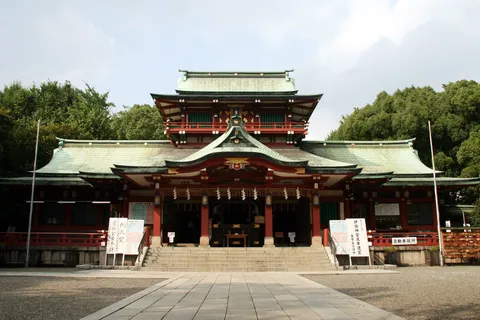
Tokyo, Koto Ward
Tomioka Hachimangu
Tomioka Hachiman-gu
- Victory in Competition
- Luck in Competition
- Business Prosperity
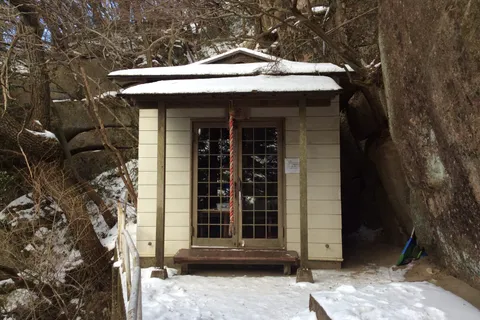
Hyogo, Kobe (Nada Ward)
Rokko Hime Jinja
Rokko Hime Jinja
- Financial Luck
- Good Fortune
- Protection from Misfortune
Hyogo, Nishinomiya
Namaze Kotai Jinja
Namaze Kōtai Jinja
- Household Safety
- Protection from Misfortune
- Business Prosperity