History
According to tradition, Takebe Taisha was founded in the 46th year of Emperor Keiko’s reign (traditionally dated to 116 CE), when Futajihime no Mikoto, consort of the legendary warrior prince Yamato Takeru, together with their son Inayoriwake no Miko, enshrined Yamato Takeru’s spirit in Takebe no Sato, a district of Omi Province’s Kanzaki County (in what is now part of Higashiomi City, Shiga Prefecture).
The shrine was later relocated, in 675 during the reign of Emperor Tenmu, to its present site at Seta. At the time, Seta was home to the provincial government of Omi and served as the political and economic center of the province, as well as a key crossroads on the route to eastern Japan — a position that led to the shrine being especially revered as a guardian of the nation. In 755, a secondary hall was newly built to enshrine Onamuchi no Mikoto (Okuninushi) alongside Yamato Takeru in the main hall, establishing the shrine’s present form with its two principal deities.
Takebe Taisha is listed as a Myojin Taisha in the Engishiki, the 10th-century register of officially recognized shrines, and has long been honored as the ichinomiya — highest-ranked shrine — of Omi Province. It was once ranked a Kanpei Taisha, a shrine under direct imperial patronage, and today, as a shrine still affiliated with the Association of Shinto Shrines, it carries on the prestige of this ancient site tied to the legend of Yamato Takeru.
Highlights
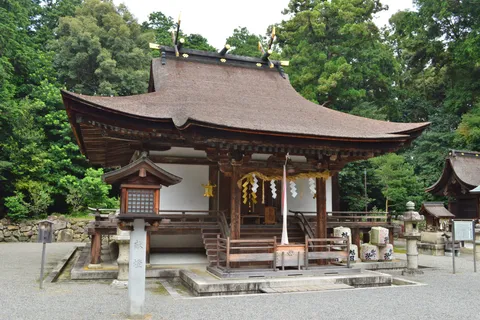
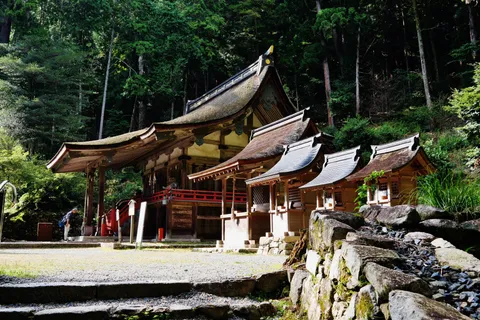
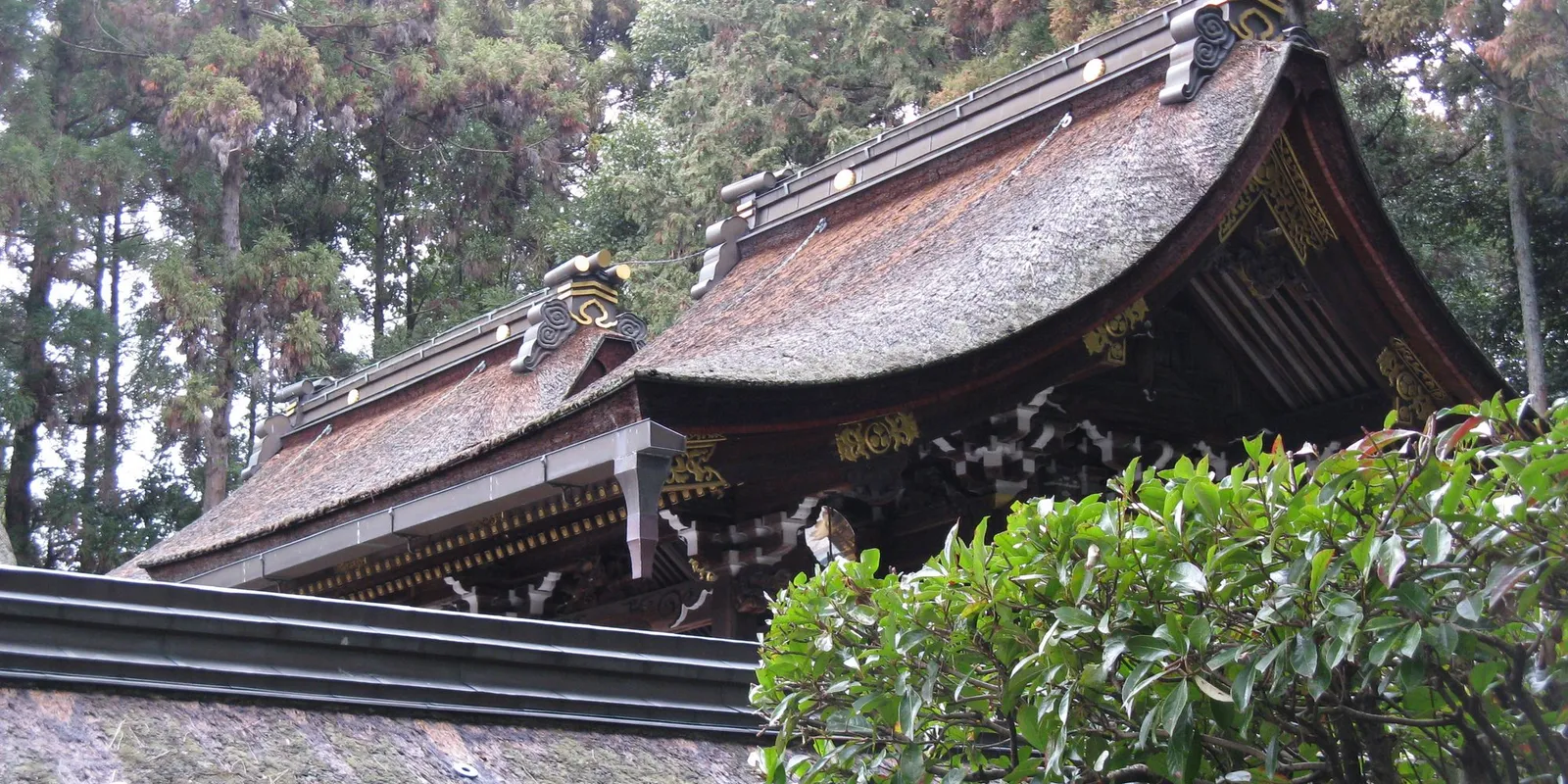
One of the grounds’ most distinctive features is the “Three Sacred Cedars” (Sanbon Sugi). According to legend, when Onamuchi no Mikoto was enshrined here in 755, three cedar trees suddenly sprouted overnight — an event commemorated in the shrine’s crest and regarded today as a particularly powerful spot for those seeking blessings. It is also unusual that the main hall and the secondary hall are built to exactly the same size, a deliberate choice reflecting the shrine’s equal reverence for both Yamato Takeru and Onamuchi no Mikoto.
The grounds also preserve several notable cultural treasures, including a stone lantern inscribed with the date 1270 (an Important Cultural Property) and wooden goddess statues dating to the Heian period. Fossilized chrysanthemum flowers and sazare-ishi (small stones fused together over time, familiar from Japan’s national anthem) are also enshrined here. Set on the banks of Lake Biwa and the Seta River, the grounds offer a peaceful, nature-filled setting for a quiet visit in any season.
Visiting Tips
The gates are open 5:00–17:00, prayer services are received 9:00–16:00, and goshuin are available 9:00–17:00 for ¥500. Several free parking lots on the grounds offer 70 or more spaces combined for regular cars, some of which also accommodate large buses — though they can fill up during the New Year holidays or the August Sengyosai festival, so public transportation is worth considering at those times. The shrine is a 10-minute walk from Karahashimae Station on the Keihan Ishiyama-Sakamoto Line, and many visitors combine their trip with a stop at the nearby Seta no Karahashi bridge, one of the celebrated Eight Views of Omi.
Annual Festivals
- Sengyosai, the Ship Festival (August 17): One of Otsu’s three great festivals, commemorating Yamato Takeru’s legendary voyage by sea with a mikoshi carried by boat down the Seta River, followed by an evening fireworks display.
- Reisai and mikoshi procession (spring): An important annual rite in which a mikoshi is carried in procession through the shrine’s parish neighborhoods.
- Natsukoshi no Oharae, the Great Purification and chinowa ring-passing (June 30): A rite of purification for the first half of the year, in which worshippers pass through a ring of woven reeds (chinowa) set up on the grounds while praying for good health.
- Night visits (mid-August): A special evening visiting period held for a few nights each summer, when the grounds are lit by lanterns for an atmospheric nighttime visit.
Nearby Food & Sightseeing
- Seta no Karahashi Bridge: A historic bridge counted among the Eight Views of Omi, within walking distance of Takebe Taisha and a popular pairing with the shrine for its view over the Seta River.
- Mii-dera Temple (Onjoji): The head temple of the Tendai Jimon sect, about a 15-minute drive from Takebe Taisha, with grounds overlooking Lake Biwa and beautiful scenery in every season.
- Lake Biwa / Nagisa Park area: A lakeside stretch popular for walks, offering the kind of lakeshore scenery that pairs naturally with a visit to Takebe Taisha.
Frequently Asked Questions
- Q. What kind of shrine is Takebe Taisha?
- A. Takebe Taisha is the ichinomiya (highest-ranked shrine) of former Omi Province, in what is now Shiga Prefecture, and its principal deity is Yamato Takeru no Mikoto, the legendary imperial prince and warrior hero. It was listed as a Myojin Taisha in the Engishiki shrine register and was once ranked a Kanpei Taisha, a shrine under direct imperial patronage.
- Q. What are the goshuin hours and fee at Takebe Taisha?
- A. Goshuin are available 9:00–17:00 for ¥500, from the office just inside the grounds on the left.
- Q. Is there parking at Takebe Taisha?
- A. Yes, there are several free parking lots on the grounds with 70 or more spaces for regular cars combined, some of which also accommodate large buses. They can fill up during the New Year holidays and other busy periods.
- Q. What is the Sengyosai (Ship Festival) at Takebe Taisha?
- A. Held every year on August 17, this festival is counted among Otsu's three great festivals. It commemorates the legend of Yamato Takeru leading a fleet by sea, reenacted with a mikoshi (portable shrine) carried by boat down the Seta River, followed by a fireworks display in the evening.
- Q. How do I get to Takebe Taisha?
- A. The closest route is a 10-minute walk from Karahashimae Station on the Keihan Ishiyama-Sakamoto Line. From JR Ishiyama Station it's about a 25-minute walk or a short bus ride. By car, it's about 5 minutes from the Seta-nishi Interchange on the Meishin Expressway.