History
Kozu-gu is a shrine in Kozu, Chuo Ward, Osaka. The official site calls it “Kozu-gu (Kozu Shrine)” and says it is affectionately known as “Kozu-san.” The reading “Kozu-gu” is not spelled out in the official site’s body text and follows the Japanese Wikipedia. According to the official site, the chief deity is Emperor Nintoku (the 16th emperor), enshrined in the central seat, with Empress Jingu, Emperor Ojin and Emperor Chuai in the left seat and Emperor Richu and Empress Ashihime in the right seat.
The official history describes Emperor Nintoku as the ruler who set Naniwa as the imperial capital (the palace called Takatsu-no-miya) and laid the foundations of Osaka’s prosperity. It tells how he climbed a high tower, saw how little smoke rose from the people’s houses, grasped their hardship and halted taxes to relieve them, and says the shrine began out of admiration for that benevolent rule. In 866 (Jogan 8), by order of Emperor Seiwa, the ruins of the old capital were searched, a site was fixed and a shrine was built to enshrine him, which is regarded as the beginning. About 700 years later, in 1583 (Tensho 11), when Toyotomi Hideyoshi built Osaka Castle, the shrine is said to have been moved to its present site, where the Himekoso shrine stood. All of this is the shrine’s own account.
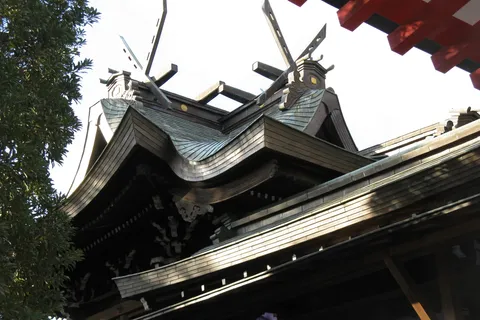
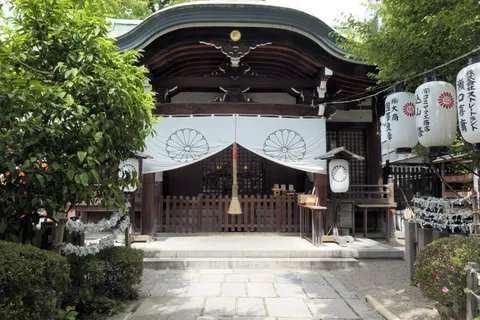
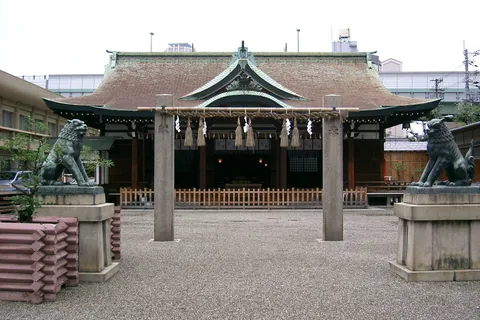
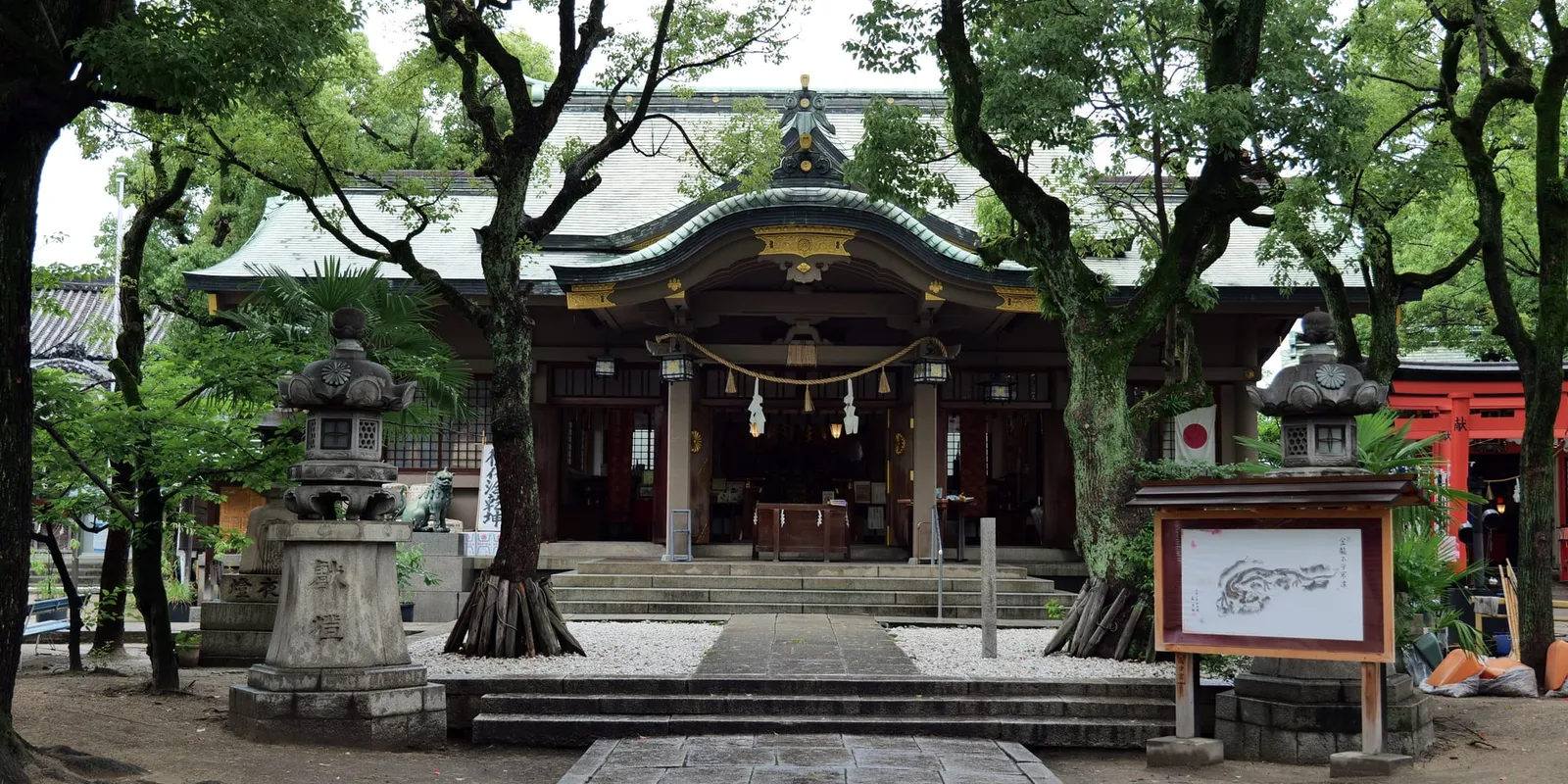
In March 1945, wartime fire destroyed all the buildings except one mikoshi storehouse. After the war, with the support of parishioners and worshippers, the shrine was rebuilt, and the buildings were completed in October 1961. A caption on the official site describes the main hall’s front as “completed in 1961, restored in 1999 (Heisei 11).” The official site also notes that respect for Nintoku’s benevolent rule is reflected in the Osaka City Song, established in 1921 (Taisho 10), which opens with “Takatsu no miya no mukashi yori.”
Highlights
Kozu-gu’s defining trait is its close tie to Kamigata rakugo. The official site names the classic rakugo stories “Takatsu no Tomi,” “Takakura Kitsune” and “Sutoku-in” as set here, and says that bunraku performances and rakugo shows by professional and amateur performers are held regularly. The grounds include the Takatsu no Tomi-tei hall, used for rakugo shows and similar events, and the site map also lists a monument to the fifth Katsura Bunshi.
The auxiliary and subordinate shrines are varied. Takakura Inari is said to draw many worshippers as a god of business prosperity and artistic skill, and the official site says a Takakura Inari household altar stands at the backstage entrance of the National Bunraku Theatre, where performers pray before going in. Yasui Inari was the Inari shrine in the residence of Yasui Kyubei, one of the developers of Dotonbori; it was moved into the grounds in 1912 (Taisho 1) and has long been revered as a guardian of safe childbirth. The Himekoso shrine, the land deity, is described as a shrine listed in the Engishiki.
The site map also lists the Yin-Yang Stones (Onmyo-seki), revered for prosperity of descendants and business, the mikoshi storehouse (said to have escaped wartime fire since the Horeki era, 1751–1764, with a tile dragon on the ceiling of its entrance porch), the votive-plaque hall (Emadono), the “Ume no Hashi” bridge and a plum-offering monument. There is also a monument to the legendary well “Ume no I,” said to have once stood at Kozu Shrine.
Visiting Tips
Visiting hours for the grounds are not stated on the official site, but the shrine office takes phone calls 9:00 AM–5:00 PM. Prayer services must be reserved in advance, by phone only. Offered services include pregnancy sash blessings, first shrine visits, Shichi-Go-San, Shinto weddings, purification for unlucky years, household safety, business prosperity, car purification, recovery from illness and exam success.
On goshuin, the official site lists original goshuin books (“with a Kozu-gu goshuin” at ¥1,500; the other type, ¥3,500, is shown as sold out), but gives neither the fee nor hours for a goshuin alone. It is best to confirm by phone before you visit.
It is a 5-minute walk from Exit 2 of Tanimachi Kyuchome Station. On parking, the official overview page says there is none, while a notice dated August 6, 2026 says there are a limited number of spaces with priority for prayer-service bookings. Both ask visitors to use public transport.
The grounds also hold Tomitei Cafe. According to the official site it is open weekdays 10:00 AM–4:00 PM and Sundays 10:00 AM–5:00 PM, closed Tuesdays (open if Tuesday is a holiday). A notice dated October 11, 2026 announced that the building of the “Takatsu Reed Boat (Tokoshie no Fune)” would take place on the front approach steps from October 12 to 28, causing some inconvenience when passing (that period has ended).
Annual Festivals
According to the official annual events list, the main events are as follows (dates may change).
- Kenbai-sai Plum Offering Festival (February 11): Following the tale that the scholar Wani, delighted at Nintoku’s accession, presented a plum blossom with a poem, parishioners from Umegatsuji and others offer plum blossoms before the deity.
- Takakura-sha Hatsuuma Grand Festival (day of the first horse in April): Held among cherry blossoms, with events including a lottery in the line of “Takatsu no Tomi.”
- Summer Festival (July 17 eve / July 18 main day): Described as the most solemn and lively festival of the shrine, with entertainment and rakugo offerings and a dragon dance at the Emadono.
- Autumn Festival with Respect-for-the-Elderly Festival (October 18) / Tokoshie Autumn Festival (late October): In 2026 the latter was held on October 25, with the “Tokoshie no Fune Mitama-ire” rite at 5:30 PM (per the notice dated September 14, 2026).
- Shichi-Go-San Festival (November 15; throughout November): Listed in the official annual events. November 15, 2026, the date of this page, falls in the Shichi-Go-San visiting season.
- Shinkoku Kansha-sai Harvest Thanksgiving (November 23): Listed in the annual events.
- Tencho-sai (December 23) and Year-end Great Purification with New Year’s Eve Festival (December 31): Listed as year-end events.
The official site also lists monthly festivals on the 1st and 15th (with a Yutate rite) and an Inari monthly festival on Horse days. According to a notice dated May 18, 2026, the “Hokkori-ichi in Kozu-gu Marche” is scheduled for Sunday, December 6, 10:00 AM–4:00 PM in the grounds.
Nearby Food & Sightseeing
- Tomitei Cafe: A cafe on the grounds of Kozu-gu. The official site’s menu lists blend coffee, the Ujiko roll cake set and a zenzai set, among other items.
- Takatsu no Tomi-tei: A building on the grounds that, according to the official site, is used for rakugo shows and other events and for rooms for various classes.
- National Bunraku Theatre: The theatre where, according to Kozu-gu’s official site, a Takakura Inari household altar stands at the backstage entrance. It is a handy reference point if you plan to combine a bunraku performance with your visit.
Frequently Asked Questions
- Q. What are the visiting hours?
- A. Visiting hours for the grounds are not stated on the official site. The shrine office takes phone calls 9:00 AM–5:00 PM. Prayer services must be reserved in advance, by phone only (the official site says a priest may be absent if you come without a reservation).
- Q. Can I get a goshuin at Kozu-gu?
- A. The official site presents original goshuin books "with a Kozu-gu goshuin" at ¥1,500 and ¥3,500 (the ¥3,500 one is shown as sold out). The fee and hours for a goshuin alone are not stated on the official site, so it is safest to phone the shrine office (9:00 AM–5:00 PM) before you go.
- Q. How do I get there, and is there parking?
- A. It is a 5-minute walk from Exit 2 of Tanimachi Kyuchome Station (official site). On parking, the official overview page says there is no parking lot, while a notice dated August 6, 2026 says there are a limited number of spaces with priority for prayer-service bookings (the pages differ). Public transport or nearby paid parking is recommended.
- Q. Is it true that Kozu-gu is linked to the rakugo story "Takatsu no Tomi"?
- A. The official site introduces the shrine as the setting of the classic rakugo stories "Takatsu no Tomi," "Takakura Kitsune" and "Sutoku-in." It also says that at the Takakura Inari shrine on the grounds, a lottery in the line of "Takatsu no Tomi" is among the events held on the day of the first horse (hatsuuma) in April (per the official annual events). A notice for the October 2026 "Tokoshie Autumn Festival" adds that the "Takatsu no Tomi" draw was open only to those attending the rakugo show and that lottery tickets were not sold.
- Q. When is the summer festival?
- A. In the official annual events list, the summer festival is held with the eve on July 17 and the main day on July 18. It is described as the most solemn and lively festival at Kozu-gu, with entertainment and rakugo performances offered and a dragon dance to "danjiri" festival music at the votive-plaque hall (Emadono). Dates can change, so check the official site before you go.
Plan Your Visit
Before you go, you can book a stay and get your shrine-visit items ready.
Amazon links open Amazon.co.jp (Japan) in English; whether an item ships overseas depends on the product.
※ Contains ads (PR). Links open external sites such as Amazon, Rakuten, Trip.com and Booking.com.