History
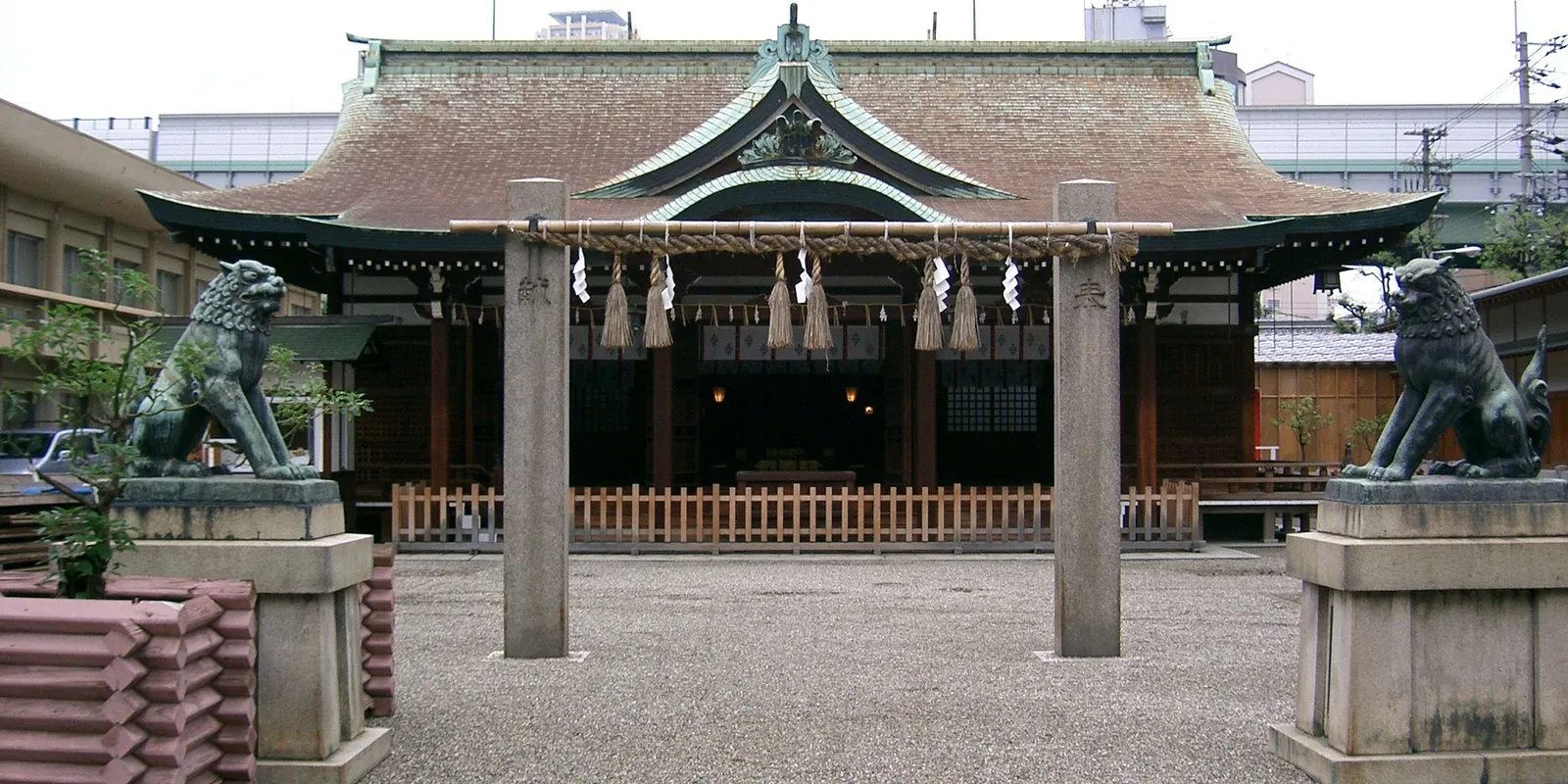
Imamiya Ebisu Jinja is traditionally said to have been founded in 600 CE, when Prince Shotoku established it as a guardian shrine to the west of Shitennoji Temple, which he was building nearby at the time. The area was then a stretch of shoreline; as a marketplace later grew up around the site, Kotoshironushi no Mikoto — worshipped here as Ebisu — came to be revered as the protector of that market and its merchants.
The main hall enshrines five deities: Amaterasu Sumeomikami, Kotoshironushi no Mikoto, Susanoo no Mikoto, Tsukuyomi no Mikoto, and Wakahirume no Mikoto. Kotoshironushi is widely known today as the god of business prosperity, but has long also been venerated as a deity of words and wisdom. During the Keicho era at the end of the Sengoku period, the Toyotomi clan sponsored the rebuilding of the shrine buildings, and as Osaka grew into a great merchant city, the shrine became beloved by ordinary Osakans as “Naniwa’s Ebessan.” The shrine buildings were destroyed in the air raids on Osaka in 1945 but were rebuilt in 1956, and it remains one of Osaka’s leading Ebisu shrines to this day.
Highlights
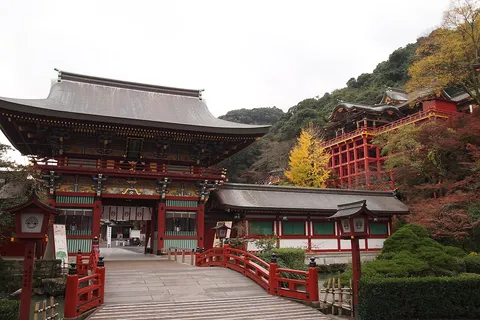
A stone torii gate on the south side of the grounds, followed by a vermillion gate beyond it, gives visitors a colorful first impression of Imamiya Ebisu. After paying their respects at the worship hall, many visitors then walk around to the back of the main hall to strike a bronze gong there and repeat their prayer once more — a custom known as “ura-mairi,” or the “back visit.”
Local legend has it that Ebisu is a little hard of hearing, so worshippers make a loud noise on the gong to be sure their prayer at the front of the hall was properly heard — a distinctly Osakan blend of reverence and humor. During the Toka Ebisu festival, the grounds fill with worshippers seeking colorful “kitcho-zasa” lucky bamboo branches, and watching the specially selected “Fuku Musume” (Lucky Girls) tie good-luck charms onto the branches and hand them out is one of the festival’s highlights. For the rest of the year the shrine is quiet, but for these three days it fills with all the energy of Osaka’s merchant spirit.
Visiting Tips
The grounds are compact, and a basic visit takes only 10–20 minutes. After praying at the main worship hall, be sure to try the “ura-mairi” custom of striking the gong at the back. Goshuin can be received at the shrine office between 9:00 and 17:00. During Toka Ebisu the shrine becomes packed almost to the point of gridlock, so visitors who prefer a quieter visit should plan to come at another time of year.
Annual Festivals
- Toka Ebisu (January 9–11): A three-day festival — Yoi-ebisu, Hon-ebisu, and Nokori-fuku — said to draw around a million worshippers, and one of Osaka’s signature New Year traditions.
- Fuku Musume distributing lucky charms (during Toka Ebisu): Each year’s publicly selected “Fuku Musume” (Lucky Girls) hand worshippers bamboo branches tied with charms for business prosperity and household safety.
- Fukuzasa distribution (January): Company representatives and shop owners flock to the shrine to receive “fukuzasa,” the lucky bamboo branches said to bring fortune for the year ahead.
- Summer festival rites (July): Summer ceremonies that recall the shrine’s history as guardian of a bustling market town.
- Reitaisai, the Grand Festival: A solemn festival of thanksgiving held together with the local parish community in gratitude for the shrine’s continued protection.
Nearby Food & Sightseeing
- Tsutenkaku Tower: Osaka’s iconic tower rises within easy walking distance of Imamiya Ebisu Jinja, with an observation deck overlooking the retro streets of Shinsekai and the city beyond.
- Kushikatsu Daruma (Tsutenkaku branch): Founded in 1925, this landmark Shinsekai institution serves Osaka’s famous deep-fried skewers, and is well known for its strict “no double-dipping” sauce rule.
- Shitennoji Temple: The ancient temple founded by Prince Shotoku that features in Imamiya Ebisu’s own founding legend, and reputed to be one of Japan’s oldest state-sponsored Buddhist temples — well worth combining with a shrine visit.
Frequently Asked Questions
- Q. What are the visiting hours?
- A. 6:00–17:00 (the south side gate stays open until 22:00); the amulet office is open 9:00–17:00.
- Q. When is the goshuin office open?
- A. 9:00–17:00, for ¥300.
- Q. Is there parking?
- A. Yes, on-site parking is available on the north side of the grounds, though it's unavailable on weekends in January, July, and November, and throughout December.
- Q. What is "ura-mairi"?
- A. After praying at the main worship hall, many visitors walk around to the back and strike a gong there to make sure their prayer is heard — a distinctly Osaka custom based on the belief that Ebisu is a little hard of hearing.
- Q. How do I get there?
- A. Immediately east of Nankai Koya Line Imamiya-ebisu Station.