History
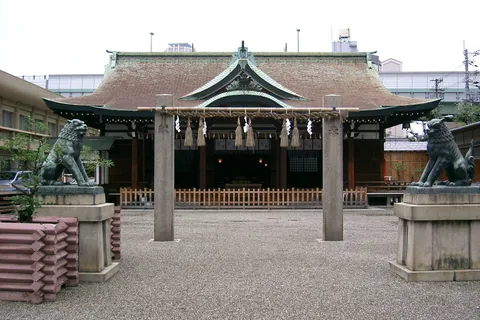
Horikoshi Shrine stands in Chausuyama-cho, Tennoji Ward, Osaka. The reading “Horikoshi Jinja” does not appear in the body text of the official site, and this page follows the Japanese Wikipedia for it.
According to the official site, in the reign of Empress Suiko the regent Prince Shotoku, remembering the virtue of his uncle, the 32nd emperor Sushun, chose the scenic hill of Chausuyama and founded the shrine at the same time as Shitennoji Temple. It is counted as one of the Seven Shrines of Shitennoji. The official site says the name comes from a fine moat that ran along the south side of the grounds until the middle of the Meiji era, which worshippers crossed to reach the shrine. It adds that the area is known as the old battlefield of the Osaka Winter and Summer Campaigns of the Keicho and Genna eras.
As for the enshrined deity, the official site’s deity entry lists only Emperor Sushun. The Japanese Wikipedia also lists Empress Kote-hime, Prince Hachiko and others, so the two differ. The official site’s “Honden” (main hall) page tells “the story of Emperor Sushun, his empress and his prince,” noting that his eldest son Prince Hachiko is regarded as the founder of the Three Mountains of Dewa and that Empress Kote-hime is said to have taught sericulture in Fukushima Prefecture.
In Osaka it has long been said that “Horikoshi-san is a deity who listens to a once-in-a-lifetime wish,” and the official site says many people, from across Japan and from abroad, come to receive the “Hito-yume Kigan” prayer.
Highlights
According to the “Massha” (auxiliary shrines) page of the official site, the grounds hold three shrines. “Taijo Shinsen Chintaku Reifu Shin,” enshrined beside the sacred tree, is described as the original deity of amulets and talismans and is known for its star festivals at Setsubun and Tanabata. “Kumano Daiichi Oji no Miya” derives from the “Daiichi Oji no Miya” at the Tenma port, which the official site describes as the starting point of Kumano pilgrimages. It is said to have later been enshrined at Kumano Shrine near the west-gate torii of Shitennoji, and to have been enshrined together with Horikoshi Shrine on February 10, 1915 (Taisho 4), where it remains today. The official site also tells of the Yatagarasu, the divine messenger of Kumano Gongen. “Chausuyama Inari Shrine” is worshipped as a deity of business prosperity; it is said to have once stood at the summit of Chausuyama, and a story is told that Tokugawa Ieyasu was saved from danger by the white fox of Chausuyama Inari during the Summer Campaign of Osaka.
The top page of the official site explains that touching the “Kaeru-ishi” (frog stone) while praying is said to bring back “lost things, or people you wish would return to you” (the official site does not say where the stone is located). In 2026, a “Kaeru-ishi goshuin” was offered for a limited time from May 13 to 24, timed to the Frog Festival on May 24, at ¥500 and as a written-in-advance sheet only.
The official site introduces amulets such as the “Katsu-mamori” (¥1,000, limited to 200 pieces from the 1st of each month), the “Momo-mamori” carved from peach wood (¥1,500), the “Omamori Sanshoku” (¥1,000) and the “Kokezaru no Ume” (¥1,000), made with plum from a monkey year. Some items may be out of stock, so those coming from afar are advised to call ahead. An official online shop is also available. The shrine was also introduced as a stopover in a TV Tokyo travel program (broadcast May 30, 2026) (according to the program’s official page).
Visiting Tips
The official site gives no visiting hours, and the Osaka Tourism Bureau’s official travel site lists 6:30 AM–6:00 PM. Because this is not confirmed on the official site, avoid visiting outside those hours, and call the shrine office (06-6771-9072) if in doubt. The official site gives no parking information either.
For access, the official site says it is about a 10–15 minute walk north of Tennoji Station or Kintetsu Abeno Station, and that exit 6 or 7 of the underground mall Abechika is convenient.
Hito-yume Kigan requires a reservation, and the official site says it must be made by phone. You write just one wish on a paper strip, keep the amulet you receive until your wish comes true, and the shrine advises visiting to give thanks once it does. Prayer by mail is also available (offering from ¥5,000 at your discretion), but mailing abroad is not available. The Tsuitachi-sai on the 1st of each month and the Tsukinami-sai on the third Sunday of each month (both from 11:00 AM) can be attended without a reservation for an offering of ¥3,000, and attendees receive red-and-white rice and fuku-cha tea as tessen (official site).
Annual Festivals
In the official 2026 (Reiwa 8) festival schedule, dates and festival names appear in separate columns, and matching them in order gives the following.
- Setsubun-sai (February 3): From 11:00 AM. The Chintaku Gentai Setsubun-sai follows at 7:00 PM the same day.
- Spring Grand Festival (April 19): From 11:00 AM. The Kumano Hanamatsuri is listed at 2:00 PM in the schedule but as “from 1:00 PM on the third Sunday of April” on the auxiliary-shrines page, so the times differ.
- Summer Festival (July 18–19): The official site’s 2026 notice gives Saturday, July 18 and Sunday, July 19, with the eve and main festival rites, a children’s mikoshi procession, stalls and dedicated performances (details announced on the official X account). The 2026 festival has already ended.
- Natsugoshi no Oharae (June 30) and Toshikoshi no Oharae (December 31): At 7:00 PM and 4:00 PM respectively.
- Chintaku Gentai Tanabata-sai (August 19, old calendar): From 7:00 PM.
- Autumn Grand Festival (October 18): From 11:00 AM.
- Tsuitachi-sai (1st of each month) and Tsukinami-sai (third Sunday of each month): Both from 11:00 AM.
Festival dates change from year to year, so check the “Festival Schedule” on the official site for the latest.
Nearby Food & Sightseeing
- Shitennoji Temple: Prince Shotoku founded Horikoshi Shrine as one of the Seven Shrines of Shitennoji, and the official site says it was founded at the same time as the temple. A good place to trace the history alongside your visit.
- Chausuyama: The hill the official site says Prince Shotoku chose as the founding site. According to the same site, the area is known as the old battlefield of the Osaka Winter and Summer Campaigns.
- Abechika: The underground mall toward Tennoji and Abeno. The official site says exit 6 or 7 is convenient for reaching the shrine.
Frequently Asked Questions
- Q. What is Hito-yume Kigan?
- A. According to the official site, there is an old saying in Osaka that "Horikoshi-san is a deity who listens to a once-in-a-lifetime wish." In this prayer you write a single wish on a paper strip, which is sealed inside an amulet pouch, and receive a prayer service. The amulet you receive is to be carried on your person every day, and the shrine recommends keeping it until your wish comes true. Reservations must be made by phone. For people far away, the shrine also accepts the prayer by mail; the offering is from ¥5,000 at your discretion, and mailing abroad is not available.
- Q. Can I get a goshuin?
- A. The official site's 2026 notice says a limited-time "Kaeru-ishi (frog stone) goshuin" was offered from May 13 to 24, timed to the Frog Festival on May 24, at ¥500 and as a written-in-advance (kakioki) sheet only. A regular goshuin is not described on the official site, and no hours are given, so it is safest to call the shrine office (06-6771-9072) before you go.
- Q. What are the visiting hours, access and parking?
- A. The official site gives no visiting hours or parking information. The Osaka Tourism Bureau's official travel site lists visiting hours of 6:30 AM–6:00 PM. For access, the official site says it is about a 10–15 minute walk north of Tennoji Station or Kintetsu Abeno Station, and that exit 6 or 7 of the underground mall Abechika is convenient.
- Q. Which deity is enshrined here?
- A. The official site names the 32nd emperor, Emperor Sushun, as the enshrined deity. It explains that in the reign of Empress Suiko, the regent Prince Shotoku, remembering the virtue of his uncle Emperor Sushun, founded the shrine at the same time as Shitennoji Temple. It is counted as one of the Seven Shrines of Shitennoji. The Japanese Wikipedia also lists an empress and princes as enshrined, which differs from the official site's deity entry.
- Q. Is it known for warding off misfortune?
- A. The official site says that for men in their 42nd year (a yakudoshi, or unlucky year), visiting a shrine that faces east is said to ward off misfortune, and many people visit each year. The shrine's Momo-mamori (peach amulet, ¥1,500), carved from peach wood, is described on the site as an amulet against misfortune.
Plan Your Visit
Before you go, you can book a stay and get your shrine-visit items ready.
Amazon links open Amazon.co.jp (Japan) in English; whether an item ships overseas depends on the product.
※ Contains ads (PR). Links open external sites such as Amazon, Rakuten, Trip.com and Booking.com.