History
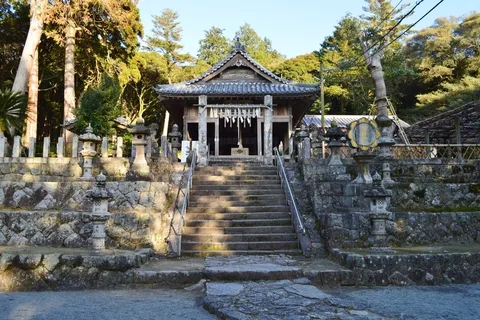
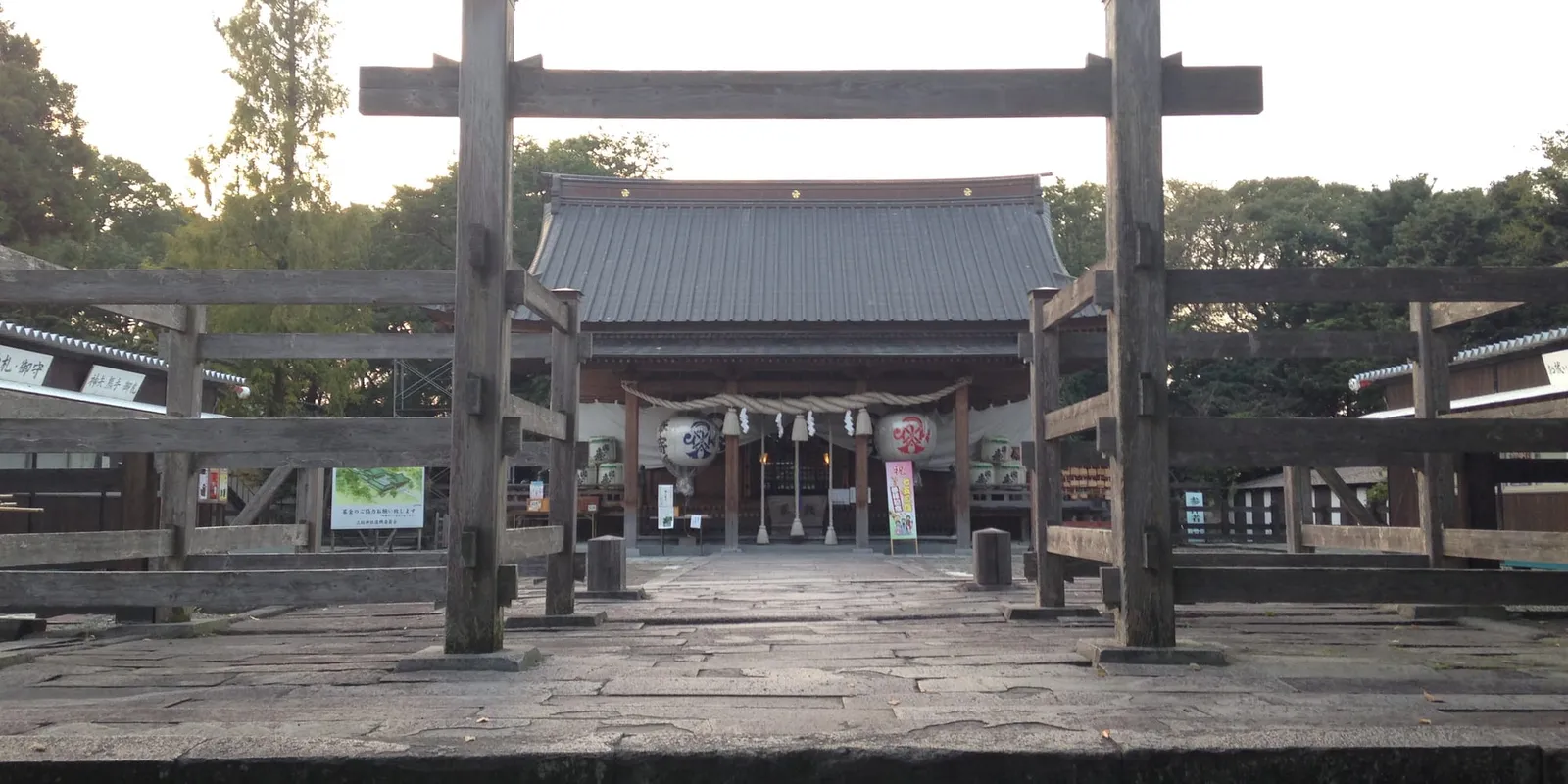
Mihashira Jinja stands in Mihashi-machi, Yanagawa, Fukuoka Prefecture. It is read “Mihashira-jinja” (the official site gives no furigana, but the Agency for Cultural Affairs’ Cultural Heritage Online lists it with this reading). The name comes from the three deities enshrined. According to the official site, they are Tachibana Muneshige, the first lord of the Yanagawa domain; Dosetsu (戸次道雪), Muneshige’s father-in-law; and Muneshige’s wife, Ginchiyo-hime. Muneshige fought with the Western Army at Sekigahara and lost his lands, but he is described as the only daimyo to regain his former domain, and he is venerated as a “god of revival.”
The founding year differs by source. According to the official history, the shrine began in 1783 (Tenmei 3), when the 7th lord, 立花鑑通, enshrined Dosetsu in the grounds of Chokyu-ji in the Sannomaru of Yanagawa Castle. In 1820 (Bunsei 3) it moved near Hiyoshi Shrine and was called “Yuiitsu-gu,” and it was later merged into the Baigaku-sha and renamed “Sanchu-gu.” In 1825 (Bunsei 8), the 9th lord, 立花鑑賢, judged the old site too small for the domain’s founder and planned a new shrine on the present site, and the deities were moved there the following year (1826), becoming today’s Mihashira Jinja. Some introductions give 1826 as the founding year, so this page simply says “sources differ.”
The official site says the current chief priest is the 18th generation of the Tachibana family. The family, which ruled Yanagawa throughout the Edo period, is described as having chosen to stay rooted in the local community after the abolition of the domains, and it also looks after Ohana (御花), the former lord’s villa.
Highlights
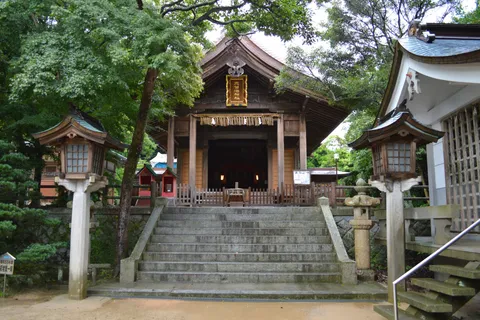
The shrine’s buildings were hit by arson on June 3, 2005 (Heisei 17), which destroyed the worship hall, Karamon gate, corridors and tower gate (per the “Reiwa Restoration” page of the official site). The main hall survived, and the official site explains that it has been restored so that it can be passed on. Work on the main hall began in November 2023, the scaffolding came down on May 11, 2025, and a ceremony for the new hall was held on September 30, 2025. Restoration of the Karamon gate is planned for fiscal 2028 (Reiwa 10) onward.
The official history page says the earlier buildings were made by carpenters who studied the architecture of Nikko Toshogu and Itsukushima Shrine, and that the tower gate in particular was an elaborate structure built with the participation of the whole domain. 2025 (Reiwa 7) marked 200 years since the enshrinement, and the official site also introduces a commemorative paper-cut goshuin of the main hall.
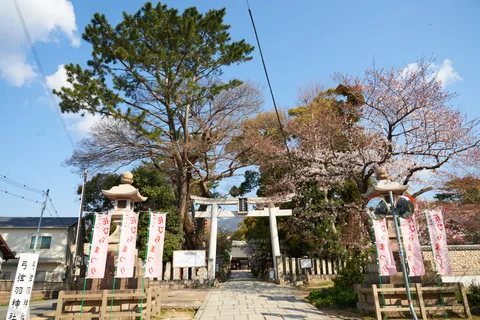
The Rankan Bridge stands in front of the shrine, and the official site says boats surrounded by cherry blossoms can be seen from it in spring. The grounds have about 500 Somei Yoshino cherry trees, with a night light-up noted as well. Seasonal events such as a hydrangea flower chozuya in the rainy season, a chinowa (grass ring) purification and wind chimes in summer, and Tanabata on July 7 are also introduced on the official site.
Visiting Tips
The shrine office (amulets and charms) is open 9:00 AM–5:00 PM. Visiting hours for the grounds, prayer reception hours and fees are not stated on the official site. Prayers cover traffic safety, household safety, protection from misfortune, fulfillment of wishes, business prosperity, first shrine visits and Shichi-Go-San, and can be booked through the official site’s form or by phone (0944-72-3883).
The goshuin are ¥1,500 each for the paper-cut “Suikyo” and “Suikyo” (night) designs and ¥2,000 for the 200th-anniversary “Honden” design (official site). There are also monthly goshuin; the October 2026 set has three designs (osmanthus, chestnut, said to relate to an anecdote from Muneshige’s childhood, and the Onigie procession), but fees and hours are not stated on the official site. Mail order is available.
It is about a 5-minute walk from Nishitetsu Yanagawa Station. The shrine has its own parking lot, but the number of spaces and fees are not stated on the official site. During Onigie the shrine lot is closed to general vehicles and temporary lots are announced, so check the “News” page of the official site in advance.
Annual Festivals
- Autumn Grand Festival “Onigie” (October): The shrine’s most important festival according to the official site, a thanksgiving for a good harvest said to have begun in the Edo period. In 2026 it ran October 10 (Sat) to 12 (Mon, holiday), with the procession and a Grand Competition on the shopping street planned for the 11th (times were subject to change with the weather). The “Dorotsukudon” float, a Fukuoka Prefecture intangible folk cultural property, takes part.
- Chinowa-kuguri (summer): A grass-ring purification for good health, introduced on the official site. No date is given.
- Tanabata (July 7): Introduced under the official site’s seasonal page.
- Cherry blossoms (spring): The official site notes about 500 Somei Yoshino trees in the grounds and a night light-up (timing varies by year).
Dates and details change from year to year, so check the “Festivals” and “News” pages of the official site for the latest.
Nearby Food & Sightseeing
- Rankan Bridge: The bridge in front of the shrine. The official site says that in spring you can watch boats surrounded by cherry blossoms from it.
- Ohana (the former Tachibana lord’s residence): According to the official site, the former lord’s villa, which the Tachibana family looks after. A good stroll to pair with the shrine for Yanagawa and Tachibana history.
Frequently Asked Questions
- Q. What are the visiting hours?
- A. The official site lists the shrine office (amulets and charms) as open 9:00 AM–5:00 PM. It does not state when the grounds can be entered or when prayer requests are accepted. Prayers can be booked through the official site's form or by phone, and the phone number is 0944-72-3883.
- Q. Can I get a goshuin at Mihashira Jinja?
- A. Yes. The official site lists the paper-cut goshuin "Suikyo" and "Suikyo" (night) at ¥1,500 each, and the 200th-anniversary "Honden" (main hall) design at ¥2,000. There are also monthly goshuin (three designs for October 2026), but their fees and hours are not stated on the official site. Mail order is available for those who cannot visit. Use the shrine office hours of 9:00 AM–5:00 PM as a guide, and it is safest to call ahead.
- Q. How do I get there, and is there parking?
- A. It is about a 5-minute walk from Nishitetsu Yanagawa Station on the Nishitetsu Tenjin Omuta Line (per the official site). The shrine has its own parking lot, but the number of spaces and fees are not stated on the official site. During the autumn festival Onigie the shrine lot is closed to general vehicles; for 2026 the Amenbo Center (あめんぼセンター) lot and the Yanagawa City Hall lot were announced as temporary parking.
- Q. What is the shrine known for?
- A. It enshrines three deities: Tachibana Muneshige, the first lord of the Yanagawa domain, his father-in-law Dosetsu (戸次道雪), and Muneshige's wife Ginchiyo-hime. According to the official site, Muneshige lost his lands after the Battle of Sekigahara but was the only daimyo to regain his former domain, so he is venerated as a "god of revival" associated with victory, fulfillment and revival. Prayers offered include protection from misfortune, household safety, traffic safety, business prosperity, first shrine visits for babies and Shichi-Go-San.
- Q. What is the Onigie festival?
- A. Onigie is the shrine's autumn grand festival, which the official site says began in the Edo period as a thanksgiving for a good harvest. The highlight is the procession, in which the "Dorotsukudon" float, a Fukuoka Prefecture intangible folk cultural property, and dance floats accompany the mikoshi through town. The official site listed the 2026 (Reiwa 8) festival as October 10 (Sat) to 12 (Mon, holiday). Dates change from year to year, so check the official site.
Plan Your Visit
Before you go, you can book a stay and get your shrine-visit items ready.
Amazon links open Amazon.co.jp (Japan) in English; whether an item ships overseas depends on the product.
※ Contains ads (PR). Links open external sites such as Amazon, Rakuten, Trip.com and Booking.com.