History
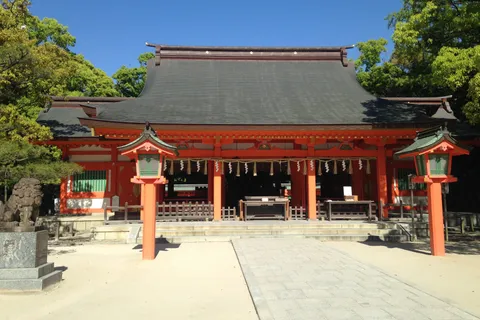
Shikaumi Jinja stands on Shikanoshima Island in Higashi Ward, Fukuoka. According to the official site, it enshrines the three Watatsumi deities (Sokotsu-watatsumi, Nakatsu-watatsumi and Uwatsu-watatsumi), born from Izanagi’s purification, and has long been called the “head shrine of the sea gods” and the “Capital of Dragons,” revered as the guardian shrine of Hakata Bay. Fukuoka City describes it as an old shrine whose name appears in the Engishiki Jinmyocho, the register of shrines compiled in the Heian period.
The date of its founding is unknown. The official site says that in ancient times there were three shrines at Katsuma on the north of the island (Uwatsu-gu, Nakatsu-gu and Okitsu-gu), and that Uwatsu-gu is said to have been moved to the present site at the foot of Mt. Katsuyama sometime between the 2nd and 4th centuries. The Azumi clan, who revere the Watatsumi deities as their ancestral gods, are said to have served the shrine for generations, and Fukuoka City’s cultural property information also calls the area the birthplace of the Azumi, a powerful ancient clan that led seafaring people.
The official site records a legend that Empress Jingu summoned Azumi no Isora when she set out to invade the Korean peninsula, received the tide-controlling jewels from the dragon god, and returned safely. The leaves said to have sprouted from the shaft of a steering oar of shii (chinquapin) wood that the Empress offered are called “kotonaki shiba,” and the shrine says that carrying a single leaf when you go out is believed to bring you home safely. According to Fukuoka City, the shrine was protected by successive Kuroda lords from the Edo period onward.
Highlights
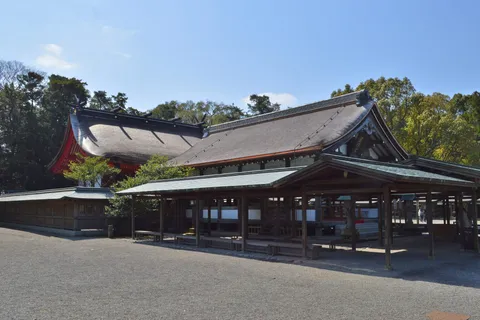
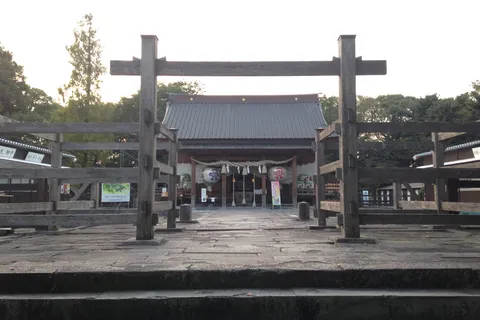
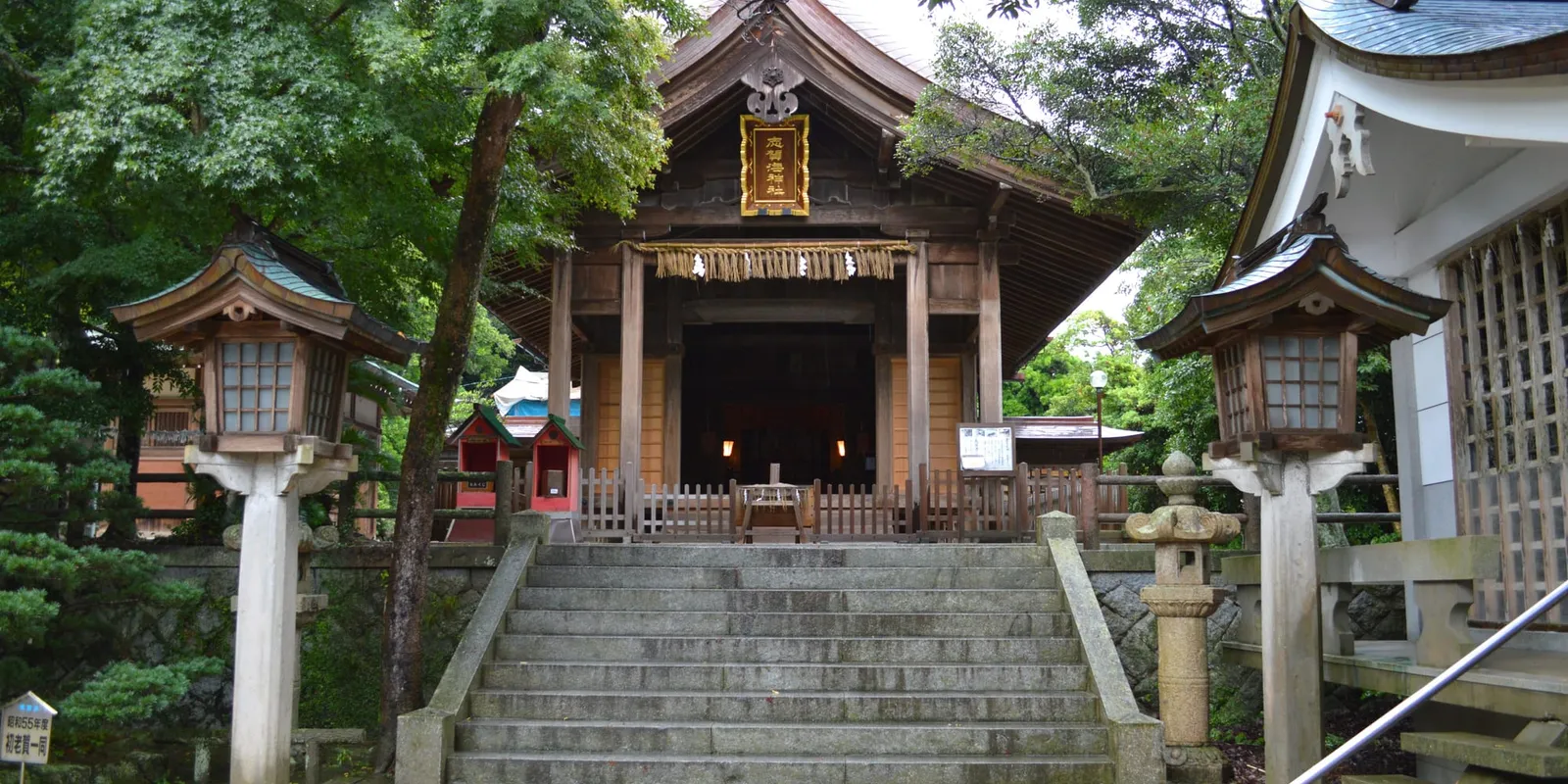
The grounds hold the main hall enshrining the three Watatsumi deities, the auxiliary Imamiya Shrine and 12 smaller shrines (official site). More auxiliary and subsidiary shrines lie around the island, including Okitsu-gu and Nakatsu-gu at Katsuma, Hirotenjin Shrine at Hiro, and Otake Shrine at Otake. In the Rokkaku-do (antler hall) in the grounds, about 10,000 deer antlers are kept, linked to the legend that Empress Jingu hunted deer on Tsushima and offered the antlers, according to Fukuoka City’s tourism guide.
Among its cultural properties, a Korean-made gilt bell (Goryeo period) is a national Important Cultural Property, the stone hokyoin-to pagoda is a Fukuoka Prefecture-designated tangible cultural property, and a bronze sword mold and other items are prefecturally designated (Fukuoka City cultural property information). The Hosha-sai, Yamahome Festival and Goshinko ceremonies are prefecture-designated intangible folk cultural properties that have preserved their ancient form well. There are also Manyoshu poem monuments in the grounds.
Shikanoshima is also famous as the place where the gold seal inscribed “Kan no Wa no Na no Kokuo” was found. According to the Fukuoka City Museum and Fukuoka City, however, the traditional find-spot is Kinin Park on the island, not the shrine grounds. The seal itself is displayed at the Fukuoka City Museum as a national treasure, and this page makes no claim about its relation to the shrine.
Visiting Tips
Visiting hours are 6:00 AM–5:30 PM, and the gate opens at midnight on New Year’s Day. Purification and prayer requests (from ¥5,000) are accepted at the shrine office from 9:00 AM to 5:00 PM (all per the official site). Because the deities are gods of purification, the official site asks visitors to sprinkle “oshioi” (purifying sand) lightly to the left, right and left before worshipping, then rinse the hands and mouth at the water basin. It also asks that people in a period of mourning, women during menstruation, infants under 100 days old, and pregnant women refrain from visiting where possible, according to the shrine’s customs.
Visitor reports say goshuin are available at the amulet office, but the official site gives neither the fee nor goshuin hours, and the amount differs by source. They may be pre-written, so please check on the spot. Fukuoka City’s Higashi Ward tourism guide also introduces original charms such as the dragon-head fortune slip, the Ryushi Katsumori charm and the flying-fish fortune slip.
The easiest route is the Fukuoka City ferry from Bayside Place at Hakata Port, which reaches Shikanoshima in about 30 minutes. See the Access section for the bus and car routes. There is a lot beside the shrine, but capacity and fees are not given on the official site and sources differ.
Annual Festivals
According to the official site, the shrine holds about 70 festivals of various sizes a year. The main ones are below (dates are as given on the official site and may change from year to year).
- Hosha-sai (January): A ceremony of shooting arrows on foot to divine the year. Fukuoka City’s information says it is part of rites held from January 2 to 15, and in recent years the shooting has taken place on the Sunday closest to January 15. A prefecture-designated intangible folk cultural property.
- Yamahome Tanemaki Ryoryo-sai (April 15): The spring Yamahome Festival, a prefecture-designated intangible folk cultural property.
- Tanabata Festival (August): According to Fukuoka City, it is now held on August 6 and 7, when fishermen from around Hakata Bay come to worship in boats flying big-catch flags.
- Otokoyama-sai, Goshinko-sai and Kunichi-sai (October): On October 1 the Otokoyama-sai asks the deities whether the Goshinko-sai will be held. At the Goshinko-sai (the 11th, 7:00 PM) the three enshrined deities descend by portable shrine to the temporary shrine. The next day, October 12, the Kunichi-sai features a yabusame (horseback archery) rite along about 330 meters of the approach. The Goshinko-sai is held once every two years and corresponds to the prefecture-designated intangible folk cultural property known as the Shinko Gyoji.
- Yamahome Ryoryo-sai (November 15): The autumn Yamahome Festival, giving thanks for the bounty of the mountains and praying for good catches.
- Chigo-sai (November 13): A festival praying for children’s safety and growth.
- Oharae Shiki Joya-sai (December 31, 4:00 PM): Purifies the year’s misfortune and prays for safety in the new year.
Dates and whether the public can watch may change, so check the official site or call the shrine (092-603-6501) for the latest.
Nearby Food & Sightseeing
- Kinin Park (Gold Seal Park): According to Fukuoka City’s cultural property information, this is the traditional site where a farmer named Jinbei is said to have found the gold seal under a large rock in 1784. A monument stands at the entrance, and Fukuoka City’s Higashi Ward tourism guide says a replica of the seal is displayed.
- Fukuoka City Museum: Displays the national treasure Gold Seal in its permanent exhibition room (per the museum’s official site). It is in Sawara Ward, away from Shikanoshima.
- Shogonji Temple: A temple on high ground on Shikanoshima said to have been opened by Shoichi Kokushi in 1278. Fukuoka City’s Higashi Ward tourism guide gives about a 6-minute walk from the ferry terminal.
- Okitsu-gu (Katsuma Coast): An auxiliary shrine of Shikaumi Jinja that can be reached on foot only at low tide during spring tides. Fukuoka City warns that crossing at any time other than low tide is dangerous.
- Shikanoshima Center: A direct-sales shop and restaurant at the entrance to the island, reopened after renovation in July 2026 according to Fukuoka City’s Higashi Ward tourism guide. It lists dishes such as the “Shikanoshima fisherman’s bowl” made with fish from the island.
Frequently Asked Questions
- Q. What are the visiting hours?
- A. The official site lists visiting hours of 6:00 AM–5:30 PM, with the gate opening at midnight on New Year's Day. Purification and prayer requests (from ¥5,000) are accepted at the shrine office 9:00 AM–5:00 PM.
- Q. Can I get a goshuin at Shikaumi Jinja?
- A. A visitor's report says goshuin are available at the amulet office just past the tower gate. However, the official site gives neither the fee nor goshuin hours, and visitor reports differ on the price (¥300 to ¥500). Use the shrine office hours (9:00 AM–5:00 PM) as a guide and confirm on site. One report says goshuin may be pre-written on days when the head priest is away.
- Q. How do I get there, and is there parking?
- A. Per the official site, take the Fukuoka City ferry from Bayside Place at Hakata Port (about 30 minutes) and walk about 10 minutes from Shikanoshima Ferry Terminal, or take a Nishitetsu bus bound for Katsuma from in front of JR Saitozaki Station (about 10 minutes) to the "Shikanoshima" stop and walk about 10 minutes. By car it is about 25 minutes from Kashiihama IC, and you use the lot beside the shrine. The official site gives no capacity or fee, and a Fukuoka Prefecture tourism site lists 20–30 spaces.
- Q. Was the gold seal found at Shikaumi Shrine?
- A. No. According to the Fukuoka City Museum, the national treasure "Gold Seal" (inscribed Kan no Wa no Na no Kokuo) is recorded as found on Shikanoshima on February 23, 1784. Fukuoka City's cultural property information says the traditional find-spot is Kinin Park on the island, not the shrine grounds. The seal is now on permanent display at the Fukuoka City Museum, and the city notes that questions about the find-spot and the finder remain unresolved.
- Q. What is the Yamahome Festival?
- A. According to Fukuoka City's cultural property information, the Yamahome Festival is a Fukuoka Prefecture-designated intangible folk cultural property, held today as the Yamahome Tanemaki Ryoryo-sai on April 15 and the Yamahome Ryoryo-sai on November 15. The priests purify and praise the three sacred mountains of Shika (Katsuyama, Kinugasayama and Mikasayama), then perform a mime of shooting a deer and one of fishing for sea bream. The official site introduces it, along with the Hosha-sai (January) and the Goshinko-sai (every two years in October), as one of the major festivals designated as prefectural intangible cultural properties.
Plan Your Visit
Before you go, you can book a stay and get your shrine-visit items ready.
Amazon links open Amazon.co.jp (Japan) in English; whether an item ships overseas depends on the product.
※ Contains ads (PR). Links open external sites such as Amazon, Rakuten, Trip.com and Booking.com.