History
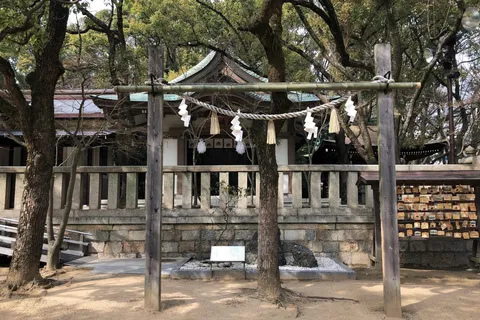
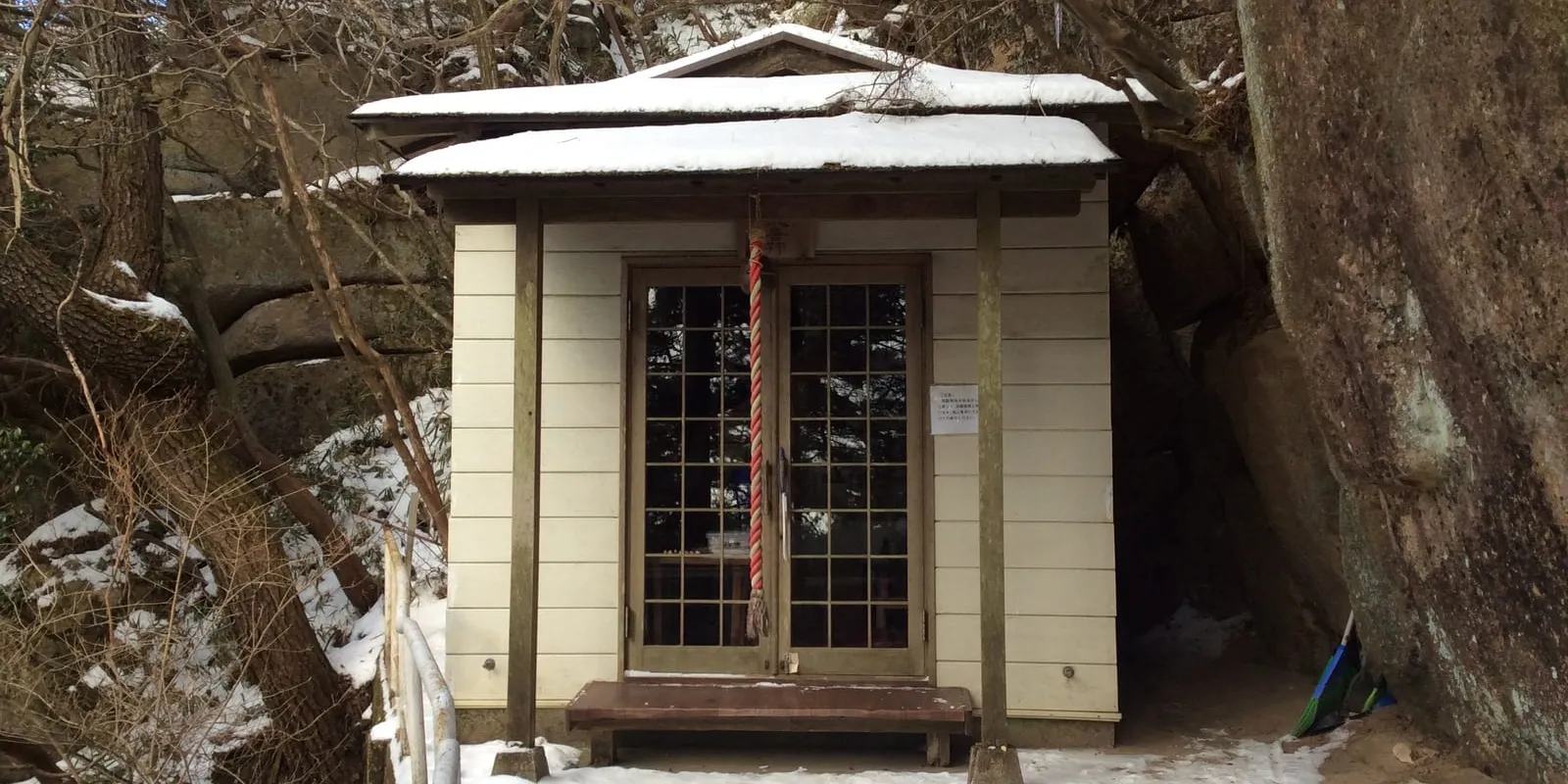
Rokko Hime Jinja (formally Rokko Hime Daizen Jinja) sits quietly in a ravine deep in the mountains of Nada Ward, Kobe, Hyogo Prefecture. Its object of worship is not a conventional shrine building but the massive granite rock formation — an iwakura, or sacred rock — that rises behind it, making this one of the more distinctive surviving examples of old Japanese mountain-worship tradition.
According to shrine tradition, the monk Hodo Shonin, said to have traveled to Japan from India, was practicing austerities in the Mount Rokko mountains in the 7th century when he experienced a vision of the guardian deity Bishamonten appearing amid a purple cloud. This experience led him to found Kisshoin Tamonji temple in what is now Kita Ward, Kobe, and the rock formation here was established as the temple’s inner sanctuary (oku-no-in), remaining an object of devotion ever since.
The shrine’s deity, Rokko Hime Daizen, is identified in Buddhist tradition with Benzaiten and Kisshoten. In 2012, Rokko Hime Ko — the lay association that helps maintain the shrine — publicly taught, based on its own study of the Hotsuma Tsutae (a text written in a purported ancient script), that this deity is one and the same as Seoritsuhime, a Shinto deity associated with water and purification. It’s worth noting that this identification does not come from the classical Kojiki or Nihon Shoki, but is a comparatively recent teaching. In the same spirit, some tellings hold that the rock formation itself was artificially stacked by human hands during the Jomon period (around 5000 BCE) — an intriguing idea, but not one confirmed by archaeological evidence, and presented here as a belief that circulates among visitors rather than settled fact.
Documented physical rebuildings of the shrine include new shrine buildings and stone steps in 1968, a completed worship hall and approach stairway on November 20, 1996, and a rebuilt shrine hall on September 29, 2019. Today the site is jointly maintained by Tamonji temple and Rokko Hime Ko, with joint rites held every autumn.
Highlights
The individual boulders that make up the iwakura each carry their own name. The three most notable are Kumo-ga-iwa (“Cloud Rock”), where Hodo Shonin is said to have experienced his vision of Bishamonten; Shingyo-iwa (“Heart Sutra Rock”), inscribed with the Buddhist Heart Sutra; and Gyoga-iwa (“Reclining Rock”), which sits at the top of the formation. All are enormous blocks of Rokko granite, marked by the columnar jointing typical of the stone. The small shrine hall is tucked into the narrow ravine as if cradled by these boulders, giving visitors a distinct sense of quiet tension the moment they arrive.
In recent years the shrine has increasingly been featured as a “power spot,” drawing visitors from well beyond the immediate area on weekends. Even so, reaching the shrine hall requires descending a steep stairway and mountain trail, and signage along the way is minimal — so the atmosphere remains that of a quiet mountain-worship site rather than a developed tourist destination.
Visiting Tips
Rokko Hime Jinja has no resident priest or shrine office — it is entirely unstaffed. Ema (about ¥300), amulets (about ¥700), and pre-printed goshuin are left near the worship hall on a self-service, leave-a-donation basis, technically available around the clock. That said, the approach involves a steep mountain trail and stairway, so visiting after dark or in bad weather is strongly discouraged — plan to arrive in daylight, wearing shoes suited to a hike. If you’re relying on public transit, build in enough time to make the round trip within the operating hours of the Rokko Cable and mountain bus. In winter, check trail conditions in advance, as snow and ice are possible.
Annual Festivals
- Autumn Grand Festival: Every autumn, Tamonji temple (in Kita Ward, Kobe) and its inner sanctuary, Rokko Hime Jinja, hold a joint rite. The exact date varies from year to year, so those planning around it should confirm details with Tamonji or Rokko Hime Ko directly.
Nearby Food & Sightseeing
- Rokko Garden Terrace: A hilltop viewing complex about 10 minutes by mountain bus from Rokko Cable’s summit station, with sweeping views over Kobe and Osaka Bay alongside restaurants, cafes, and shops — a convenient stop after visiting the shrine.
- Arima Onsen: One of Japan’s oldest hot spring towns, reachable in about 12 minutes via the Rokko-Arima Ropeway from the mountaintop station. It sits on the far side of Mt. Rokko from the shrine, and many visitors combine the two into a single day trip.
- Rokko Alpine Botanical Garden: An alpine garden at roughly 865m elevation, not far from Rokko Hime Jinja itself. Taking advantage of Mt. Rokko’s cool climate, it displays around 1,500 species of alpine plants from Japan and abroad across the seasons.
Frequently Asked Questions
- Q. Who is enshrined at Rokko Hime Jinja?
- A. The shrine's deity is Rokko Hime Daizen. In Buddhist tradition this deity is identified with Benzaiten and Kisshoten. The shrine's lay association, Rokko Hime Ko, has also taught since 2012 that the deity is one and the same as Seoritsuhime, a Shinto purification deity — an identification drawn from the association's own study of the Hotsuma Tsutae text rather than from the classical chronicles (the Kojiki and Nihon Shoki), so it's worth treating as a comparatively recent devotional teaching rather than ancient established history.
- Q. How do I get to Rokko Hime Jinja?
- A. From the Rokko Cable's mountaintop station, transfer to the Rokko-san-jo mountain bus and get off at Athletic Park-mae. From there it's about a 10-15 minute walk down a hiking trail next to the Rokko Snow Park (GREENIA), including some steep stairs, so wear shoes suited to walking on a mountain trail. To reach the cable car's base station, take a Kobe City Bus from JR Rokko-Michi Station or Hankyu Rokko Station to Rokko Cable Shita.
- Q. Is Rokko Hime Jinja unstaffed? Can I get a goshuin?
- A. Yes, this is an unstaffed shrine with no resident priest or shrine office. Ema (about ¥300), amulets (about ¥700), and pre-printed goshuin are left out near the worship hall on a self-service, leave-a-donation basis, technically available 24 hours a day. That said, walking the mountain trail after dark carries real risk, so a daytime visit is strongly recommended.
- Q. What is the sacred rock (iwakura) at Rokko Hime Jinja?
- A. The shrine's actual object of worship is a massive granite rock formation. Its named sections include Kumo-ga-iwa ("Cloud Rock," where Hodo Shonin is said to have experienced his vision of Bishamonten), Shingyo-iwa ("Heart Sutra Rock," inscribed with the Heart Sutra), and Gyoga-iwa ("Reclining Rock") at the top of the formation. Some visitors describe the rock as having been artificially stacked by human hands during the Jomon period, but this is not an archaeologically confirmed fact — it's presented here as one belief circulating among visitors, not established history.
- Q. What is the history of Rokko Hime Jinja?
- A. According to shrine tradition, the monk Hodo Shonin — said to have traveled from India — experienced a vision of Bishamonten at this site in the 7th century, and this led him to found Kisshoin Tamonji temple in what is now Kita Ward, Kobe, with this rock formation as the temple's inner sanctuary. Documented rebuildings of the shrine structure include new buildings and stone steps in 1968, a completed worship hall and approach stairway in 1996, and a rebuilt shrine hall in 2019. Today the site is jointly maintained by Tamonji temple and the lay association Rokko Hime Ko.