History
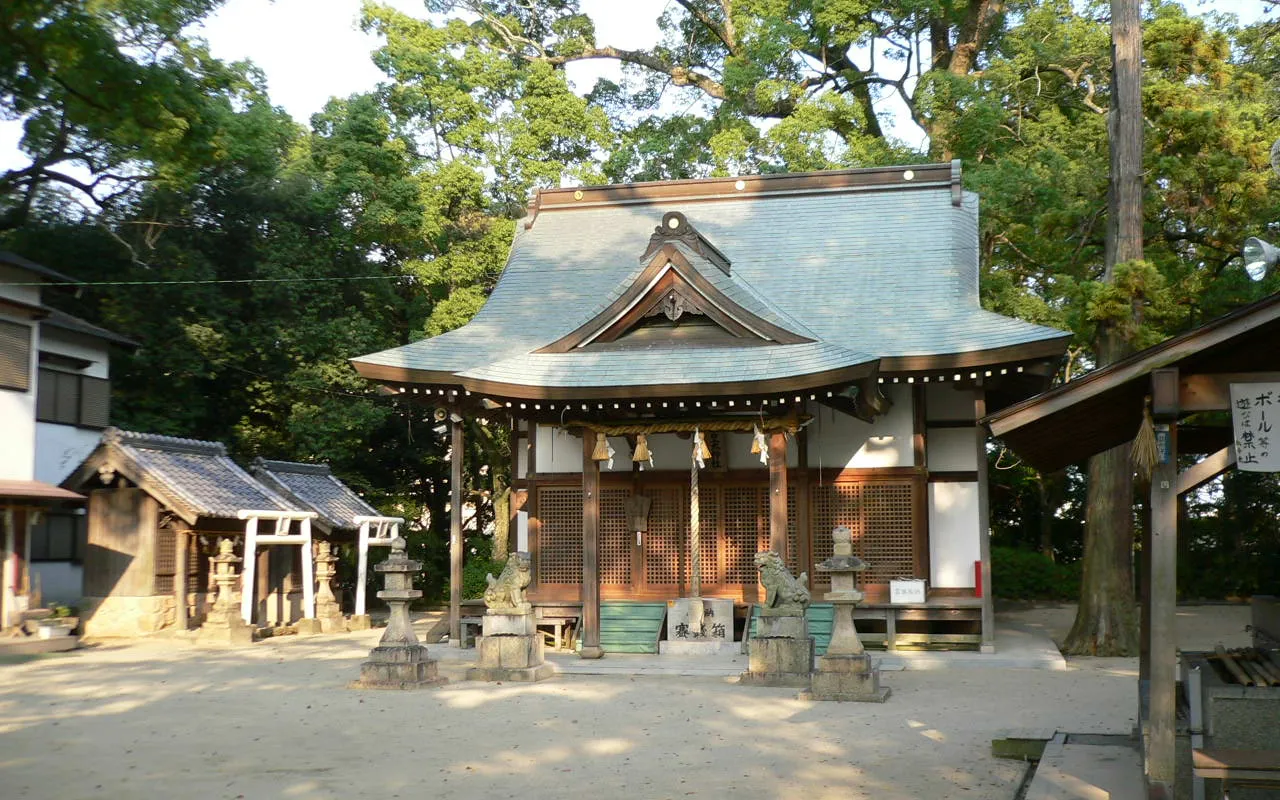
Namaze Kotai Jinja stands in the Namaze district in the northern part of Nishinomiya City, a neighborhood that grew up along the Muko River as the post town of Namaze-juku on the old Arima Kaido road. According to shrine tradition, it was founded in 1243, during the Kamakura period, under the name “Kotai Jinja.” The shrine buildings were destroyed by fire amid fighting in 1473 and rebuilt in 1547 by the Hosokawa clan. They were burned down again during Hashiba (Toyotomi) Hideyoshi’s campaign against Bessho Nagaharu in the late 16th century, before being rebuilt once more in 1626, in the form that has come down to the present day. The shrine went simply by the name “Kotai Jinja” until the Taisho era, and was renamed “Namaze Kotai Jinja,” incorporating the local place name, in 1927.
The principal deity is Amaterasu Omikami, also enshrined as the central deity of the Grand Shrine of Ise. Hachiman Okami and Kasuga Okami are enshrined alongside her, and subsidiary shrines on the grounds are said to enshrine Atago Okami, Susanoo no Mikoto, Omononushi Okami, and Komori Myojin as well. The shrine’s long-used name, “Kotai Jinja” (“Imperial Grand Shrine”), is thought to reflect its role in honoring Amaterasu Omikami, ancestral deity of the imperial line.
Highlights
Though surrounded by a residential neighborhood, the shrine grounds are lushly green, centered on a sacred tree said to be some 400 years old, its branches spread wide after generations of watching over the town of Namaze. Stone frog statues are scattered along the approach and throughout the grounds, a small, charming feature that visitors often notice. The main hall’s unusual west-facing orientation is another distinctive feature, one that local tradition says was chosen to look out toward the distant Grand Shrine of Ise.
Annual Festivals
- Spring Festival (March 22): A festival praying for safety through the year and a bountiful harvest.
- Summer Festival (July 22): A festival praying for good health through the summer months.
- Autumn Festival / Reitaisai (October 22): The shrine’s liveliest annual event, in which danjiri floats pulled by the local community parade through the streets of the old Namaze-juku post town.
Visiting Tips
The shrine office is generally unattended, so a goshuin cannot always be guaranteed even if one is hoping to receive one — checking the latest information in advance is a good idea. Parking on the grounds is limited to about 2 spaces, so arriving on foot from JR Namaze Station is recommended. The shrine pairs well with a relaxed stroll through the old streets of Namaze-juku that still line the Muko River nearby.
Nearby Food & Sightseeing
- Jokyo-ji Temple: A Jodo-shu Seizan-branch temple close to Namaze Kotai Jinja, said to have been founded in 1241 by Shoku, founder of the Seizan branch.
- Namaze Suidobashi Bridge: A narrow, roughly 60-centimeter-wide bridge crossing the Muko River, locally known as a curious little landmark.
Frequently Asked Questions
- Q. Who is enshrined at Namaze Kotai Jinja?
- A. The principal deity is Amaterasu Omikami, with Hachiman Okami and Kasuga Okami enshrined alongside her. Subsidiary shrines on the grounds are also said to enshrine Atago Okami, Susanoo no Mikoto, Omononushi Okami, and Komori Myojin, among others — giving visitors a chance to receive the blessings of several different deities within a single shrine precinct.
- Q. Is this the same shrine as the famous Nishinomiya Jinja known for the "Fukuotoko" race?
- A. No, it is an entirely different shrine. The famous Nishinomiya Jinja, head shrine of the Ebisu faith and known for its "Fukuotoko-erabi" running race, stands in the Shake-cho area in the southern part of Nishinomiya City. Namaze Kotai Jinja, by contrast, is located in the Namaze district in the northern part of the same city, along the Muko River in what was once the Namaze post town. Although both shrines share "Nishinomiya" in their location, they have completely different enshrined deities and histories, so please take care not to confuse the two.
- Q. Can I receive a goshuin (shrine stamp) here?
- A. Visitor reports indicate that a goshuin has been offered at this shrine, but because the shrine office is generally unattended, it cannot be guaranteed on any given visit. Pre-written goshuin have reportedly been available on some occasions. If you specifically want to receive one, it's a good idea to check the latest availability through local shrine listings before visiting.
- Q. How do I get to Namaze Kotai Jinja?
- A. It's about a 7-minute walk east from Namaze Station on the JR Fukuchiyama Line (JR Takarazuka Line). The shrine sits in the former post town of Namaze-juku, along the Muko River, reached by walking uphill through a residential area from the station. The grounds have space for only about 2 cars, so using public transportation is recommended.
- Q. What is the danjiri float procession at the autumn festival?
- A. At the shrine's main annual festival in October, danjiri floats are pulled out by the local community and paraded through the streets of the old Namaze-juku post town. It's one of the liveliest events of the year for local residents, alongside a spring festival in March and a summer festival in July.
Related Shrines
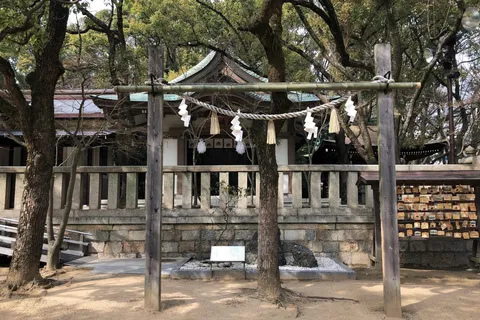
Hyogo, Kobe (Chuo Ward)
Minatogawa Jinja
Minatogawa-jinja
- Good Fortune
- Victory in Competition
- Luck in Competition
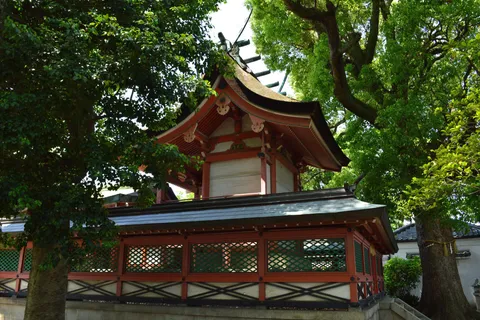
Osaka, Osaka (Sumiyoshi-ku)
Ikune Jinja
Ikune Jinja
- Financial Luck
- Business Prosperity
- Protection from Misfortune
Kumamoto, Yamaga
Hikotake-gu
Hikotake-gū
- Good Relationships
- Protection from Misfortune
- Household Safety