History
Nakano Numabukuro Hikawa Shrine is a Hikawa shrine in Numabukuro, Nakano, Tokyo, just a short walk from Numabukuro Station on the Seibu Shinjuku Line. The official site presents it as “Nakano Numabukuro Hikawa Shrine,” which appears to be read “Nakano Numabukuro Hikawa-jinja” (the official site gives no hiragana reading; this follows its official romanization, “Numabukuro Hikawa” and similar). It is a different shrine from “Nakano Hikawa Shrine” in Higashi-Nakano, which this site covers on a separate page. The enshrined deity is Susanoo no Mikoto, the hero of the myth of slaying the eight-headed serpent.
According to the official history, the shrine is said to have begun in 1346 (Shohei 1, in the Nanbokucho period), when a divided spirit was received from Omiya Hikawa Shrine (now in Saitama City), the ichinomiya of Musashi Province. In April 1477 (Bunmei 9), during a battle with the Toshima clan, Ota Dokan is said to have set up his headquarters at the shrine and planted a cedar at its entrance to pray for victory. The tree later came to be called the “Dokan Cedar” and withered in 1942. All of this is the shrine’s own account.
The shrine’s chronology records repairs to the buildings by a local magistrate in the Shoho era (1644–48) and a rebuilding of the hall in 1880. It also notes that the hall built in 1988 was destroyed in 1990 by a radical group, that the present hall was built in August 1991, and that the large torii on the rear approach fell in the 2011 Great East Japan Earthquake and was rebuilt the following year.
In recent years, according to the shrine’s official site, it has run an official collaboration with the TV anime Tokyo Revengers, handing out goshuin themed on characters who appear in a scene of the manga for which the shrine served as a model.
Highlights
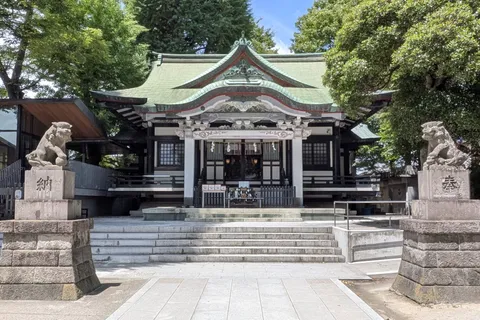
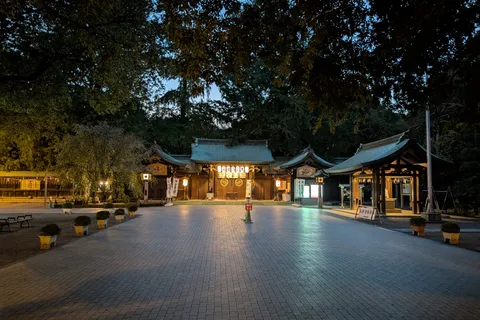
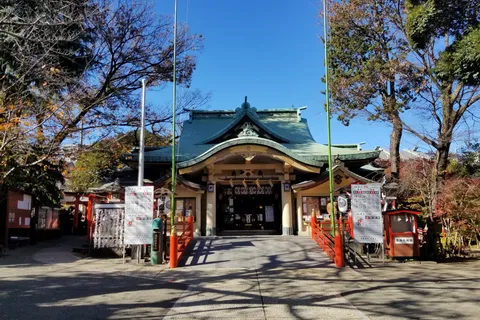
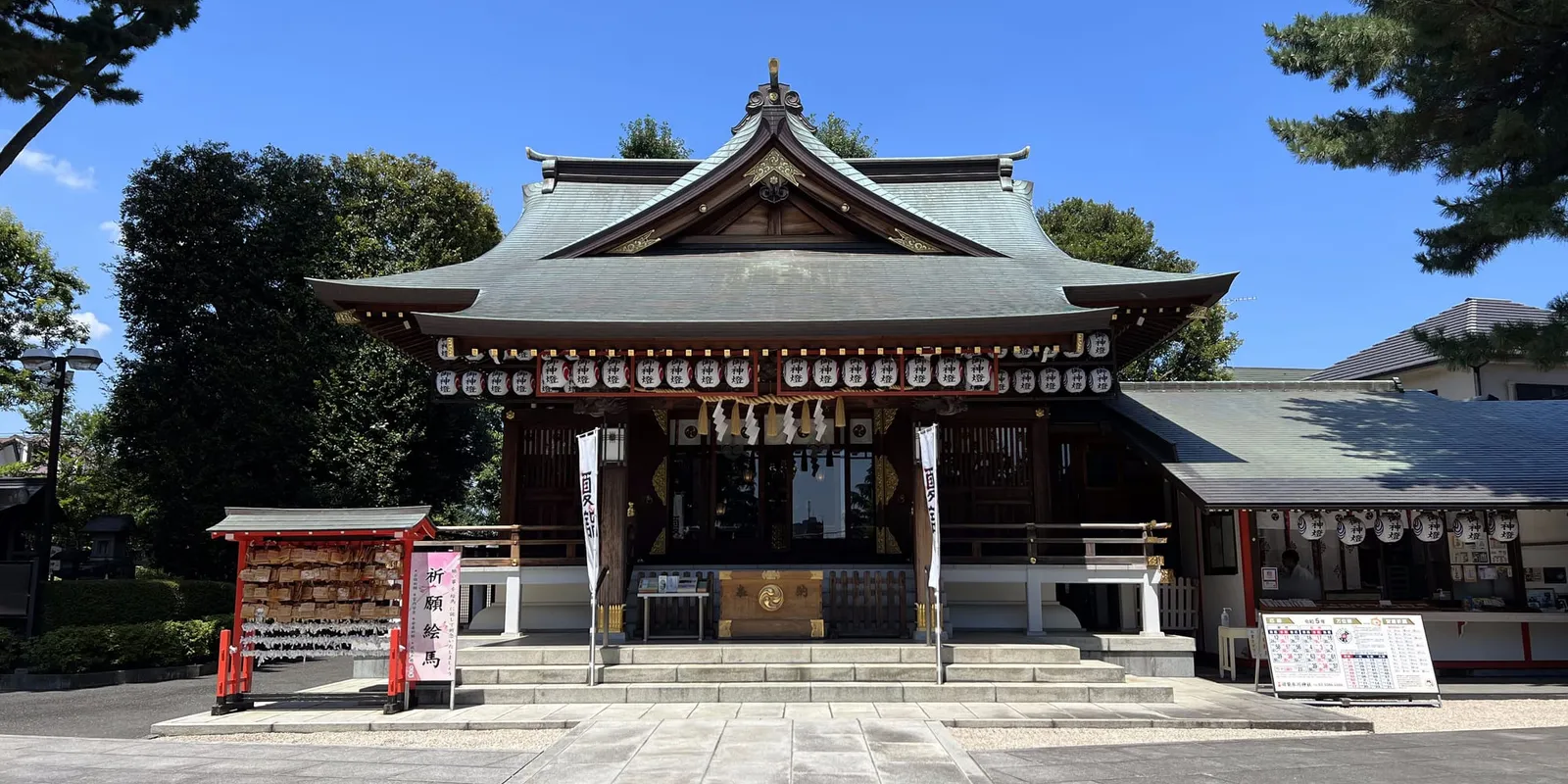
At the center of the grounds is the present main hall (built in 1991), which enshrines Susanoo no Mikoto. According to the official grounds guide, the purification fountain and the kagura hall were renovated in 2019 as a commemorative project for the Emperor’s enthronement ceremonies, and the kagura hall hosts dedicatory dances and festival music at New Year’s and festivals.
The best-loved feature is the rare “child-rearing komainu,” which holds and soothes a baby. The official site says that stroking it three times is said to bring an easy birth and smooth child-rearing. The sacred tree, the “Three Wish Pines,” is touched by many visitors who place their wishes in it. There are also a “chikara-ishi” (strength stone), once used by young men in contests of strength and carved with the weight and name of the lifter, and the site of the Dokan Cedar tied to Ota Dokan.
The grounds also hold the Tenno-sha (dedicated to Gozu Tenno, for recovery from illness), the Inari Shrine (which absorbed Okubo Inari Shrine in 1963; for rich harvests and business prosperity) and Mitake Shrine (against fire and theft). Seven Lucky Gods were enshrined in 2009, and the official site says this is the only place in Nakano Ward where all seven can be worshipped.
Visiting Tips
The gates open at 6:00 AM and close at 6:00 PM (opening at 7:00 AM from November to February, and open all day over New Year’s). The counter for amulets, talismans and goshuin is open daily 9:00 AM–4:00 PM, so visit within those hours if you want a goshuin. Prayer services require no booking from 10:00 AM to 4:00 PM (last acceptance 3:30 PM) in January, February (until National Foundation Day) and November, and on weekends, public holidays and dog days outside those months. On other weekdays a reservation is needed. A service is described as taking about 20 minutes.
The regular goshuin is ¥500, and its stamp design and color change every month. Amulets are mostly ¥800 each. Limited-edition and collaboration goshuin have set distribution periods and quantities, and the official site posts the current status.
It is about a 2-minute walk from the north exit of Numabukuro Station on the Seibu Shinjuku Line. The parking lot has about 25 spaces.
Annual Festivals
According to the official annual events page, the main events are as follows.
- Saitan-sai (January 1): Festival music by local hayashi groups and a lion dance are performed, and old talismans are burned in an otakiage fire in the grounds (December 31 to January 3).
- Genshi-sai (January 3): Sato-kagura is performed at the kagura hall.
- Hatsuuma-sai (first Horse Day in February): A festival of the Inari subshrine on the grounds.
- Kinen-sai (February 17): A prayer for rich harvests and industrial prosperity.
- Reitaisai (first Saturday and Sunday of June): The annual grand festival, with a mikoshi procession and various dedicatory events (the ceremony is on Sunday).
- Tenno-sai (June 22): The festival of the Tenno-sha subshrine, praying for protection from epidemics; red-bean rice is handed out.
- Nagoshi no Oharae (June 30): A purification rite with a chinowa reed ring to pass through. In 2026 it was announced for 5:00 PM.
- Shichi-Go-San (November 15): The official site also has an announcement about 2026 prayers.
- Niiname-sai (November 23): A harvest thanksgiving festival.
- Toshikoshi no Oharae (December 30): A purification rite in which visitors pass through a chinowa ring, praying for good health.
Dates can change from year to year, so check the official site for the latest.
Nearby Food & Sightseeing
- Arai Yakushi (Baishoin): A Shingon Buzan-school temple in Arai, Nakano. According to its official site, it is open 9:00 AM–4:00 PM, holds goma prayer services, and has a Hana Matsuri on April 8. It lies near Arai-Yakushimae Station, the next stop from Numabukuro on the Seibu Shinjuku Line.
- Tetsugakudo Park: A park in Matsugaoka, Nakano, founded in 1904 by Inoue Enryo, the founder of Toyo University. Facilities themed on philosophy are scattered through the grounds, and it is also known for cherry blossoms. According to Nakano City’s public relations materials, it is a nationally designated Place of Scenic Beauty (March 2020).
Frequently Asked Questions
- Q. What are the visiting hours?
- A. The official FAQ lists the gates as opening at 6:00 AM and closing at 6:00 PM. From November to February they open at 7:00 AM, and over New Year's they stay open all day. Amulets, talismans and goshuin are available daily from 9:00 AM to 4:00 PM.
- Q. Can I get a goshuin here?
- A. Yes. The official site lists both the Numabukuro Hikawa Shrine goshuin and the Nakano Seven Lucky Gods goshuin at ¥500 each, and says the Numabukuro goshuin changes its stamp design and color every month. Goshuin books are ¥2,000, and the counter is open daily 9:00 AM–4:00 PM. For limited-edition goshuin, the official site points visitors to the shrine's social media.
- Q. Is the shrine collaborating with the anime Tokyo Revengers?
- A. According to the shrine's official site, yes. As an official collaboration with the TV anime Tokyo Revengers (東京リベンジャーズ), it offers goshuin marking characters' birthdays and an official collaboration amulet, among other items. A notice dated October 23, 2026 says the Baji Keisuke version of the goshuin is available in limited quantities from October 28 at the shrine and, for mail orders, from October 25, at ¥1,500 per piece (with a clear file and postcard included), while supplies last. The site's distribution-status table lists items currently on offer, items that have ended, and upcoming ones (the Matsuno Chifuyu version is planned for mid-December 2026 and the Hayashida Haruki version for mid-February 2027), and it is updated as things change. Resale is prohibited, and the shrine asks people not to phone with questions. Availability changes, so check the official site before you go.
- Q. How do I get there, and is there parking?
- A. It is about a 2-minute walk from the north exit of Numabukuro Station on the Seibu Shinjuku Line (official site). From Nakano Station (JR / Tozai Line) it is about 20 minutes on foot, or you can take a Nerima-bound bus to "Reiwa Elementary School" and walk 5 minutes. There is a visitor parking lot with about 25 spaces. Note that "Nakano Hikawa Shrine" in Higashi-Nakano is a different shrine.
- Q. Do I need a reservation for a safe-childbirth prayer or other prayer services?
- A. The official site says no reservation is needed from 10:00 AM to 4:00 PM (last acceptance 3:30 PM) in January, February (until National Foundation Day) and November, and on weekends, public holidays and dog days (inu no hi) outside those months. On other weekdays you need to book by the reservation form or phone. Individual offerings are chosen from ¥7,000, ¥10,000, ¥20,000 or ¥30,000 and up. The grounds also have a rare komainu that holds and soothes a child; stroking it three times is said to bring an easy birth and smooth child-rearing.
Plan Your Visit
Before you go, you can book a stay and get your shrine-visit items ready.
Amazon links open Amazon.co.jp (Japan) in English; whether an item ships overseas depends on the product.
※ Contains ads (PR). Links open external sites such as Amazon, Rakuten, Trip.com and Booking.com.