History
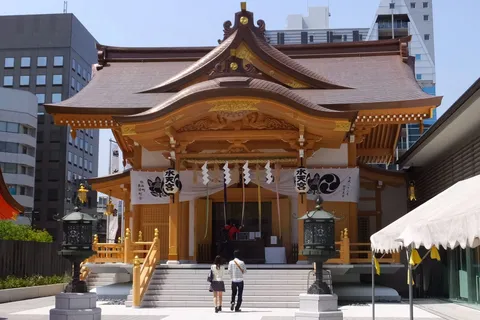
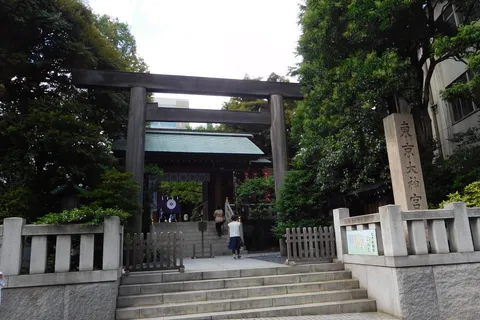
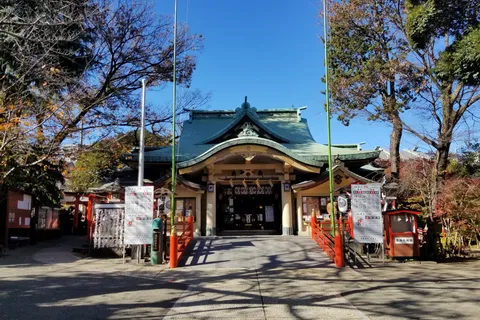
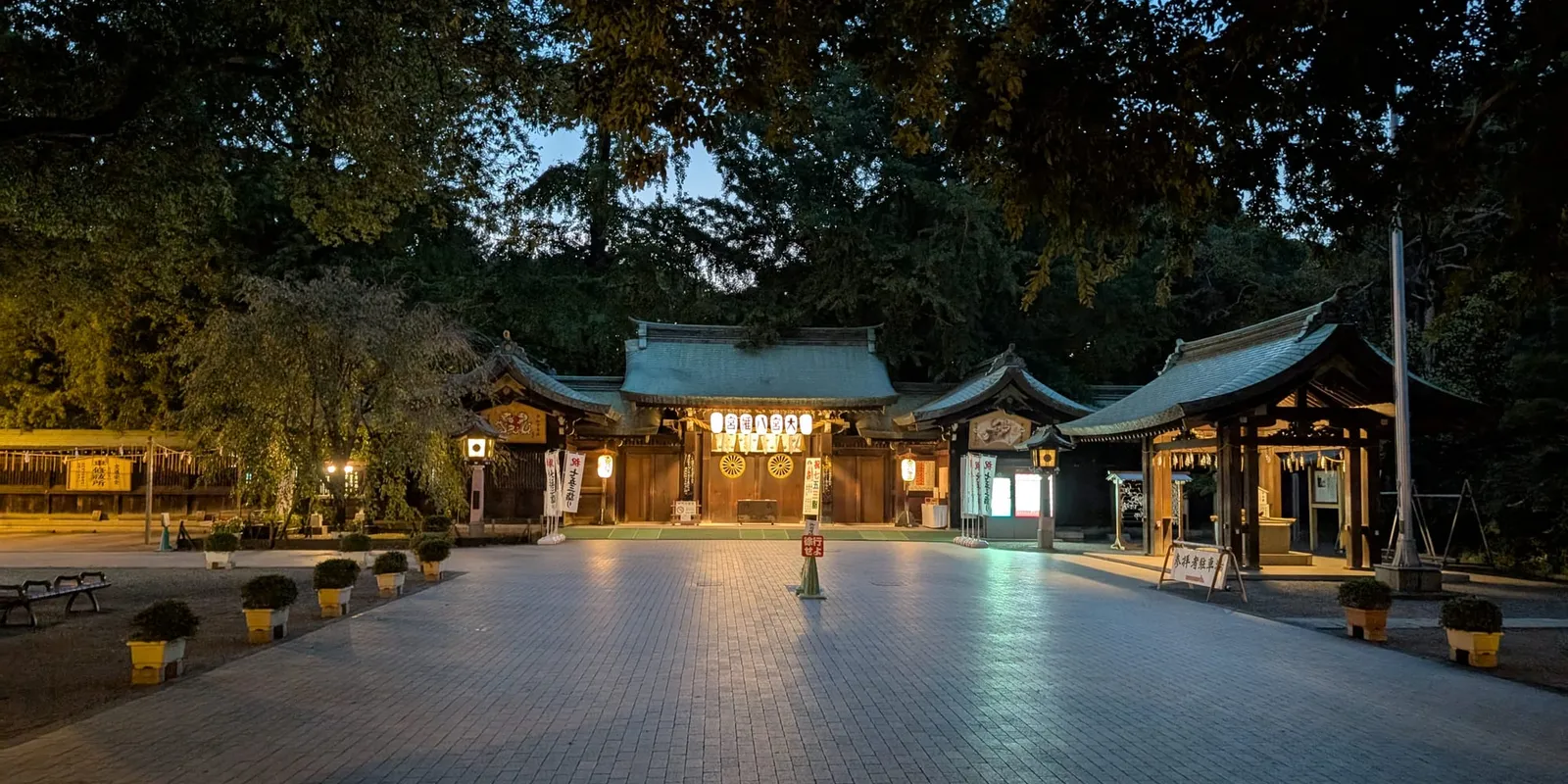
Omiya Hachimangu is a Hachiman shrine in Omiya, Suginami, Tokyo, known affectionately as the “Navel of Tokyo” (Tokyo no Heso) and a Hachiman shrine for child-rearing and protection from misfortune. It enshrines Emperor Ojin, his father Emperor Chuai, and his mother Empress Jingu.
According to the shrine’s tradition, in the Tenki era (1053–57) of the Heian period, the Former Nine Years’ War broke out in Oshu (northern Honshu). When the army of Minamoto no Yoriyoshi, the Commander of the Defense Headquarters, who had received an imperial order to put down the rebellion, reached this spot, eight streaks of white cloud trailed across the sky like the white banner of the Minamoto clan. Yoriyoshi took it as a sign of Hachiman’s protection and vowed to build a shrine here if he won. After he pacified Oshu and returned in triumph, he fulfilled his vow in 1063 (Kohei 6), enshrining a branch spirit from Iwashimizu Hachimangu in Kyoto, which is the origin of the shrine. His son, Hachimantaro Minamoto no Yoshiie, is said to have repaired the buildings after the Later Three Years’ War and planted a thousand young pine saplings in the precinct.
The shrine was once ranked among the “three great shrines of Musashi Province,” known as “Tama no Omiya,” and also called the “Hachiman Ichinomiya of Musashi.” In 1969, excavations in the former precinct on the north side uncovered a Yayoi-period ritual site and a chieftain’s dwelling, showing that this was a sacred place from ancient times.
Highlights
Beyond the sacred gate stands the main hall, built of cypress wood. The present buildings were constructed to mark the shrine’s 900th anniversary and completed in 1965 (Showa 40). The grounds cover about 15,000 tsubo, and the forest feels far removed from central Tokyo. A stone-paved approach of about 250 m, lined with cherry trees, runs from the main torii; the cherries bloom in April, and the azaleas along the path peak around the Golden Week holidays in early May.
Within the grounds are sub-shrines including Shirahata-gu and Wakamiya Hachiman Shrine (honoring Yoriyoshi and Yoshiie), Omiya Tenmangu (Sugawara no Michizane, for study and exam success), Omiya Inari Shrine and Sanpo Kojin Shrine (deities of food, clothing and shelter), and Tama Shimizu Shrine, where sacred spring water wells up. The pair of “married” ginkgo trees on either side of the sacred gate (the male tree stands about 26 m tall) symbolize marital harmony and turn gold around November. Also look for the “Symbiosis Tree,” a kaya tree with a wild cherry growing on it, the spot where Yoshiie’s pines were planted (now a second-generation pine), the bamboo grove, and the tea houses Tsusen-an and Shinsen-tei.
The shrine’s reputation for good relationships, safe childbirth and child-rearing comes from the tradition that Emperor Ojin showed his divine power even in his mother’s womb, and from the strong bond of the three parent-and-child deities. Amulets available include the enmusubi (good relationships) charm, a child-blessing charm, a safe-childbirth charm, and the “Omiya Hachiman Okinagaobi,” a belly band (iwata-obi) used for safe-childbirth prayers.
Visiting Tips
Prayer requests are accepted daily from 9:30 AM to 4:30 PM with no reservation, covering safe childbirth, a first shrine visit, Shichi-Go-San, protection from misfortune, good relationships and more. The offering is ¥10,000 or more for a first shrine visit or safe-childbirth prayer, and ¥7,000, ¥10,000 or ¥15,000 or more for other prayers. On the 1st and 15th of each month, on festival days, and during ceremonies and weddings, you may have to wait before your prayer begins. For prayers for children, the shrine advises couples to visit together to pray to the three parent-and-child deities.
Goshuin are available at the amulet office around 9:30 AM–5:00 PM (about ¥500; fees and hours can change, so please confirm at the shrine office). On the 25th of each month a limited goshuin for Omiya Tenmangu (pre-written, ¥500) is offered, and since August 1, 2026 a priest-calligraphed handmade-washi goshuin (¥1,000, limited quantity) is also available.
The recommended approach is a 7-minute walk from Nishi-Eifuku Station on the Keio Inokashira Line; from Eifukucho Station it is about 10 minutes. Free parking is available but limited, and may be closed when it is busy or during large events.
Annual Festivals
- Omiya Hachiman Matsuri (autumn grand festival, mid-September): The shrine’s biggest festival, centered on the main ceremony of September 15. In 2026 it runs on September 15 and 18–21, and includes a joint entry of mikoshi from the parish districts. The festival of Wakamiya Hachiman Shrine and Shirahata-gu is also held at this time (September 19).
- New Year visit and Ogasawara-ryu Hikime-no-gi and Omato-shiki (January): At 10:00 AM on January 2, a demon-warding ritual said to date back to the Kamakura period is offered. Hamaya arrows inspired by the whistling and white-feathered arrows used in it are given out as charms against misfortune.
- Setsubun Festival (February 3): Features the string-twanging ritual (meigen-no-gi) and bean-throwing.
- Omiya Hachiman Cherry Blossom Festival (late March to early April) / Wakaba Festival (spring festival, May 3–5): Seasonal events for the cherry-lined approach and the azaleas.
- Tanabata Kikkoden (July) and Omiya Tenjin Children’s Festival (July 24–25): Summer evening rites and a cooling-off festival.
- Shichi-Go-San Festival (November 15): Families fill the grounds while the ginkgo trees turn color.
Nearby Food & Sightseeing
- Wadabori Park: A long, narrow metropolitan park along the Zenpukuji River. The shrine sits on the south side of the river, and its greenery blends with the park’s red pine woods. A good place for a stroll after your visit.
- Zenpukuji River Greenway: A riverside walking path that continues from Wadabori Park, offering rare riverside greenery for central Tokyo.
- Seiryoden (on-site wedding hall and tea room): The reception hall for Shinto weddings, visible as you approach the sacred gate from the south approach. Weddings are always held in the main hall, and the tea room inside has been listed as open 10:00 AM–5:00 PM (last order 4:30 PM), but please check days and hours in advance.
Frequently Asked Questions
- Q. What are the visiting hours and when are prayers accepted?
- A. The grounds are open to visitors. Prayer requests (safe childbirth, first shrine visit, Shichi-Go-San and more) are accepted daily from 9:30 AM to 4:30 PM, with no reservation needed. The amulet and goshuin office is open about 9:30 AM–5:00 PM, and phone inquiries are taken from 10:00 AM to 5:00 PM. Prayers may be paused briefly during festivals, events and weddings.
- Q. Can I get a goshuin?
- A. Yes, at the amulet office around 9:30 AM–5:00 PM (handwritten, about ¥500). The limited Omiya Tenmangu goshuin is offered only on the 25th of each month (July 24 and 25), pre-written only, for ¥500. Since August 1, 2026, a priest-calligraphed handmade-washi goshuin (¥1,000, limited quantity) is also offered.
- Q. Is there parking?
- A. There are free parking spaces, but the number is limited and they may be unavailable when it is busy or during large events. Arriving on foot from Nishi-Eifuku Station on the Keio Inokashira Line is recommended.
- Q. What does "Navel of Tokyo" mean?
- A. The shrine stands near the center of Tokyo, including the Tama area, and its official website introduces it as "Tokyo no Heso," the center of gravity of Greater Tokyo. The grounds cover about 15,000 tsubo, and in 1969 excavations in the former precinct on the north side uncovered a Yayoi-period ritual site and a chieftain's dwelling, showing the land was a sacred place since ancient times.
- Q. Do I need a reservation for a safe-childbirth prayer or first shrine visit? What is the offering?
- A. No reservation is needed; groups are guided in order of arrival (daily 9:30 AM–4:30 PM). The offering is ¥10,000 or more for both a first shrine visit (hatsu-miyamairi) and a safe-childbirth prayer. Regular ceremonies are held on the 1st and 15th of each month and on festival days, so you may need to wait for them to finish; if you have set a date, calling 03-3311-0105 first is reassuring.
Plan Your Visit
Before you go, you can book a stay and get your shrine-visit items ready.
Amazon links open Amazon.co.jp (Japan) in English; whether an item ships overseas depends on the product.
※ Contains ads (PR). Links open external sites such as Amazon, Rakuten, Trip.com and Booking.com.