History
Suga Shrine stands in Suga-cho, Yotsuya, in Shinjuku, and has long been the guardian shrine of Yotsuya’s eighteen neighborhoods. According to the history on its official website, it began as an Inari shrine that was moved here in 1634 (Kan’ei 11) when Edo Castle’s outer moat was built, with this land granted in exchange. In 1643 (Kan’ei 20) the deity Susanoo no Mikoto was enshrined here, and the shrine became popularly known as “Yotsuya Tenno-sha.” It was renamed Suga Shrine in 1868 (Meiji 1) and ranked as a village shrine (gosha) in 1872 (Meiji 5).
The name “Suga” comes from a legend in which Susanoo, after slaying the eight-headed serpent in Izumo, said his heart had become calm and clear (“suga”) and built his palace there. The shrine enshrines Susanoo no Mikoto (Suga Okami) and Ukanomitama no Mikoto (Inari Okami), along with their five male and three female children. Locals call it “Tenno-sama,” and its June festival, called Tenno Matsuri or the Kappa Festival, was counted among Edo’s five great festivals, according to the official website. The prewar main hall dated from 1828 (Bunsei 11) and survived the Great Kanto Earthquake, but most buildings were lost in the 1945 air raids and were rebuilt with the efforts of parishioners.
Highlights
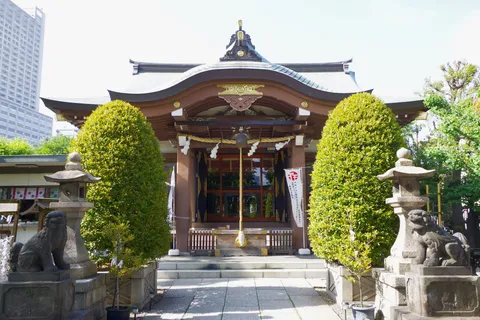
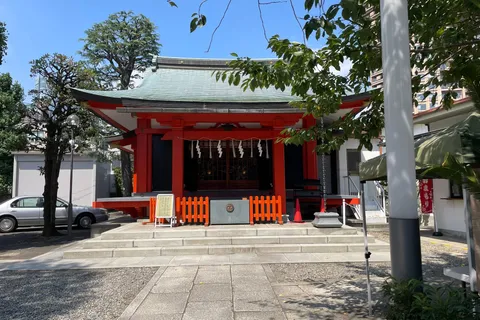
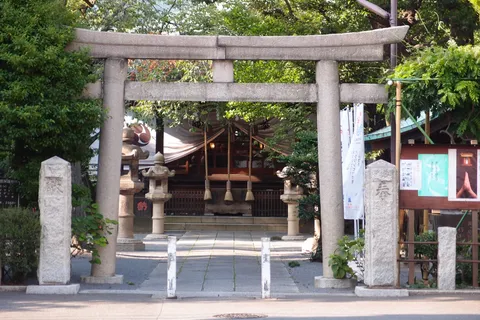
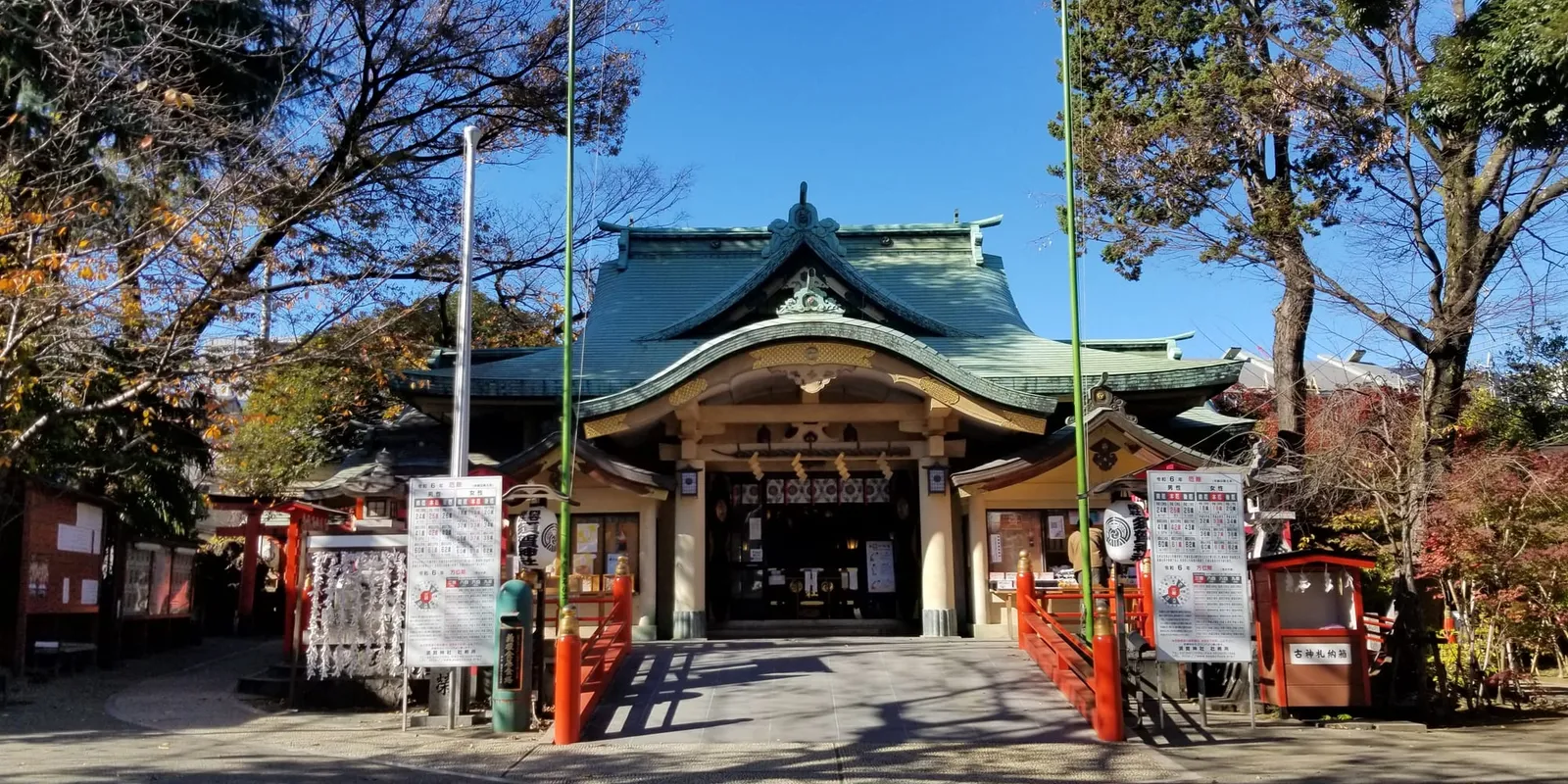
The grounds include, besides the main hall, the great torii and stone monument, the kagura hall, the mikoshi storehouse, a memorial monument, the ancestral spirits shrine, and the Tenpaku Inari Shrine. Otori Shrine (Yamato Takeru no Mikoto), enshrined jointly in the main hall, is the setting of the Tori-no-ichi fair, and the subsidiary Daikoku Shrine enshrines Okuninushi no Mikoto. The hall with its verdigris roof and vermilion railings blends into the quiet grounds in the middle of a residential neighborhood.
The shrine’s treasure “Thirty-Six Poets” paintings (by Oka Unpo, with calligraphy by Chigusa Arikatsu) are designated a Shinjuku City Tangible Cultural Property.
The shrine’s other claim to fame is the steep stone staircase leading up to it, Otoko-zaka. According to Shinjuku City’s sightseeing guide, it is a steep stone stairway that descends northeast from beside the east entrance of Suga Park, and it became famous after appearing in Makoto Shinkai’s animated film Your Name (Kimi no Na wa., 2016). The same guide explains that “otoko-zaka” often refers to a steep stone stairway that rises straight toward a shrine hall on high ground. Fans began visiting after the film’s release, as the local newspaper Ichigaya Keizai Shimbun reported in 2016. (We did not find any mention of the film on the shrine’s own visitor pages.)
Visiting Tips
The grounds are open 6:00 AM–5:00 PM (from 6:30 AM in November–February), and the amulet, talisman and goshuin office is open daily 10:00 AM–4:45 PM. Goshuin are reported to be mostly pre-written, from ¥500 with the price varying by design. The official website does not list designs or prices, so please check on site. Prayer services (misfortune-warding, direction-warding, Shichi-Go-San, safe childbirth and first shrine visits, and more) are by reservation, by phone or online.
The stairs are steep, so watch your step going up and down. Stopping partway to take photos can easily block other people, and the surroundings are residential, so keep quiet and take turns. The official access guide describes five entrance routes, and routes 1 and 2 lead to the stairs below the shrine, so if you are unsteady on your feet it is worth checking the guide beforehand.
By train, it is about 7 minutes on foot from Yotsuya-sanchome Station (Tokyo Metro Marunouchi Line) and about 10 minutes from Yotsuya Station (JR, Tokyo Metro) or Shinanomachi Station (JR). The shrine’s 7 parking spaces are for shrine-related vehicles only, so we do not recommend coming by car.
Annual Festivals
Main events from the official website’s annual calendar (dates are for 2026).
- Grand Festival (early June; June 5–8 in 2026): The shrine’s biggest festival, also called Tenno Matsuri. June 5 is the eve festival, June 6 the ceremony (with taiko and a dragon dance in the evening), June 7 the main mikoshi procession (leaving at 8:00 AM, returning at 9:00 PM), and June 8 the closing rite. Stalls open and kagura is performed on June 6 and 7.
- Tori-no-ichi (November; first Tori day November 7 and second November 19 in 2026): Yotsuya’s rooster-day fair, held with the festival of Otori Shrine on the grounds.
- Setsubun Festival (February 3): Listed in the official annual calendar.
- Natsugoshi no Oharae (June 30, 3:00 PM) and Toshikoshi no Oharae (December 31, 3:00 PM): Purification rites held twice a year.
- Shichi-Go-San Festival (November 15): Shichi-Go-San prayers are accepted year-round by reservation.
- Ichiyo Raifuku charm (from the winter solstice to the day before Setsubun): A charm associated with money and good fortune, offered for ¥1,200.
Nearby Food & Sightseeing
- Oiwa Inari Tamiya Shrine: A shrine in Samon-cho, Shinjuku, known for its ties to the kabuki ghost story Yotsuya Kaidan. It pairs well with Suga Shrine for a Yotsuya shrine walk.
- Shinjuku History Museum: A ward-run museum in Yotsuya Sanei-cho that introduces Shinjuku’s history and Edo-era life.
- Taiyaki Wakaba: A long-established taiyaki shop in Wakaba, popular for a snack after a visit. Check its days and hours beforehand.
Frequently Asked Questions
- Q. What are the visiting hours and the amulet office hours?
- A. The grounds are open 6:00 AM–5:00 PM (from 6:30 AM in November–February). The office for amulets, talismans and goshuin is open daily 10:00 AM–4:45 PM. Prayer services are by reservation, by phone (03-3351-7023) or online.
- Q. Can I get a goshuin?
- A. Yes, during office hours (daily 10:00 AM–4:45 PM). They are reported to be mostly pre-written, from ¥500, with the price varying by design such as the paper-cut one. The official website does not list the designs or prices, so please check at the office.
- Q. Is there parking?
- A. There are only 7 spaces for shrine-related vehicles, not for general visitors. Please come by train or use nearby paid parking.
- Q. Where are the stairs from the movie Your Name?
- A. They are the steep stone stairs called Otoko-zaka, which descend to the northeast from beside the east entrance of Suga Park up to the shrine. Shinjuku City's sightseeing guide says the stairs became famous after appearing in Makoto Shinkai's 2016 film Your Name (Kimi no Na wa.).
- Q. When is the annual grand festival?
- A. In early June. In 2026 it ran from the eve festival on June 5 to the closing rite on June 8. On June 7 the shrine's main mikoshi leaves at 8:00 AM and returns at 9:00 PM.
Plan Your Visit
Before you go, you can book a stay and get your shrine-visit items ready.
Amazon links open Amazon.co.jp (Japan) in English; whether an item ships overseas depends on the product.
※ Contains ads (PR). Links open external sites such as Amazon, Rakuten, Trip.com and Booking.com.