History
Kameari Katori Jinja stands in Kameari, Katsushika, Tokyo, about a 3-minute walk from the south exit of JR Kameari Station. According to the official site, the main deity is Futsunushi no Okami, with Takemikazuchi no Okami and Kunado no Okami enshrined alongside.
The official history gives the founding as the 19th day of the 8th month of Kenji 2 (1276), in the Kamakura period. The area was then Kamenashi village in the Kasai Mikuriya of Shimosa Province, and because it was land belonging to Katori Daijingu, a divided spirit of the main shrine (Futsunushi) is said to have been invited to serve as the village’s guardian shrine. The deities of Kashima (Takemikazuchi) and Itako-Isu (Kunado) were later enshrined together, and as the “Three Shrines of the East” they have reportedly protected the villagers and their neighbors. The official site describes 2026 as the 750th year of the shrine in Kameari. All of this is the shrine’s own account.
The virtues listed are removal of misfortune, good fortune and warding off bad luck, leg and hip health, household safety, and safe childbirth. Futsunushi and Takemikazuchi have long been revered as martial deities, hence the image of gods who “prevail over everything” and of gods of sports; Kunado is regarded as a guide deity of paths, hence leg and hip health, and as a guardian against calamity from outside the settlement, hence household safety.
Highlights
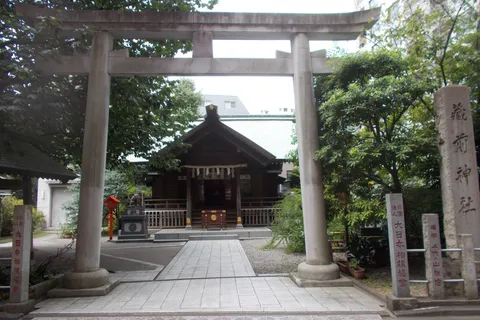
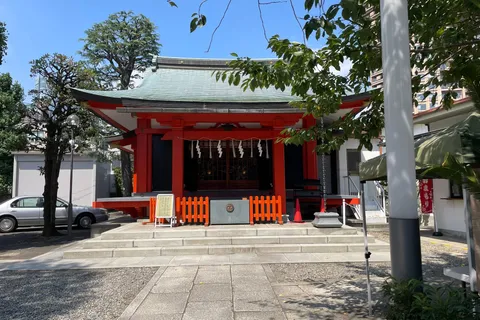
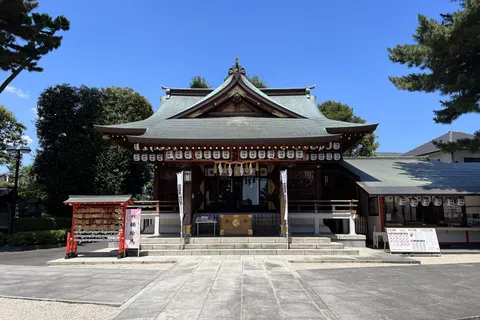
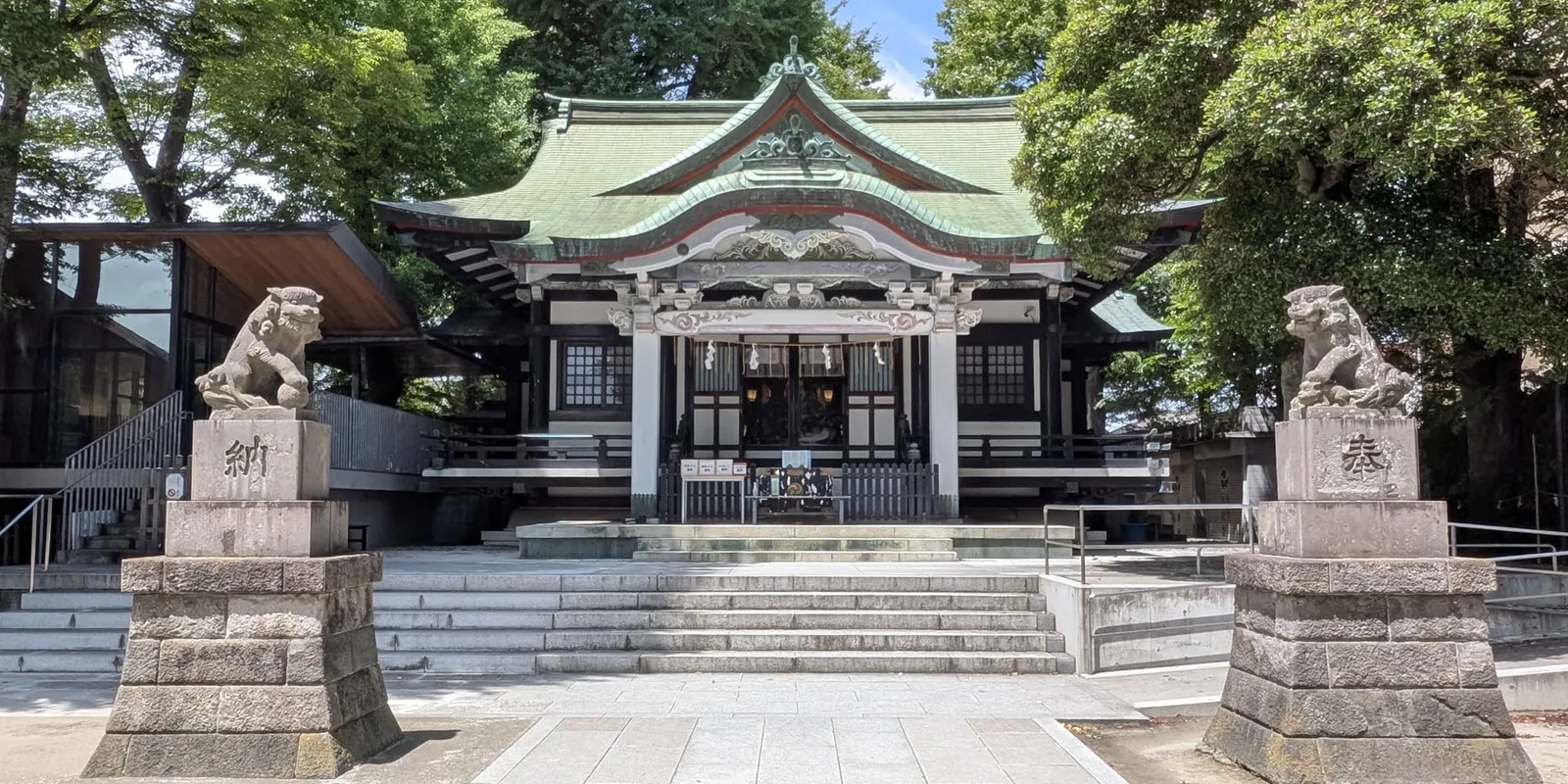
The grounds include the large torii of the west approach, the main worship hall, the north-facing Dosojin, the shrine office, and the pastry shop and café “La Rose Japonais.” The official site says a renovation to mark the shrine’s 740th anniversary produced a new shrine office, a café building and renewed grounds, which received a 2020 Good Design Award.
Turtle motifs are a distinctive feature, drawing on the “kame” in the name Kameari. The official amulet page lists a turtle ema showing a parent and child turtle, as well as turtle amulets such as the Fuku-game and Musubi-game charms. A Katsushika City PR page also says that, besides ordinary komainu guardian dogs, the shrine has a pair of turtle statues.
The official Kochikame collaboration page says the grounds have a bronze statue of Ryotsu Kankichi, the hero of the manga “Kochira Katsushika-ku Kameari Koen-mae Hashutsujo” (by Osamu Akimoto).
Visiting Tips
The official site does not state when the grounds can be entered. The shrine office is open 9:00 AM–5:00 PM on weekdays and 9:00 AM–5:30 PM on weekends and holidays, and prayer reception runs 9:30 AM–4:30 PM, with same-day applications accepted. Individual prayers start from ¥5,000. The official site says the shrine office, grounds and main hall are barrier-free, with an elevator.
Of the goshuin, “Dosojin” and “Katori Jinja” are written directly into your goshuin book, while “Kameari Shisha Inari” and the seasonal or limited designs are loose washi paper only. The fee and goshuin-only hours are not on the official site, so arrive well within the shrine-office hours. Original goshuin books come in turtle and leg designs.
It is about a 3-minute walk from the south exit of Kameari Station on the JR Joban Line, and the large torii on Loop Road No. 7 is the landmark. The 8 parking spaces on the grounds are reserved for people receiving a prayer.
Annual Festivals
The official events table lists the following annual rites. Monthly festivals are held on the 1st and 15th.
- New Year’s Day Festival (January 1)
- Hatsuuma-sai (early February): A festival at the Inari shrine.
- Setsubun-sai (February 3)
- Shokonsha Annual Festival (May 5)
- Nagoshi no Oharae (June 30)
- Tanabata-sai (July 7)
- Annual festival, Reitaisai (mid-September): As listed in the events table. In 2026 (Reiwa 8) it was held October 9–11 as the 750th-anniversary festival, and the official festival page calls it the main festival held once every two years. It features the joint entry of neighborhood mikoshi and a procession of the shrine’s main mikoshi through the town.
- Shichi-Go-San visits (November 15)
- Niiname-sai (November 23)
- Toshikoshi no Oharae and New Year’s Eve Festival (December 31)
Dates can change from year to year, so check the official site for the latest.
Nearby Food & Sightseeing
- Pâtisserie La Rose Japonais: A pastry shop and café beside the shrine’s large torii. According to the official site it is open 11:00 AM–6:00 PM (café last order 5:00 PM), closed Tuesdays and irregularly on Wednesdays.
- Ario Kameari: A large shopping mall next to the shrine. The official site also suggests it as parking when the shrine lot is full.
- Ryotsu statues around Kameari Station: The shrine’s official page says several Kochikame statues stand around the town. Their locations are described differently in different sources, so check with a local tourist office before you go.
Frequently Asked Questions
- Q. What are the visiting hours?
- A. The official site does not state when the grounds can be entered. The shrine office (amulets, ema, goshuin) is listed as open 9:00 AM–5:00 PM on weekdays and 9:00 AM–5:30 PM on weekends and holidays. Prayer reception is 9:30 AM–4:30 PM, and same-day walk-ins are accepted (official site). Phone reservations follow the shrine-office hours.
- Q. Can I get a goshuin at Kameari Katori Jinja?
- A. Yes. According to the official site, the standard goshuin are "Dosojin," "Katori Jinja" and "Kameari Shisha Inari," and the first two can be written directly into your goshuin book. "Kameari Shisha Inari" and the seasonal, Year-of-the-Horse special and collaboration goshuin are loose washi paper only, and some are limited in number. The fee and goshuin-only hours are not given on the official site, so please check with the shrine office (+81-3-3601-1418).
- Q. How do I get there, and is there parking?
- A. It is about a 3-minute walk from the south exit of Kameari Station on the JR Joban Line (official site). There are 8 parking spaces on the grounds, but they are reserved for people receiving a prayer, and a permit is issued at reception. When the lot is full, Ario Kameari or nearby coin parking is suggested.
- Q. Is the shrine connected to the manga Kochikame?
- A. The official site has a Kochikame collaboration page. It says there is a bronze statue of Ryotsu Kankichi, the hero of the manga Kochira Katsushika-ku Kameari Koen-mae Hashutsujo (by Osamu Akimoto), on the grounds. The page also announces two collaboration goshuin (a salute version and a festival version, distributed only as loose washi paper and not written into goshuin books) and Ryotsu ema. No fees or distribution periods are listed, so please ask the shrine office for details.
- Q. When is the annual festival?
- A. The official annual-events table lists the annual festival (Reitaisai) as "mid-September." However, in 2026 (Reiwa 8) it was held October 9–11 as the 750th-anniversary festival, and the official festival page calls it the main festival held once every two years. Dates vary by year, so check the official site before you go.
Plan Your Visit
Before you go, you can book a stay and get your shrine-visit items ready.
Amazon links open Amazon.co.jp (Japan) in English; whether an item ships overseas depends on the product.
※ Contains ads (PR). Links open external sites such as Amazon, Rakuten, Trip.com and Booking.com.