History
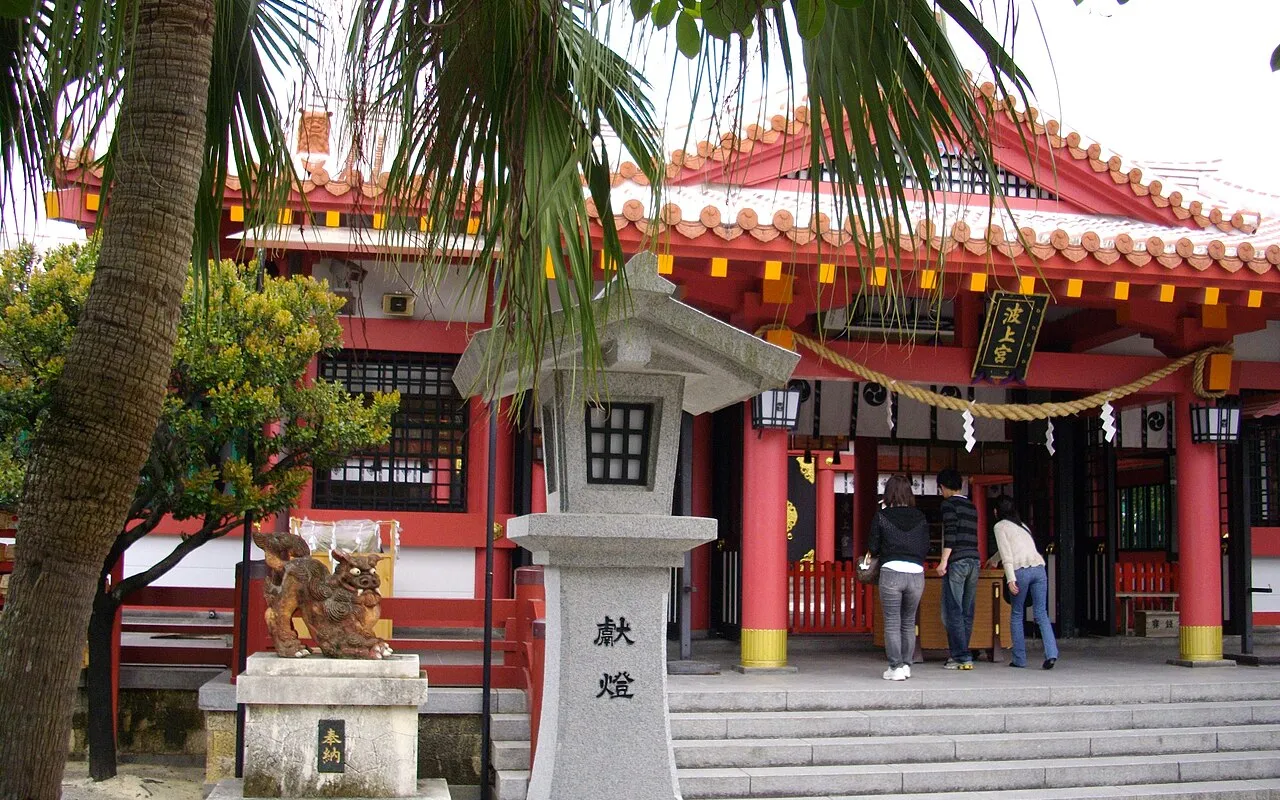
Naminoue Shrine stands atop a cliff overlooking the sea in Wakasa, Naha, and holds the highest rank among the “Eight Shrines of Ryukyu,” the most venerated group of shrines from the era of the Ryukyu Kingdom. Its exact founding date is unknown, but from ancient times, the people of this land prayed toward Nirai Kanai — the realm of the gods believed to lie across the ocean — for a bountiful catch, a good harvest, and a peaceful life, and the cliff edge above the waves became one of the sacred sites where these prayers were offered.
According to shrine tradition, a fisherman found a radiant sacred stone in a cave at the cliff’s edge and enshrined it as the object of worship for Kumano Gongen. He is said to have received a divine oracle instructing him, “Build a shrine on this spot, and I shall protect the nation,” after which the Ryukyuan royal government built the shrine hall and worshipped there with great reverence. The enshrined deities — Izanami-no-Mikoto, Hayatamao-no-Mikoto, and Kotosakao-no-Mikoto — correspond to the three deities of Kumano, showing how mainland Japan’s Kumano faith fused with Ryukyu’s own maritime beliefs to take root in a distinctly local form.
During the Ryukyu Kingdom era, successive kings made personal pilgrimages to the shrine to pray for the peace and security of the nation, and it came to be revered as a shrine apart — known as “the New Ichinomiya of the Ryukyu Kingdom” and “the Guardian Shrine of All Okinawa.” The shrine buildings were destroyed in the Battle of Okinawa but were rebuilt after the war, and it remains one of Okinawa’s foremost shrines, drawing a steady stream of worshippers today.
Highlights
The shrine’s greatest draw is its dramatic setting: the shrine hall sits atop a cliff, commanding sweeping views of the sea off Naha and Naminoue Beach below. The combination of Ryukyu limestone cliffs, deep blue ocean, and vermillion-lacquered shrine buildings creates a landscape unlike any mainland Japanese shrine — often described as “a sacred site floating on the sea.” Kokuji-ji Temple, one of Okinawa’s oldest Buddhist temples, stands right next door, and visiting both together offers a sense of the layered religious history of the Ryukyus.
On clear days, the view from the shrine grounds extends as far as the Kerama Islands, and the site still carries the living faith of a seafaring people who once prayed here for safe voyages and a bountiful catch — a distinctly Okinawan sense of the sacred.
Visiting Tips
Because the shrine sits atop a cliff, reaching the grounds involves climbing a flight of stairs. At sunset, the silhouette of the shrine against the sea makes for a particularly beautiful — and photogenic — scene. Pairing a visit with neighboring Naminoue Beach and Wakasa Kaihin Park makes for a fuller appreciation of the shrine’s character as a sacred site by the sea.
Annual Festivals
- Saitansai (January 1): The first festival of the New Year, held early on New Year’s morning; the shrine is one of Okinawa’s most popular spots for the first shrine visit of the year.
- Setsubun Festival (February 3): After a purification ritual is performed in the worship hall facing the four directions, a shishimai lion dance is presented on the shrine grounds — touching the lion is said to ward off misfortune.
- Nanmin Festival (May 15–17): Naminoue Shrine’s largest annual festival. Beginning with an eve-of-festival rite, the three-day celebration includes a mikoshi procession, an island-wide sumo tournament, a beach tug-of-war, and offerings of traditional Ryukyuan dance, drawing the whole community together.
Nearby Food & Sightseeing
- Kokuji-ji Temple: Just next to Naminoue Shrine, this Shingon Buddhist temple is said to be Okinawa’s oldest, enshrining a Kannon statue believed to date from the Kamakura period.
- Naminoue Beach: Naha’s only swimmable in-town beach, sitting right below the shrine’s cliff — a popular spot for a stroll or a swim after visiting.
- Turner-san: A café just steps from Naminoue Beach, known for acai bowls enjoyed with an ocean view.
Frequently Asked Questions
- Q. What are the visiting hours?
- A. The grounds are open anytime; the shrine office is open 9:00 AM–4:30 PM.
- Q. When is the goshuin office open?
- A. 9:00 AM–4:30 PM, for ¥500.
- Q. Is there parking?
- A. Yes, free parking is available (about 20 spaces; use nearby paid lots if full).
- Q. What makes its setting distinctive?
- A. It sits atop a cliff facing the sea in Naha, overlooking Naminoue Beach — the highest-ranked of the "Ryukyu Eight Shrines."
- Q. How do I get there?
- A. About a 15–20 minute walk from Asahibashi Station on the Okinawa Urban Monorail (Yui Rail).
Related Shrines
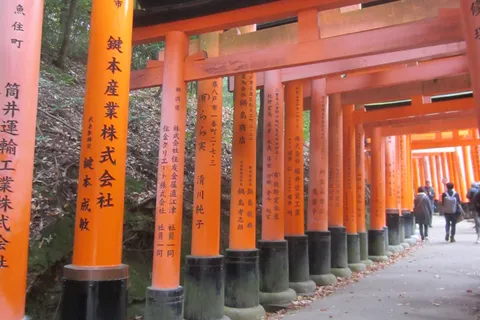
Kyoto Prefecture, Fushimi-ku, Kyoto
Fushimi Inari Taisha
Fushimi Inari Taisha
- Business Prosperity
- Bountiful Harvest
- Household Safety
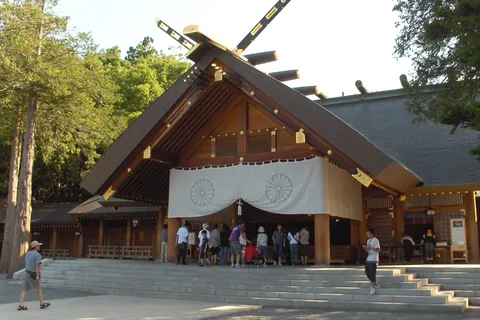
Hokkaido, Chuo-ku, Sapporo
Hokkaido Jingu
Hokkaidō-jingū
- Success in New Ventures
- Household Safety
- Business Prosperity
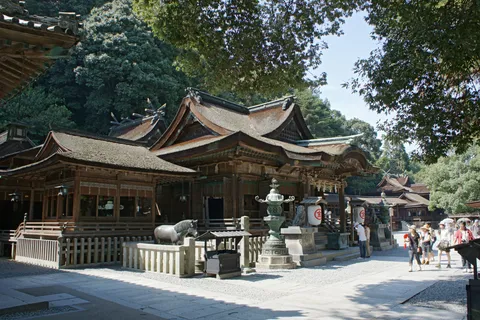
Kagawa Prefecture, Kotohira, Nakatado District
Kotohiragu
Kotohira-gū
- Maritime Safety
- Bountiful Harvest
- Business Prosperity